History
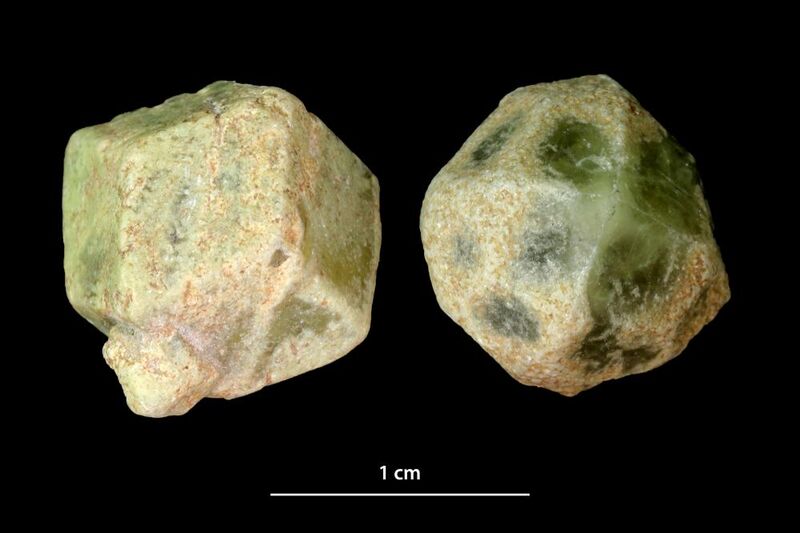
The name carries a small insult. It comes from the Ancient Greek hēssōn, meaning inferior — a nod to the stone being softer and lighter than most other garnets. Hessonite is the orange to cinnamon-brown gem variety of grossular, a calcium-aluminium garnet. Its older name says the same thing about that colour: it is the cinnamon stone. Gem cutters had long mistaken it for a lesser kind of zircon, the gem it most resembles in its reddish, orange-leaning glow.
In the gem traditions of India it was never treated as inferior at all. There it is the gomeda, one of the nine stones of the navaratna — a set of nine gems, each tied to a celestial body. Hessonite is the gem of Rahu, the ascending lunar node, and on that account it has long been cut and worn across South Asia.
The clearest sign of how often the stone went unrecognised in the West came from the British chemist Arthur Herbert Church. He showed that many engraved gems long taken for zircon were in fact hessonite. The mistake is an easy one: the two share a warm reddish fire, and only a careful eye separates them.
Industrial & practical applications
Hessonite has no industrial use. It is valued only as a gemstone — the orange to cinnamon-brown variety of grossular garnet, cut and faceted for rings and other jewellery. Most of it reaches the trade from Sri Lanka and India. There it is recovered chiefly from placer deposits — loose gravels where the heavy crystals collect after weathering out of their parent rock. Smaller amounts come from Brazil and California. In South Asia it remains in steady demand as the gomeda, the gem of the planet Rahu and one of the nine stones of the navaratna.
Where it forms, where it's found
Physical
- Colour
- brownish red to brownish yellow · and aurora red
The internal features of hessonite are highly pronounced and characteristic of this gemstone. The heat-wave effect, also known as a roiled interior appearance (or terms like “oily” appearance, treacle, molasses, and so on), is a distinctive and common feature associated with hessonite, although very few hessonites lack this effect, such as those from Somalia and Afghanistan. While liquid inclusions and crystals are common in hessonite, they are not exclusive to this gemstone. Another characteristic inclusion in hessonite is the granular texture. Gem-quality hessonite is typically mined from secondary deposits, with primary ore deposits located in the high-grade metamorphic khondalite suites or the quartzite–amphibolite contact zones. Hessonite has been well-known for its heat-wave effect for a long time. A strong, roiled appearance will influence its transparency. Hessonite is polycrystalline rather than single-crystalline, composed of submillimeter-sized granules with random orientation and minor chemical composition variations. Abundant micropores exist among the granules. These structural features interrupt incident light as it traverses the hessonite. It will cause changes in both the direction and the speed of the incident light. Such alterations induce light to swirl and roil within the gemstone, ultimately giving rise to the heat-wave effect. [[1]]
- Density
- 3.62 g/cm³
Optical
- Optical type
- Isotropic
- Surface relief
- High
- Principal indices
- n 1.74 – 1.768
- UV response
- inert to LW and SW
- Single index
- n = 1.754
Chemical composition
Synonyms
- Cinnamit
- Cinnamita
- Cinnamite
- Cinnamon Garnet
- Cinnamon Granat
- Cinnamon Stone
- Essonit
- Essonita
- Essonite
- False Hyacinth
- Hessonit
- Hessonita
- Hyacinthoid
- Kaneelstein
Literature, links & citation
- 2025Chen, Tao; Wang, Mengyuan; Zheng, Jinyu; Tian, Jinglin; Lou, Lili; Pei, Jingcheng; Xu, Xing (2025) The Formation of the Heat-Wave Effect in Hessonite. Minerals, 15 (6). doi:10.3390/min15060601DOI: 10.3390/min15060601
Entry last updated
@misc{mineral2026,
  author    = {Mineral Index editorial board},
  title     = {Hessonite — Mineral Index},
  year      = {2026},
  url       = {https://mineralindex.org/minerals/hessonite-1882}
}