History
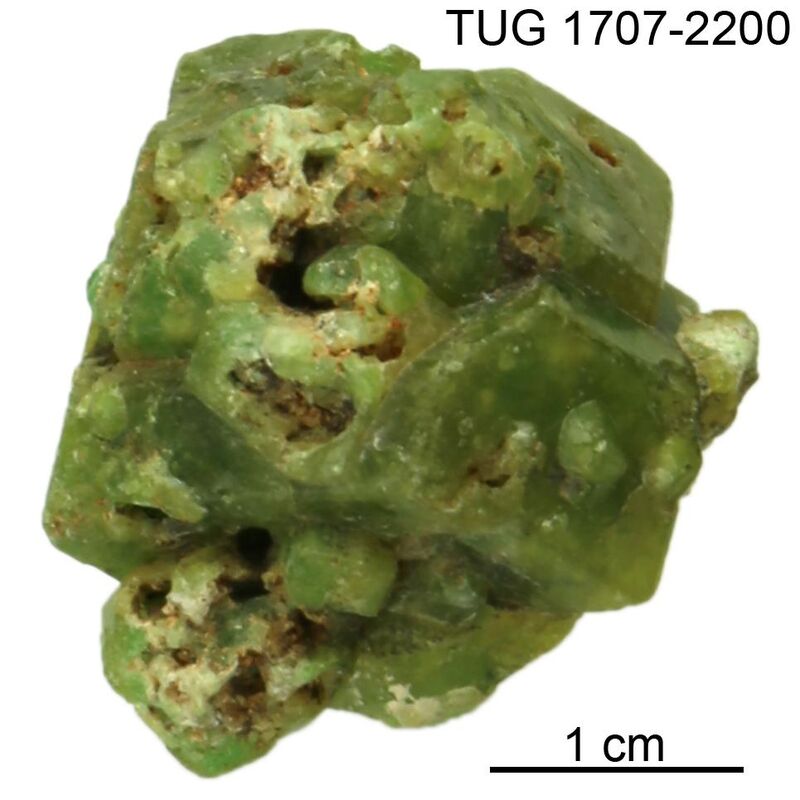
The name grossular is botanical — it borrows from grossularia, the Latin term for gooseberry. The first crystals to wear it were small, pale-green stones plucked from a Siberian riverbed, and they did resemble unripe gooseberries.
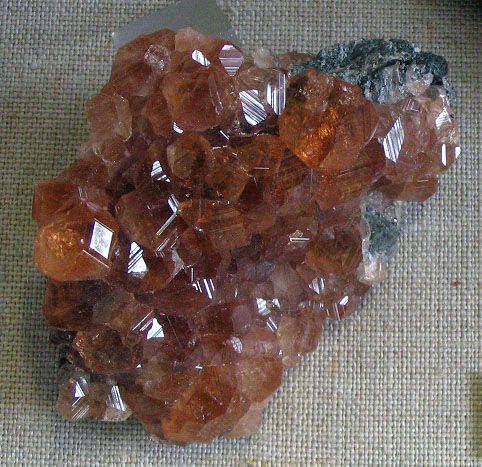
The mineral entered the literature under a different name. In 1803, the German mineralogist Abraham Gottlob Werner described an orange-brown variety from Sri Lanka and called it Kanelstein — cinnamon stone. Werner's reddish-brown specimen survives in the modern nomenclature as hessonite: the variety name comes from the Greek hēssōn — lesser — a nod to its slightly lower density than other red garnets. Five years later, in 1808, Werner returned to the same calcium-aluminium species and renamed it grossularite after green crystals found in eastern Siberia, whose tint matched a gooseberry. The status of grossular as a recognised mineral is formally tracked from 1811.
The type locality sits in eastern Siberia, at the riverbank where the Vilyui — also written Wilui in older German sources — meets the Akhtaragda. Pale-green stones from that confluence are still labelled Wiluite garnet in 19th-century collections, even though viluite itself is now a separate mineral.
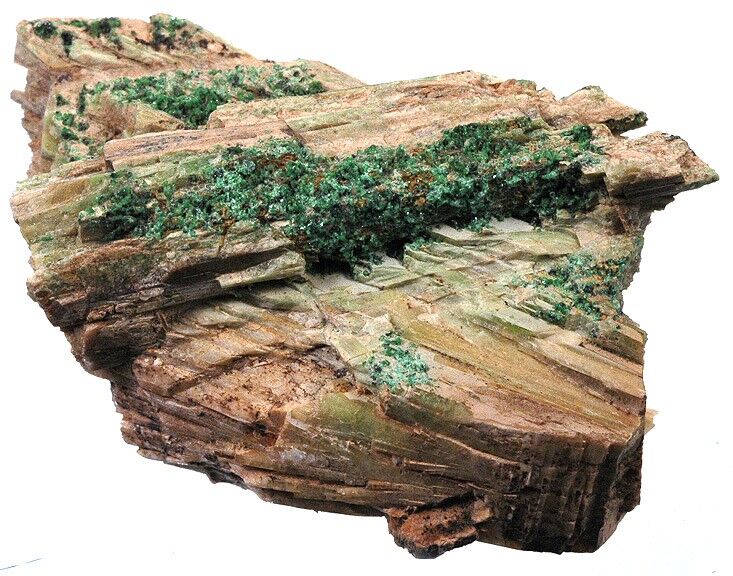
In 1908, the British-South African geologist Arthur Lewis Hall identified a massive, opaque green grossular in the old Transvaal province of South Africa, north of the Vaal River. Early miners took it for true jade. The trade name Transvaal jade has stuck, even though the stone is grossular and shares nothing mineralogically with either jadeite or nephrite.
The most consequential modern chapter is a gem story. In 1967, the British gem prospector and geologist Campbell R. Bridges found a deposit of intensely green grossular in the Simanjiro District of north-east Tanzania. Tanzania refused him export permits. Reasoning that the geology continued across the border, Bridges began prospecting in Kenya, and in 1971 he located the same material there and secured a mining permit. That same year, the International Mineralogical Association formally discouraged the older -ite suffix; the species is now simply grossular in the official lists, though grossularite still appears on field labels and trade catalogues.
For seven years the Kenyan green stone remained known only to mineralogists. That changed in 1974, when Tiffany and Co launched a marketing campaign that introduced the gem to a wider public. The name tsavorite was proposed by Tiffany's then-president Henry Platt, in honour of Tsavo East National Park in Kenya. The region on the Kenya–Tanzania border remains the only commercial source of gem-quality tsavorite.
Industrial & practical applications
Grossular's working life today is almost entirely a gem story. The harder, iron-rich garnet almandine carries the abrasive market for sandblasting and waterjet powder. Grossular itself has no significant share of that trade. Its place is on a jeweller's bench, on a lapidary's wheel, and in the petrologist's hand lens.
As a gemstone
Two varieties carry most of the demand. Tsavorite is the intensely green, chromium- and vanadium-bearing form from the Kenya–Tanzania border, and the most sought-after gem variety of the species. Hessonite, the orange to reddish-brown variety also called cinnamon stone, is the cheaper and more widely set of the two: nearly every faceted grossular on the market is orange to reddish-brown.
A third, opaque green form — sold as Transvaal jade or South African jade — is cut and polished as a carving and ornamental stone. It is not jade in the mineralogical sense (it is neither jadeite nor nephrite), but its massive habit and uniform colour take a high polish, and it is worked into beads, cabochons, and small sculptural pieces.
As a research mineral
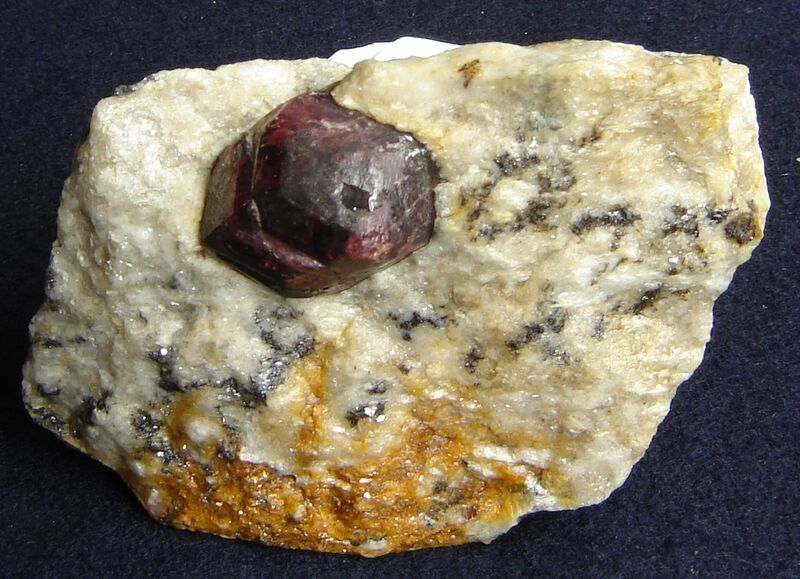
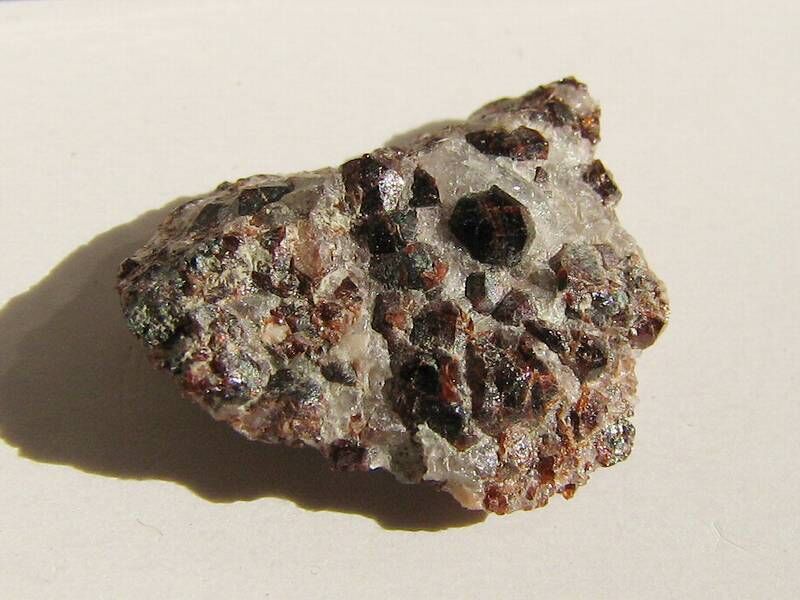
Outside the gem trade, grossular's most consistent use is as a witness mineral for the petrologist — the geologist who reads rock origins from mineral assemblages. Grossular forms when calcium-rich rocks are cooked and squeezed under metamorphism, and finding it in an outcrop is itself a clue to that history. It is the index garnet of contact-metamorphosed limestones — skarns — and of rodingites, the calcium-altered slivers found inside serpentinised ultramafic rocks. Collectors and museum buyers maintain a steady, modest demand for well-crystallised specimens from classic localities.
Where it forms, where it's found
- Geological setting
Contact and regionally metamorphosed calcareous rocks. Rodingites
- Type locality
- Akhtaragda River mouth
- Vilyui River Basin
- Mirninsky District
- Sakha
- Russia
63.1061°, 112.2025°
Varieties
Physical
- Hardness
- 1Talc
- 2Gypsum
- 3Calcite
- 4Fluorite
- 5Apatite
- 6Orthoclase
- 7Quartz
- 8Topaz
- 9Corundum
- 10Diamond
- Transparency
- Transparent · Translucent
- Colour
- Brown · orange · red · yellow · green · white · colorless · pink
Colorless when pure (rare), commonly red orange to brown.
- Streak
- White to pale Brownish white
- Tenacity
- brittle
- Cleavage
- None Observed
- Fracture
- Irregular/Uneven · Sub-Conchoidal
- Density
- 3.594 g/cm³
Optical
- Optical type
- Isotropic
- Surface relief
- High
- Principal indices
- n 1.731 – 1.754
- Birefringence
- 0.0-0.005
- Pleochroism
- Non-pleochroic
- UV response
- Almost always non-fluorescent; may be a weak golden yellow (LW & SW) Some light green grossular garnets exhibit orange-red luminescence under long-wave and short-wave ultraviolet light. Results imply that chromium and manganese are the luminescence activators in grossular garnets, and vanadium is a powerful quencher.
- Notes
Weak strain birefringence
- Single index
- n = 1.743
Crystallography
- Space group
- #225
- Cell parameters
- a = 11.851 Å
- Z
- 8
- Morphology
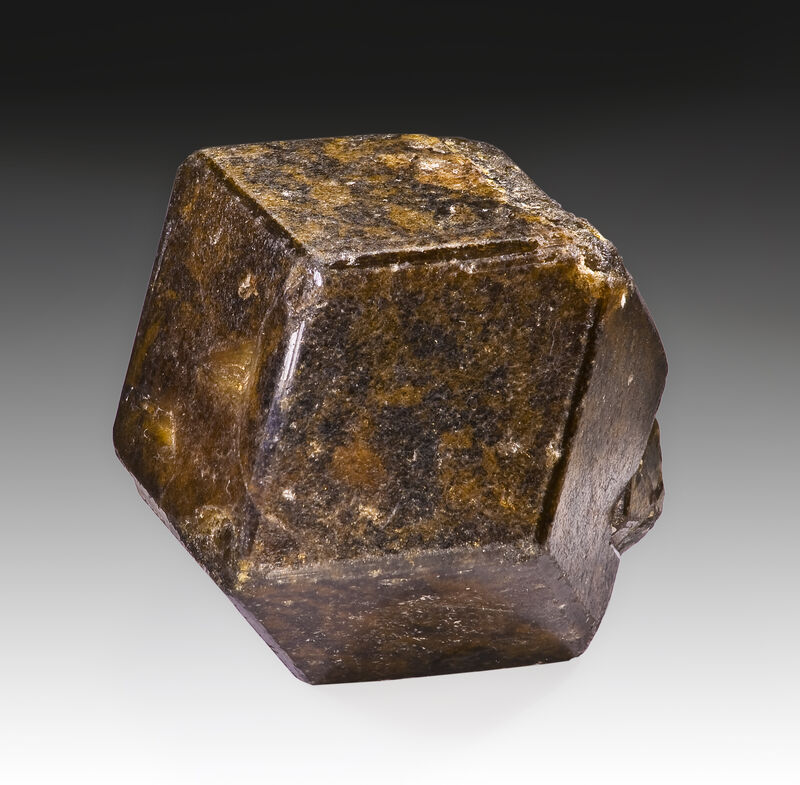
Dodecahedra or trapezohedra, granular, compact, massive. May have hexoctahedral faces. Rarely tetrahexahedral or octahedral.
- Twinning
Not observed
- Parting
- Rarely observed on (110)
Chemical composition
- Impurities
- Fe
- Cr
- Mn
- Mg
- Ti
Synonyms
- Colophonit
- Colophonita
- Ernit
- Ernita
- Ernite
- Garnet Jade
- Gooseberry-Garnet
- Grossular Garnet
- Grossularit
- Grossularita
- Grossularite
- Kalkthongranat
- Kanelstein
- Kolophonit
- Olyntholit
- Olyntholita
- Olyntholite
- Pechgranat
- Romanzovite
- Rumanzowit
- Rumjanzowit
- Telemarkit
- Tellemarkit
- Tellemarkita
- Tellemarkite
- Viluit
- Viluita
- Viluite (of Severgin)
- Wilouit
- Wilouita
- Wilouite
- Wiluite (of Severgin)
In other languages
- French
- grossulaire
- German
- Grossular
- Spanish
- grosularia
- Italian
- Grossularia
- Japanese
- 灰礬柘榴石
- Chinese
- 鈣鋁榴石
- Russian
- Гроссуляр
Classification
9.AD.25
- 9SilicatesClass
- 9.ANesosilicatesDivision
- 9.ADNesosilicates without additional anions; cations in [6] and/or greater coordinationGroup
- 9.AD.25GrossularSpecies
51.04.3b.02
- 51Nesosilicates Insular Sio4 Groups OnlyClass
- 51.04Insular SiO4 Groups Only with cations in [6] and >[6] coordinationType
- 51.04.3b— unnamed intermediate level —Group
- 51.04.3b.02GrossularSpecies
16.9.6
- 16Silicates Containing Aluminum and other MetalsClass
- 16.9Aluminosilicates of CaGroup
- 16.9.6GrossularSpecies
Group, growth & confusion
 AlmandineFe2+3Al2(SiO4)3Mineral—
 AndraditeCa3Fe3+2(SiO4)3Mineral—
 CalderiteMn2+3Fe3+2(SiO4)3Mineral—
- EringaiteCa3Sc2(SiO4)3Mineral—
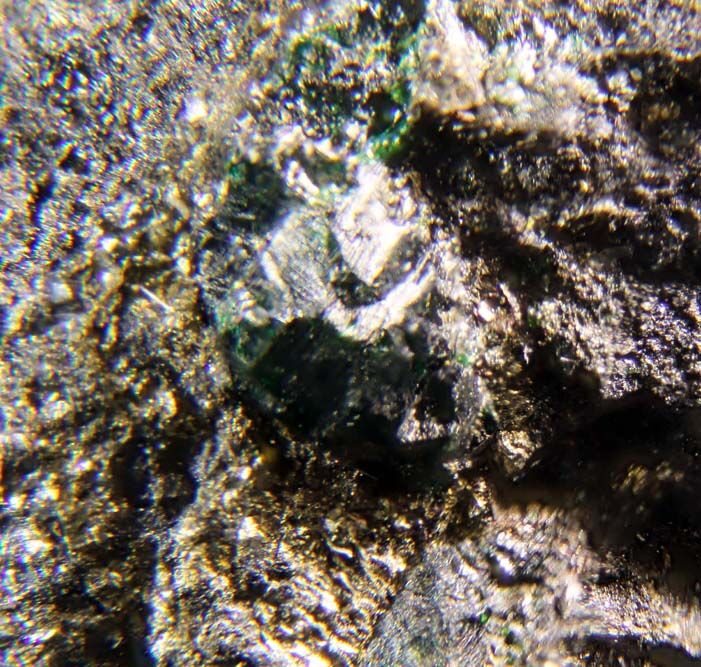 GoldmaniteCa3V3+2(SiO4)3Mineral—
- KnorringiteMg3Cr2(SiO4)3Mineral—
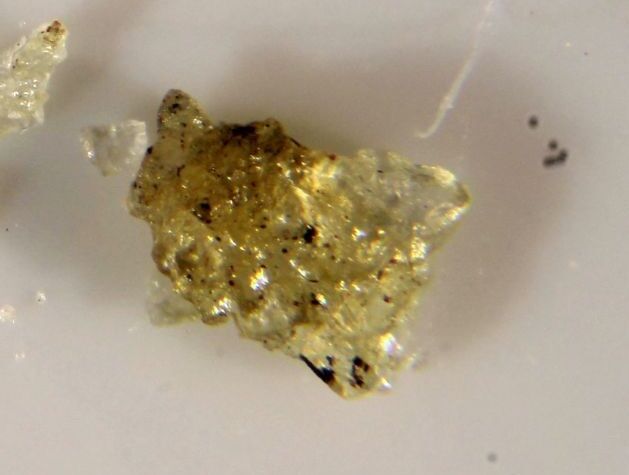 MajoriteMg3(MgSi)(SiO4)3Mineral—
- Menzerite-(Y)(CaY2)Mg2(SiO4)3Mineral—
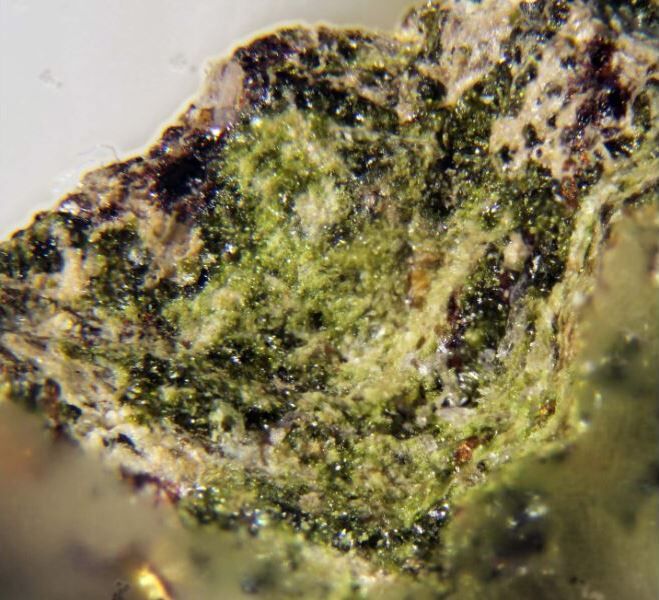 MomoiiteMn2+3V3+2(SiO4)3Mineral—
- MorimotoiteCa3(TiFe2+)(SiO4)3Mineral—
- AndraditeCa3Fe3+2(SiO4)3Mineral—
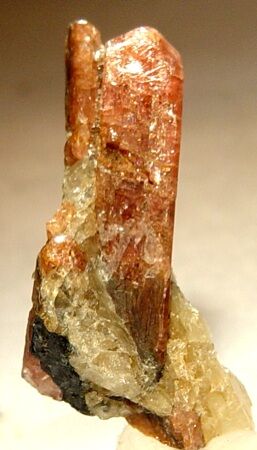 BustamiteMn2Ca2MnCa(Si3O9)2Mineral—
 CalciteCa(CO3)Mineral—
 ClinochloreMg5Al(AlSi3O10)(OH)8Mineral—
 ClintoniteCaAlMg2(SiAl3O10)(OH)2Mineral—
 DanburiteCaB2Si2O8Mineral—
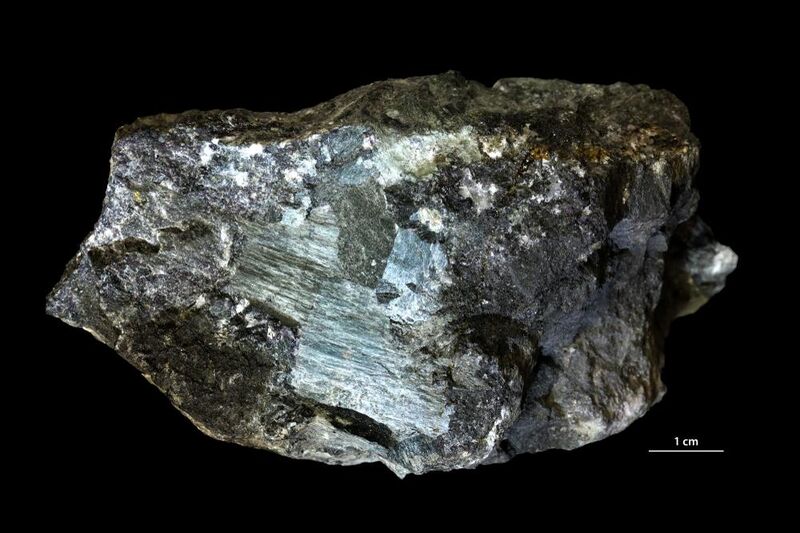 DiopsideCaMgSi2O6Mineral—
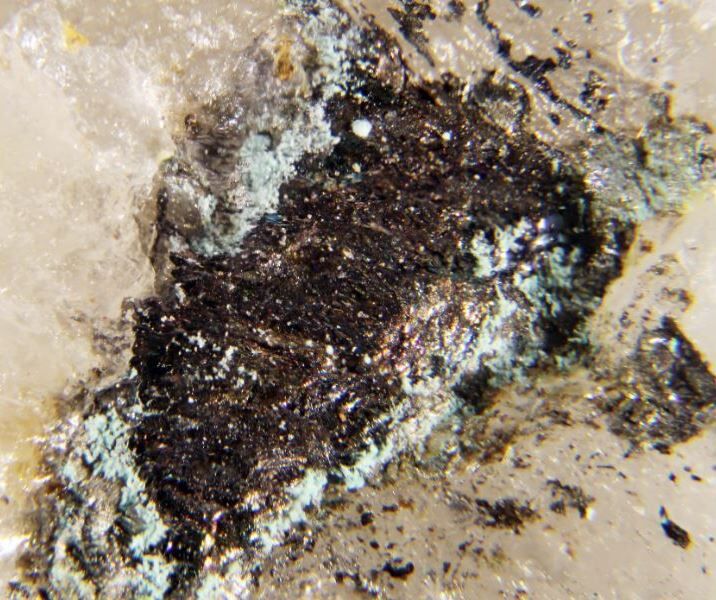 HammariteCu2Pb2Bi4S9Mineral—
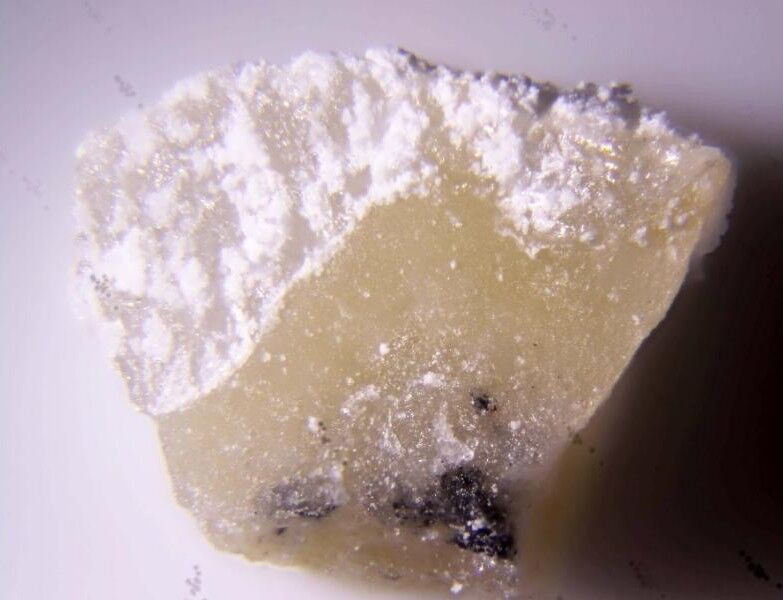 SolongoiteCa2B3O4(OH)4ClMineral—
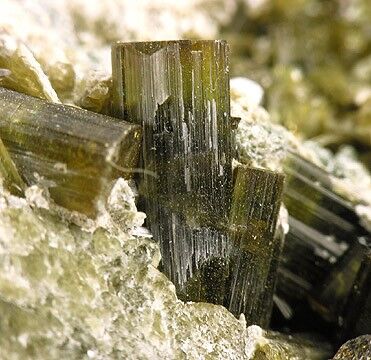 Vesuvianite(Ca,Na)19(Al,Mg,Fe)13(SiO4)10(Si2O7)4(OH,F,O)10Mineral—
Literature, links & citation
- 1807Klaproth, M. H. (1807) CLVII. Untersuchung des olivengrünen Granats, aus Sibirien. In Beiträge zur chemischen Kenntniss der Mineralkörper Vol. 4. Rottmann. p.319-324.
- 1950Yoder, Hatten S. (1950) Stability Relations of Grossularite. The Journal of Geology, 58 (3) 221-253 doi:10.1086/625736DOI: 10.1086/625736
- 1958Abrahams, S. C., Geller, S. (1958) Refinement of the structure of a grossularite garnet. Acta Crystallographica, 11 (6) 437-441 doi:10.1107/s0365110x5800116xDOI: 10.1107/s0365110x5800116x
- 1986ROSSMAN, G.R., AINES, R.D. (1986) Spectroscopy of a birefringent grossular from Asbestos, Quebec, Canada. American Mineralogist, 71, 779-780.
- 1989Akizuki, Mizuhiko (1989) Growth structure and crystal symmetry of grossular garnets from the Jeffrey mine, Asbestos, Quebec, Canada. American Mineralogist, 74 (7-8) 859-864
Entry last updated
@misc{mineral2026,
  author    = {Mineral Index editorial board},
  title     = {Grossular — Mineral Index},
  year      = {2026},
  url       = {https://mineralindex.org/minerals/grossular-1755}
}