Where it forms, where it's found
- Geological setting
Fumarole at 320°C.
- Type locality
- Glavnaya Tenoritovaya fumarole (Major Tenorite)
- Second scoria cone
- Northern Breakthrough (North Breach)
- Great Fissure eruption (Main Fracture)
- Tolbachik Volcanic field
- Milkovsky District
- Kamchatka Krai
- Russia
55.6833°, 160.2333°
1recorded occurrences
Physical
Optical
- Optical type
- Biaxial (+) · 2V calc = 80.7°
- Refractive index
- 1.562 – 1.634
- Surface relief
- Moderate
- Principal indices
- nα 1.562 · nβ 1.591 · nγ 1.634
- UV response
- Not fluorescent.
Δ = 0Δmax
PPLpleochroism per grain
XPLindependent extinctions · rotate the stage
PPLpleochroism only · colour blends on rotation
XPLinterference colour · extinct every 90°
Retardation720 nm
Order2nd order
XPL colour
Crystallography
- Space group
- C2/c
- Cell parameters
- a = 17.41(1) Å · b = 9.39(1) Å · c = 14.40(1) Å
- Cell angles
- β = 112.04(7) °
- Ratio a:b:c
- 1 : 0.539 : 0.827
- Unit cell volume
- 2183 ų
- Z
- 8
- Type-locality form
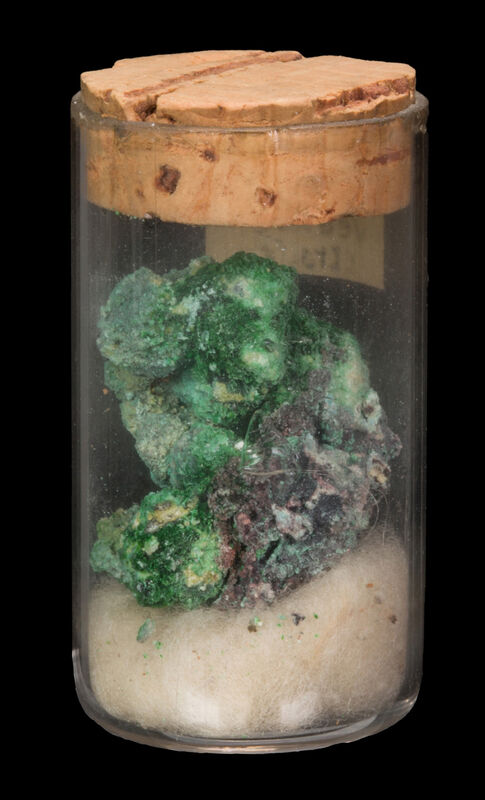
As crystalline crusts, individual crystals up to 10 x 30 x 50 µm (usually 5-20 µm) in size, and as irregularly shaped grains.
Chemical composition
Synonyms
- IMA2015-012
- Puniniet
In other languages
- German
- IMA 2015-012 · Puninit
- Italian
- puninite
Classification
Strunz
10th ed.7.BC.20
- 7SulfatesClass
- 7.BSulfates (selenates, etc.) with additional anions, without H2ODivision
- 7.BCWith medium-sized and large cationsGroup
- 7.BC.20PuniniteSpecies
Group, growth & confusion
Literature, links & citation
Citations
- 2015Hålenius, U., Hatert, F., Pasero, M., Mills, S. J. (2015) New minerals and nomenclature modifications approved in 2015, CNMNC Newsletter 26. Mineralogical Magazine, 79 (4) 941-947 doi:10.1180/minmag.2015.079.4.05DOI: 10.1180/minmag.2015.079.4.05
- 2017Siidra, Oleg I., Nazarchuk, Evgenii V., Zaitsev, Anatoly N., Lukina, Evgeniya A., Avdontseva, Evgeniya Y., Vergasova, Lidiya P, Vlasenko, Natalia S., Filatov, Stanislav K., Turner, Rick, Karpov, Gennady A. (2017) Copper oxosulphates from fumaroles of Tolbachik volcano: puninite, Na2Cu3O(SO4)3 – a new mineral species and structure refinements of kamchatkite and alumoklyuchevskite. European Journal of Mineralogy, 29 (3) 499-510 doi:10.1127/ejm/2017/0029-2619 DOI: 10.1127/ejm/2017/0029-2619
- 2017Siidra, Oleg (2017) Erratum: Copper oxosulphates from fumaroles of Tolbachik volcano: puninite, Na2Cu3O(SO4)
- 2020(2020) Puninite. Handbook of Mineralogy. Mineralogical Society of America
Cite this entry
Entry last updated
@misc{mineral2025,
  author    = {Mineral Index editorial board},
  title     = {Puninite — Mineral Index},
  year      = {2025},
  url       = {https://mineralindex.org/minerals/puninite-46673}
}