Where it forms, where it's found
- Geological setting
Alluvial deposit
- Type locality
- Rakwana
- Ratnapura District
- Sabaragamuwa Province
- Sri Lanka
6.4647°, 80.6160°
19recorded occurrences
Physical
Optical
- Optical type
- Biaxial (-) · 2V measured = 16°
- Surface relief
- Very high
- Principal indices
- n 2.38
- Optical colour
- gray white
- Anisotropism
- observed
- Internal reflections
- Brown, dark blue
- Tropism
- Anisotropic
- Reflectance R%
- (19.4,18.6) 480, (18.4,16.0) 546, (18.5,16.4) 589, (18.7,17.0) 649
- UV response
- Not fluorescent in UV
Reflected-light panel
R̄ 18.8 %anisotropic · dual curve
Specimen
White reference
R₁ R₂
Mode
Crystallography
- Space group
- Pbcn
- Cell parameters
- a = 4.708(5) Å · b = 5.553(5) Å · c = 5.019(4) Å
- Ratio a:b:c
- 1 : 1.179 : 1.066
- Z
- 4
- Morphology
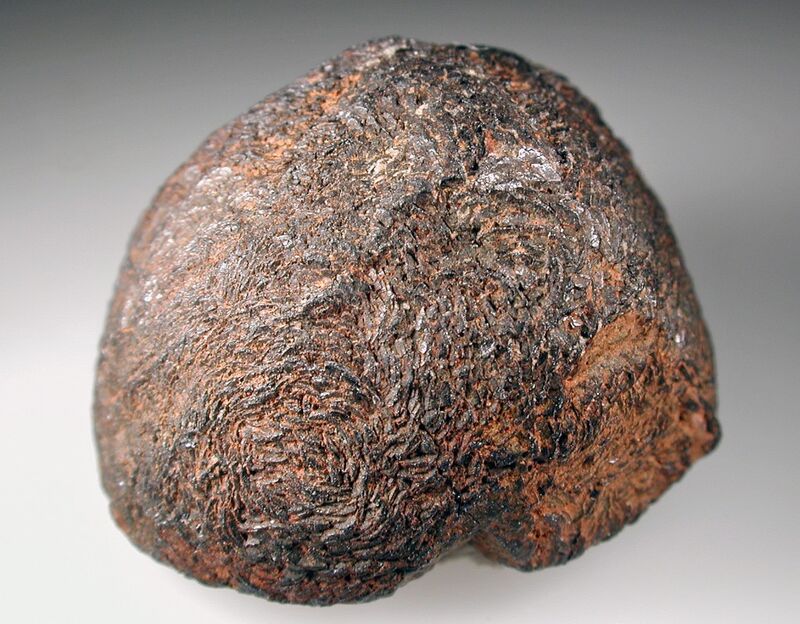
Tabular crystal, often twinned
- Twinning
Interpenetration and contact twins
Crystal structure
Chemical composition
Synonyms
- IMA1982-056
- Srilankiet
In other languages
- German
- IMA1982-056 · Srilankit
- Spanish
- Srilankita
- Italian
- srilankite
Classification
Strunz
10th ed.4.DB.25
- 4OxidesClass
- 4.DMetal: Oxygen = 1:2 and similarDivision
- 4.DBWith medium-sized cations; chains of edge-sharing octahedraGroup
- 4.DB.25SrilankiteSpecies
Dana
8th ed.04.04.13.02
- 04Simple OxidesClass
- 04.04AX2Type
- 04.04.13— unnamed intermediate level —Group
- 04.04.13.02SrilankiteSpecies
CIM
—7.10.4
- 7Oxides and HydroxidesClass
- 7.10Oxides of Zr and ThGroup
- 7.10.4SrilankiteSpecies
Group, growth & confusion
Literature, links & citation
Citations
- 1983Willgallis, Alexander, Hartl, Hans (1983) (Zr0,33Ti0,67)O2 – ein natürliches Zirkonium-Titanoxid mit α-PbO2-Struktur. Zeitschrift für Kristallographie, 164 (1-2). 59-66 doi:10.1524/zkri.1983.164.1-2.59 DOI: 10.1524/zkri.1983.164.1-2.59
- 1983Neues Jahrb.Min.,Mh.(1983) 151-157
- 1984Dunn, Pete J., Grice, Joel D. Fleischer, Michael, Pabst, Adolf (1984) New mineral names. American Mineralogist, 69 (1-2) 210-215
- 1986Bordet, P., McHale, A., Santoro, A., Roth, R.S. (1986) Powder neutron diffraction study of ZrTiO4, Zr5Ti7O24, and FeNb2O6. Journal of Solid State Chemistry, 64. 30-46 doi:10.1016/0022-4596(86)90119-2DOI: 10.1016/0022-4596(86)90119-2
- 1987Willgallis, A., Brauer, R., Buhl, J-C. (1987) Investigation regarding the synthesis of srilankite (Zr0.33Ti0.67)O2. Neues Jahrbuch für Mineralogie, Monatshefte: 1987 (3): 129-135.
Cite this entry
Entry last updated
@misc{mineral2026,
  author    = {Mineral Index editorial board},
  title     = {Srilankite — Mineral Index},
  year      = {2026},
  url       = {https://mineralindex.org/minerals/srilankite-3737}
}