Where it forms, where it's found
- Type locality
- Konjo mine
- Miyahara
- Mimasaka city
- Okayama Prefecture
- Japan
79recorded occurrences
Physical
Optical
- Pleochroism
- Visible
pale salmon-brown to brown
- Optical colour
- pinkish brown
- Anisotropism
- Strong; dark orange-red to yellow-gray
- Tropism
- Anisotropic
- Reflectance R%
- (17.5,18.9) 400, (18.2,20.3) 440, (20.8,23.0) 480, (22.8,25.3) 520, (24.6,27.1) 560, (26.2,28.4) 600, (27.8,29.5) 640, (29.6,30.5) 680, (30.3,30.8) 700
Reflected-light panel
R̄ 24.2 %anisotropic · dual curve
Specimen
White reference
R₁ R₂
Mode
Crystallography
- Space group
- #42
- Cell parameters
- a = 10.767 Å · b = 5.411 Å · c = 16.118 Å
- Ratio a:b:c
- 1 : 0.503 : 1.497
- Z
- 2
- Morphology
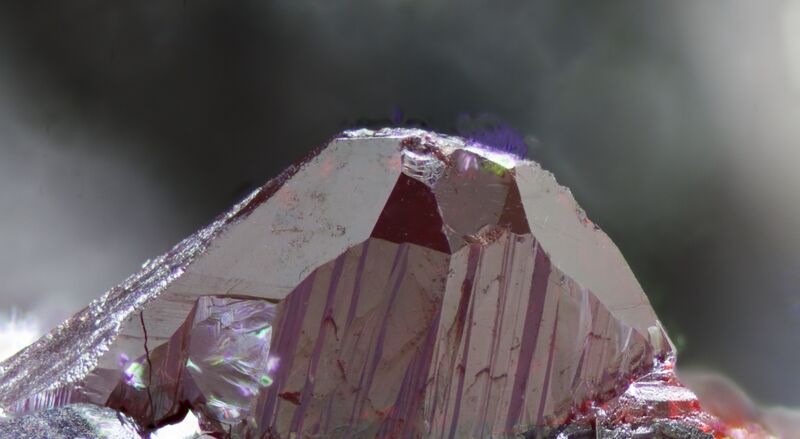
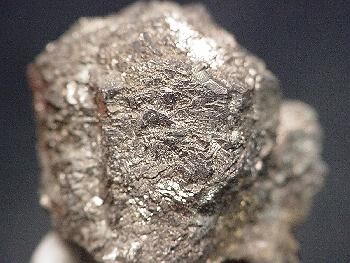
Massive, in veinlets, to 1 mm
Crystal structure
Chemical composition
Synonyms
- Hexastannit
- Hexastannita
- Hexastannite
- IMA1968-004a
- Stannoidiet
In other languages
- German
- IMA 1968-004a · Stannoidit
- Italian
- stannoidite
- Japanese
- 褐錫鉱
- Russian
- станноидит
Classification
Strunz
10th ed.2.CB.15c
- 2Sulfides and SulfosaltsClass
- 2.CMetal Sulfides, M: S = 1: 1 (and similar)Division
- 2.CBWith Zn, Fe, Cu, Ag, etc.Group
- 2.CB.15cStannoiditeSpecies
Dana
8th ed.02.09.03.03
- 02SulfidesClass
- 02.09AmBnXp, with (m+n):p = 1:1Type
- 02.09.03Mawsonite GroupGroup
- 02.09.03.03StannoiditeSpecies
CIM
—6.1.12
- 6Sulphosalts - Sulphostannates, Sulphogermanates,Sulpharsenates, Sulphantimonates, Sulphovanadates and SulphohalidesClass
- 6.1Sulphostannates and other sulfides containing SnGroup
- 6.1.12StannoiditeSpecies
Group, growth & confusion
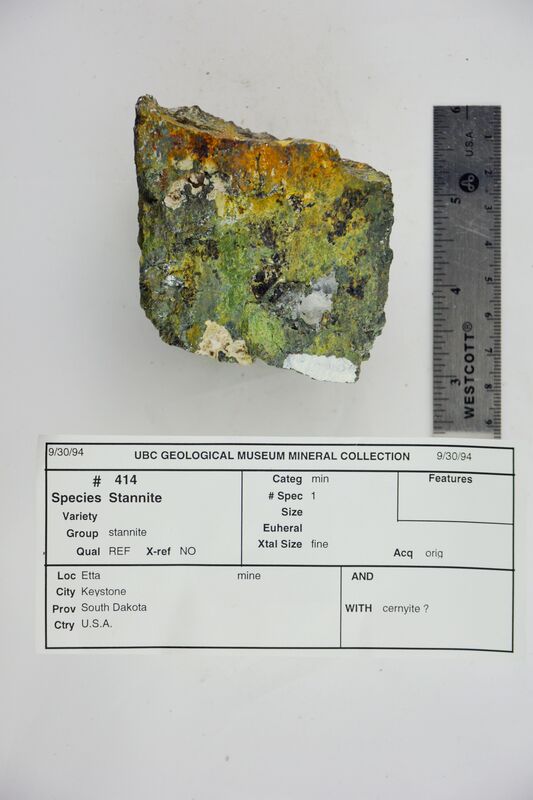
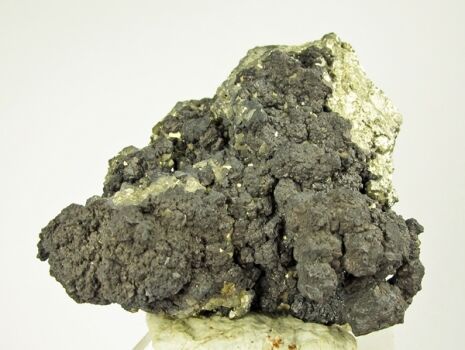
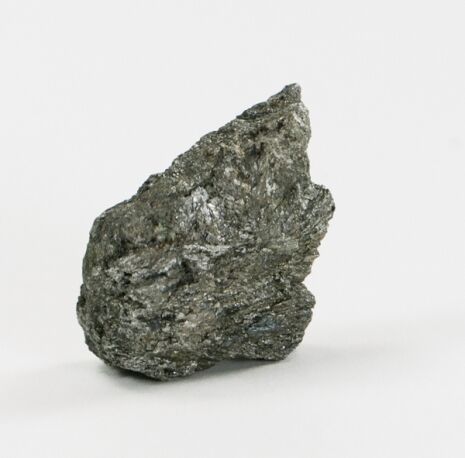
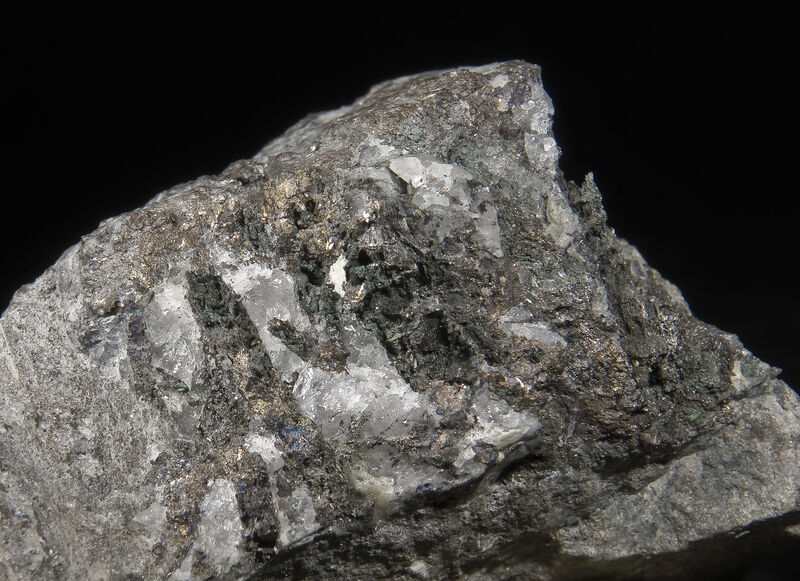
Literature, links & citation
Citations
- —Mineralogical Abstracts: 29: 245.
- 1969KATO, AKIRA; FUJIKI, YOSHINORI (1969) The occurrence of stannoidites from the xenothermal Ore Deposits of the Akenobe, Ikuno, and Tada Mines, Hyogo Prefecfure, and the Fukoku Mine, Kyoto Prefecture, Japan. Mineralogical Journal, 5 (6). 417-433 doi:10.2465/minerj1953.5.417 DOI: 10.2465/minerj1953.5.417
- 1969Fleischer, Michael (1969) New Mineral Names. American Mineralogist, 54 (9-10) 1495-1499
- 1969Kato, A. (1969) Stannoidite, Cu5(Fe, Zn)2SnS8, a new stannite-like mineral from the Konjo mine, Okayama Prefecture, Japan. Bulletin National Science Museum, Tokyo: 12: 165-172.
- 1975Lee, Min Sung, Takenouchi, S., Imai, H. (1975) Syntheses of stannoidite and mawsonite and their genesis in ore deposits. Economic Geology, 70 (4) 834-843 doi:10.2113/gsecongeo.70.4.834DOI: 10.2113/gsecongeo.70.4.834
Cite this entry
Entry last updated
@misc{mineral2025,
  author    = {Mineral Index editorial board},
  title     = {Stannoidite — Mineral Index},
  year      = {2025},
  url       = {https://mineralindex.org/minerals/stannoidite-3748}
}