Where it forms, where it's found
- Geological setting
Occurs as irregular lenses in szaibelyite, in a borate deposit.
- Type locality
- Deposit No. 33
- Inder B deposit and salt dome
- Inder District
- Atyrau Region
- Kazakhstan
13recorded occurrences
Physical
Optical
- Optical type
- Biaxial (-) · 2V measured = 60 – 80° · 2V calc = 60°
- Refractive index
- 1.488 – 1.525
- Surface relief
- Moderate
- Principal indices
- nα 1.488 – 1.491 · nβ 1.508 – 1.51 · nγ 1.515 – 1.525
- Dispersion
- weak r > v
Δ = 0Δmax
PPLpleochroism per grain
XPLindependent extinctions · rotate the stage
PPLpleochroism only · colour blends on rotation
XPLinterference colour · extinct every 90°
Retardation305 nm
Order1st order
XPL colour
Crystallography
- Cell parameters
- a = 8.3479(1) Å · b = 10.6068(1) Å · c = 6.4447(1) Å
- Cell angles
- α = 98.846 ° · β = 108.981 ° · γ = 105.581 °
- Ratio a:b:c
- 1 : 1.271 : 0.772
- Z
- 2
- Morphology
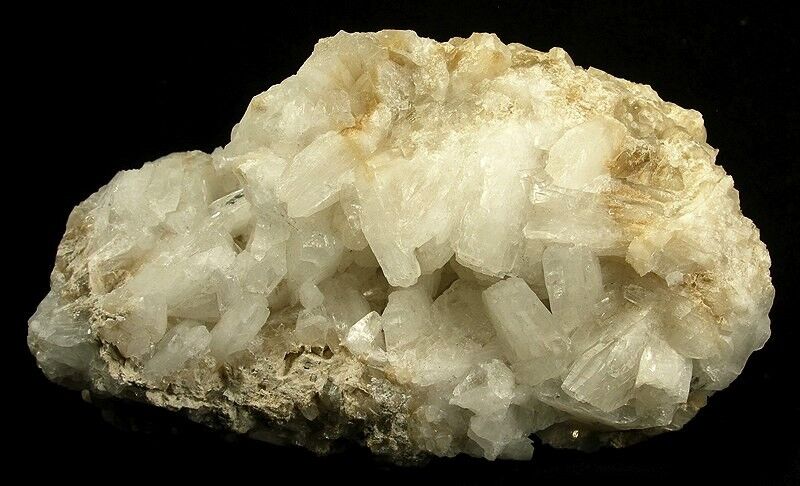
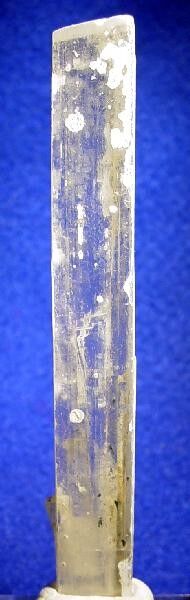
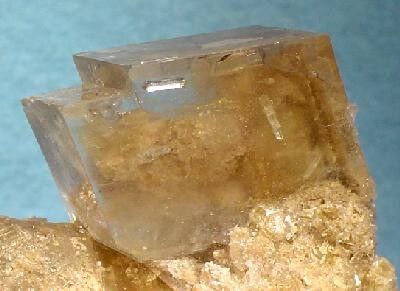
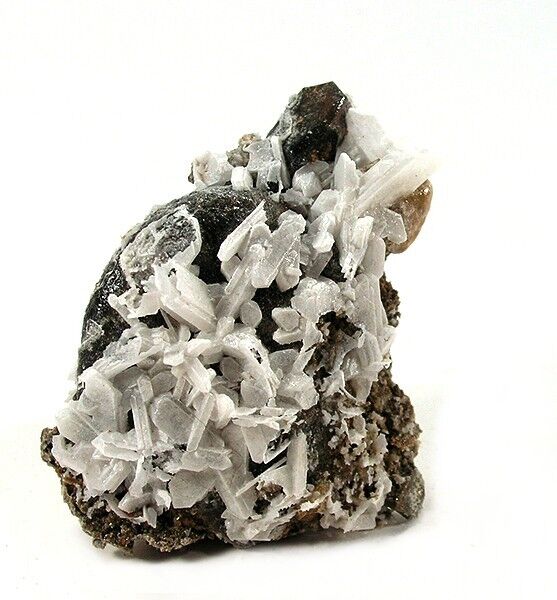
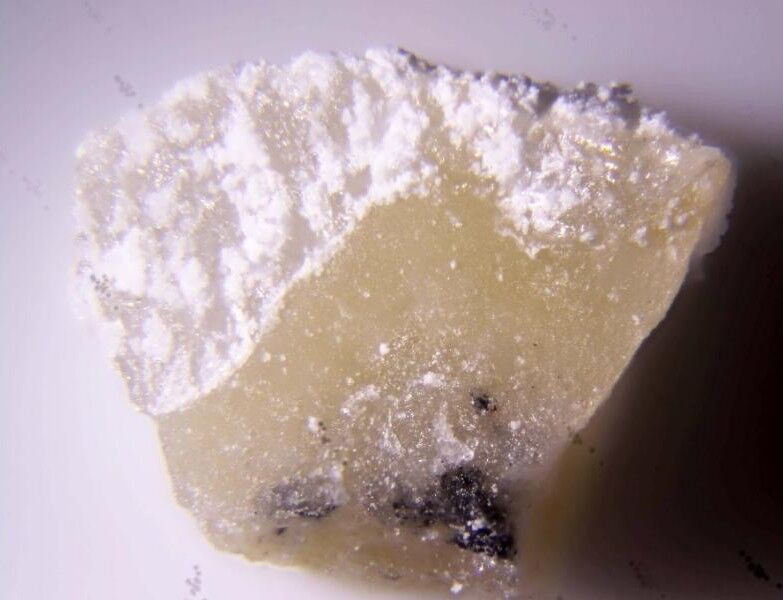
Rough prismatic crystals to 37cm. Dense aggregates.
- Twinning
Twinned at times.
- Type-locality form
Dense white aggregates.
Crystal structure
Chemical composition
Synonyms
- Kurnakoviet
In other languages
- French
- Kurnakovite
- German
- Kurnakovit
- Spanish
- Kurnakovita
- Italian
- Kurnakovite
- Russian
- Курнаковит
Classification
Strunz
10th ed.6.CA.20
- 6BoratesClass
- 6.CTriboratesDivision
- 6.CANeso-triboratesGroup
- 6.CA.20KurnakoviteSpecies
Dana
8th ed.26.03.03.01
- 26Hydrated Borates Containing Hydroxyl or HalogenClass
- 26.03TriboratesType
- 26.03.03— unnamed intermediate level —Group
- 26.03.03.01KurnakoviteSpecies
CIM
—9.2.9
- 9BoratesClass
- 9.2Borates of Be and MgGroup
- 9.2.9KurnakoviteSpecies
Group, growth & confusion
Literature, links & citation
Citations
- 1940Godlevsky, M.N. (1940) Kurnakovite, a new borate. Comptes Rendus (Doklady) de l'Académie des Sciences de l'URSS: 28: 638-640.
- 1941Fleischer, M. (1941) New mineral names. American Mineralogist, 26 (4). 293-294
- 1951Palache, Charles; Berman, Harry; Frondel, Clifford (1951) The System of Mineralogy (7th ed.) Vol. 2 - Halides, Nitrates, Borates, Carbonates, Sulfates, Phosphates, Arsenates, Tungstates, Molybdates, Etc. John Wiley and Sons.
- 1970Razmanova, P., Rumanova, I.M., Belov, N.V. (1970) Crystal structure of kurnakovite Mg2B6O11•15H2O = 2Mg[B3O3(OH)5]•5H2O. Soviet Physics, Doklady: 14: 1139-1142.
- 1973Baysal, O. (1973). New hydrous magnesium-borate minerals in Turkey: kurnakovite, inderite, inderborite. Bulletin of Mineral Resources and Exploration, Ankara, 80, 93-103.
Cite this entry
Entry last updated
@misc{mineral2025,
  author    = {Mineral Index editorial board},
  title     = {Kurnakovite — Mineral Index},
  year      = {2025},
  url       = {https://mineralindex.org/minerals/kurnakovite-2295}
}