Where it forms, where it's found
- Type locality
- Monti Pelati Nature Park
- Bettolino
- Baldissero Canavese
- Metropolitan City of Turin
- Piedmont
- Italy
45.4148°, 7.7409°
224recorded occurrences
Physical
Optical
- Optical type
- Biaxial (-) · 2V measured = 20 – 70° · 2V calc = 18°
- Refractive index
- 1.498 – 1.579
- Surface relief
- Moderate
- Principal indices
- nα 1.498 – 1.522 · nβ 1.507 – 1.553 · nγ 1.527 – 1.579
- Birefringence
- 0.035
- Pleochroism
- Non-pleochroic
- Dispersion
- none
- Extinction
- Z=c; parallel
- Notes
May appear nearly isotropic. Meerschaum from Turkey reported at 1.517
Δ = 0Δmax
PPLpleochroism per grain
XPLindependent extinctions · rotate the stage
PPLpleochroism only · colour blends on rotation
XPLinterference colour · extinct every 90°
Retardation350 nm
Order1st order
XPL colour
Crystallography
- Space group
- #72
- Cell parameters
- a = 5.21 Å · b = 26.73 Å · c = 13.5 Å
- Ratio a:b:c
- 1 : 5.131 : 2.591
- Morphology
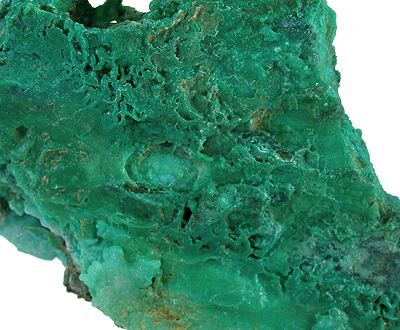
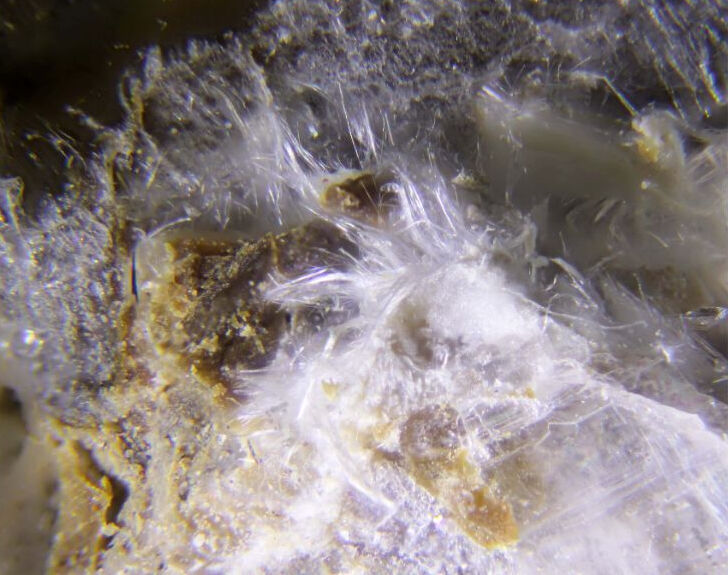
Needle-like fibers commonly in porous aggregates, also in fibrous sheets
- Parting
- Good, but grain sizes are generally small and no cleavage may be seen.
- Comment
Pncn
Crystal structure
Chemical composition
- Impurities
- Al
- Ca
- Fe
- Ni
Synonyms
- Ecume de mer
- L'écume de mer
- Meerschaum
- Parasepiolite
In other languages
- French
- écume de mer · sépiolite
- German
- Meerschaum · Sepiolith
- Spanish
- espuma de mar · sepiolita
- Italian
- Meerschaum · schiuma di mare · sepiolite · seppiolite
- Portuguese
- meerschaum · sepiolita · sepiolite
- Japanese
- セピオライト · 海泡石
- Chinese
- 海泡石
- Russian
- Морская пенка · Сепиолит
- Arabic
- سبيوليت
Classification
Strunz
10th ed.9.EE.25
- 9SilicatesClass
- 9.EPhyllosilicatesDivision
- 9.EESingle tetrahedral nets of 6-membered rings connected by octahedral nets or octahedral bandsGroup
- 9.EE.25SepioliteSpecies
Dana
8th ed.74.03.1b.01
- 74Phyllosilicates Modulated LayersClass
- 74.03Modulated Layers with joined stripsType
- 74.03.1b— unnamed intermediate level —Group
- 74.03.1b.01SepioliteSpecies
CIM
—14.4.11
- 14Silicates not Containing AluminumClass
- 14.4Silicates of MgGroup
- 14.4.11SepioliteSpecies
Group, growth & confusion
Literature, links & citation
Citations
- 1847Glocker, Ernst Friedrich (1847) Generum et specierum mineralium, secundum ordines naturales digestorum synopsis, omnium, quotquot adhuc reperta sunt, mineralium nomina complectens [A synopsis of the genera and species of minerals, according to their natural orders, including the names of all the minerals that have yet been discovered.]. Eduardus Anton. 348 pp.
- 1956Brauner, K., Preisinger, A. (1956) Struktur und Entstehung des Sepioliths. Tschermaks Mineralogische und Petrographische Mitteilungen: 6: 120-140. [in German]
- 1959Brindley, G. W. (1959) X-ray and electron diffraction data for sepiolite. American Mineralogist, 44 (5-6) 495-500
- 1966Van Olphen, H. (1966) Maya Blue: A Clay-Organic Pigment? Science, 154 (3749). 645-646 doi:10.1126/science.154.3749.645DOI: 10.1126/science.154.3749.645
- 1974Nagata, Hiroshi; Shimoda, Susumu; Sudo, Toshio (1974) On Dehydration of Bound Water of Sepiolite. Clays and Clay Minerals, 22 (3). 285-291 doi:10.1346/ccmn.1974.0220310DOI: 10.1346/ccmn.1974.0220310
Cite this entry
Entry last updated
@misc{mineral2025,
  author    = {Mineral Index editorial board},
  title     = {Sepiolite — Mineral Index},
  year      = {2025},
  url       = {https://mineralindex.org/minerals/sepiolite-3621}
}