Where it forms, where it's found
- Geological setting
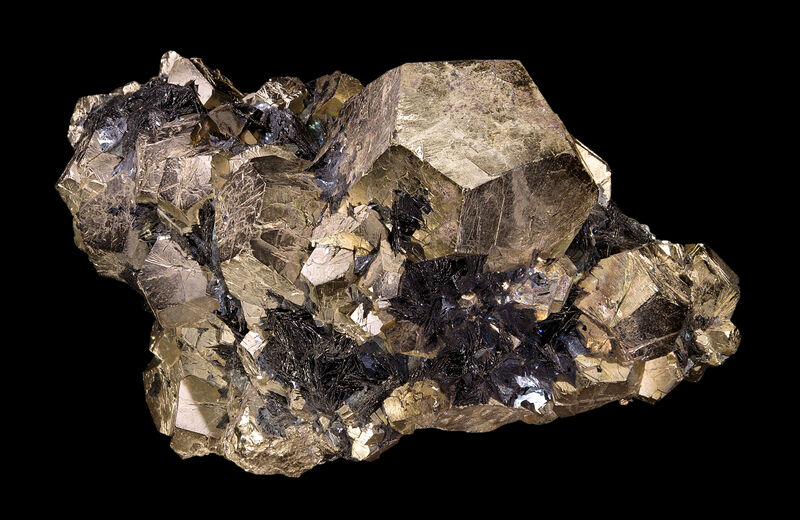
Dump material from a pyrite deposit in dolomite.
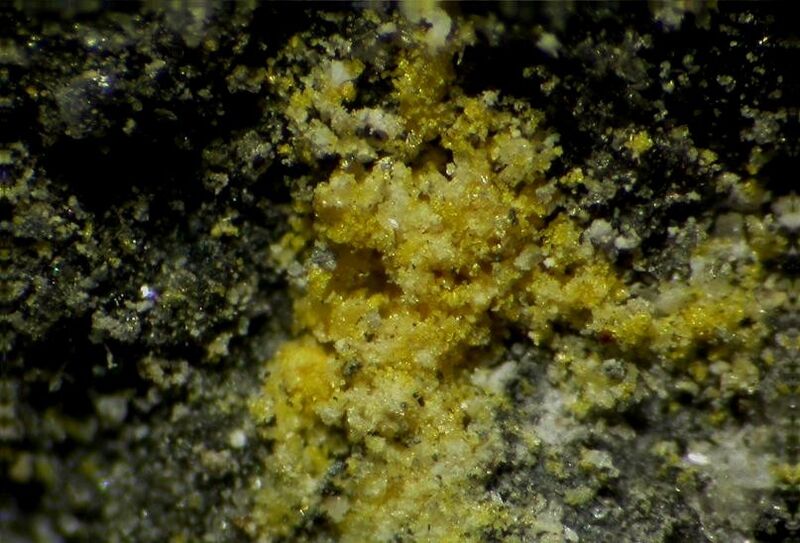
A secondary mineral sometimes found in the oxidized zone of sulfide mineral deposits, resulting from the decomposition of pyrite and marcasite. May form from the dehydration of hexahydrite (Chou, 2005).
- Type locality
- Starkey Mine
- Madison County
- Missouri
- USA
37.4831°, -90.1955°
71recorded occurrences
Physical
Optical
- Optical type
- Biaxial (+) · 2V measured = 50° · 2V calc = 46°
- Refractive index
- 1.49 – 1.497
- Principal indices
- nα 1.490 · nβ 1.491 · nγ 1.497
- Birefringence
- 0.007
- Pleochroism
- Non-pleochroic
- Dispersion
- none
Δ = 0Δmax
PPLpleochroism per grain
XPLindependent extinctions · rotate the stage
PPLpleochroism only · colour blends on rotation
XPLinterference colour · extinct every 90°
Retardation70 nm
Order1st order
XPL colour
Crystallography
- Space group
- #14
- Cell parameters
- a = 5.92 Å · b = 13.6 Å · c = 7.91 Å
- Cell angles
- β = 90.85 °
- Ratio a:b:c
- 1 : 2.297 : 1.336
- Z
- 4
- Morphology
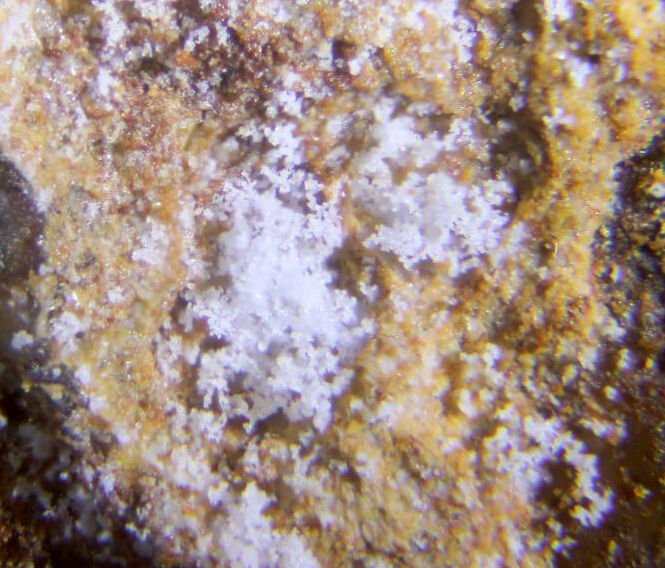
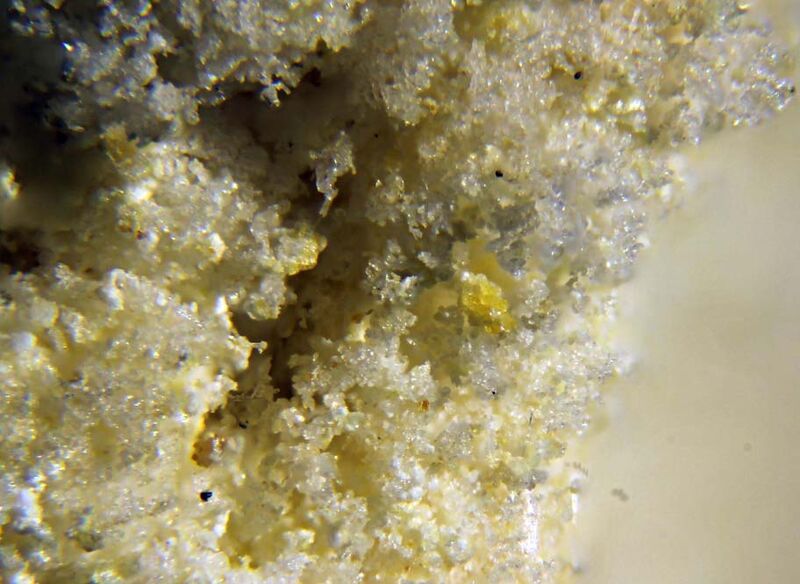
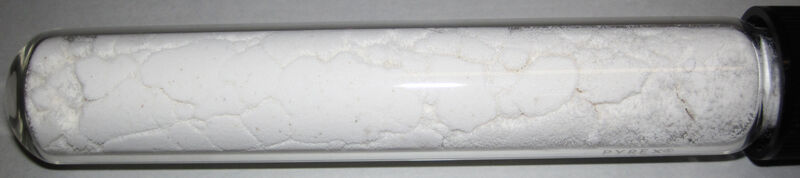
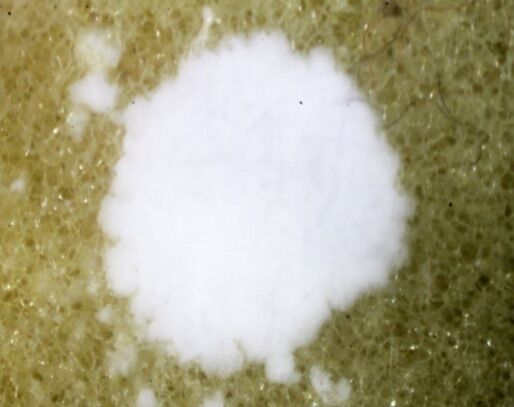
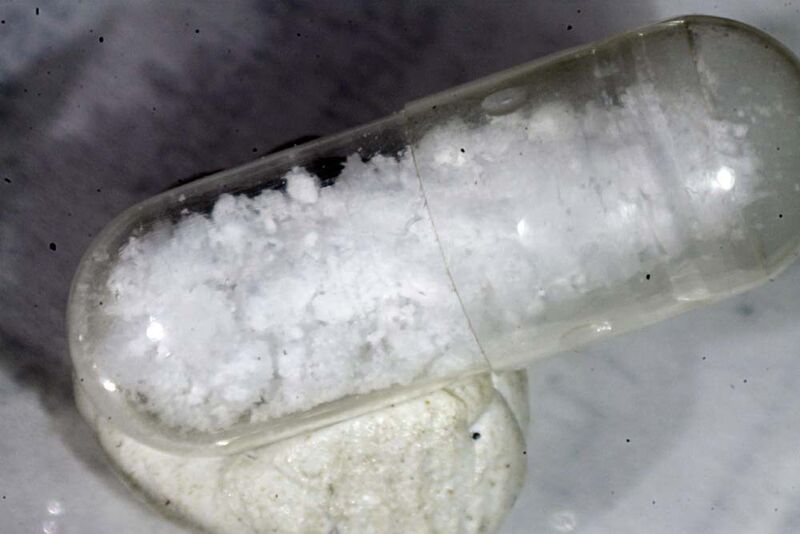
Forms not reported, typically found as powdery efflorescences.
- Twinning
Not reported.
- Type-locality form
Dull white powdery efflorescence.
Crystal structure
Chemical composition
Synonyms
- Leonhardtit
- Leonhardtite
- Starkeyiet
In other languages
- French
- Starkeyite
- German
- IMA 1970-014a · Leonhardtit · Starkeyit
- Italian
- starkeyite
Classification
Strunz
10th ed.7.CB.15
- 7SulfatesClass
- 7.CSulfates (selenates, etc.) without additional anions, with H2ODivision
- 7.CBWith only medium-sized cationsGroup
- 7.CB.15StarkeyiteSpecies
Dana
8th ed.29.06.06.02
- 29Hydrated Acid and Normal SulfatesClass
- 29.06AXO4·xH2OType
- 29.06.06Rozenite Group (Monoclinic)Group
- 29.06.06.02StarkeyiteSpecies
CIM
—25.3.3
- 25SulphatesClass
- 25.3Sulphates of MgGroup
- 25.3.3StarkeyiteSpecies
Group, growth & confusion
Literature, links & citation
Citations
- 1927Robson, Homer Louis (1927) The system MgSO4·H2O from 68 to 240°. Journal Of The American Chemical Society, 49 (11). 2772-2783 doi:10.1021/ja01410a016DOI: 10.1021/ja01410a016
- 1945Grawe, O.R. (1945) Pyrite deposits of Missouri. Starkeyite [FeSO4·H2O], a new mineral. Missouri Geological Survey and Water Resources, ser. 2: 30: 209-210.
- 1952Berdesinski, W. (1952) Sanderit, Leonhardtit, Allenit und Hexahydrit, neue Mineralien der marinen Kalisalzlagerstätten. Neues Jahrbuch für Mineralogie, Monatshefte, 1952, 28-29.
- 1956Grawe, Oliver R. (1956) Strakeyite, a correction. American Mineralogist, 41 (7-8) 662
- 1957Fleischer, M. (1957) New mineral names. American Mineralogist, 42 (5-6). 440-444
Cite this entry
Entry last updated
@misc{mineral2025,
  author    = {Mineral Index editorial board},
  title     = {Starkeyite — Mineral Index},
  year      = {2025},
  url       = {https://mineralindex.org/minerals/starkeyite-3752}
}