History
Before anyone knew uranium existed, German miners already had a name for the heavy black stone they kept hitting. They called it pechblende — pitchblende. Pitch for its tar-black colour; blende from the German blenden, "to deceive". The name was a warning. The rock looked dense and metallic, as if it should yield something valuable, yet miners could not work it for any useful metal — so it deceived them.
The deceiving stone had been turning up since at least the 15th century, in the silver mines of the Ore Mountains along the German and Czech border. It took on a string of names before it had a settled one. A naturalist called it schwarz beck-erz — black pitch ore — in 1727. Another labelled it pseudogalena and "pitch-like zinc-blende" in 1747, comparing it to ores it merely resembled. The pitchblende name itself was fixed in 1758. The first formal mineralogical description came in 1772, from the silver-mining town of Jáchymov — then Joachimsthal — which became the mineral's type locality.
The element hidden inside
In 1789 the chemist Martin Klaproth dissolved pitchblende from the Johanngeorgenstadt deposit and pulled from it an element no one had isolated before. He named it uranium, after the newly discovered planet Uranus. The mineral was renamed in turn: Klaproth's uranerz — uranium ore — acknowledged what it carried, and in 1845 it was given the composition-based name it still holds, for the uranium inside it.
The stone kept yielding firsts. Helium had been spotted in the Sun's light before anyone found it on Earth. It was first detected on Earth inside cleveite, an impure radioactive variety of the mineral.
The deeper secret was radioactivity. In the 1890s, working in Paris, Marie Skłodowska-Curie measured samples of pitchblende and found them four to five times more radioactive than their uranium content could explain. Something else, far more active, had to be hiding in the ore. In July 1898 she and Pierre Curie announced a new metal extracted from pitchblende and named it polonium, after Poland. On 26 December 1898 they announced a second: radium. To isolate it they needed raw material in bulk. The Austrian Academy of Sciences arranged for tons of pitchblende residue — the leftovers from the Joachimsthal slag-heaps — to be sent to Paris. From those tons Marie Curie eventually isolated pure metallic radium in 1910.
Industrial & practical applications
Uraninite is the world's primary ore of uranium — the rock mines are after when they go looking for the metal. Its chemistry is mostly uranium dioxide (UO₂), a dense store of uranium atoms. Crush the ore, leach the uranium out, purify it, and you have the feedstock for almost everything uranium does.
The dominant use is fuel for nuclear reactors. The uranium drawn from uraninite is enriched and pressed into ceramic pellets of uranium dioxide. Those pellets are the fuel that generates electricity from nuclear power. The same enrichment chain, taken further, yields the concentrated fissile uranium used in nuclear weapons.
Supply matters as much as the rock itself. Much of the uranium used in the United States is imported. Uranium now sits on the country's list of critical minerals — materials judged essential and vulnerable to supply disruption.
One practical note for anyone who handles a specimen: uraninite is radioactive. As it decays it emits radon gas, a radioactive byproduct. The standard collector precautions are simple. Keep specimens in airtight containers in a separate cabinet, away from living spaces; ventilate when opening them so radon cannot build up; and wash hands after handling.
Where it forms, where it's found
- Type locality
- Jáchymov
- Karlovy Vary District
- Karlovy Vary Region
- Czech Republic
50.3661°, 12.9233°
Varieties
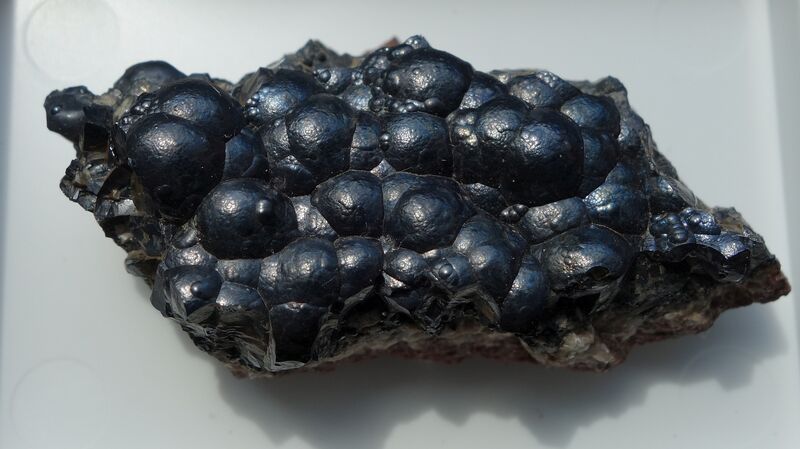
Radioactivity
Physical
- Hardness
- 1Talc
- 2Gypsum
- 3Calcite
- 4Fluorite
- 5Apatite
- 6Orthoclase
- 7Quartz
- 8Topaz
- 9Corundum
- 10Diamond
- Lustre
- Sub Metallic
- Transparency
- Opaque
- Colour
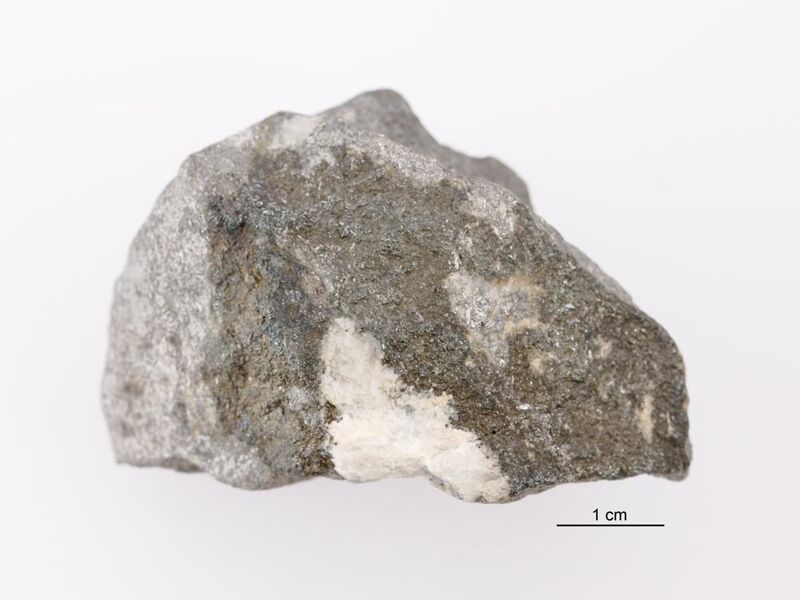
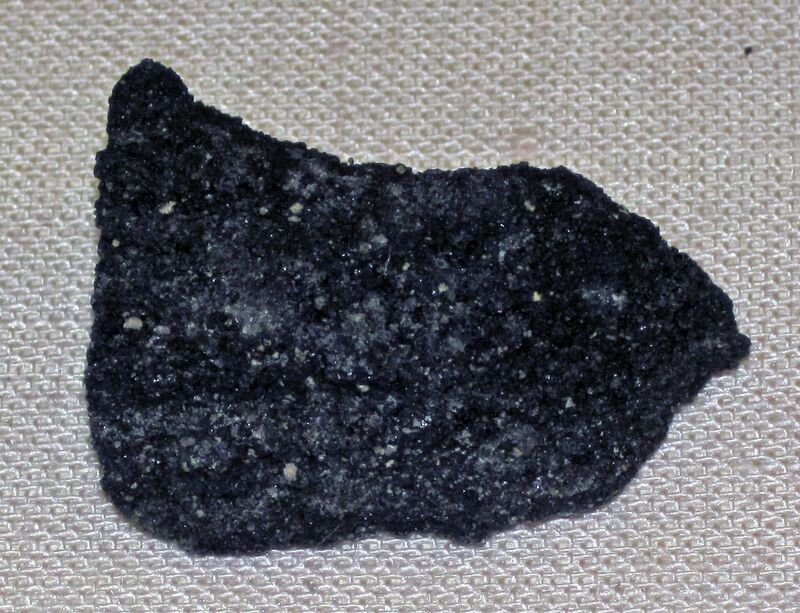
- Black · brownish-black · greyish · greenish · green-gray (thin fragments)
- Streak
- Brownish black, grayish, olive-green
- Tenacity
- brittle
- Cleavage
Good
- Fracture
- Irregular/Uneven · Conchoidal
- Density
- 10.63 g/cm³
Optical
- Optical type
- Isotropic
- Optical colour
- Light grey with brownish tint
- Internal reflections
- Dark brown
- Tropism
- Isotropic
- Reflectance R%
- (17.6) 400, (17.3) 420, (17.0) 440, (16.8) 460, (16.5) 480, (16.3) 500, (16.2) 520, (16.0) 540, (15.9) 560, (15.8) 580, (15.9) 600, (15.9) 620, (16.0) 640, (16.0) 660, (16.1) 680, (16.2) 700
- Luminescence
- Non-fluorescent.
- UV response
- None.
Crystallography
- Space group
- #224
- Cell parameters
- a = 5.4682 Å
- Z
- 4
- Morphology
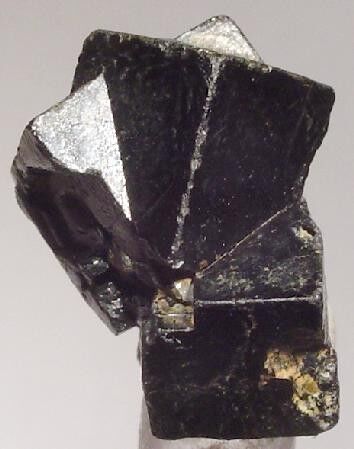
Octahedral, cubooctahedral, and cubic crystals; dodecahedrons less common. Massive, botryoidal, reniform, banded, columnar, curved lamellar.
- Twinning
On (111), rare.
- Comment
Synthetic material UO2.03
Chemical composition
- Impurities
- Th
- Zr
- Pb
- Ra
- Ac
- Po
- Ce
- Y
- Er
- La
Synonyms
- Kristallisirtes Uranpecherz
- Protoxide of Uranium
- Schwarz Beck-Erz
- Ulrichite (of Kirsch)
- Uranatemnite
- Uranbekerts
- Urane noir
- Urane oxydulé
- Uranerts
- Uranerz
- Uranin
- Urano ossidolato
- Uranopissit
- Uranopissita
- Uranopissite
In other languages
- French
- 1317-99-3 · Pechblende · Uraninite
- German
- Uraninit · Uranpecherz
- Spanish
- dióxido de uranio · uraninita · uranita · uranitita
- Italian
- uraninite
- Portuguese
- pechblenda · Uraninita · uraninite
- Japanese
- 八酸化三ウラン · 瀝青ウラン鉱 · 閃ウラン鉱
- Chinese
- 八氧化三鈾 · 晶质铀矿 · 瀝青鈾 · 瀝青鈾礦
- Simplified Chinese
- 八氧化三铀 · 沥青铀矿
- Traditional Chinese
- 八氧化三鈾 · 瀝青鈾礦
- Russian
- настуран · смоляная обманка · уранинит · урановая смолка
- Arabic
- بتشبلند · يورانينيت
- Hindi
- ट्राइयूरेनियम ऑक्टाऑक्साइड
Classification
4.DL.05
- 4OxidesClass
- 4.DMetal: Oxygen = 1:2 and similarDivision
- 4.DLWith large (+- medium-sized) cations; fluorite-type structuresGroup
- 4.DL.05UraniniteSpecies
05.01.01.01
- 05Oxides Containing Uranium or ThoriumClass
- 05.01AXO2·xH2OType
- 05.01.01— unnamed intermediate level —Group
- 05.01.01.01UraniniteSpecies
7.16.1
- 7Oxides and HydroxidesClass
- 7.16Oxides of UGroup
- 7.16.1UraniniteSpecies
Group, growth & confusion
 BerzelianiteCu2-xSe (x ≈ 0.12)Mineral—
 ClausthalitePbSeMineral—
 CoffiniteU(SiO4) · nH2OMineral—
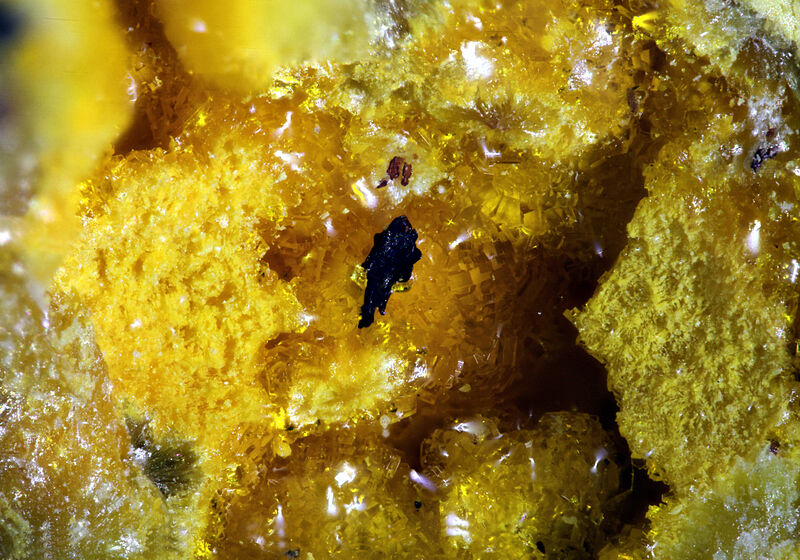 CompreignaciteK2(UO2)6O4(OH)6 · 7H2OMineral—
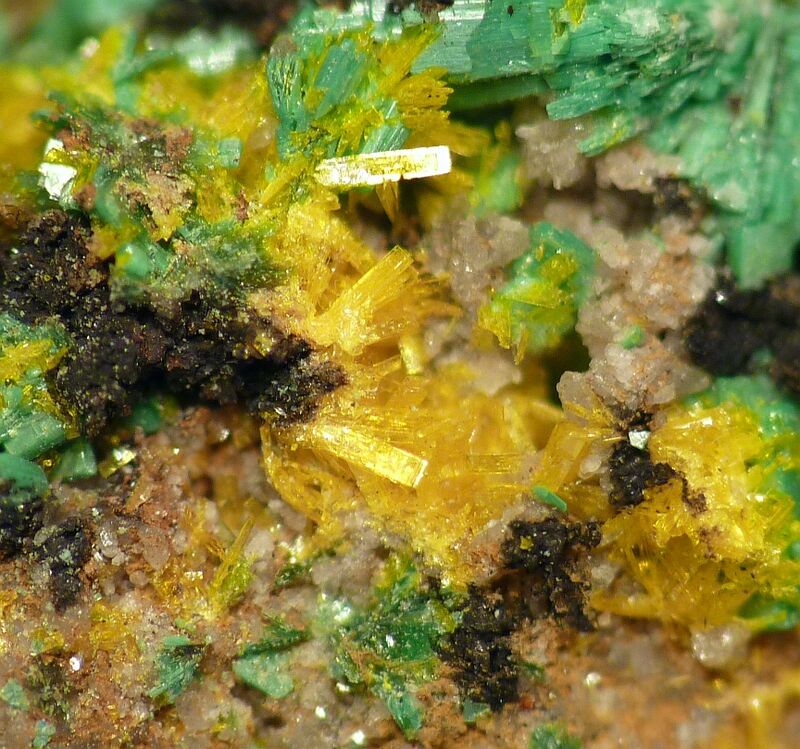 DewindtiteH2Pb3(UO2)6O4(PO4)4 · 12H2OMineral—
- EskeborniteCuFeSe2Mineral—
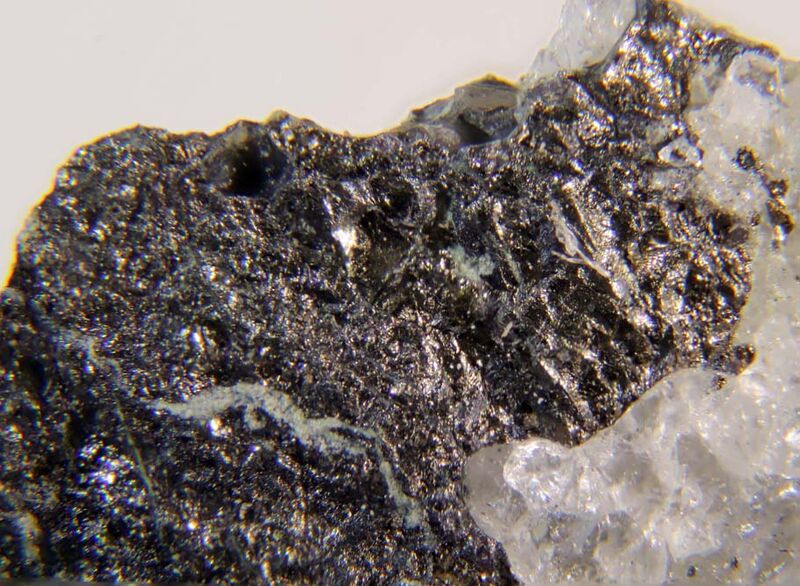 FerroseliteFeSe2Mineral—
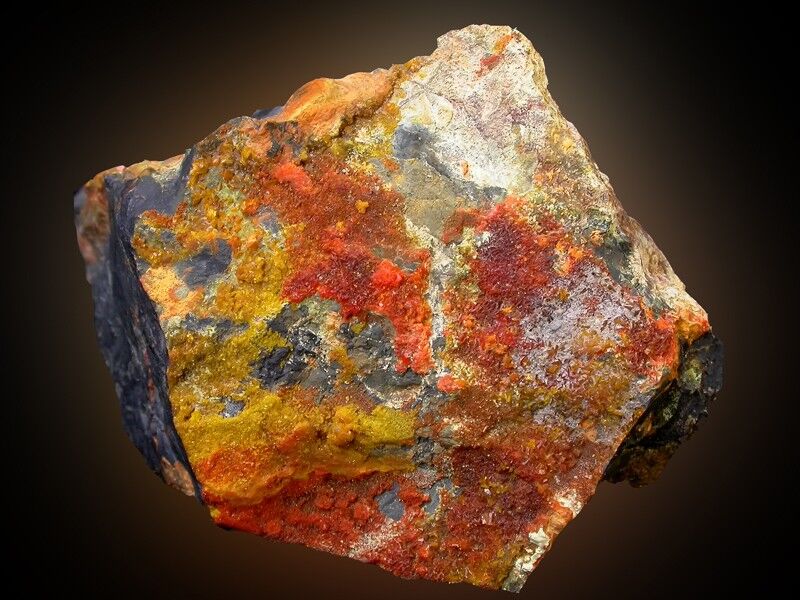 FourmarieritePb1-xO3-2x(UO2)4(OH)4+2x · 4H2OMineral—
- JolliffeiteNiAsSeMineral—
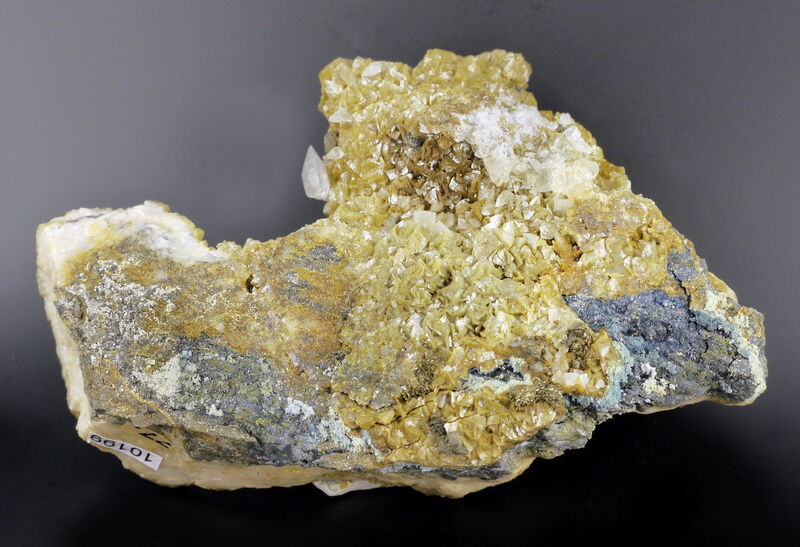 JordisiteMoS2Mineral—
Literature, links & citation
- 1797Klaproth, M. H. (1797) LVII. Chemische Untersuchung des Uranerzes. In Beiträge zur chemischen Kenntniss der Mineralkörper Vol. 2. Rottmann. p.197-221.
- 1893Hillebrand (1893) USGS Bulletin 113: 37.
- 1923Goldschmidt, Thomassen (1923) Vidensk. Selsk. Skr. Mat.-nat. Kl.: 2.
- 1927Aubel (1927) C.R.: 185: 586.
- 1932Parsons (1932) Univ. Toronto Stud., Geol. Ser.: 32: 17.
Entry last updated
@misc{mineral2026,
  author    = {Mineral Index editorial board},
  title     = {Uraninite — Mineral Index},
  year      = {2026},
  url       = {https://mineralindex.org/minerals/uraninite-4102}
}