Where it forms, where it's found
- Geological setting
Hydrothermal copper ores.
- Type locality
- Ani Mine
- Ani-machi
- Kitaakita City
- Akita Prefecture
- Japan
39.9818°, 140.4165°
116recorded occurrences
Physical
Optical
- UV response
- Not fluorescent in UV
Crystallography
- Space group
- #71
- Cell parameters
- a = 7.89 Å · b = 7.84 Å · c = 11.01 Å
- Ratio a:b:c
- 1 : 0.994 : 1.395
- Z
- 4
- Morphology
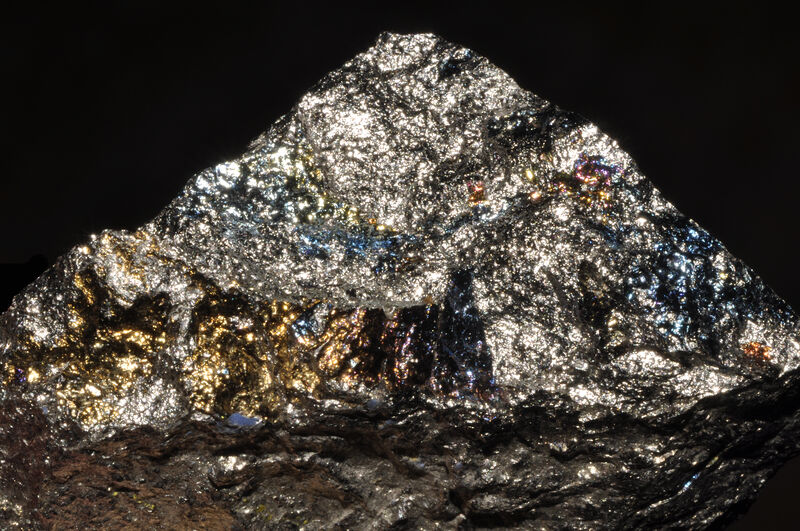
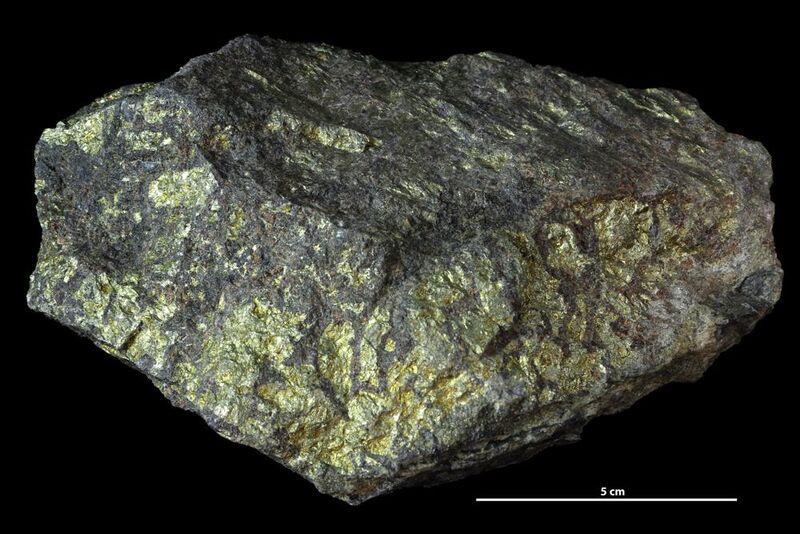
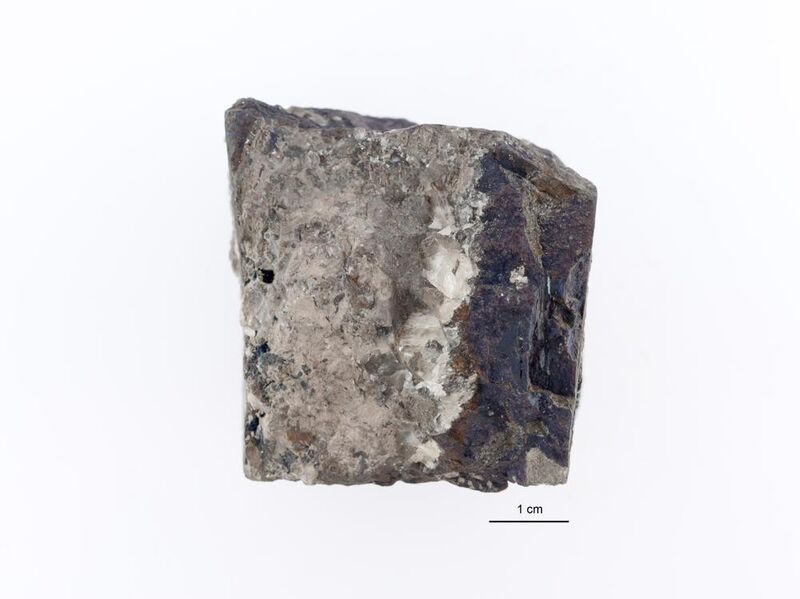
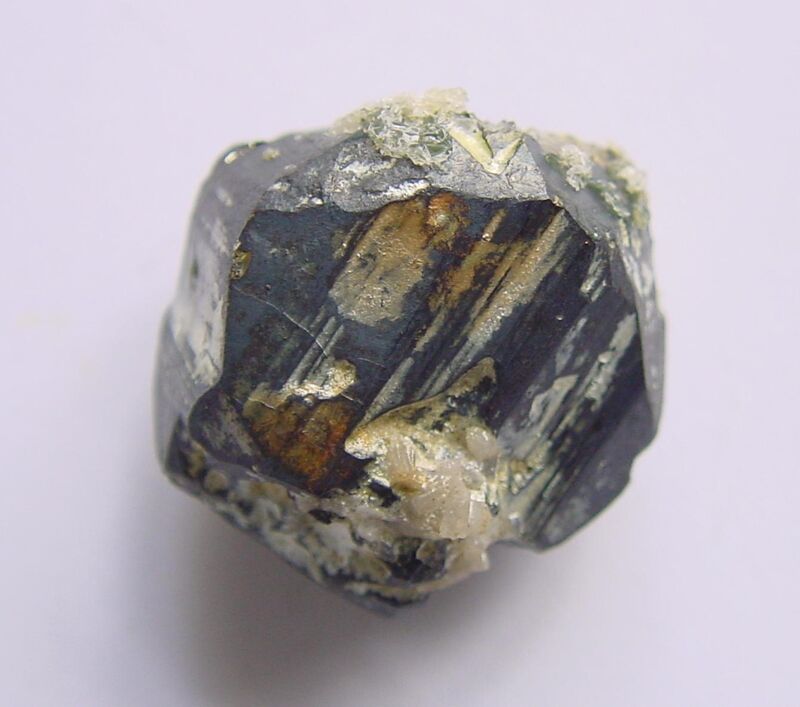
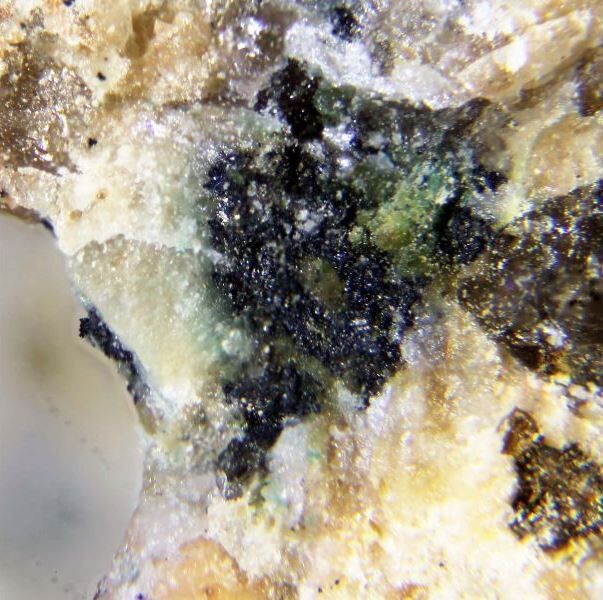
Prismatic or platy crystals to 5mm. Anilite cannot be identified using a powdered sample. Grinding transforms anilite to digenite (Morimoto, et. al., 1969).
- Twinning
Present; "neighboring twins".
- Type-locality form
Prismatic or platy crystals to 5 mm
Crystal structure
Chemical composition
Synonyms
- Aniliet
- Anilit
- Anilitt
- IMA1968-030
In other languages
- German
- Anilit · Anilith
- Italian
- anilite
- Japanese
- 阿仁鉱
Classification
Strunz
10th ed.2.BA.10
- 2Sulfides and SulfosaltsClass
- 2.BMetal Sulfides, M: S > 1: 1 (mainly 2: 1)Division
- 2.BAWith Cu, Ag, AuGroup
- 2.BA.10AniliteSpecies
Dana
8th ed.02.04.07.05
- 02SulfidesClass
- 02.04AmBnXp, with (m+n):p = 2:1Type
- 02.04.07Chalcocite Group ([Cu]2-x S] formulae)Group
- 02.04.07.05AniliteSpecies
CIM
—3.1.4
- 3Sulphides, Selenides, Tellurides, Arsenides and Bismuthides (except the arsenides, antimonides and bismuthides of Cu, Ag and Au, which are included in Section 1)Class
- 3.1Sulphides etc. of CuGroup
- 3.1.4AniliteSpecies
Group, growth & confusion
Literature, links & citation
Citations
- 1969Morimoto, Nobuo, Koto, Kichiro, Shimazaki, Yoshihiko (1969) Anilite, Cu7S4, a new mineral. American Mineralogist, 54 (9-10) 1256-1268
- 1970Morimoto, Nobuo, Koto, Kichiro (1970) Phase relations of the Cu-S system at low temperatures: stability of anilite. American Mineralogist, 55 (1-2) 106-117
- 1970Koto, K., Morimoto, N. (1970) The crystal structure of anilite. Acta Crystallographica Section B Structural Crystallography and Crystal Chemistry, 26 (7) 915-924 doi:10.1107/s0567740870003370DOI: 10.1107/s0567740870003370
- 1973Goble, R.J., Smith, D.G.W. (1973) Electron microprobe investigation of copper sulphides in the Precambrian Lewis Series of S.W. Alberta, Canada. The Canadian Mineralogist: 12: 95-103. https://rruff.info/rruff_1.0/uploads/CM12_95.pdf
- 1977Potter II, R. W. (1977) An electrochemical investigation of the system copper-sulfur. Economic Geology, 72 (8). 1524-1542 doi:10.2113/gsecongeo.72.8.1524DOI: 10.2113/gsecongeo.72.8.1524
Cite this entry
Entry last updated
@misc{mineral2025,
  author    = {Mineral Index editorial board},
  title     = {Anilite — Mineral Index},
  year      = {2025},
  url       = {https://mineralindex.org/minerals/anilite-236}
}