History
Chalcopyrite has been the most important ore of copper since the Bronze Age. Major historical workings include Río Tinto in Spain, the Ani mine in Japan, Butte in Montana, and Joplin in Missouri.
For centuries, the mineral was confused with pyrite. The two share the brassy lustre and the spark-when-struck behaviour that gave both their Greek name. Dioscorides, writing around 50 CE, listed them together under the umbrella term purites lithos in book 5 of his medical treatise On Medical Material.
In 1725, Johann Friedrich Henckel separated chalcopyrite from pyrite by giving it its own name. He combined the Greek chalkos (copper) with pyrites (strike fire) — the copper one that strikes fire.
Industrial & practical applications
Chalcopyrite is the principal ore of copper, the most abundant copper-bearing mineral on Earth. The world's copper supply rests on chalcopyrite mining.
Two extraction routes are in use. Pyrometallurgy — the heat route — is the commercially dominant one. The ore is crushed and ground, the mineral concentrated by froth flotation, then smelted, refined, and electro-refined into pure copper. Hydrometallurgy, the water-chemistry route, handles ores that pyrometallurgy cannot reach economically.
The smelting step produces sulfur dioxide gas, which is captured and converted into sulfuric acid — a major by-product of every modern copper smelter.
Where it forms, where it's found
- Geological setting
Chalcopyrite is a prevalent sulfide mineral in ore deposits and hosts various trace elements such as Ag, Co, As, Se, Sb, Te, Bi, etc. The variations in trace element contents, as well as Fe, S, and Cu isotopic compositions of chalcopyrite are controlled by a series of factors including metallogenic temperature and pressure, fluid compositions, metal sources, and sulfide equilibrium. Chalcopyrite is found in porphyry Cu deposits (PCDs), sedimentary rock-hosted stratiform Cu deposits (SSCs), iron oxide Cu-Au deposits (IOCGs), sedimentary exhalative deposits (SEDEXs), magmatic Cu-Ni sulfide deposits (MSDs), and volcanogenic massive sulfide deposits (VMSs), etc. Different types of ore deposits show significantly distinct chalcopyrite geochemical characteristics. For example, in PCDs, chalcopyrite is notably enriched in Zn and Pb, with negative δ34S values (−2.1 ± 3.64 ‰, n = 32) due to sediment contributions. Positive δ65Cu values (1.5 ± 2.00 ‰, n = 140) indicate a mantle-crustal mixed source, while negative δ57Fe values (−4.3 ± 5.10 ‰, n = 32) likely result from Fe isotope fractionation during magnetite precipitation or continental crust contamination. In MSDs, Cr is the most enriched element, with positive δ34S values (1.0 ± 2.14 ‰, n = 185) and slightly negative δ⁶5Cu values (−0.46 ± 0.50 ‰, n = 52). Chalcopyrite in SSCs is enriched in Zn and As, characterized by negative δ34S (−3.6 ± 0.12 ‰, n = 190) and δ65Cu values (−0.59 ± 0.98 ‰, n = 118). [[1]]
Varieties
Physical
- Hardness
- 1Talc
- 2Gypsum
- 3Calcite
- 4Fluorite
- 5Apatite
- 6Orthoclase
- 7Quartz
- 8Topaz
- 9Corundum
- 10Diamond
- Lustre
- Metallic
- Transparency
- Opaque
- Colour
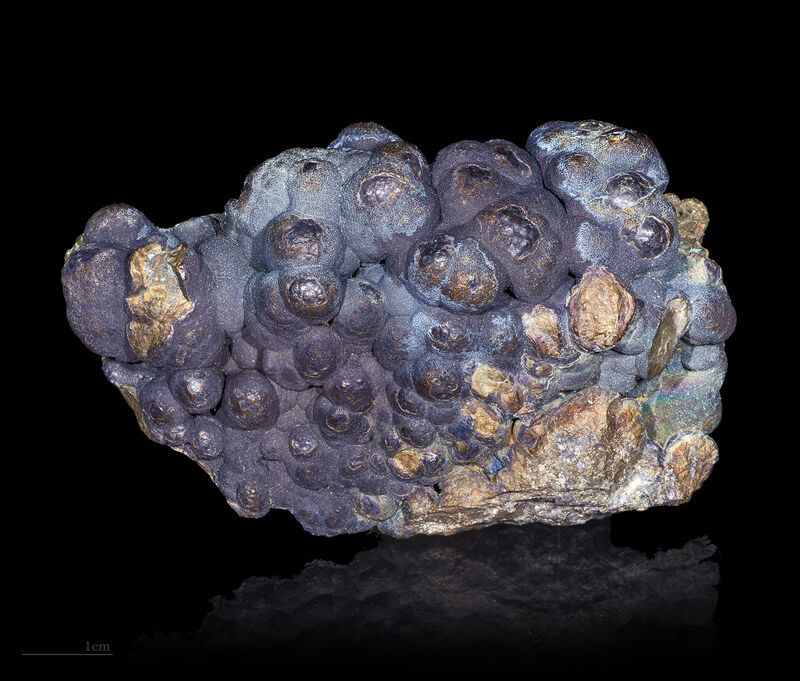
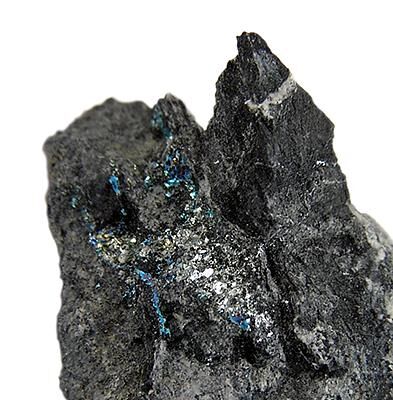
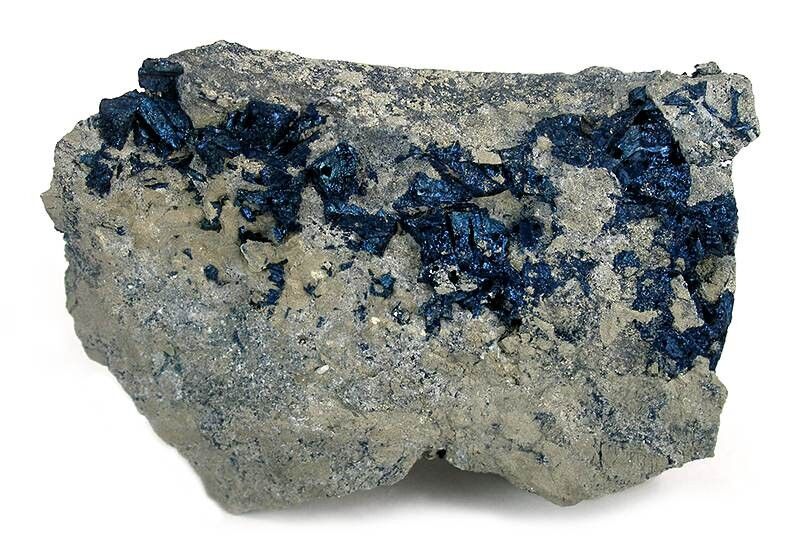
- Brass yellow · often with an iridescent tarnish.
- Streak
- Greenish black
- Tenacity
- brittle
- Cleavage
- Poor/Indistinct
Indistinct on (011), sometimes distinct.
- Fracture
- Irregular/Uneven
- Density
- 4.1 g/cm³
Optical
- Pleochroism
- Weak
- Optical colour
- Yellow against a white/gray phase, greenish-yellow when next to gold.
- Anisotropism
- Weak, but distinct blue-gray to yellow-green
- Bireflectance
- Weak
- Tropism
- Anisotropic
- Reflectance R%
- (16.0,17.3) 400, (20.0,21.3) 420, (24.8,26.1) 440, (30.2,31.4) 460, (34.9,35.9) 480, (38.9,39.9) 500, (41.9,42.7) 520, (44.0,44.9) 540, (45.4,46.4) 560, (46.6,47.6) 580, (47.1,48.3) 600, (47.5,48.6) 620, (47.6,48.7) 640, (47.6,48.7) 660, (47.6,48.6) 680, (47.6,48.6) 700
- Luminescence
- None
Crystallography
- Space group
- #141
- Cell parameters
- a = 5.289 Å · c = 10.423 Å
- Z
- 4
- Morphology
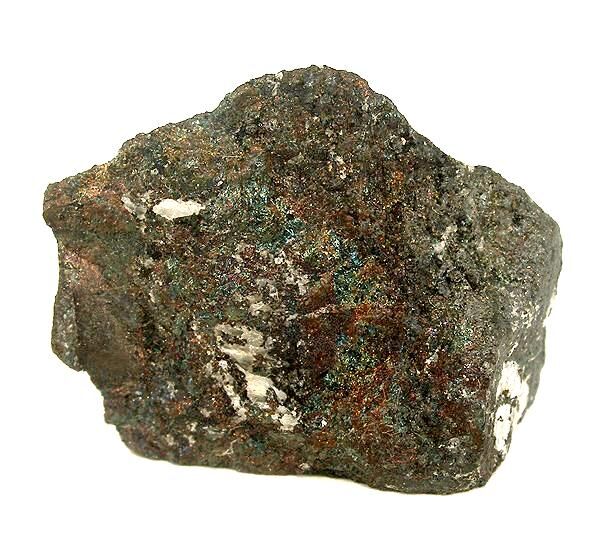
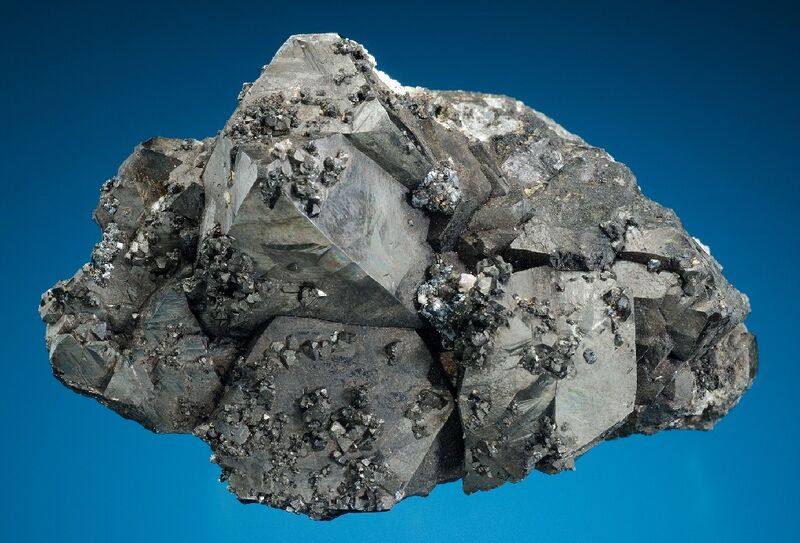
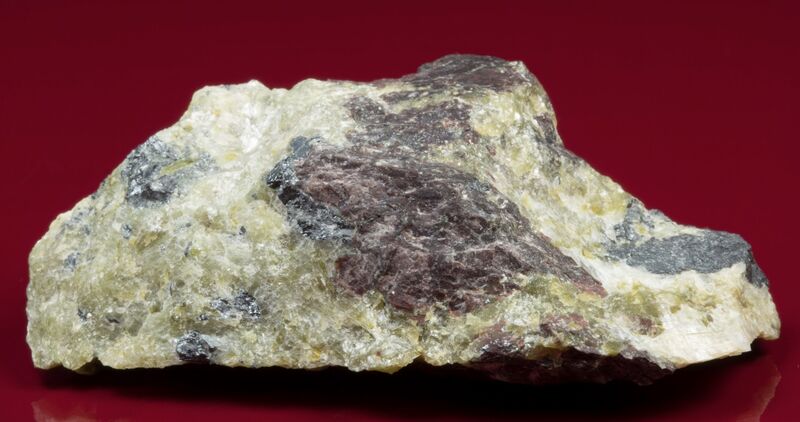
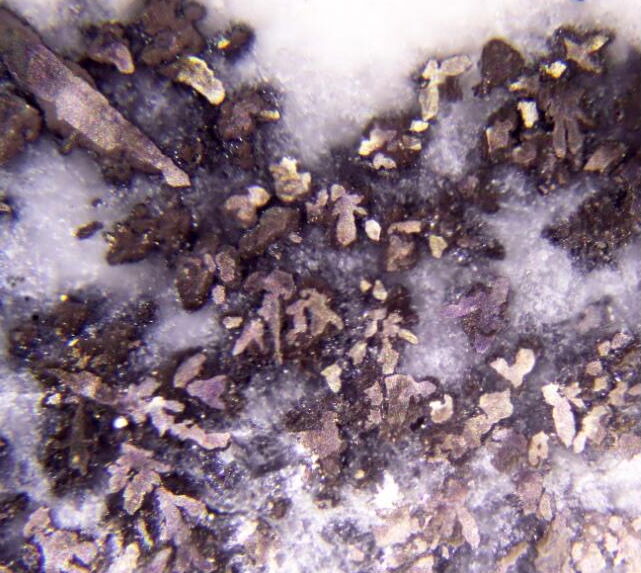
Typically found as equant to wedge-shaped pseudo-tetrahedral disphenoidal crystals, often modified by tetragonal scalenohedral faces. Mostly found massive or in disseminated grains and major deposits of such material are known.
- Twinning
Twinned on (112) and (012), penetration or cyclic.
- Epitaxy
Pyrite on chalcopyrite from Ege-Khay, Yakutia, Russia (Novgorodova 1977).
- Comment
Subcell: I-centred tetragonal, a = 3.74, c = 5.21 Å.
Chemical composition
- Impurities
- Ag
- Au
- In
- Tl
- Se
- Te
Synonyms
- Chalcopirita
- Chalcopyrita
- Chalkopyrita
- Chalkopyrite
- Copper Pyrite
- Copper Pyrites
- Cuivre Jaune
- Cuivre Pyriteux
- Cupropyrit
- Cupropyrita
- Cupropyrite
- Gelbkupfererz
- Gelferz
- Kobberkis
- Kopparglasertz
- Kupfereisenerz
- Kupfereisenerzkies
- Kupferkies
- Kupferkis
- Pirita de Cobre
- Pyrites of Copper
- Rame giallo
- Towanit
- Towanita
- Towanite
- Yellow Copper
- Yellow Copper Ore
- Yellow Pyrite
In other languages
- French
- Blister Copper · chalcopyrite · Chalkopyrite · CuFeS2 · Cuivre jaune · Cuivre pyriteux · Mine de cuivre jaune · pyrite cuivreuse · Towanite
- German
- Buntkupfer · Chalkopyrit · Gelbkupfererz · Kupfereisenerz · Kupferkies
- Spanish
- calcopirita · calcopiritas · pirita de cobre
- Italian
- Calcopirite
- Portuguese
- calcopirita · Calcopirite · Minério de cobre
- Japanese
- カルコパイライト · 黄銅鉱
- Chinese
- 黃銅礦
- Simplified Chinese
- 黄铜矿
- Traditional Chinese
- 黃銅礦
- Russian
- золотая обманка · медный колчедан · халькопирит
- Arabic
- كالكوبيريت
Classification
2.CB.10a
- 2Sulfides and SulfosaltsClass
- 2.CMetal Sulfides, M: S = 1: 1 (and similar)Division
- 2.CBWith Zn, Fe, Cu, Ag, etc.Group
- 2.CB.10aChalcopyriteSpecies
02.09.01.01
- 02SulfidesClass
- 02.09AmBnXp, with (m+n):p = 1:1Type
- 02.09.01Chalcopyrite Group (Tetragonal: I-42d)Group
- 02.09.01.01ChalcopyriteSpecies
3.1.25
- 3Sulphides, Selenides, Tellurides, Arsenides and Bismuthides (except the arsenides, antimonides and bismuthides of Cu, Ag and Au, which are included in Section 1)Class
- 3.1Sulphides etc. of CuGroup
- 3.1.25ChalcopyriteSpecies
Group, growth & confusion
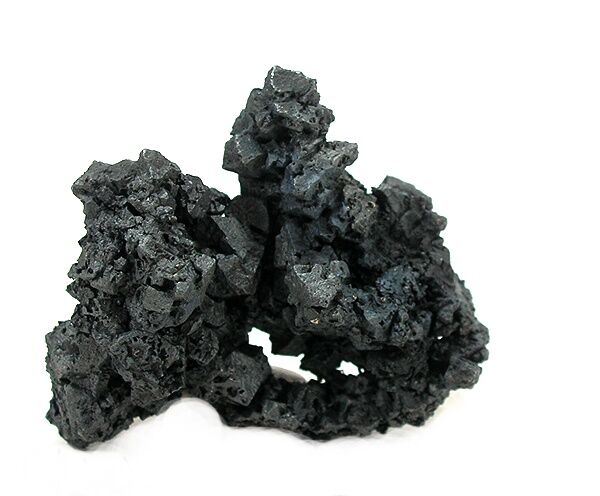
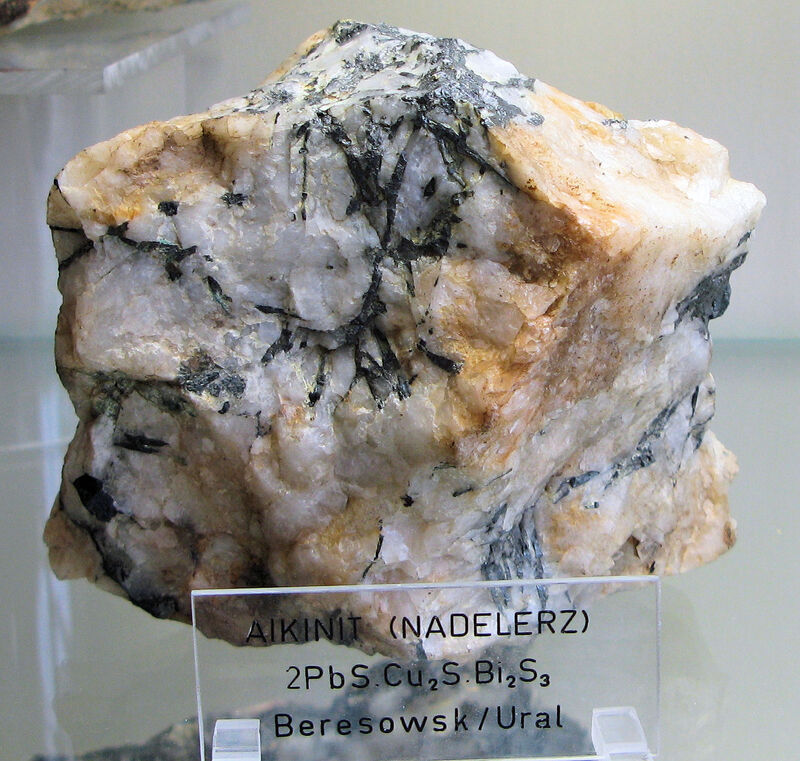
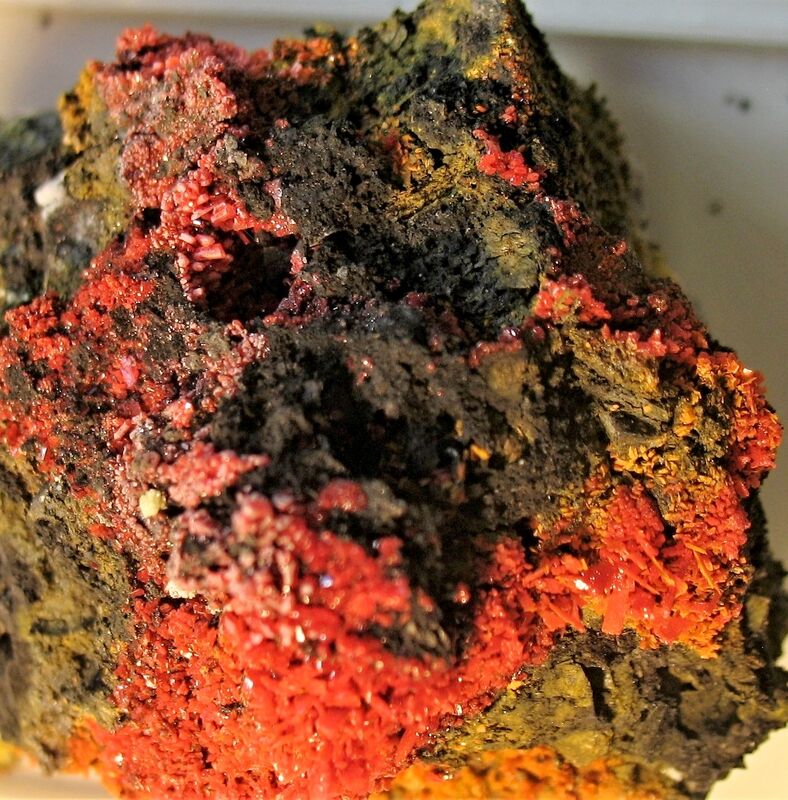
Literature, links & citation
- 1725Henckel, J.F. (1725) Pyritologia, oder Kieß Historie. Verlegts Johann Christian Martini (Leipzig), pages 114-115. [Chalcopyrites (Latin), Kupfer-Kieß (German)].
- 1934Buerger, N. W., Buerger, M. J. (1934) Crystallographic relations between cubanite segregation plates, chalcopyrite matrix, and secondary chalcopyrite twins. American Mineralogist, 19 (7) 289-303
- 1934Buerger, N. W. (1934) The unmixing of chalcopyrite from sphalerite. American Mineralogist, 19 (11) 525-530
- 1944Palache, Charles, Berman, Harry, Frondel, Clifford (1944) The System of Mineralogy (7th ed.) Vol. 1 - Elements, Sulfides, Sulfosalts, Oxides. John Wiley and Sons, New York.
- 1966YUND, R. A.; KULLERUD, G. (1966) Thermal Stability of Assemblages in the Cu-Fe-S System. Journal of Petrology, 7 (3). 454-488 doi:10.1093/petrology/7.3.454DOI: 10.1093/petrology/7.3.454
Entry last updated
@misc{mineral2026,
  author    = {Mineral Index editorial board},
  title     = {Chalcopyrite — Mineral Index},
  year      = {2026},
  url       = {https://mineralindex.org/minerals/chalcopyrite-955}
}