Where it forms, where it's found
- Geological setting
Potash deposit of oceanic origin.
- Type locality
- Friedrichshall potash mine
- Staßfurt
- Salzlandkreis
- Saxony-Anhalt
- Germany
51.8406°, 11.6069°
57recorded occurrences
Physical
- Hardness
- 1Talc
- 2Gypsum
- 3Calcite
- 4Fluorite
- 5Apatite
- 6Orthoclase
- 7Quartz
- 8Topaz
- 9Corundum
- 10Diamond
- Transparency
- Transparent
- Colour
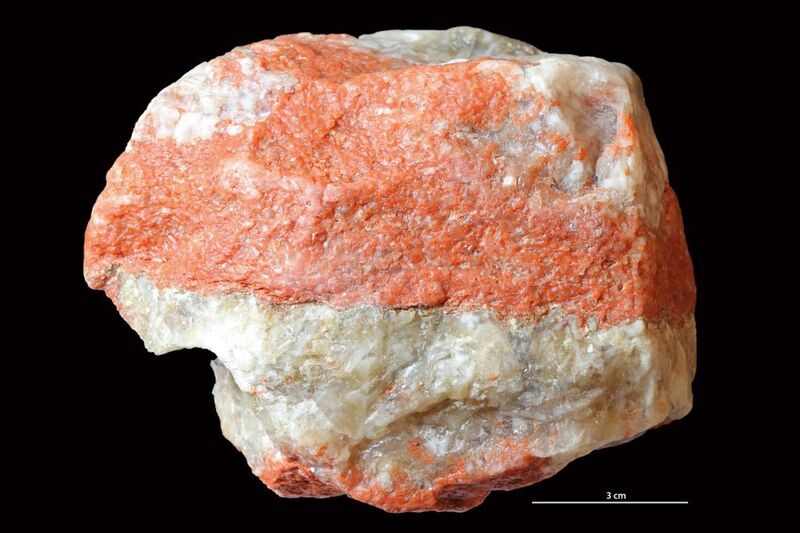
- Colourless · yellow · brownish · greyish-green · red · violet · blue · colourless in transmitted light.
Tints due to included matter. Violet-coloured material is decolourized at 150°C. H2S identified in blue material (Leonhardt and Kühn).
- Streak
- White
- Tenacity
- brittle
- Cleavage
- Perfect
(001), perfect.
- Fracture
- Splintery
- Density
- 2.15 g/cm³
Optical
- Optical type
- Biaxial (-) · 2V measured = 90° · 2V calc = 88°
- Refractive index
- 1.494 – 1.516
- Surface relief
- Moderate
- Principal indices
- nα 1.494 · nβ 1.505 · nγ 1.516
- Pleochroism
- Visible
X = Violet Y = Blue Z = Yellowish Observed on blue or violet material only.
- Dispersion
- weak
- Extinction
- X = a; Y = b; Z ∧ c = 13°.
Δ = 0Δmax
PPLpleochroism per grain
XPLindependent extinctions · rotate the stage
PPLpleochroism only · colour blends on rotation
XPLinterference colour · extinct every 90°
Retardation220 nm
Order1st order
XPL colour
Crystallography
- Space group
- C2/m
- Cell parameters
- a = 19.6742(2) Å · b = 16.18240(10) Å · c = 9.49140(10) Å
- Cell angles
- β = 94.8840(10) °
- Ratio a:b:c
- 1 : 0.823 : 0.482
- Unit cell volume
- 3010.86 ų
- Z
- 16
- Morphology
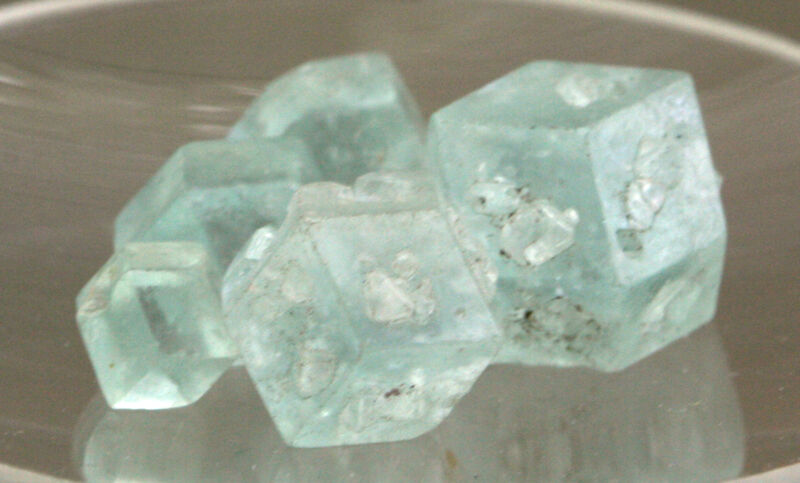
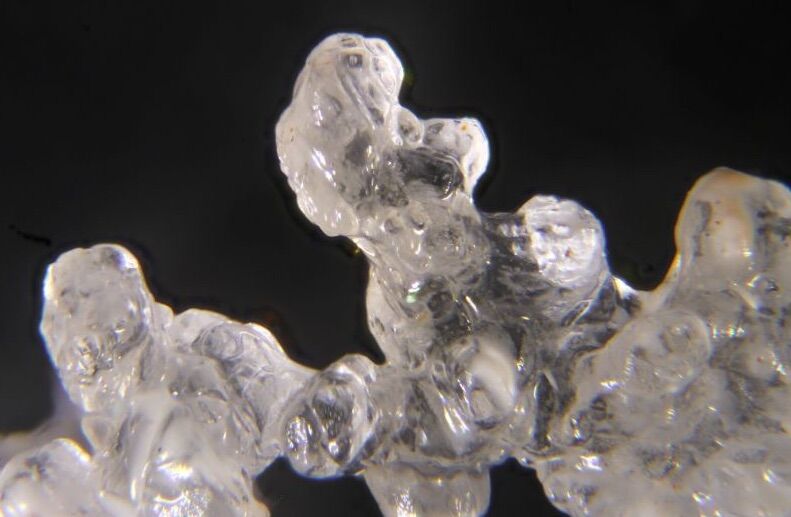
Crystals thick tabular (100) to equidimensional; often exhibiting numerous forms. Occurs as crystalline coatings and clusters in cavities or fissures in which single crystals may reach several centimeters; granular massive.
- Comment
Borisov et al. (2022).
Crystal structure
Chemical composition
Synonyms
- Caenit
- Caenita
- Caenite
- Cainit
- Cainite
- Cenit
- Cenita
- Cenite
In other languages
- French
- kaïnite
- German
- Kainit
- Spanish
- Kainita
- Italian
- Kainite
- Portuguese
- cainita · Cainite · Kainita · Kainite
- Japanese
- カイナイト · カリナイト
- Chinese
- 鉀瀉鹽 · 鉀鎂礬 · 钾盐镁矾
- Russian
- каинит
- Arabic
- كاينيت
Classification
Strunz
10th ed.7.DF.10
- 7SulfatesClass
- 7.DSulfates (selenates, etc.) with additional anions, with H2ODivision
- 7.DFWith large and medium-sized cationsGroup
- 7.DF.10KainiteSpecies
Dana
8th ed.31.07.01.01
- 31Hydrated Sulfates Containing Hydroxyl or HalogenClass
- 31.07(AB)2(XO4)Zq·xH2OType
- 31.07.01— unnamed intermediate level —Group
- 31.07.01.01KainiteSpecies
CIM
—26.14
- 26Sulphates with HalideClass
- 26.14— unnamed intermediate level —Group
- 26.14KainiteSpecies
Group, growth & confusion
Literature, links & citation
Citations
- 1865Zincken, C. (1865): Mittheilung an Prof. H.B. Geinitz vom 18.März 1865 [Über ein neues Mineral, Kainit].- Neues Jahrbuch für Mineralogie, Geologie und Paläontologie, 310.
- 1865Zincken, C. (1865): Ueber die Zusammensetzung des Kainits von Leopoldshall bei Stassfurth.- Berg- und hüttenmännische Zeitung 24, 288.
- 1869Groth, P. (1869) Ueber den krystallisirten Kainit von Stassfurth. Annalen der Physik, Halle, Leipzig: 213(7): 442-447.
- 1882Zepharovich, V. von (1882) Ueber Kainit, Rutil und Anatas. Zeitschrift für Krystallographie, Mineralogie und Petrographie, 6 (1-6). 234-243 doi:10.1524/zkri.1882.6.1.234DOI: 10.1524/zkri.1882.6.1.234
- 1889Bücking, H. (1889) Mittheilungen aus dem mineralogischen Institut der Universität Strassburg. 13.: Glaserit, Blödit, Kainit und Boracit von Donglashall bei Westeregeln. Zeitschrift für Kristallographie - Crystalline Materials, 15(1-6), 561-575 (569).
Cite this entry
Entry last updated
@misc{mineral2026,
  author    = {Mineral Index editorial board},
  title     = {Kainite — Mineral Index},
  year      = {2026},
  url       = {https://mineralindex.org/minerals/kainite-2132}
}