History
The mineral that carries the name of crystallography's most famous notation system was first picked out of a Welsh coal mine. In 1845, the mineralogist Wilhelm Haidinger described a brassy, hair-thin sulfide found in the coal seams of Wales and named it millerite in honour of William Hallowes Miller.
Miller (1801–1880) was a Welsh-born professor at the University of Cambridge who had spent his career making crystals legible. In 1839 he published the notation that still bears his name — Miller indices, the small bracketed numbers that label every face and plane in a crystal. He had also written A Treatise on Crystallography, the textbook that put the system on its feet. Haidinger, dedicating a new species, picked the man who had given mineralogists the language to describe one.
The mineral also goes by two alternative names. It is called capillary pyrites — a reference to the fine hair-like needles in which it tends to grow — and nickel blende, marking it as a sulfide-of-nickel cousin to the better-known zinc blende.
Beyond the Welsh type locality, classic occurrences include Andreasberg in the Harz mountains of Germany, where the mineral forms as an alteration product of older nickel minerals, and Mount Vesuvius, where it appears as a sublimation product.
Industrial & practical applications
Millerite is a minor player in the world's nickel supply. Where it is locally concentrated, though, it makes an excellent ore. Pound for pound it carries a higher percentage of nickel than pentlandite — the sulfide that dominates global production. Several large nickel sulfide orebodies in Western Australia rely in part on it, among them Silver Swan, Mt Keith and Honeymoon Well. It also appears in the nickel laterite deposits of New Caledonia. Outside those settings it rarely accumulates in mineable concentrations.
For most of the world the mineral is sought as a specimen. Halls Gap in Lincoln County, Kentucky yields the radiating sprays of fine brassy needles that define the species in collections. The locality is the most common source of museum-quality material, with further sites in Wisconsin rounding out the regular collector circuit.
Where it forms, where it's found
- Geological setting
A low-temperature mineral which occurs in sulfidic limestones and dolostones, and as a late-forming mineral in nickel sulfide deposits.
- Type locality
- Jáchymov
- Karlovy Vary District
- Karlovy Vary Region
- Czech Republic
50.3661°, 12.9233°
Physical
- Hardness
- 1Talc
- 2Gypsum
- 3Calcite
- 4Fluorite
- 5Apatite
- 6Orthoclase
- 7Quartz
- 8Topaz
- 9Corundum
- 10Diamond
- Lustre
- Metallic
- Transparency
- Opaque
- Colour
- Pale brass-yellow · with an iridescent tarnish · and greenish-grey.
- Streak
- Greenish black
- Tenacity
- brittle
- Cleavage
- Perfect
Perfect on (101) and (012).
- Fracture
- Irregular/Uneven
- Density
- 5.3 g/cm³
Optical
- Pleochroism
- Weak
Weak in air stronger in oil Pale yellow-brown to bright yellow
- Anisotropism
- Strong
- Tropism
- Anisotropic
- Reflectance R%
- (26.4,30.0) 400, (29.8,34.0) 420, (35.6,38.8) 440, (41.0,42.1) 460, (45.1,44.8) 480, (48.4,46.9) 500, (51.5,48.4) 520, (53.9,49.8) 540, (55.5,50.8) 560, (57.0,51.8) 580, (58.3,51.6) 600, (59.2,53.3) 620, (59.9,53.8) 640, (60.4,54.2) 660, (60.5,54.4) 680, (60.5,54.3) 700
- Luminescence
- None
Crystallography
- Space group
- #86
- Cell parameters
- a = 9.607 Å · c = 3.143 Å
- Z
- 9
- Morphology
Acicular crystals in radiating or jackstraw clusters; also massive.
- Twinning
None reported.
Chemical composition
- Impurities
- Fe
- Co
- Cu
Synonyms
- Archise
- Capillary Pyrite
- Capillary Pyrites
- Capillose
- Gelbnickelkies
- Haarkies
- Hair Pyrites
- Nickel Pyrite
- Trichopyrit
- Trichopyrita
- Trichopyrite
In other languages
- French
- archise · harkise · millérite · nickel sulfuré · pyrite capillaire · pyrite de nickel · trichopyrite
- German
- Gelbnickelkies · Haarkies · Haarpyrit · Millerit · Nickelkies · Trichopyrit
- Spanish
- Millerita
- Italian
- Millerite
- Japanese
- 針ニッケル鉱
- Chinese
- 针镍 · 针镍矿
- Russian
- Миллерит
- Arabic
- ميلريت
Classification
2.CC.20
- 2Sulfides and SulfosaltsClass
- 2.CMetal Sulfides, M: S = 1: 1 (and similar)Division
- 2.CCWith Ni, Fe, Co, PGE, etc.Group
- 2.CC.20MilleriteSpecies
02.08.16.01
- 02SulfidesClass
- 02.08AmXp, with m:p = 1:1Type
- 02.08.16— unnamed intermediate level —Group
- 02.08.16.01MilleriteSpecies
3.11.3
- 3Sulphides, Selenides, Tellurides, Arsenides and Bismuthides (except the arsenides, antimonides and bismuthides of Cu, Ag and Au, which are included in Section 1)Class
- 3.11Sulphides etc. of NiGroup
- 3.11.3MilleriteSpecies
Group, growth & confusion
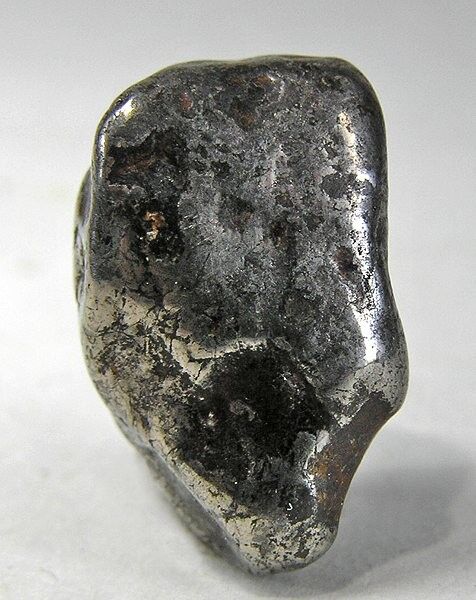 AwaruiteNi3FeMineral—
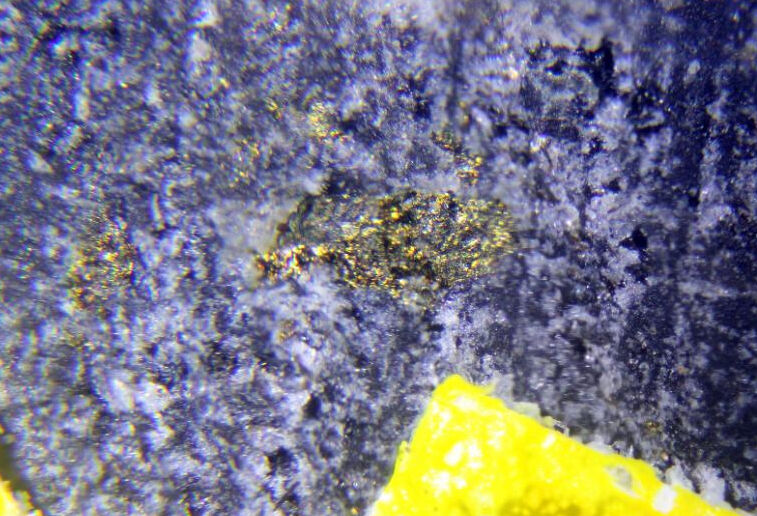 BismutohauchecorniteNi9Bi2S8Mineral—
- FrebolditeCoSeMineral—
 Godlevskite(Ni,Fe)9S8Mineral—
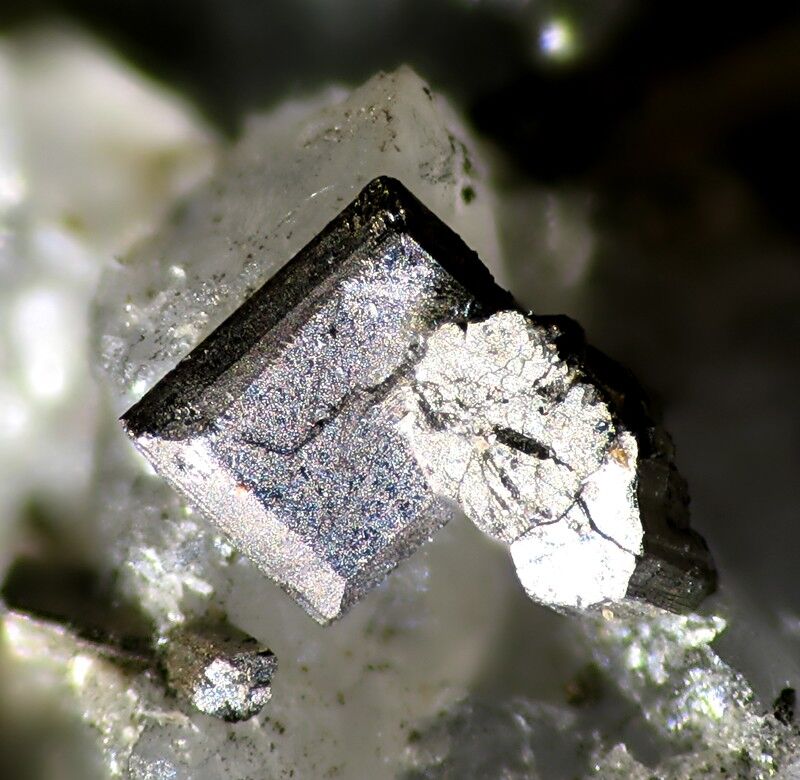 HauchecorniteNi9BiSbS8Mineral—
- LaflammeitePd3Pb2S2Mineral—
 OrceliteNi5-xAs2 (x = 0.25)Mineral—
- ParagersdorffiteNiAsSMineral—
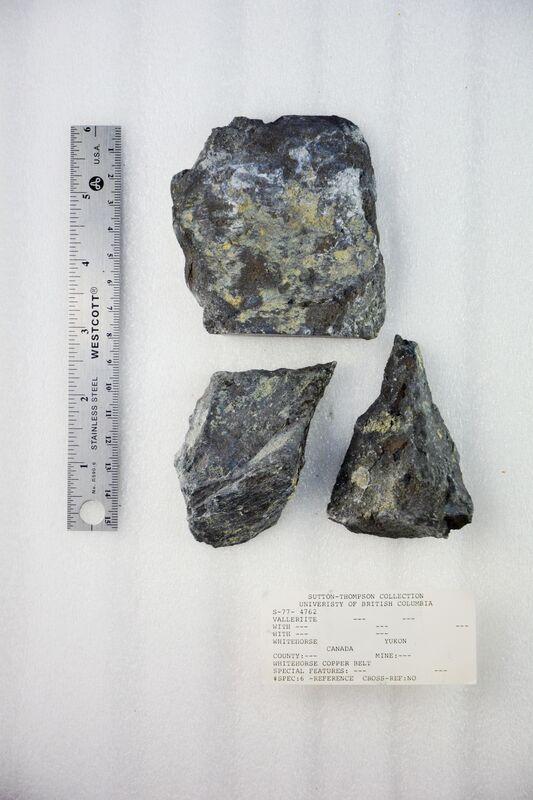 Valleriite2[(Fe,Cu)S] · 1.53[(Mg,Al)(OH)2]Mineral—
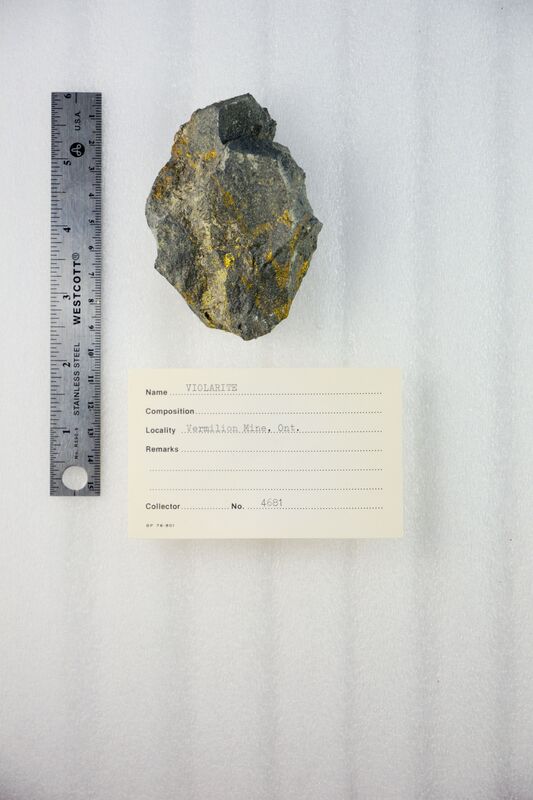 ViolariteFeNi2S4Mineral—
Literature, links & citation
- 1845Haidinger, W. (1845) Zweite Klasse: Geogenide. XIII. Ordnung. Kiese. IV. Eisenkies. Millerit., in Handbuch der Bestimmenden Mineralogie Bei Braumüller and Seidel Wien: 559-562.
- 1902Lohest, M. (1902) Présentation de millérite. Annales de la Société géologique de Belgique, 29, B142.
- 1904Palache, C., Wood, H.O. (1904) A crystallographic study of millerite. American Journal of Science: 18: 343-359.
- 1925Alsén, N. (1925) Röntgenographische Untersuchung der Kristallstrukturen von Magnetkies, Breithauptit, Pentlandit, Millerit und verwandten Verbindungen. Geologiska Föreningens i Stockholm Förhandlingar: 47: 19-72.
- 1943Stainier, X. (1943) L'origine de la millérite du Houiller. Annales de la Société géologique de Belgique: 66: B86
Entry last updated
@misc{mineral2026,
  author    = {Mineral Index editorial board},
  title     = {Millerite — Mineral Index},
  year      = {2026},
  url       = {https://mineralindex.org/minerals/millerite-2711}
}