Where it forms, where it's found
- Geological setting
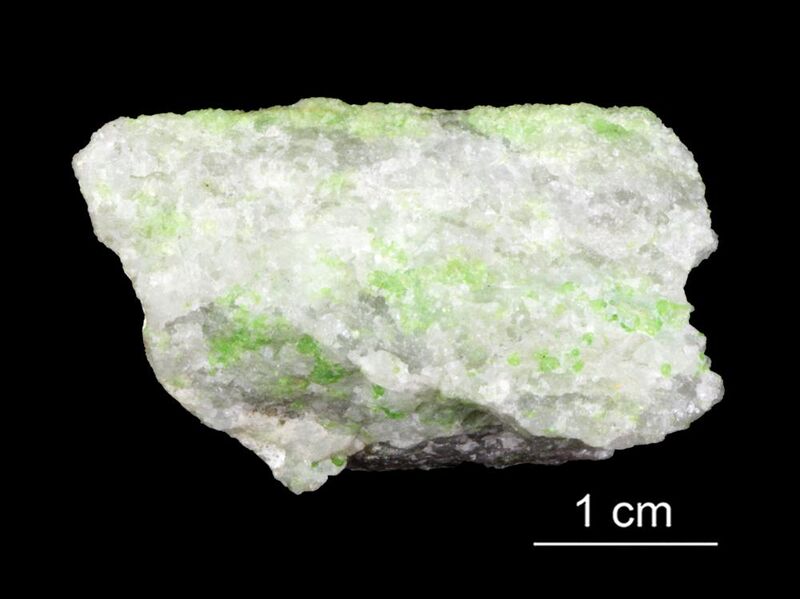
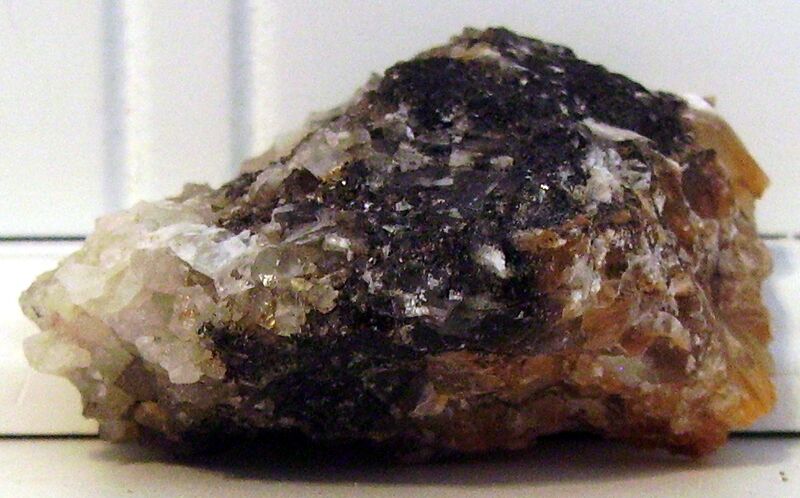
Surface efflorescences in arid regions; in caves or other dry, sheltered places. Also in soils rich in organic materials, especially after rain during hot weather.
61recorded occurrences
Physical
- Hardness
- 1Talc
- 2Gypsum
- 3Calcite
- 4Fluorite
- 5Apatite
- 6Orthoclase
- 7Quartz
- 8Topaz
- 9Corundum
- 10Diamond
- Lustre
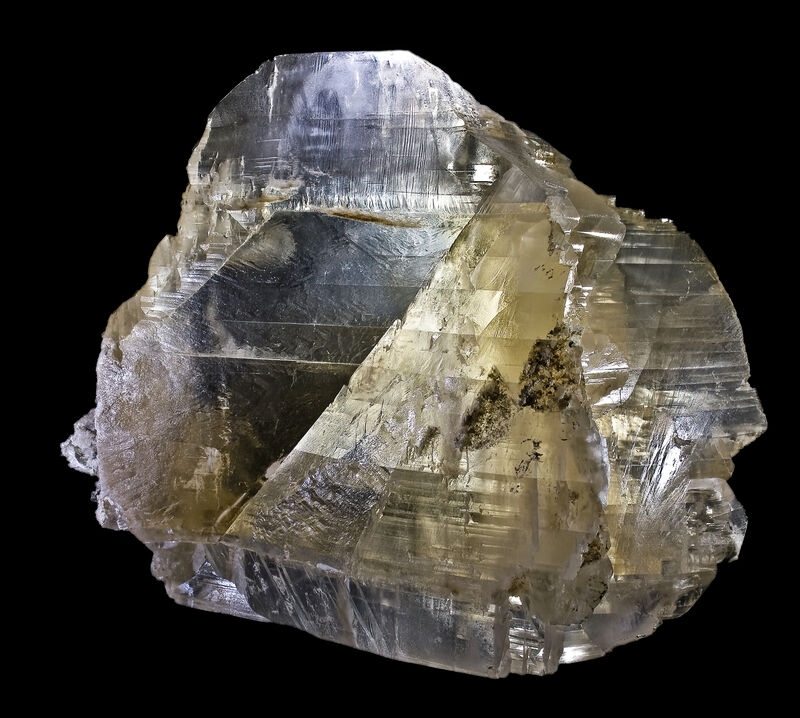
- Vitreous
- Transparency
- Transparent
- Colour
- Colorless or white · light yellow · very light gray
- Streak
- White
- Tenacity
- brittle
- Cleavage
- Very Good
On (011) nearly perfect; on (010) fairly good; on (110) imperfect.
- Fracture
- Irregular/Uneven · Sub-Conchoidal
- Density
- 2.11 g/cm³
Optical
- Optical type
- Biaxial (-) · 2V measured = 7°
- Refractive index
- 1.332 – 1.504
- Principal indices
- nα 1.332 · nβ 1.504 · nγ 1.504
- Birefringence
- 0.172
- Pleochroism
- Non-pleochroic
- Dispersion
- r<v, weak
- Extinction
- Parallel
- UV response
- Not fluorescent
Δ = 0Δmax
PPLpleochroism per grain
XPLindependent extinctions · rotate the stage
PPLpleochroism only · colour blends on rotation
XPLinterference colour · extinct every 90°
Retardation1720 nm
Order4th order
XPL colour
Crystallography
- Space group
- #67
- Cell parameters
- a = 5.414 Å · b = 9.164 Å · c = 6.431 Å
- Ratio a:b:c
- 1 : 1.693 : 1.188
- Z
- 4
- Morphology
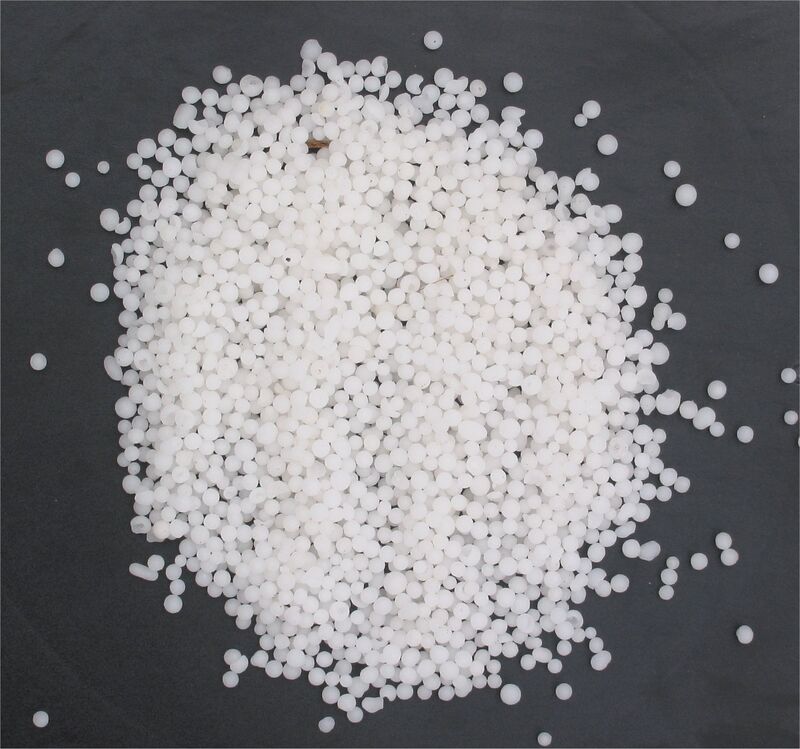
Massive, granular, earthy, mealy. Crusts, silky tufts, and delicate acicular crystallization. Artificial crystals are prismatic [001].
- Twinning
Common on (110), frequently as pseudo-hexagonal groupings.
- Parting
- Twin gliding with K1 (110), K2 (13_0).
- Type-locality form
Frequently compact granular.
- Comment
Pmcm
Crystal structure
Chemical composition
- Impurities
- Na
- Li
Synonyms
- Kalisalpeter
- Natürlicher Salpeter
- Nitrate of Potash
- Potasse nitratée
- Sal petrae
- Salpetersaures Kali
- Salpetre
- Saltpeter
In other languages
- French
- nitre · salpêtre
- German
- Kalisalpeter · Nitrokalit · Salpetersaures Kali
- Spanish
- Nitro · Salitre
- Italian
- Niter · nitro
- Portuguese
- salitre
- Japanese
- 硝石
- Chinese
- 硝石
- Simplified Chinese
- 硝石
- Traditional Chinese
- 硝石
- Russian
- калийная селитра
- Arabic
- نتر
Classification
Strunz
10th ed.5.NA.10
- 5CarbonatesClass
- 5.NNITRATESDivision
- 5.NAWithout OH or H2OGroup
- 5.NA.10NiterSpecies
Dana
8th ed.18.01.02.01
- 18Normal NitratesClass
- 18.01AXO3·xH2O, where x can equal zeroType
- 18.01.02Niter SeriesGroup
- 18.01.02.01NiterSpecies
CIM
—13.2
- 13NitratesClass
- 13.2— unnamed intermediate level —Group
- 13.2NiterSpecies
Group, growth & confusion
Literature, links & citation
Citations
- 1803Reuss, F.A. (1803) Lehrbuch der Mineralogie. Leipzig. part 2, volumes 3: 21 (as Salpeter).
- 1818Philips (1818): 137 (as Nitrate of Potash).
- 1826Leonhard, K.C. (1826) Handbuch der Oryktognosie. second edition, Heidelberg: 247 (as Kalisalpeter).
- 1828Naumann, C.F. (1828) Lehrbuch der Mineralogie, Berlin: 261.
- 1832Breithaupt, A. (1832) Vollständige Characteristik etc., 2nd. Ed.: 27 (as Kalinitrat).
Cite this entry
Entry last updated
@misc{mineral2025,
  author    = {Mineral Index editorial board},
  title     = {Niter — Mineral Index},
  year      = {2025},
  url       = {https://mineralindex.org/minerals/niter-2917}
}