Where it forms, where it's found
- Geological setting
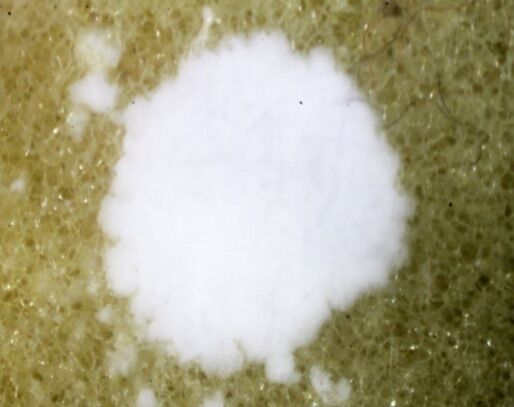
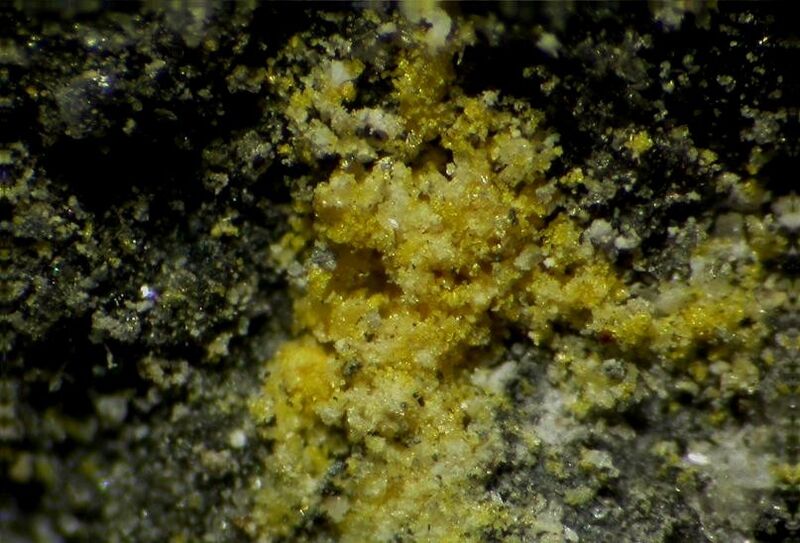
Typically found growing as efflorescences in sheltered spots on outcrops of dolomitic or calcareous rocks; often found growing on the walls of caves and in salt lake deposits; also often found growing on the walls of coal and metal mines, including on wooden supports and abandoned equipment.
- Type locality
- Epsom Spa
- Epsom and Ewell
- Surrey
- England
- UK
51.3273°, -0.2915°
Physical
- Hardness
- 1Talc
- 2Gypsum
- 3Calcite
- 4Fluorite
- 5Apatite
- 6Orthoclase
- 7Quartz
- 8Topaz
- 9Corundum
- 10Diamond
- Lustre
- Vitreous · silky · earthy
- Transparency
- Transparent · Translucent
- Colour
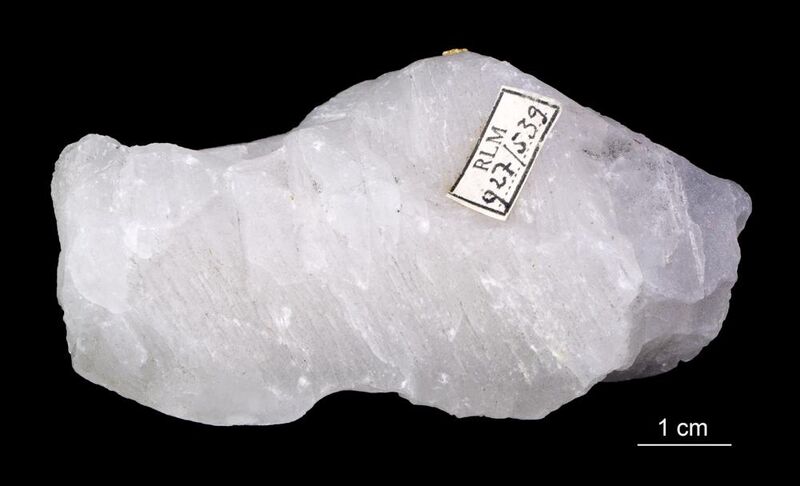
- White · grey · colourless · or pink · greenish · colourless in transmitted light.
Pink = cobaltoan; greenish = nickelian.
- Streak
- White
- Tenacity
- fragile
- Cleavage
- Perfect
Perfect on (010), distinct on (101).
- Fracture
- Conchoidal
- Density
- 1.675 g/cm³
Optical
- Optical type
- Biaxial (-) · 2V measured = 52° · 2V calc = 54°
- Refractive index
- 1.433 – 1.461
- Principal indices
- nα 1.433 · nβ 1.455 · nγ 1.461
- Dispersion
- none
- Extinction
- X = a; Y = c; Z = b.
Crystallography
- Space group
- #44
- Cell parameters
- a = 11.86 Å · b = 11.99 Å · c = 6.858 Å
- Ratio a:b:c
- 1 : 1.011 : 0.578
- Z
- 4
- Morphology
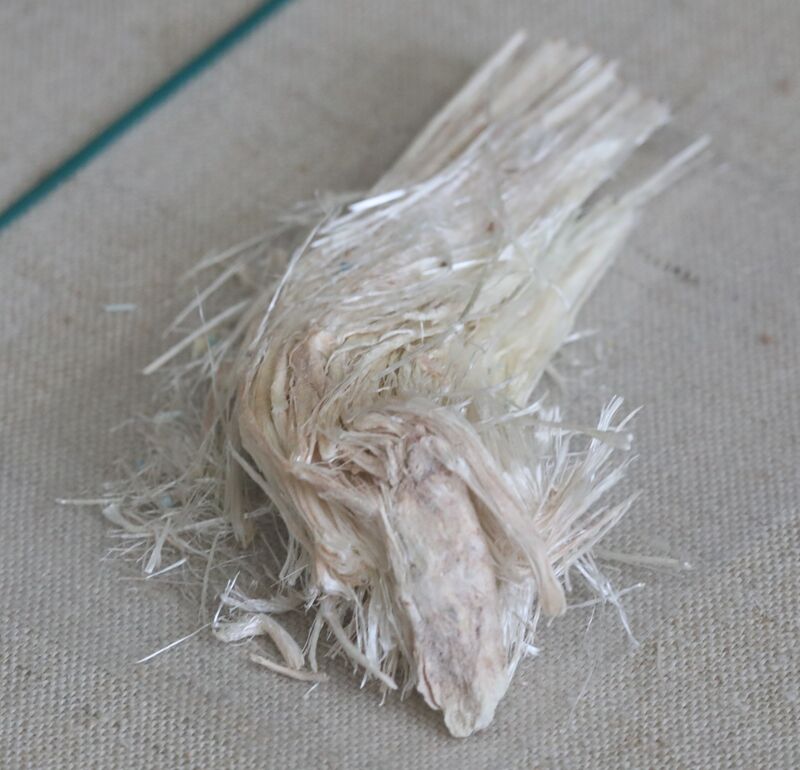
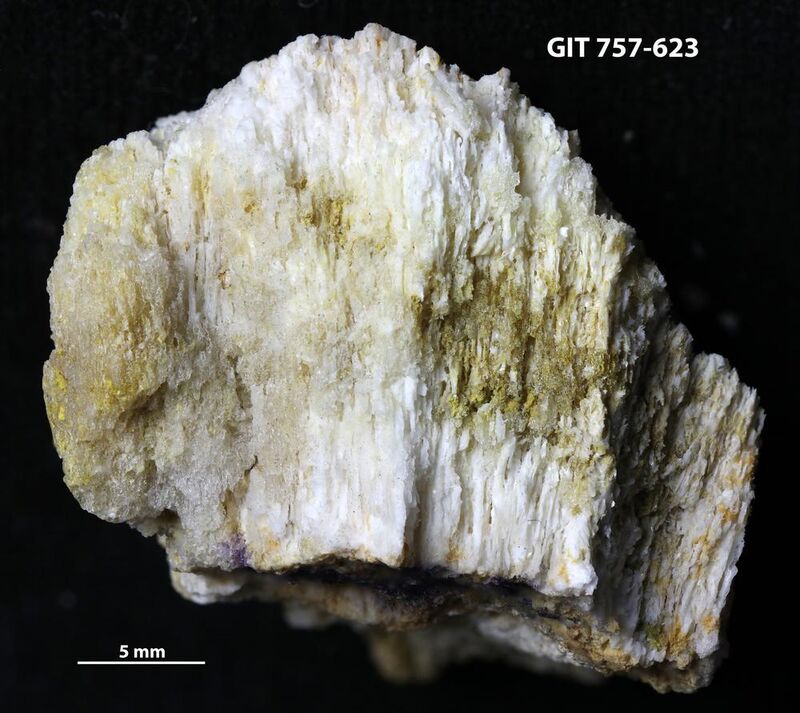
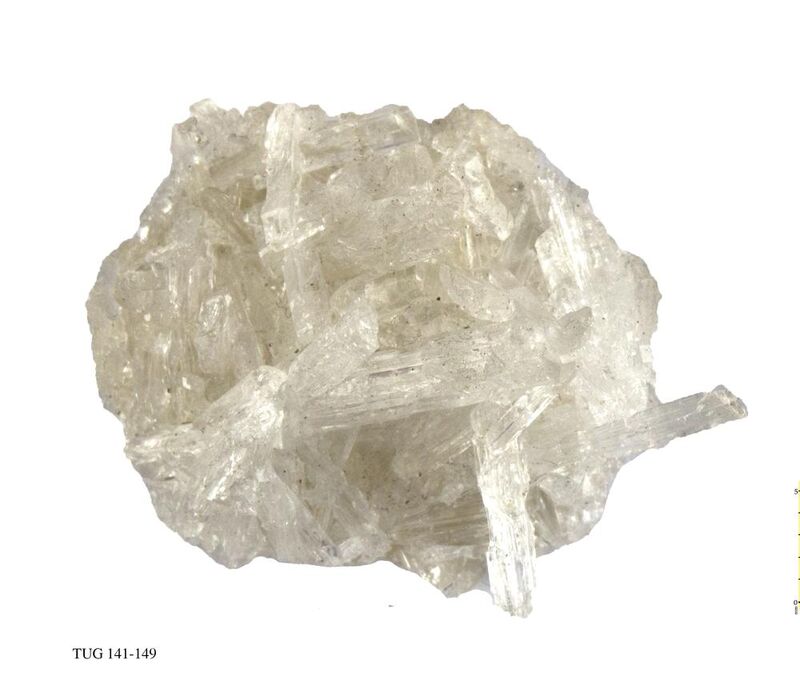
Crystals rare, usually as fibrous to acicular crusts, fibers elongated [001]; may be in botryoidal masses or stalactic; wooly efflorescences. Artificial crystals short prismatic [001] to equant.
- Twinning
On (110), rare.
- Translation gliding
- T(110), t[1_10] ?; T(100), t[0_10] ?; T(011), t[011] ?; T(101), t[_101] ?.
- Epitaxy
Oriented overgrowths with zinc (Goslarite) and nickel (Morenosite) analogues. Also on Muscovite with Epsomite (100) or (110) parallel Muscovite (001) and Epsomite [001] parallel to Muscovite [120], [310], [150], [1_20], [3_10], [1_50].
Chemical composition
- Impurities
- Ni
- Fe
- Co
- Mn
- Zn
Synonyms
- Bitter Salts
- Bittersalz
- Epsom Salt
- Epsomensis
- Epsonit
- Epsonita
- Epsonite
- Gletschersalz
- Magnesia vitriolata
- Reichardtit
- Reichardtita
- Reichardtite
- Sal amarus
- Sal Anglicanum
- Sal Anglicus
- Sal Catartica
- Sal catharticum
- Sal nativum catharticum
- Sal neutrum acidulare
- Seelandite
- Seidlitzensis
- Sel d'Epsom
- Seydschützensis
In other languages
- French
- aromite · cobalto-épsomite · épsomite · fausérite · ferroepsomite · reichardite · seelandite
- German
- Bittersalz · Epsomit · Magnesiumsulfat-Heptahydrat
- Spanish
- epsomita
- Italian
- Epsomite · Sale amaro · Sale di Epsom
- Portuguese
- epsomita · epsomite
- Japanese
- 瀉利塩
- Chinese
- 泻利盐
- Simplified Chinese
- 泻利盐
- Traditional Chinese
- 瀉利鹽
- Arabic
- إبسوميت
Classification
7.CB.40
- 7SulfatesClass
- 7.CSulfates (selenates, etc.) without additional anions, with H2ODivision
- 7.CBWith only medium-sized cationsGroup
- 7.CB.40EpsomiteSpecies
29.06.11.01
- 29Hydrated Acid and Normal SulfatesClass
- 29.06AXO4·xH2OType
- 29.06.11Epsomite GroupGroup
- 29.06.11.01EpsomiteSpecies
25.3.6
- 25SulphatesClass
- 25.3Sulphates of MgGroup
- 25.3.6EpsomiteSpecies
Group, growth & confusion
 AluminiteAl2(SO4)(OH)4 · 7H2OMineral—
 AlunogenAl2(SO4)3(H2O)12 · 5H2OMineral—
 ApjohniteMn2+Al2(SO4)4 · 22H2OMineral—
 FibroferriteFe3+(SO4)(OH) · 5H2OMineral—
 HexahydriteMg(SO4) · 6H2OMineral—
 KieseriteMg(SO4) · H2OMineral—
 KonyaiteNa2Mg(SO4)2 · 5H2OMineral—
 LöweiteNa12Mg7(SO4)13 · 15H2OMineral—
 MirabiliteNa2(SO4) · 10H2OMineral—
 NiterK(NO3)Mineral—
Literature, links & citation
- 1721Hermann (1721) De Sale nativo cathartico in fodinis Hungariae recens invento, Posonii (as Sal nativum catharticum).
- 1747Wallerius, J.G. (1747) Mineralogia, eller Mineralriket. Stockholm: 184 (as Sal neutrum acidulare).
- 1747Wallerius, J.G. (1747) Mineralogia, eller Mineralriket. Stockholm: 184 (as Sal Anglicanum).
- 1753Wallerius, J.G. (1753) French edition of “Mineralogia, eller Mineralriket.” 2 volumes, Paris: 1: 339 (as Sel d'Epsom).
- 1761Scopoli (1761) De Hydrarg. Idriense Tent., Venet (as Halotrichum).
Entry last updated
@misc{mineral2026,
  author    = {Mineral Index editorial board},
  title     = {Epsomite — Mineral Index},
  year      = {2026},
  url       = {https://mineralindex.org/minerals/epsomite-1393}
}