Where it forms, where it's found
- Geological setting
Cave guano from warm arid environment.
- Type locality
- Toppin Hill
- Lake Rason
- Laverton Shire
- Western Australia
- Australia
-28.7000°, 123.9333°
8recorded occurrences
Physical
- Transparency
- Translucent
- Colour
- Colourless · pale yellow · pale brown
- Streak
- yellowish white
- Density
- 1.33 g/cm³
Optical
- Optical type
- Uniaxial (+)
- Refractive index
- 1.484 – 1.603
- Surface relief
- Moderate
- Principal indices
- nω 1.484 · nε 1.603
Δ = 0Δmax
PPLpleochroism per grain
XPLindependent extinctions · rotate the stage
PPLpleochroism only · colour blends on rotation
XPLinterference colour · extinct every 90°
Retardation1190 nm
Order3rd order
XPL colour
Crystallography
- Space group
- #146
- Cell parameters
- a = 5.646(1) Å · c = 4.701(1) Å
- Z
- 2
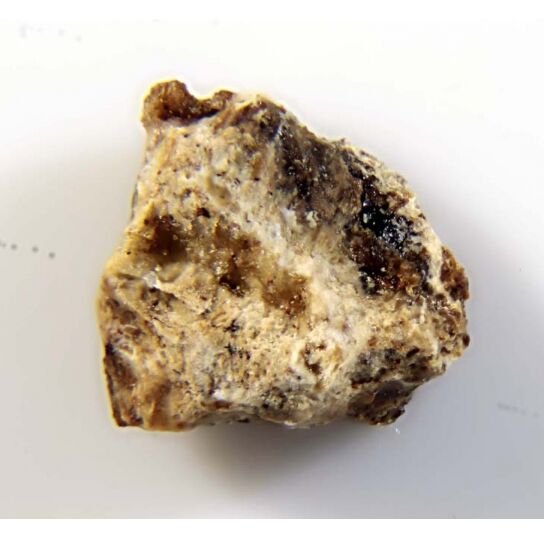
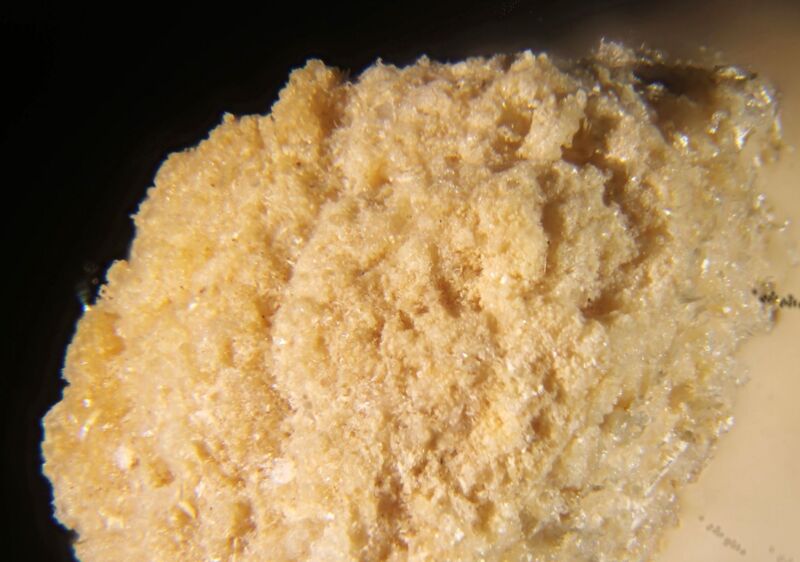
- Type-locality form
Damp incoherent mass of crystals.
Crystal structure
Chemical composition
Synonyms
- Harnstoff
- IMA1972-031
In other languages
- German
- IMA 1972-031 · Urea
- Italian
- Urea
Classification
Strunz
10th ed.10.CA.35
- 10Organic CompoundsClass
- 10.CMiscellaneous Organic MineralsDivision
- 10.CAMiscellaneous Organic MineralsGroup
- 10.CA.35UreaSpecies
Dana
8th ed.50.04.06.01
- 50Organic CompoundsClass
- 50.04MiscellaneousType
- 50.04.06— unnamed intermediate level —Group
- 50.04.06.01UreaSpecies
CIM
—32.13
- 32Hydrocarbons, Resins and other Organic CompoundsClass
- 32.13— unnamed intermediate level —Group
- 32.13UreaSpecies
Group, growth & confusion
Literature, links & citation
Citations
- 1828Wohler, M.F. (1828) Artificial formation of urea. The Philosophical Magazine: 4: 309-310.
- 1957Worsham, J. E., Levy, H. A., Peterson, S. W. (1957) The positions of hydrogen atoms in urea by neutron diffraction. Acta Crystallographica, 10 (4) 319-323 doi:10.1107/s0365110x57000924DOI: 10.1107/s0365110x57000924
- 1970Pryor, A. W., Sanger, P. L. (1970) Collection and interpretation of neutron diffraction measurements on urea. Acta Crystallographica Section A, 26 (5) 543-558 doi:10.1107/s0567739470001390DOI: 10.1107/s0567739470001390
- 1973Bridge, P. J. (1973) Urea, a new mineral, and neotype phosphammite from Western Australia. Mineralogical Magazine, 39 (303) 346-348 doi:10.1180/minmag.1973.039.303.11 DOI: 10.1180/minmag.1973.039.303.11
- 1974Fleischer, Michael (1974) New mineral names. American Mineralogist, 59 (7-8). 873-875
Cite this entry
Entry last updated
@misc{mineral2025,
  author    = {Mineral Index editorial board},
  title     = {Urea — Mineral Index},
  year      = {2025},
  url       = {https://mineralindex.org/minerals/urea-4117}
}