Where it forms, where it's found
- Geological setting
Bottom muds of an Antarctic sea.
Authigenic in bottom sediments and peat; in calcareous lacustrine sediments; also formed by reaction of calcite with oxalic acid derived from lichens; also from solutions derived from bat guano.
- Type locality
- Weddell Sea
- West Antarctica
- Antarctica
35recorded occurrences
Physical
- Hardness
- 1Talc
- 2Gypsum
- 3Calcite
- 4Fluorite
- 5Apatite
- 6Orthoclase
- 7Quartz
- 8Topaz
- 9Corundum
- 10Diamond
- Transparency
- Transparent
- Colour
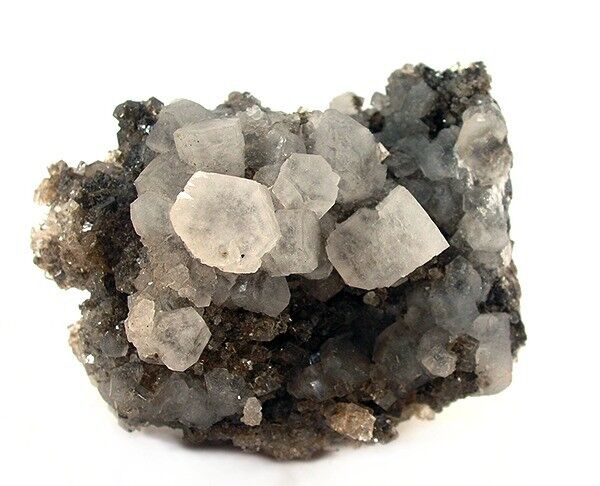
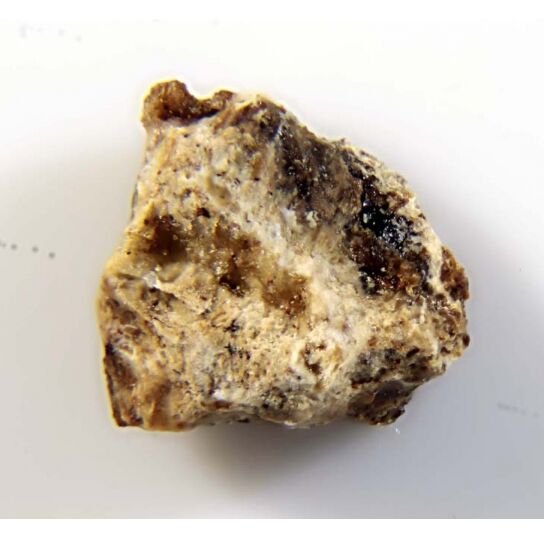
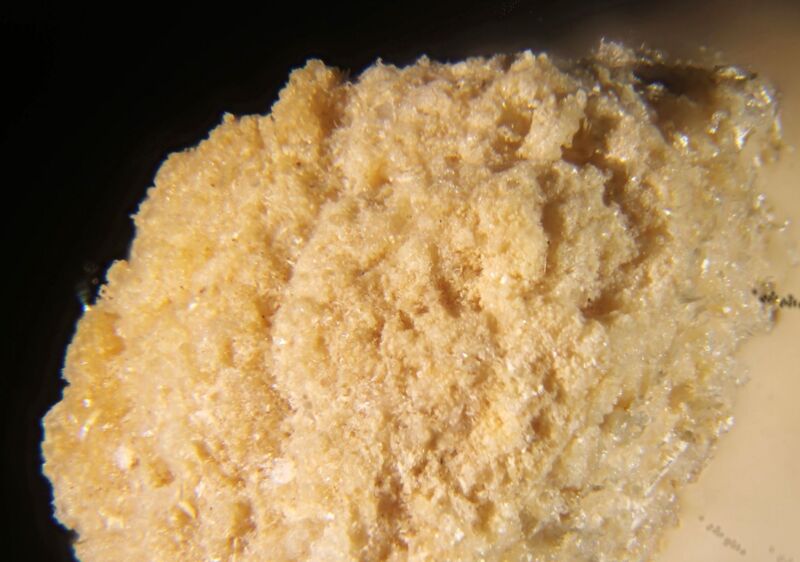
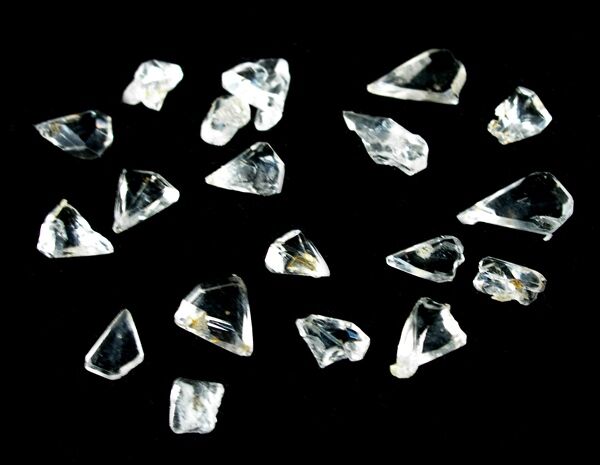
- Colourless · white · yellowish brown to brown · colourless in transmitted light.
- Streak
- White
- Cleavage
- None Observed
Mandarino and Witt (1983) report a good (010) cleavage, unlike other descriptions.
- Fracture
- Sub-Conchoidal
- Density
- 1.94 g/cm³
Optical
- Optical type
- Uniaxial (+)
- Refractive index
- 1.523 – 1.544
- Surface relief
- Moderate
- Principal indices
- nω 1.523 · nε 1.544
- UV response
- Can fluoresce yellow under long-wave UV.
Δ = 0Δmax
PPLpleochroism per grain
XPLindependent extinctions · rotate the stage
PPLpleochroism only · colour blends on rotation
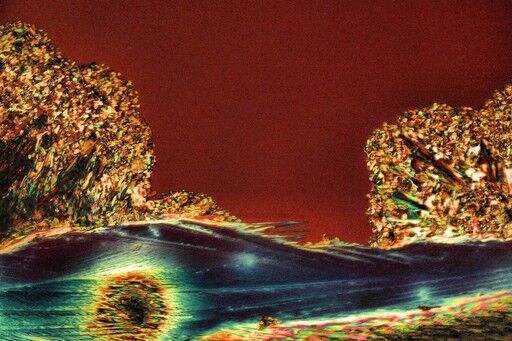
XPLinterference colour · extinct every 90°
Retardation210 nm
Order1st order
XPL colour
Crystallography
- Space group
- #135
- Cell parameters
- a = 12.371 Å · c = 7.357 Å
- Z
- 8
- Morphology
Crystals commonly isolated, with (011), elongated [010], terminated by (001); commonly corroded.
- Twinning
Single or multiple twins possibly noted.
- Type-locality form
Tiny isolated crystals
Crystal structure
Chemical composition
- Impurities
- ORG
Synonyms
- Hydrated Calcium Oxalate
- Weddelliet
In other languages
- French
- Weddellite
- German
- Weddellit
- Spanish
- Weddellita
- Italian
- Weddellite
- Japanese
- ウェッデル石
- Chinese
- 水草酸钙石 · 草酸鈣石
- Simplified Chinese
- 水草酸钙石
- Traditional Chinese
- 水草酸鈣石 · 草酸鈣石
Classification
Strunz
10th ed.10.AB.40
- 10Organic CompoundsClass
- 10.ASalts of organic acidsDivision
- 10.ABOxalatesGroup
- 10.AB.40WeddelliteSpecies
Dana
8th ed.50.01.02.01
- 50Organic CompoundsClass
- 50.01OxalatesType
- 50.01.02Weddellite GroupGroup
- 50.01.02.01WeddelliteSpecies
CIM
—31.1.6
- 31Oxalates, Citrates, Mellitates and AcetatesClass
- 31.1OxalatesGroup
- 31.1.6WeddelliteSpecies
Group, growth & confusion
Literature, links & citation
Citations
- 1923Nakano, H. (1923) Beiträge zur Kenntnis der in den Harnsteinen enthaltenen Substanzen (Contributions to knowledge of the substances contained in the urine stones). The Journal of Biochemistry: 2(3): 437–445.
- 1929Hammarsten, G. (1929) Om calciumoxalat och dess löslighet vid närvaro av oorganiska salter med speciell hänsyn till uppkomsten av oxaluri. Comptes rendu des trav. lab. Carlsberg: 17: 1.
- 1936Bannister, F.A., Hey, M.H. (1936) Report on some crystalline components of the Weddell Sea deposits. Discovery Reports, 13. 60-69
- 1942Frondel, C., Prien, E.L. (1942) Carbonate-apatite and Hydroxyl-apatite in urinary calculi. Science: 95: 431-431.
- 1943Lecompte, J., Pobeguin, T., Wyart, J. (1943) Rendus de l’Académie des sciences de Paris: 216: 808.
Cite this entry
Entry last updated
@misc{mineral2025,
  author    = {Mineral Index editorial board},
  title     = {Weddellite — Mineral Index},
  year      = {2025},
  url       = {https://mineralindex.org/minerals/weddellite-4254}
}