Where it forms, where it's found
- Geological setting
5 element Silver-Nickel-Cobalt-Bismuth-Uranium veins
Silver-antimony ores (Ni-Co-Ag deposits); In high-grade Ag–Sb ores
- Type locality
- University Mine (Giroux Lake Mine)
- Coleman Township
- Cobalt area
- Cobalt-Gowganda region
- Timiskaming District
- Ontario
- Canada
47.3697°, -79.6703°
69recorded occurrences
Physical
- Hardness
- 1Talc
- 2Gypsum
- 3Calcite
- 4Fluorite
- 5Apatite
- 6Orthoclase
- 7Quartz
- 8Topaz
- 9Corundum
- 10Diamond
- Lustre
- Metallic
- Transparency
- Opaque
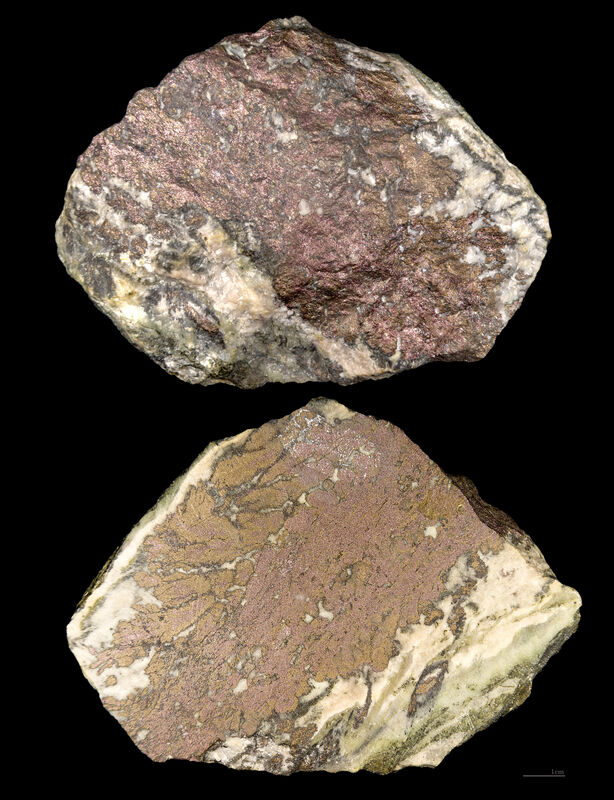
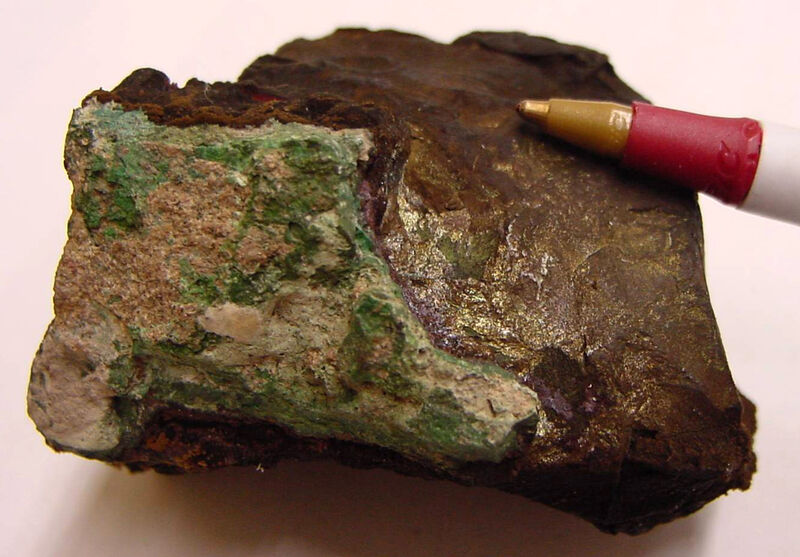
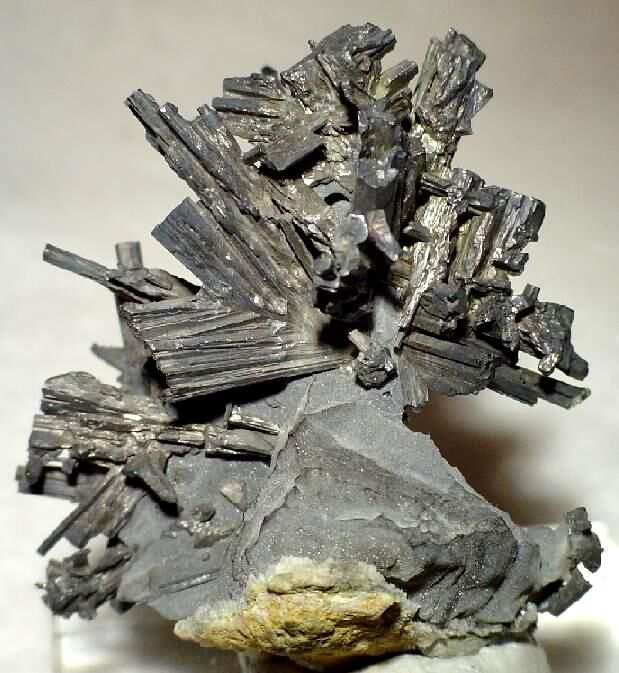
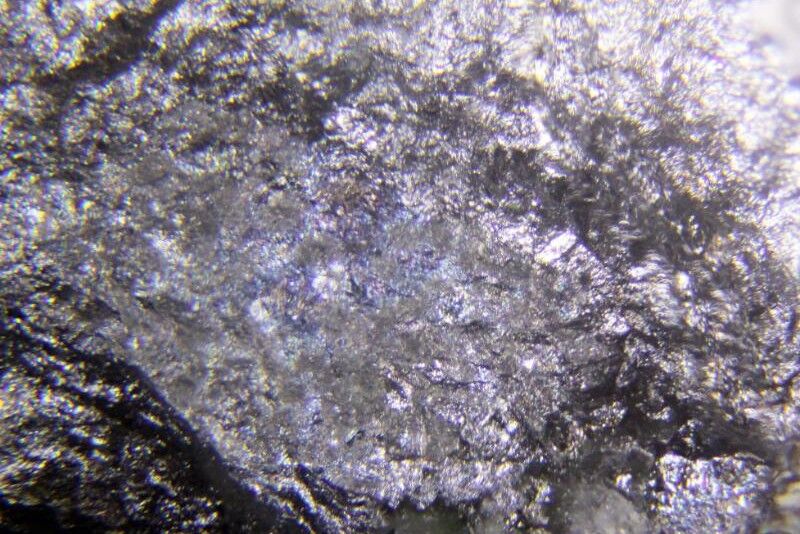
- Colour
- Silver
- Density
- 10.0 g/cm³
Optical
- Anisotropism
- Weak
- Bireflectance
- Strong
- Tropism
- Anisotropic
- Reflectance R%
- (67.0, 68.8) 400, (66.5, 68.2) 420, (66.0, 67.6) 440, (65.9, 67.3) 460, (67.1, 68.6) 480, (67.4, 68.7) 500, (68.9, 70.4) 520, (69.5, 70.9) 540, (70.2, 71.6) 560, (70.5, 71.8) 580, (71.0, 72.3) 600, (71.7, 73.0) 620, (72.1, 73.4) 640, (72.6, 73.9) 660, (73.1, 74.3) 680, (73.8, 74.9) 700
Reflected-light panel
R̄ 69.6 %anisotropic · dual curve
Specimen
White reference
R₁ R₂
Mode
Crystallography
- Cell parameters
- a = 2.952 Å · c = 4.773 Å
- Z
- 2
- Morphology
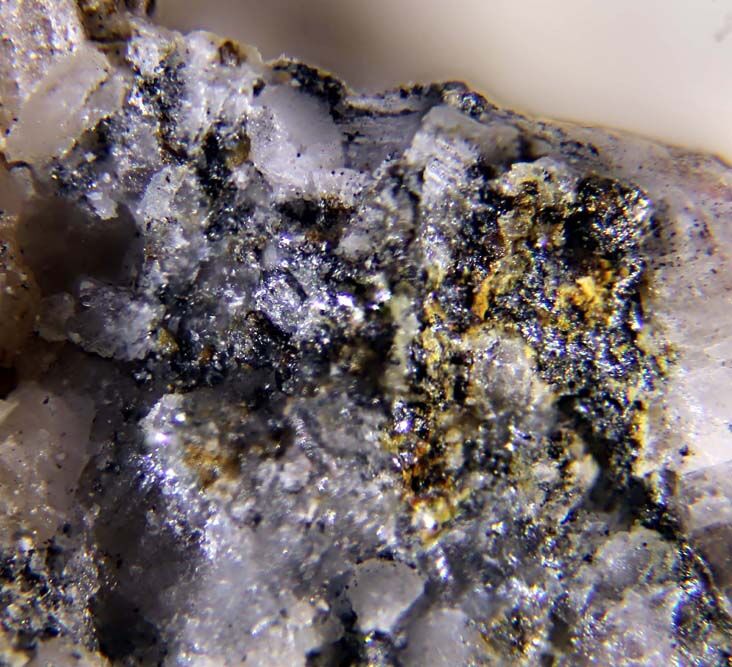
In complex intergrowths with silver, and as very small grains.
- Type-locality form
In complex intergrowths with silver, and as very small grains.
- Comment
Crystal class = nd; Point group = nd
Crystal structure
Chemical composition
- Impurities
- Hg
- Ni
- As
In other languages
- French
- Allargentum
- German
- Allargentum
- Spanish
- Alargento
- Italian
- Allargento · allargentum
- Russian
- Алларгентум
- Arabic
- ألارجينتم
Classification
Strunz
10th ed.2.AA.30
- 2Sulfides and SulfosaltsClass
- 2.AAlloysDivision
- 2.AAAlloys of metalloids with Cu, Ag, AuGroup
- 2.AA.30AllargentumSpecies
Dana
8th ed.02.02.01.02
- 02SulfidesClass
- 02.02AmBnXp, with (m+n):p = 3:1Type
- 02.02.01Dyscrasite GroupGroup
- 02.02.01.02AllargentumSpecies
CIM
—1.46
- 1Elements and Alloys (including the arsenides, antimonides and bismuthides of Cu, Ag and Au)Class
- 1.46— unnamed intermediate level —Group
- 1.46AllargentumSpecies
Group, growth & confusion
Literature, links & citation
Citations
- 1929Westgren, A.; Hägg, G.; Eriksson, S. (1929) Röntgenanalyse der Systeme Kupfer—Antimon und Silber—Antimon. Zeitschrift für Physikalische Chemie, 4B (1). 453-468 doi:10.1515/zpch-1929-0433DOI: 10.1515/zpch-1929-0433
- 1940Weibke, Friedrich; Efinger, Isolde (1940) Der Aufbau der Legierungen des Systems Silber‐Antimon. Zeitschrift für Elektrochemie und angewandte physikalische Chemie, 46 (2). 53-60 doi:10.1002/bbpc.19400460202DOI: 10.1002/bbpc.19400460202
- 1950Ramdohr, Paul (1950) Die Erzmineralien und ihre Verwachsunge [The ore minerals and their intergrowths]. Akademie-Verlag. 827 pp.
- 1950Ramdohr, P. (1950) Neue Erzmineralien. Fortschritte der Mineralogie: 28: 69-70.
- 1966Somanchi, S. (1966) Subsolidus phase relations in the system Ag-Sb. Canadian Journal of Earth Sciences, 3 (2). 211-222 doi:10.1139/e66-017DOI: 10.1139/e66-017
Cite this entry
Entry last updated
@misc{mineral2026,
  author    = {Mineral Index editorial board},
  title     = {Allargentum — Mineral Index},
  year      = {2026},
  url       = {https://mineralindex.org/minerals/allargentum-128}
}