History
Silver does not always have to be smelted out of an ore. Sometimes it grows on its own — as a wire, a tangled mass, or a tree-shaped sprig of pure metal in a crack of rock. That is native silver, and for most of human history it was the easiest way to lay hands on the element.
The English name traces back to the Old English seolfor, whose deeper meaning has been lost. The modern spelling silver is recorded by 1478. The chemical symbol Ag comes from a parallel line — the Latin argentum, the Romans' name for the metal. Argentum itself reaches further back, to a Proto-Indo-European root meaning "white" or "shining".
Worked silver appears alongside copper and gold in the earliest metalwork. From the 4th millennium BCE the metal was used for ornamental and utilitarian purposes in Anatolia and the Aegean. Silver ornaments and decorations have been found in royal tombs dating back as far as 4000 BCE. In Ancient Egypt the metal was associated with the moon and ritual purity. Some of that material was picked up as native silver; much of it was already being separated from gold by heating the two metals with salt and reducing the silver chloride to the metal.
By the 7th century BCE the Greeks had moved well past the easy nuggets. They were extracting silver from galena — a heavy lead sulfide that yields silver as a side product. The rise of Athens was funded by the mines at Laurium, which produced about 30 tonnes a year between 600 and 300 BCE. Rome later industrialised the same trade. At peak production it drew about 200 tonnes a year, mostly from Spain. By that point native silver was a small slice of supply; the bulk of the metal was being smelted out of base-metal ores.
Central Europe became the centre of silver production during the Middle Ages, after the Mediterranean deposits had been exhausted. New mines opened in Bohemia, Saxony, Alsace, Hungary, Norway, the southern Black Forest and elsewhere. Freiberg, in the Saxon Erzgebirge, produced spectacular dendritic and arborescent silver associated with proustite and stephanite — two silver-bearing sulphide minerals — under the eye of the first European mineralogists.
Spanish exploitation of the Americas then displaced the European mines in scale. In 1554 Bartolomé de Medina developed the patio process in Pachuca, in Mexico, allowing efficient extraction of silver from low-grade ores by amalgamation with mercury. The technique revolutionised production and made Peru, Bolivia, Chile and Argentina the dominant silver producers from the 17th century onward. Most of that colonial silver was smelted from sulphide ores, but a handful of Mexican districts — Batopilas in Chihuahua among them, famed for herringbone dendrites of native silver in white calcite — yielded extraordinary native specimens alongside the bulk production.
The next great native-silver district was Norwegian. Mining at Kongsberg ran from 1623 to 1958 in vein systems where hydrothermal fluids reacted with carbonaceous sedimentary beds, creating localised reducing conditions that grew the metal into wires. The wires — twisted, curled, sometimes a metre long — made Kongsberg specimens the standard against which every later wire-silver find is measured.
North America added its own districts in the 19th and early 20th centuries. The Comstock Lode in Nevada, discovered in 1859, was the first major silver rush in the United States; its bonanza veins held native silver intergrown with argentite (silver sulphide) and electrum, a natural gold-silver alloy. The Cobalt district of Ontario, discovered in 1903, produced slabs of native silver associated with skutterudite and smaltite — cobalt-nickel-arsenide minerals that gave the town its name.
Industrial & practical applications
Almost none of the silver in the world economy began life as native silver. Over 80% of global silver supply is a by-product of smelting polymetallic sulfide ores — the lead-zinc-copper-gold concentrates from which silver is recovered downstream. Native silver itself, the wires and dendrites and tree-shaped sprigs of pure metal occasionally pulled from veins, constitutes only a minor fraction of global production. The mineral is mostly a specimen today; the element it is made of, by contrast, is one of the most heavily worked industrial substances on Earth.
The specimen market is what keeps the mineral in circulation. Well-preserved historical native silver is rare because crystalline and wire forms were routinely melted into bullion for export when they came out of the ground. The pieces that survive — Kongsberg wires, Cobalt slabs, Batopilas dendrites — sit in museum collections and serious mineral cabinets, and they are valued well above their weight in metal.
The element itself flows through industry in roughly the proportions the 2024 figures record. In the United States, the estimated end-use breakdown was physical investment (bars) 30%, electrical and electronics 29%, coins and medals 12%, photovoltaics 12%, jewellery and silverware 6%, brazing and solder 4%, and other industrial uses and photography 7%. Industrial demand alone reached a record 680.5 million ounces in 2024, the fourth consecutive year at a new high.
In electronics and solar
Silver is the most electrically conductive metal known at room temperature, with a conductivity of 6.30 × 10⁷ S/m. That single property is what carries it into almost every electronic circuit at some scale — switch contacts, conductive pastes, plated connectors, thick-film hybrids — and into the silver-bearing paste printed on every crystalline-silicon solar cell to collect the photo-generated current.
The photovoltaic share has grown faster than any other. Solar consumption of silver rose from 59.6 million ounces in 2015 to about 232 million ounces in 2024. Within the industrial subtotal, photovoltaics already account for nearly a third of demand, and growth in that segment is driving most of the recent overall increase in industrial silver use.
In objects, coins, and medicine
Jewellery and silverware draw the next-largest slice. In 2024 silver jewellery fabrication grew 3% to 208.7 million ounces, while silverware demand fell 2% to 54.2 million ounces — a three-year low. Coinage and bullion together still take a comparable share, both as monetary instruments and as the most common form in which the metal is held as an investment.
Brazing alloys take another slice. These are silver-bearing fillers used to join metal parts at temperatures above 450 °C, well below the melting points of the parts themselves. Demand for the alloys grew 3% in 2024 on the back of automotive and aerospace work. Medical use is a smaller stream — mostly silver nitrate and other silver compounds added to bandages, wound dressings, catheters and other instruments as disinfectants and microbiocides. The same silver-halide chemistry also underlies light-darkening glass — the photochromic lens material used in spectacles that tint in sunlight.
Two visible uses are quietly contracting. Photography, once the single largest end-use of silver because of silver-halide film, has been displaced by digital imaging and now sits inside the residual "other industrial and photography" 7% slice. Silverware fabrication is declining for similar consumer-preference reasons.
Demand has now outrun mine and recycle supply for four years running, leaving the market in a structural deficit of 148.9 million ounces in 2024. None of that flow runs through native silver in any quantitative way — the mineral's role is now almost entirely cultural, in museum cabinets and serious collections, while the work of supplying the element is done by sulfide concentrates fed into the world's smelters.
Where it forms, where it's found
- Geological setting
1) Primary hydrothermal veins 2) Secondary enrichment 3) Alluvial nuggets
Varieties
Physical
Optical
- Pleochroism
- Non-pleochroic
- Optical colour
- brilliant silver white
- Tropism
- Isotropic
- Reflectance R%
- (83.4,81.0) 400, (84.5,82.0) 420, (86.0,83.5) 440, (87.7,85.3) 460, (88.4,86.0) 470, (89.1,86.8) 480, (90.5,88.2) 500, (91.8,89.7) 520, (93.0,91.1) 540, (93.4,91.5) 546, (93.5,91.6) 560, (93.7,91.8) 580, (93.9,91.9) 589, (94.0,92.0) 600, (94.4,92.4) 620, (94.7,92.8) 640, (94.9,93.0) 650, (95.2,93.3) 660, (95.6,93.9) 680, (96.0,94.3) 700
- Luminescence
- None
- UV response
- none
- Notes
Reflectivity data from Criddle & Stanley (1993).
Crystallography
- Space group
- #224
- Cell parameters
- a = 4.0862 Å
- Z
- 4
- Morphology
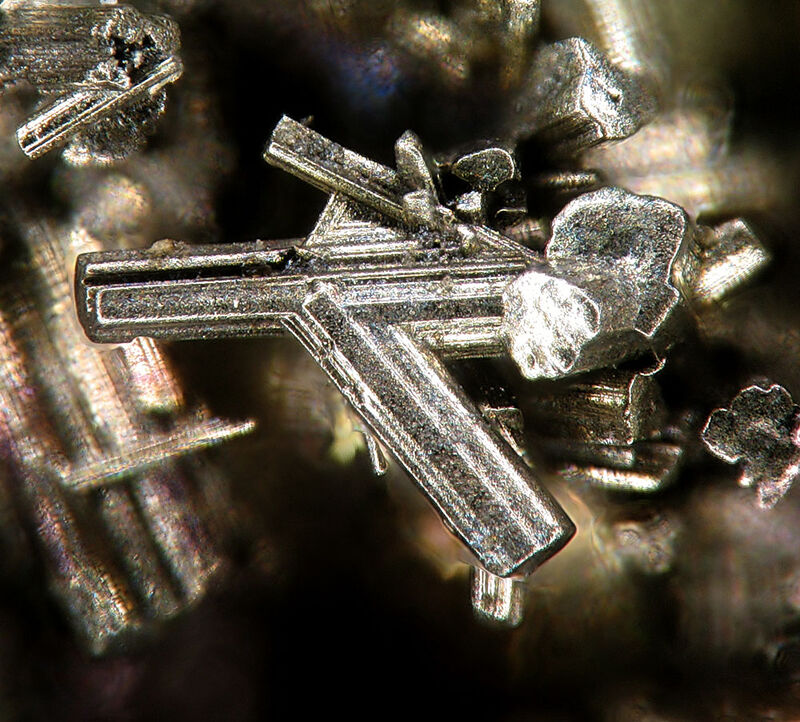
Crystals are cubic, octahedral, dodecahedral to a cm. Often elongated to many cms in herringbone twins and wires (crystals elongated along the [111] axis).
- Twinning
Penetration twins on (111) with cubes from Kongsberg and tetrahexahedrons from Michigan (bearpaws). Arborescent growths twinned on (100) and on (111).
- Epitaxy
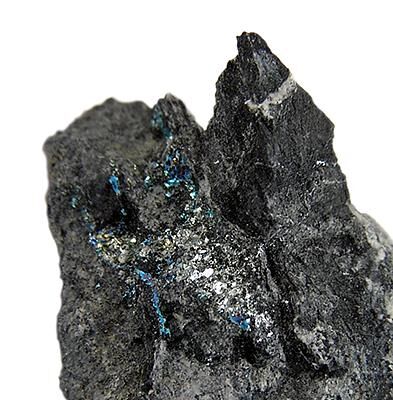
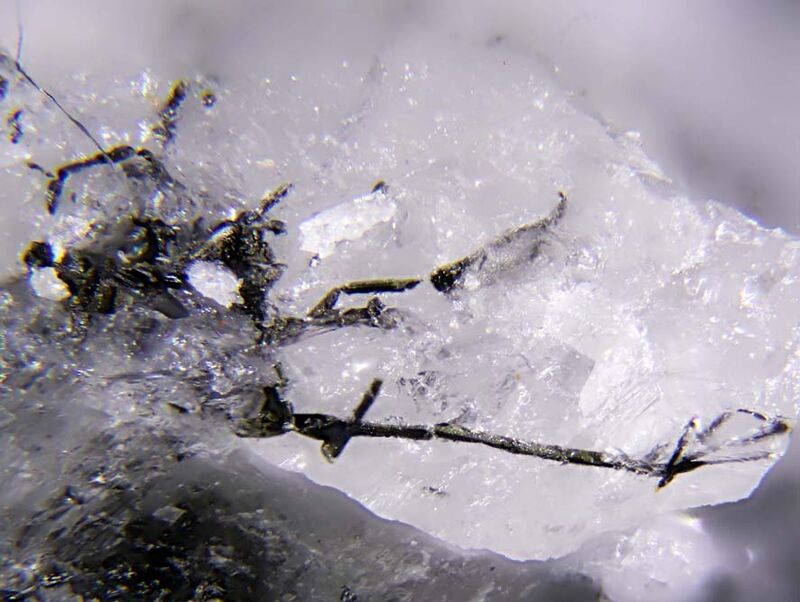
Mixtures with Ag on Cu and more rarely Cu on Ag. The face centred lattice is continuous between the two minerals. Wires with black Acanthite crystals and coating form by continuing the face centred cubic silver between the minerals.
Chemical composition
- Impurities
- Au
- Hg
- Cu
- Sb
- Bi
Synonyms
- Ag
- Agenti
- Airgead
- Ajan
- Argent
- Argento
- Arĝento
- Argentu
- Argentum
- Argid
- Argint
- Argjendi
- Arian
- Arint
- Arjento
- Arxento
- Bạc
- Colque
- Ergent
- Ezüst
- Gediegen Silber
- Gedigent Sølv
- Gümüş
- Haarigsilber
- Hõbe
- Hopea
- Isiliva
- Itatĩ
- Iztāc teōcuitlatl
- Kawata
- Kömeş
- Kumush
- Ngaenz
- Ngiùn
- Perak
- Pilak
- Plata
- Prata
- Qullqi q'illay
- Rijno
- Sëlwer
- Sidabras
- Silber
- Silfur
- Silfver
- Silver
- Silwer
- Srebro
- Sudrabs
- Sülver
- Zèlver
- Zilar
- Zilver
- Zîv
- Άργυρος
- ચાંદી
- வெள்ளி
- వెండి
- വെള്ളി
In other languages
- French
- argent natif
- German
- Silber, gediegen
- Spanish
- plata nativa
- Italian
- argento nativo
- Japanese
- 自然銀
- Russian
- Самородное серебро · Серебро самородное
Classification
1.AA.05
- 1ElementsClass
- 1.AMetals and Intermetallic AlloysDivision
- 1.AACopper-cupalite familyGroup
- 1.AA.05Native SilverSpecies
01.01.01.02
- 01Native Elements and AlloysClass
- 01.01Metals, other than the Platinum GroupType
- 01.01.01Gold groupGroup
- 01.01.01.02Native SilverSpecies
1.2
- 1Elements and Alloys (including the arsenides, antimonides and bismuthides of Cu, Ag and Au)Class
- 1.2— unnamed intermediate level —Group
- 1.2Native SilverSpecies
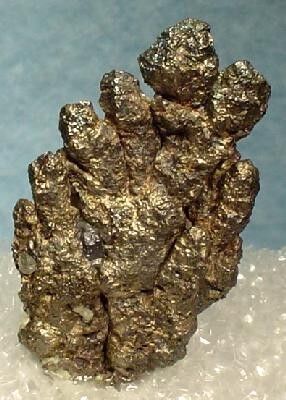
Group, growth & confusion
Literature, links & citation
- —King. S., Rajoo, D., Norori-McCormac, A., Striolo, A. (2024): Characterization of Kinetics-Controlled Morphologies in the Growth of Silver Crystals from a Primary Lead Melt. Minerals, 14, 56.
- 1887Rath, G. vom (1887) Ueber künstliche Silberkrystalle. Zeitschrift für Krystallographie, 12 (1-6). 545-551 doi:10.1524/zkri.1887.12.1.545DOI: 10.1524/zkri.1887.12.1.545
- 1912Guertler (1912) Metallographie. Berlin: 1: 769.
- 1922(1922) Atlas Der Krystallformen Vol. 8 - Text - Band VIII - Safflorit-Topas. Carl Winters Universitätsbuchhandlung, Heidelberg.
- 1922McKeehan (1922) Physical Review, a Journal of Experimental and Theoretical Physics: 20: 424.
Entry last updated
@misc{mineral2026,
  author    = {Mineral Index editorial board},
  title     = {Native Silver — Mineral Index},
  year      = {2026},
  url       = {https://mineralindex.org/minerals/native-silver-3664}
}