Where it forms, where it's found
- Geological setting
Contact aureole.
were also found in igneous rocks. They occur as inclusions in chromites of mafic layered intrusions and ophiolite complexes
- Type locality
- Zillertal
- Schwaz District
- Tyrol
- Austria
11recorded occurrences
Physical
Optical
- Optical type
- Biaxial (-)
- Pleochroism
- Visible
X = colourless with yellowish tint and Y = Z = pale yellowish brown
Crystallography
- Space group
- C2/m
- Cell parameters
- a = 5.291 Å · b = 9.16 Å · c = 10.12 Å
- Cell angles
- β = 105.1 °
- Ratio a:b:c
- 1 : 1.731 : 1.913
- Z
- 2
- Type-locality form
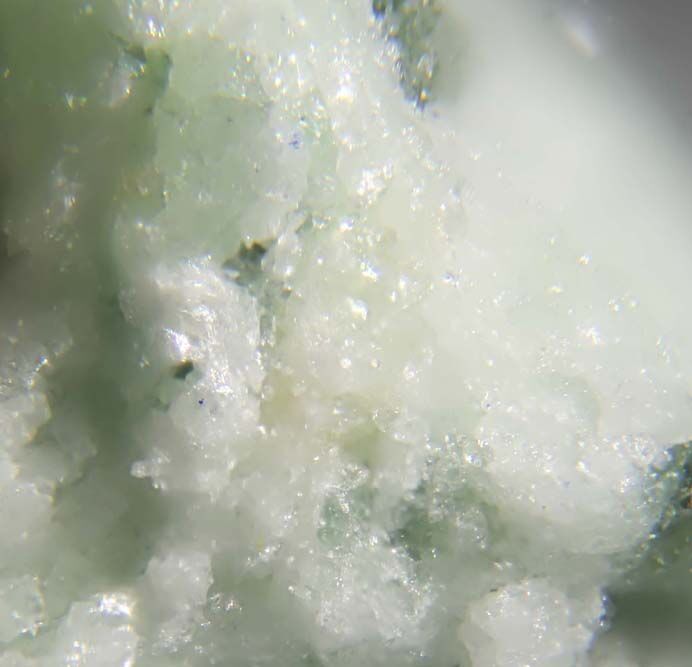
Interleaved with phlogopite.
- Comment
. Aspidolite-1M is monoclinic, space group C2/m and Z = 2; aspidolite-1A is triclinic, space group C1Å and Z = 2
Chemical composition
Synonyms
- Aspidoliet
- Aspidolit
- Aspidolitt
- IMA2004-049
- Na Phlogopit
- Na Phlogopite
- Na-Phlogopite
- Natrium-Phlogopit
- Natriumphlogopit
- Sodium Phlogopite
In other languages
- German
- Aspidolith · IMA 2004-049
- Italian
- Aspidolite
- Japanese
- ソーダ金雲母
- Russian
- аспидолит
Classification
Strunz
10th ed.9.EC.20
- 9SilicatesClass
- 9.EPhyllosilicatesDivision
- 9.ECPhyllosilicates with mica sheets, composed of tetrahedral and octahedral netsGroup
- 9.EC.20AspidoliteSpecies
Group, growth & confusion
- BalestraiteKLi2V5+Si4O12Mineral—
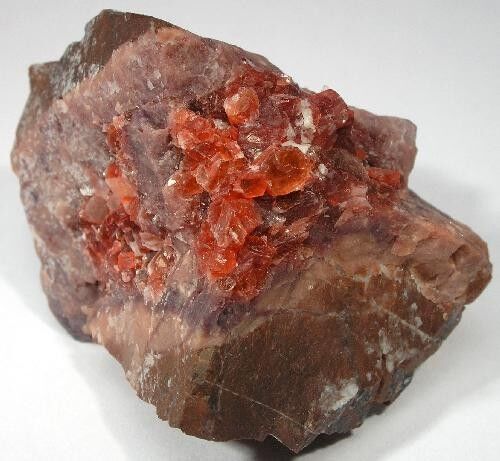 EphesiteNaLiAl2(Si2Al2)O10(OH)2Mineral—
- GarmiteCsLiMg2(Si4O10)F2Mineral—
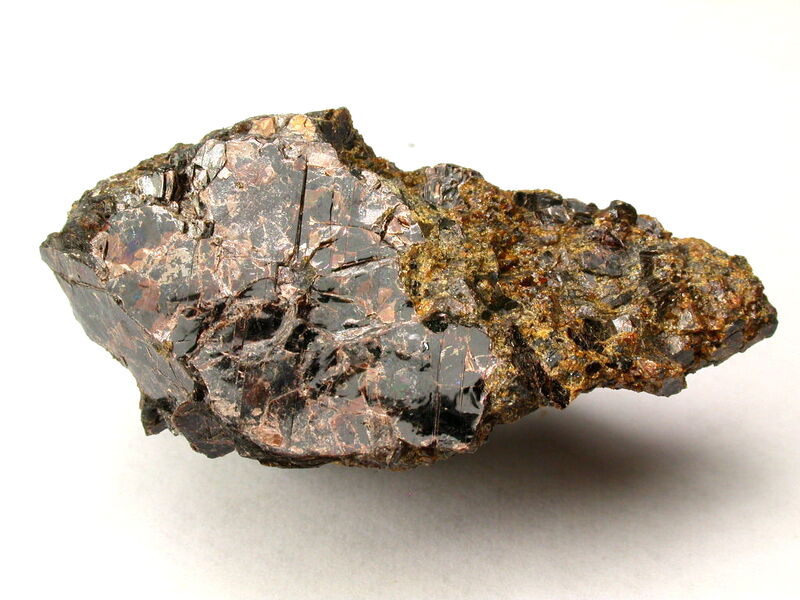 HendricksiteKZn3(Si3Al)O10(OH)2Mineral—
- KreiteriteCsLi2Fe3+Si4O10F2Mineral—
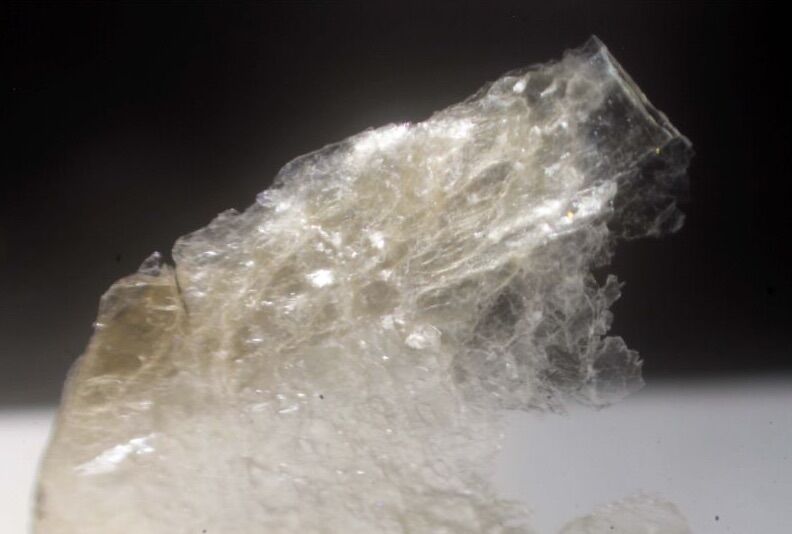 MasutomiliteKLiAlMn2+(Si3Al)O10(F,OH)2Mineral—
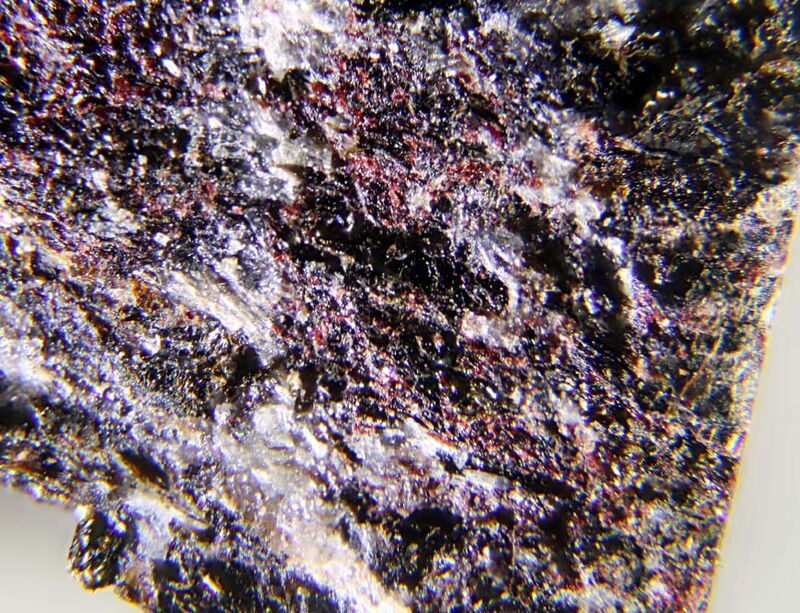 NorrishiteKLiMn3+2Si4O10O2Mineral—
- OrloviteKLi2Ti(Si4O10)(OF)Mineral—
 PreiswerkiteNaAlMg2(Si2Al2)O10(OH)2Mineral—
- ShirokshiniteK(Mg2Na)Si4O10F2Mineral—
Literature, links & citation
Citations
- —Schreyer (1980): Contrib. Mineral. Petrol. 74, 223-233.
- 1869von Kobell, F. (1869): Sitzungsber. königl. bayer. Akad. Wiss, (I), 364-366.
- 1897Hintze, C. (1897): Handbuch der Mineralogie.
- 1998Rieder, M., Cavazzini, G., D’Yakonov, Y.S., Frank-Kamenetskii, V.A., Gottardt, G., Guggenheim, S., Koval, P.V., Muller, G., Neiva, A.M.R., Radoslovich, E.W., Robert, J.L., Sassi, F.P., Takeda, H., Weiss, Z., Wones, D.R. (1998) Nomenclature of the micas. The Canadian Mineralogist, 36 (3) 905-912
- 2001Costa, Fidel, Dungan, Michael A., Singer, Brad S. (2001) Magmatic Na-rich phlogopite in a suite of gabbroic crustal xenoliths from Volcán San Pedro, Chilean Andes: Evidence for a solvus relation between phlogopite and aspidolite. American Mineralogist, 86 (1) 29-35 doi:10.2138/am-2001-0104DOI: 10.2138/am-2001-0104
Cite this entry
Entry last updated
@misc{mineral2026,
  author    = {Mineral Index editorial board},
  title     = {Aspidolite — Mineral Index},
  year      = {2026},
  url       = {https://mineralindex.org/minerals/aspidolite-27494}
}