Where it forms, where it's found
- Type locality
- Dara-i-Pioz Massif
- Districts of Republican Subordination
- Tajikistan
39.4504°, 70.7163°
2recorded occurrences
Physical
Optical
- Optical type
- Uniaxial (-)
- Refractive index
- 1.63 – 1.635
- Surface relief
- Moderate
- Principal indices
- nω 1.635 · nε 1.63
- UV response
- Bright bluish white fluorescence in short-wave ultraviolet light
Δ = 0Δmax
PPLpleochroism per grain
XPLindependent extinctions · rotate the stage
PPLpleochroism only · colour blends on rotation
XPLinterference colour · extinct every 90°
Retardation50 nm
Order1st order
XPL colour
Crystallography
- Space group
- #123
- Cell parameters
- a = 9.903 Å · c = 14.274 Å
- Unit cell volume
- 1211.9 ų
- Z
- 2
- Type-locality form
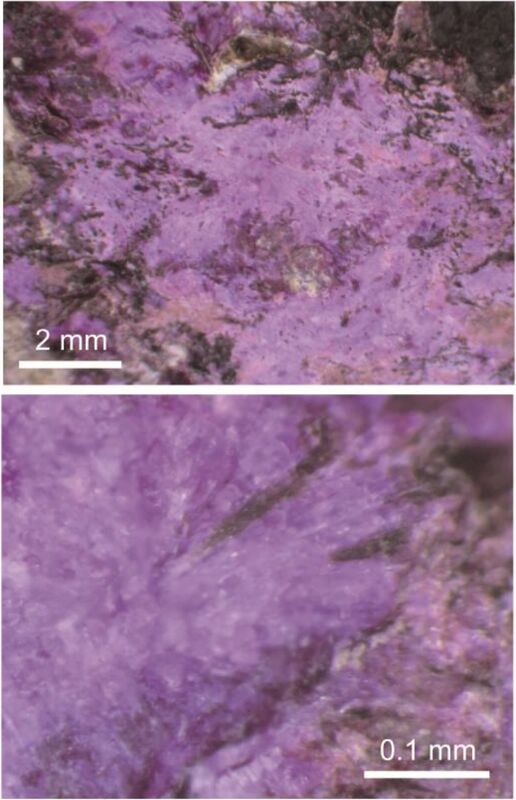
Occurs as aggregates, up to 2x3 mm, and as vein-like aggregates to 3x20 mm, consisting of platy grains up to 0.6 mm across.
Crystal structure
Chemical composition
Synonyms
- Berezanskiet
- IMA1996-041
In other languages
- German
- Berezanskit · IMA 1996-041
- Italian
- Berezanskite
Classification
Strunz
10th ed.9.CM.05
- 9SilicatesClass
- 9.CCyclosilicatesDivision
- 9.CM[Si6O18]12- 6-membered double rings (sechser-Doppelringe)Group
- 9.CM.05BerezanskiteSpecies
Group, growth & confusion
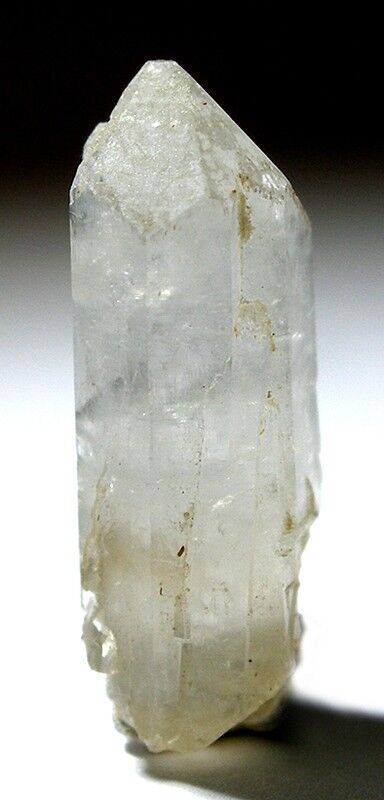
- Agakhanovite-(Y)YCa◻2KBe3Si12O30Mineral—
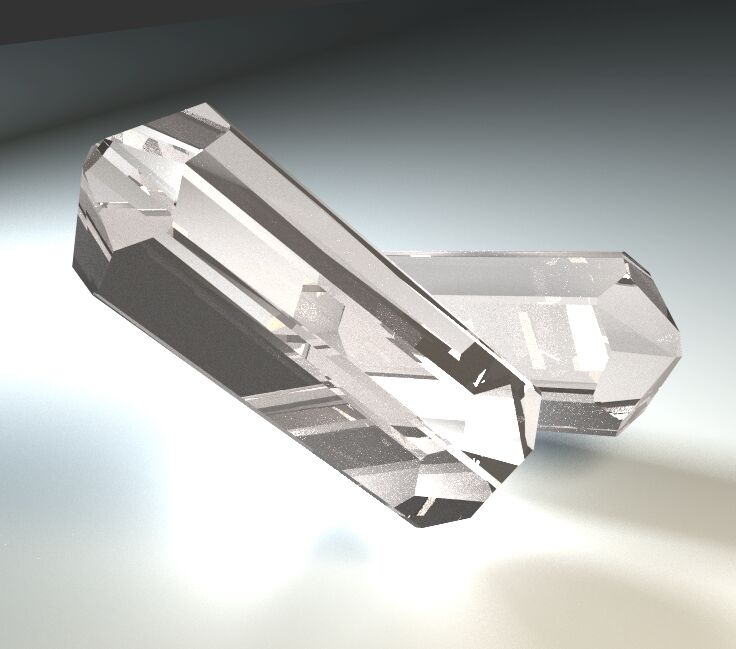
- AlmaruditeK(◻,Na)2(Mn,Fe,Mg)2[(Be,Al)3Si12]O30Mineral—
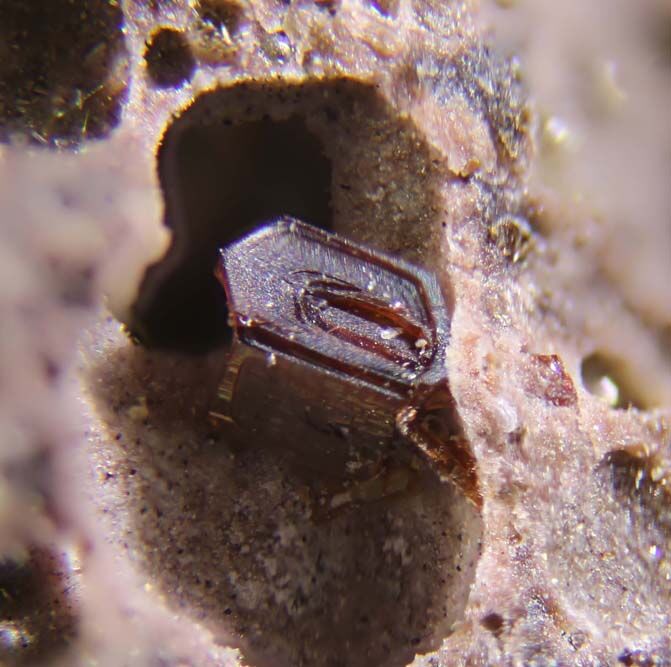
 AluminosugiliteKNa2Al2Li3Si12O30Mineral—
 ArmeniteBaCa2(Al6Si9)O30 · 2H2OMineral—
 BrannockiteKSn2(Li3Si12)O30Mineral—
 ChayesiteKMg4Fe3+[Si12O30]Mineral—
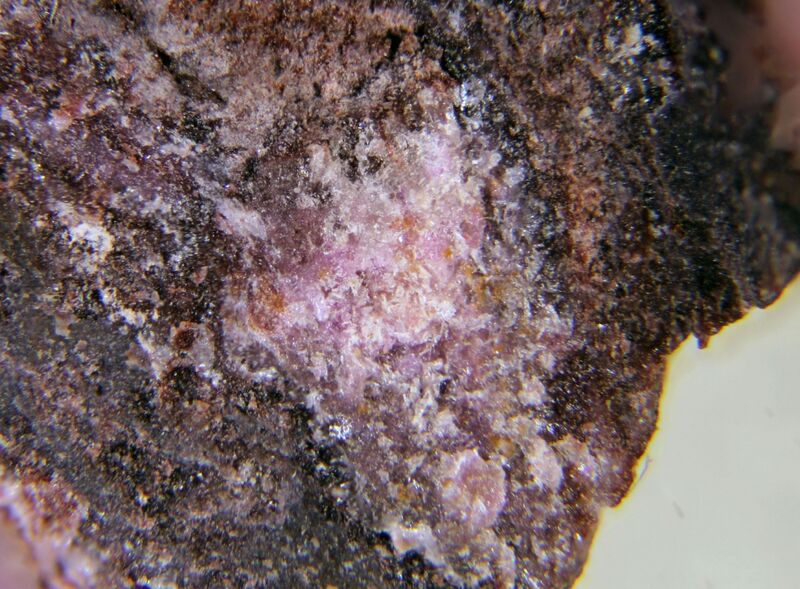 DarapiositeKNa2Mn2(Li2ZnSi12)O30Mineral—
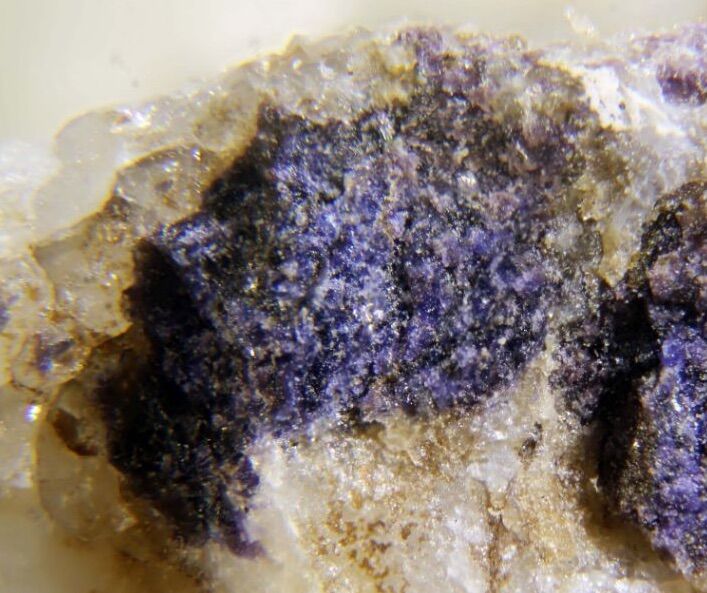 DusmatoviteKK2Mn2(Zn2LiSi12)O30Mineral—
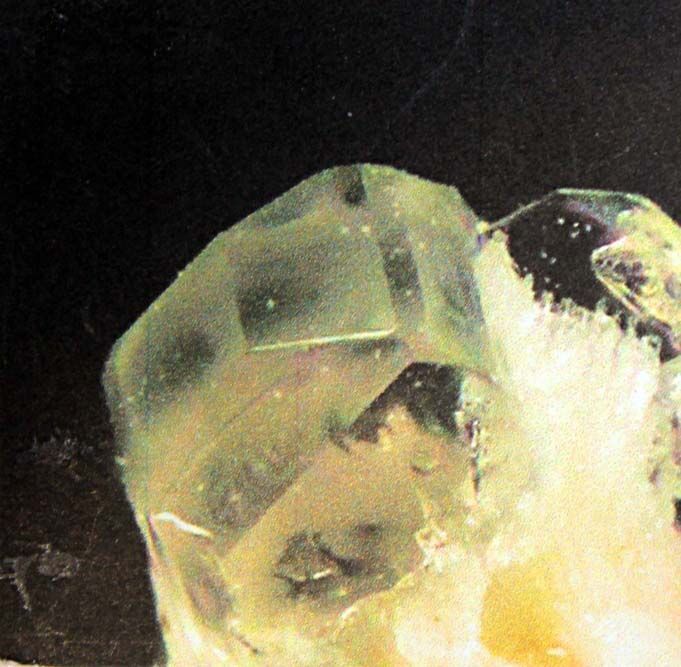 EifeliteKNa2(MgNa)(Mg3Si12)O30Mineral—
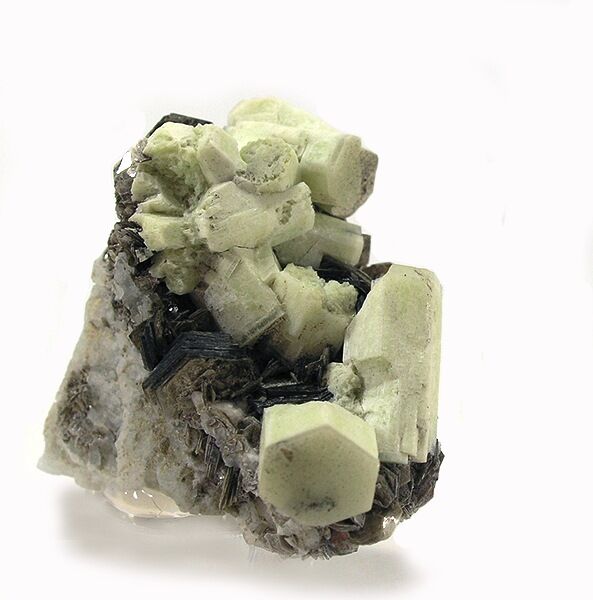
- FriedrichbeckeiteK(◻Na)Mg2(Be2Mg)Si12O30Mineral—
Literature, links & citation
Citations
- 1997Pautov, L. A., Agakhanov, A. A. (1997) Berezanskite KLi3Ti2Si12O30 – a new mineral. Zapiski Vserossijskogo Mineralogicheskogo Obshchestva, 126 (4) 75-80
- 1998Mandarino, Joseph A. (1998) Abstracts of New Mineral Descriptions. The Mineralogical Record, 29 (5) 467-479
- 1998Jambor, J.L., Pertsev, N.N., Roberts, A.C. (1998) New mineral names. American Mineralogist: 83: 907-911.
- 2016Hawthorne, F. C., Sokolova, E., Pautov, L.A., Agakhanov, A. A., Karpenko, V. Yu. (2016) Refinement of the crystal structure of berezanskite, Ti22KLi3(Si12O30) Mineralogical Magazine, 80 (5) 733-737 doi:10.1180/minmag.2016.080.022DOI: 10.1180/minmag.2016.080.022
- 2016Gagné, Olivier C., Hawthorne, Frank C. (2016) Chemographic Exploration of the Milarite-Type Structure. The Canadian Mineralogist, 54 (5) 1229-1247 doi:10.3749/canmin.1500088DOI: 10.3749/canmin.1500088
Cite this entry
Entry last updated
@misc{mineral2025,
  author    = {Mineral Index editorial board},
  title     = {Berezanskite — Mineral Index},
  year      = {2025},
  url       = {https://mineralindex.org/minerals/berezanskite-6824}
}