History
The name graphite comes from the Greek graphein — to write — because the soft black mineral leaves a mark on almost anything it touches. That single property runs through its whole human story, from Neolithic potters to the pencil in a desk drawer.
The oldest known use is decorative. In the 4th millennium BCE, during the Neolithic Age in southeastern Europe, the Marița culture ground graphite into a ceramic paint and used it to decorate pottery.
A strategic English mine
The mineral's strangest chapter belongs to one valley in England. Sometime before 1565, an enormous deposit of pure graphite was found near the hamlet of Seathwaite in Borrowdale, Cumbria — the only large source of solid, high-purity graphite ever discovered.
It had a military use. During the reign of Elizabeth I, Borrowdale graphite lined the molds used to cast cannonballs, a refractory — heat-resistant — coating that gave rounder, smoother balls able to fly farther. Because that mattered to the navy, the Crown controlled the mine and its output tightly.
The same deposit started an industry. From the 16th century, pencils were made with leads cut from English natural graphite.
Untangling the name
For centuries the mineral was confused with others that looked like it. It was called black lead or plumbago, both names borrowed from the lead ores it resembled, particularly galena — a heavy, metallic lead sulfide. The confusion was scholarly as well as popular. Magnus von Bromell applied the name plumbago to it in 1739, though in a different sense from older authorities such as Agricola and Conrad Gesner. The Swedish chemist Carl Wilhelm Scheele showed in 1781 that the loosely-used name molybdaena in fact covered two minerals: molybdenite and graphite. The German mineralogist Abraham Gottlob Werner finally cut the tangle, coining the name graphite — writing stone — in 1789.
The pencil supply chain shifted not long after. In 1795 the French inventor Nicolas-Jacques Conté worked out how to make pencil leads from a mix of powdered graphite and clay — the method still used today.
Industrial & practical applications
Graphite is the rare mineral that behaves like both a metal and a non-metal. It conducts heat and electricity like a metal, yet it is chemically inert, withstands high temperatures, and is slippery to the touch — a combination that suits it to a wide spread of industrial jobs.
Its single largest industrial role is in steelmaking. Graphite electrodes carry the electric current that melts scrap iron and steel inside electric-arc furnaces, the type that produces the vast majority of the world's steel. The same heat resistance makes graphite a refractory — a material that holds up under extreme heat. Carbon-magnesite bricks line steel converters and electric-arc furnaces, and graphite crucibles hold molten metal.
In a foundry — a workshop that casts metal — graphite also does quieter work. A thin water-based paint of fine graphite, brushed inside a mold and dried, leaves a coat that helps the finished casting separate cleanly from the mold.
Its slipperiness makes it a lubricant where oil would fail. Graphite lubricants are specialty items for very high or very low temperatures, used as a forging-die lubricant, an antiseize agent, a gear lubricant for mining machinery, and to free stuck locks. In electric motors, graphite brushes are the sliding contacts that pass current to the spinning part.
Pencils, the mineral's oldest manufactured product, remain a small but steady market. Around 7% of the 1.1 million tonnes of graphite produced in 2011 went into making them.
The fastest-growing demand comes from energy storage. Graphite is the main anode material in lithium-ion batteries — the negative electrode that stores the charge. The anode in nearly every electric-vehicle battery is graphite; a single fully electric Nissan Leaf battery holds close to 40 kg of it.
Not all of it is mined. Synthetic graphite is made by heating hydrocarbon materials above 2,100 °C through the Acheson process. It reaches purities above 99.9% carbon, though at lower density and conductivity than the natural mineral. The very pure synthetic grades serve as a neutron moderator inside nuclear reactors, slowing the neutrons that sustain a chain reaction.
Supply of natural graphite is highly concentrated. China produced an estimated 78% of the world's output in 2024.
Where it forms, where it's found
Varieties
Physical
Optical
- Optical type
- Uniaxial (-)
- Refractive index
- 1.93 – 2.07
- Surface relief
- Very high
- Principal indices
- nω 1.93 – 2.07
- Birefringence
- Extreme
- Pleochroism
- Strong
- Optical colour
- Iron black to steel gray
- Anisotropism
- Extreme
- Luminescence
- None
- Notes
Deep blue in transmitted light.
Crystallography
- Space group
- #114
- Cell parameters
- a = 2.461 Å · c = 6.708 Å
- Morphology
Hexagonal platy crystals, often bent.
- Twinning
(111)
Chemical composition
Synonyms
- Black Lead
- Crayon
- Flinzgraphit
- Graphita
- Graphitum
- Melangraphit
- Melangraphita
- Melangraphite
- Mica des Peintres
- Mica Pictoria
- Plombagine
- Pombaggine
- Reissblei
In other languages
- French
- graphite
- German
- Graphit
- Spanish
- grafito
- Italian
- grafite
- Portuguese
- grafite
- Japanese
- グラファイト · 石墨 · 黒鉛
- Chinese
- 石墨 · 黑铅
- Simplified Chinese
- 石墨
- Traditional Chinese
- 石墨
- Russian
- графит
- Arabic
- غرافيت
- Hindi
- ग्रेफाइट · ग्रेफाईट
Classification
1.CB.05a
- 1ElementsClass
- 1.CMetalloids and NonmetalsDivision
- 1.CBCarbon-silicon familyGroup
- 1.CB.05aGraphiteSpecies
01.03.06.02
- 01Native Elements and AlloysClass
- 01.03Semi-metals and non-metalsType
- 01.03.06Carbon Polymorph groupGroup
- 01.03.06.02GraphiteSpecies
1.25
- 1Elements and Alloys (including the arsenides, antimonides and bismuthides of Cu, Ag and Au)Class
- 1.25— unnamed intermediate level —Group
- 1.25GraphiteSpecies
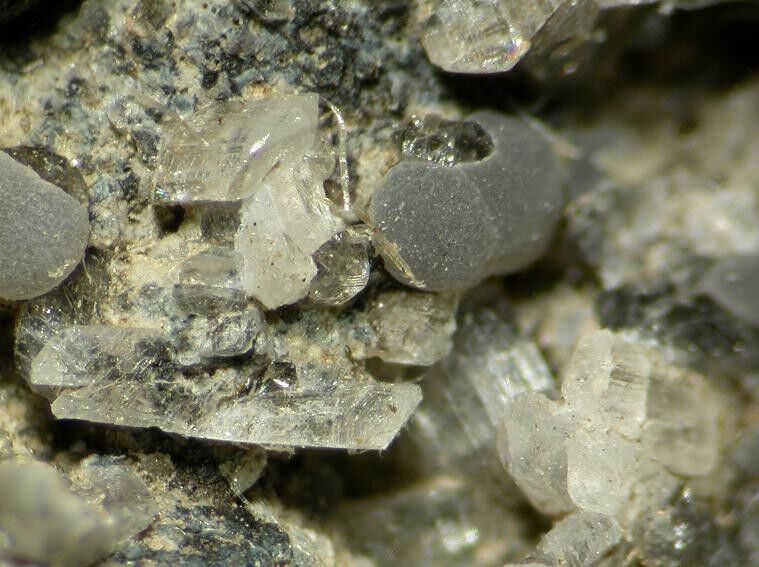
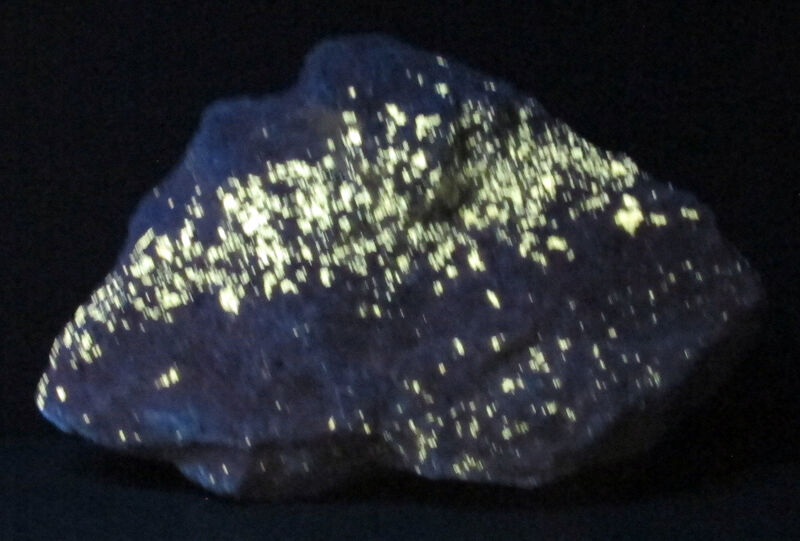
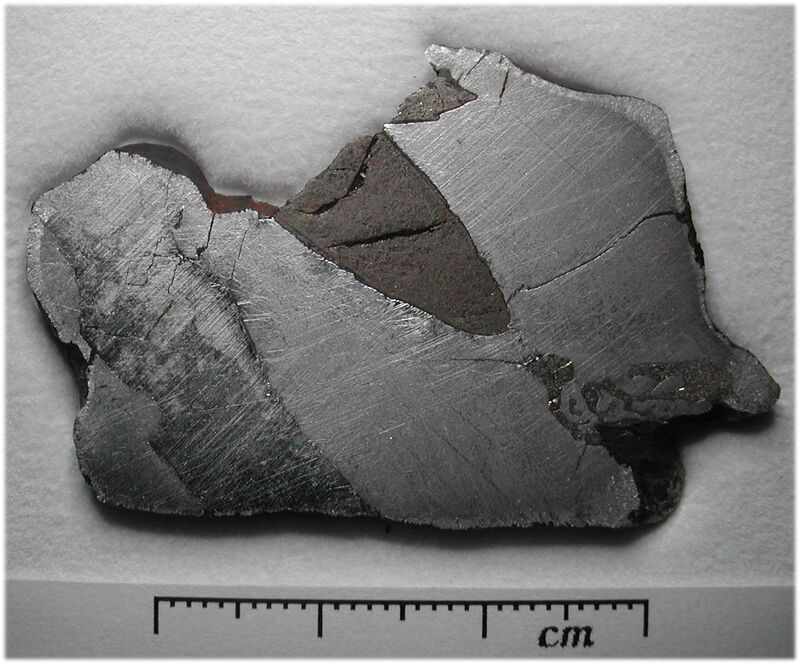
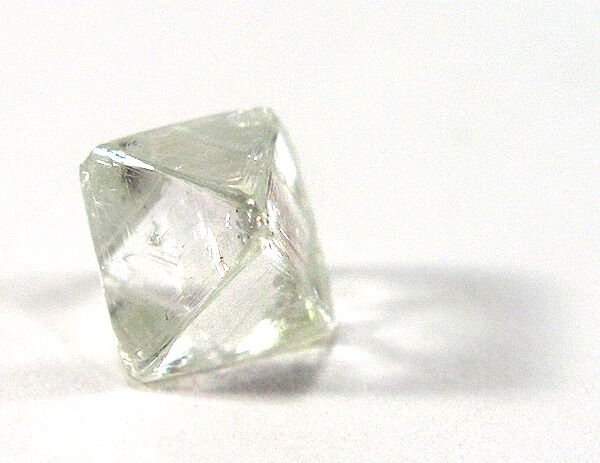
Group, growth & confusion
Literature, links & citation
- 1907Cirkel, F. (1907) Graphite: its properties, occurrence, refining and uses: Department of Mines, Mines Branch, Ottawa, Canada, 307pp.
- 1917Alling, H.L. (1917) The Adirondack graphite deposits, New York State Museum Bulletin 199: 7-150.
- 1920Spence, H.S. (1920) Graphite Mines, Branch Report No. 511: Canada Department of Mines, Ottawa: 202pp. + photos.
- 1934Wesselowski, Wassiliew (1934) Zeitschrift für Kristallographie: 89: 494.
- 1941Palache, Charles (1941) Contributions to the mineralogy of Sterling Hill, New Jersey: Morphology of graphite, arsenopyrite, pyrite and arsenic. American Mineralogist, 26 (12) 709-717
Entry last updated
@misc{mineral2026,
  author    = {Mineral Index editorial board},
  title     = {Graphite — Mineral Index},
  year      = {2026},
  url       = {https://mineralindex.org/minerals/graphite-1740}
}