Where it forms, where it's found
- Geological setting
meteorite
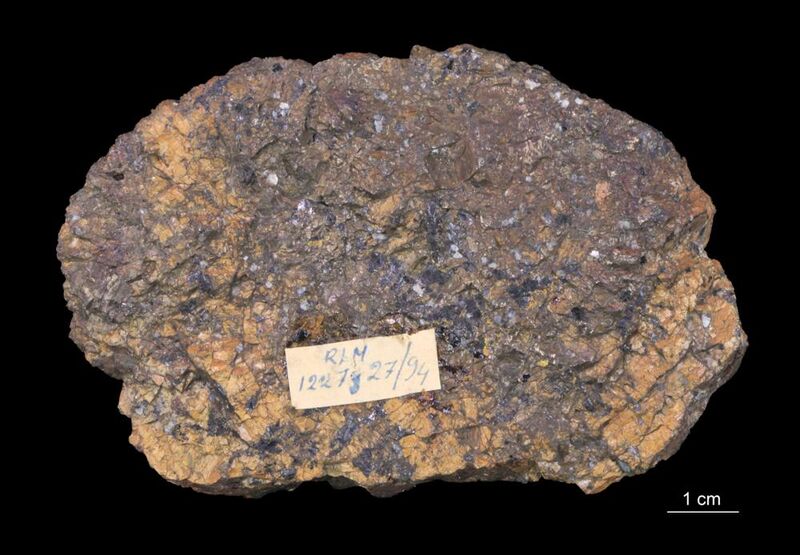
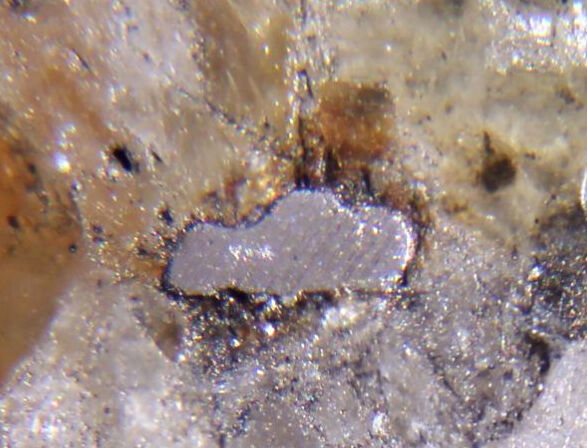
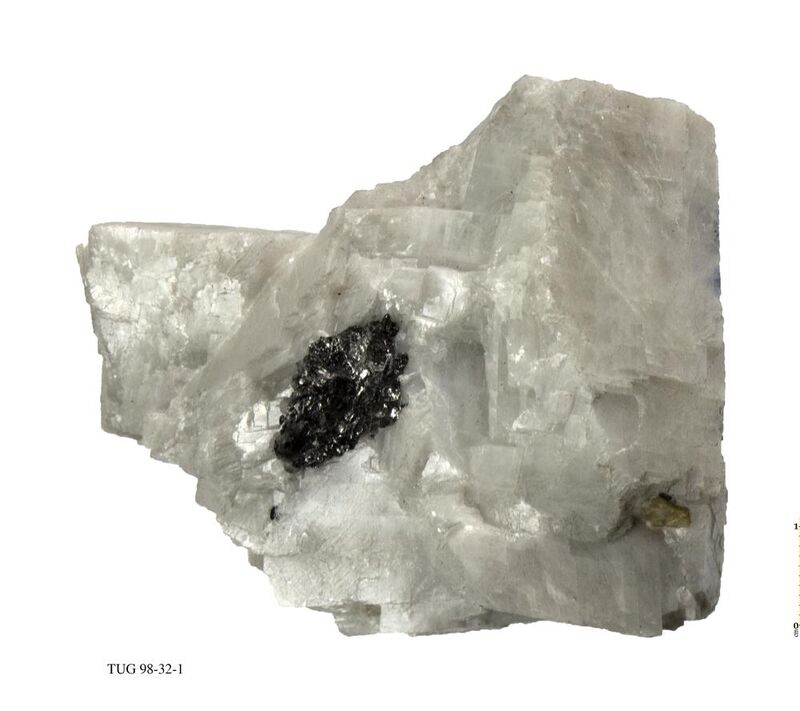
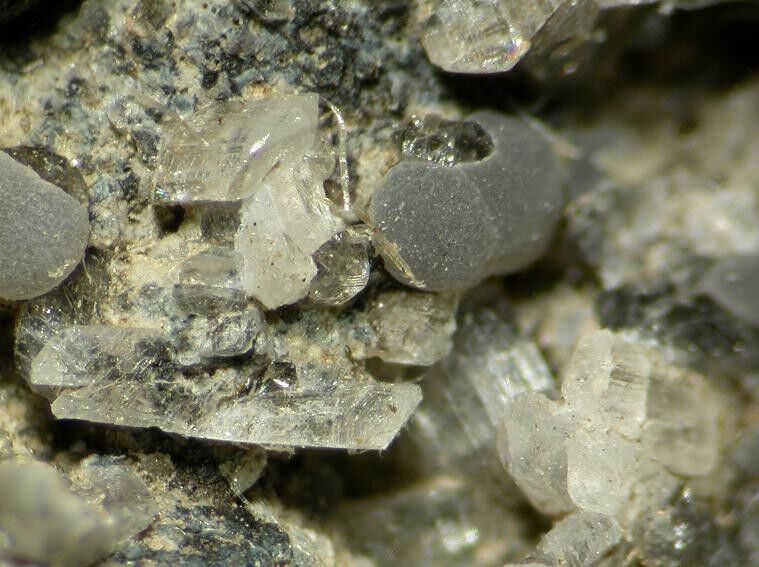
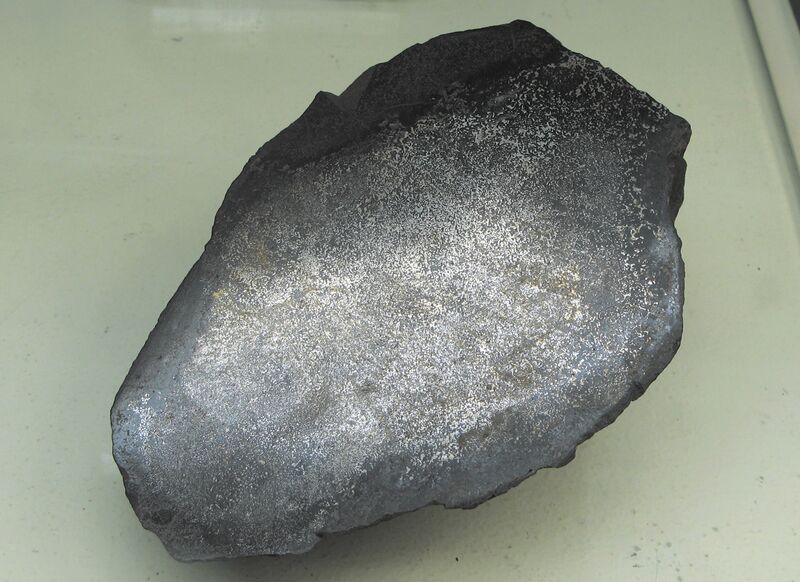
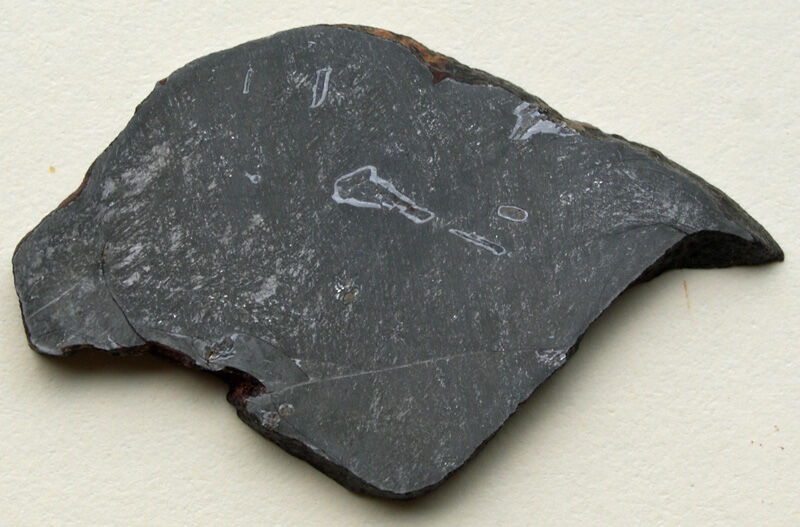
Troilite occurs in serpentine, in layered ultramafic intrusives, and in meteorites. Known terrestial occurrences of troilite are not common. Found in a great number of meteorites (also Lunar and Martian) and in planetary nebulae. Found in slags and also in pulverized coal particles after combustion. Based on observations by the Voyager spacecraft in 1979 and Galileo in 1996, troilite seems to be an important phase in the mineral composition of the model rock of Jupiter's Galilean satellites Ganymede and Callisto. Based on the observations of Viking-1 and Viking-2-XRF-soil analyses and Phobos-2 orbital γ-ray data, troilite is likely to be a common mineral in the Martian surface rocks.
- Type locality
- Albareto meteorite
- Albareto
- Modena
- Modena Province
- Emilia-Romagna
- Italy
44.6833°, 10.9500°
Physical
- Hardness
- 1Talc
- 2Gypsum
- 3Calcite
- 4Fluorite
- 5Apatite
- 6Orthoclase
- 7Quartz
- 8Topaz
- 9Corundum
- 10Diamond
- Transparency
- Opaque
- Colour
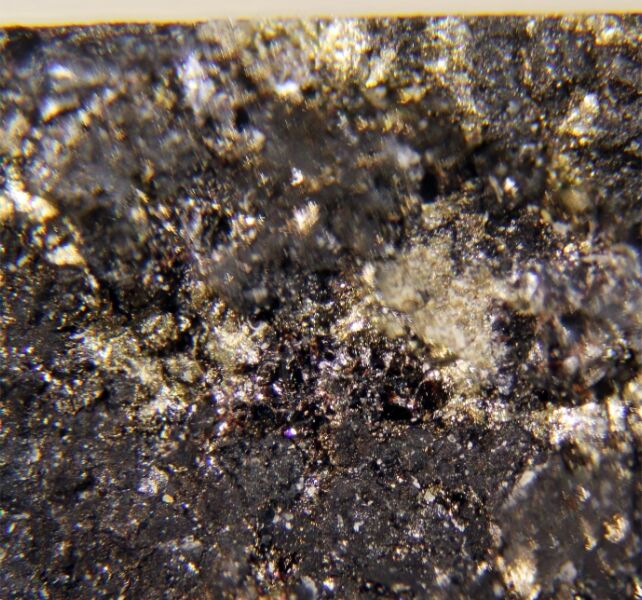
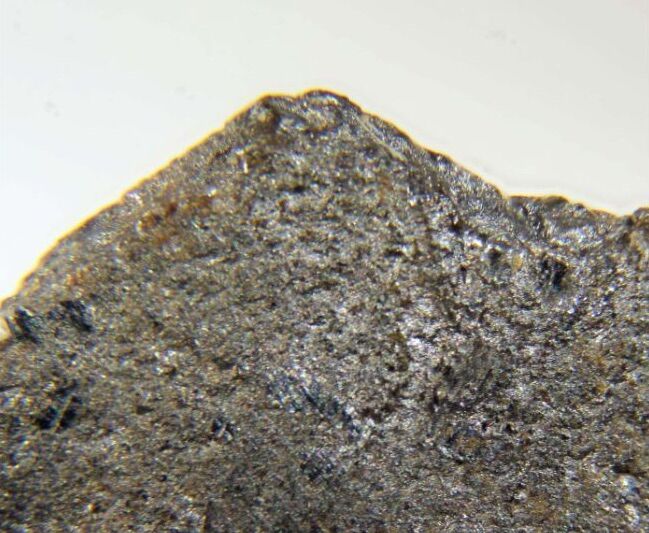
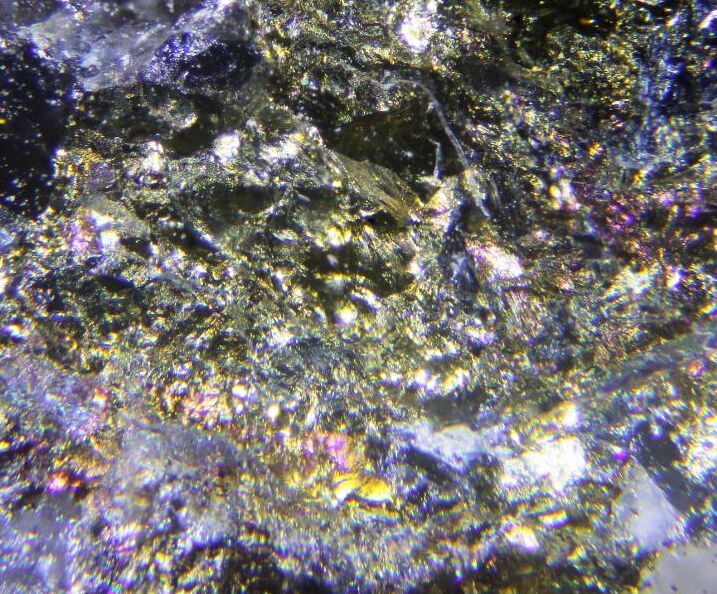
- Gray brown · bronze brown (tarnished) · yellow brown · light greyish brown · bronze
tarnishes rapidly on exposure
- Streak
- Brownish black
- Tenacity
- brittle
- Cleavage
- None Observed
- Fracture
- Irregular/Uneven · Sub-Conchoidal
- Density
- 4.67 g/cm³
Optical
- Anisotropism
- strong
- Tropism
- Anisotropic
Crystallography
- Space group
- P63/mmc
- Cell parameters
- a = 5.958 Å · c = 11.74 Å
- Unit cell volume
- 361.7 ų
- Z
- 12
- Morphology
massive, granular
Chemical composition
Synonyms
- Meteorkies
- Pyrrhotite-2C
In other languages
- French
- 1317-37-9 · Troïlite
- German
- Troilit
- Spanish
- Troilita
- Italian
- Troilite
- Portuguese
- Troilita · troilite
- Japanese
- トロイリ鉱
- Chinese
- 隕硫鐵
- Traditional Chinese
- 隕硫鐵
- Arabic
- ترويليت
Classification
2.CC.10
- 2Sulfides and SulfosaltsClass
- 2.CMetal Sulfides, M: S = 1: 1 (and similar)Division
- 2.CCWith Ni, Fe, Co, PGE, etc.Group
- 2.CC.10TroiliteSpecies
02.08.09.01
- 02SulfidesClass
- 02.08AmXp, with m:p = 1:1Type
- 02.08.09— unnamed intermediate level —Group
- 02.08.09.01TroiliteSpecies
Group, growth & confusion
Literature, links & citation
- —Kiskyras, D. A. (1943): Magnetic properties of the minerals of the system FeS-FeS2. Beiträge zur Angewandten Geophysik 10, 308-311.
- 1863Haidinger, W. (1863): Meteorit von Albareto im k. k. Hof-Mineralienkabinet vom Jahre 1766, un der troilit: K. Academie der Willenschaften, Vienna (Wien), Mathematisch-naturwissenschaftiche Klasse, Sitzumsberichte, 47, 283-298.
- 1868Öfvers. KVA handl. (1868), 25, 197-201.
- 1933Hägg, G. & Sucksdorff, I. (1933): Die Kristallstruktur von Troilit und Magnetkies. Zeitschrift für Physikalische Chemie, B22, 444-452.
- 1947Buerger, M. J. (1947) The cell and symmetry of pyrrhotite. American Mineralogist, 32 (7-8) 411-414
Entry last updated
@misc{mineral2026,
  author    = {Mineral Index editorial board},
  title     = {Troilite — Mineral Index},
  year      = {2026},
  url       = {https://mineralindex.org/minerals/troilite-4029}
}