History
Jamesonite carries the name of a man who never described it. The mineral was named in 1825 for the Scottish naturalist Robert Jameson (1774–1854). Jameson held the chair of natural history at the University of Edinburgh for fifty years.
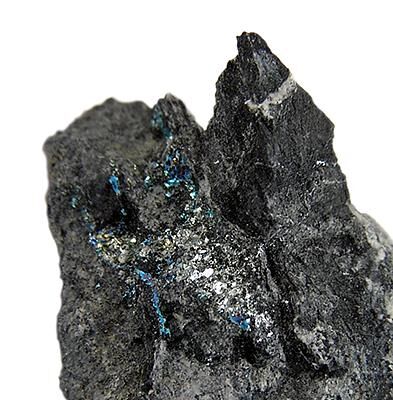
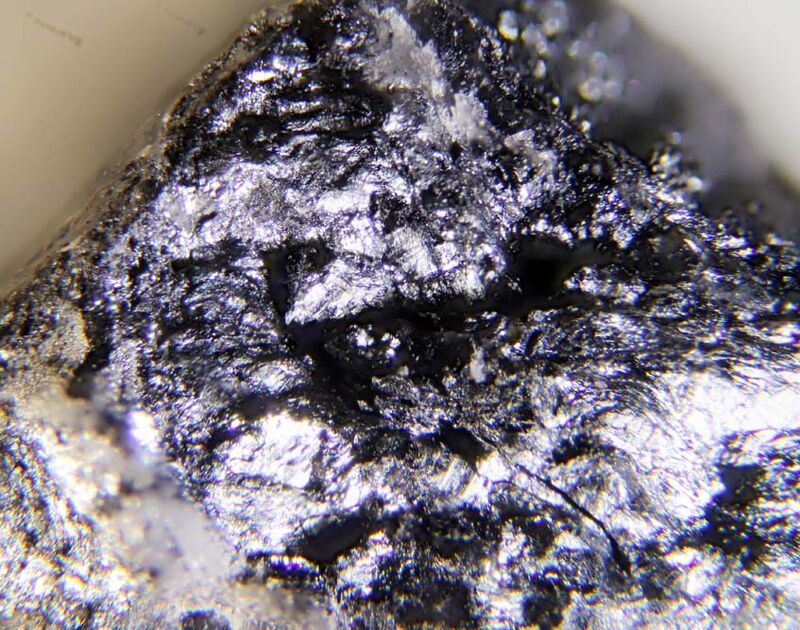
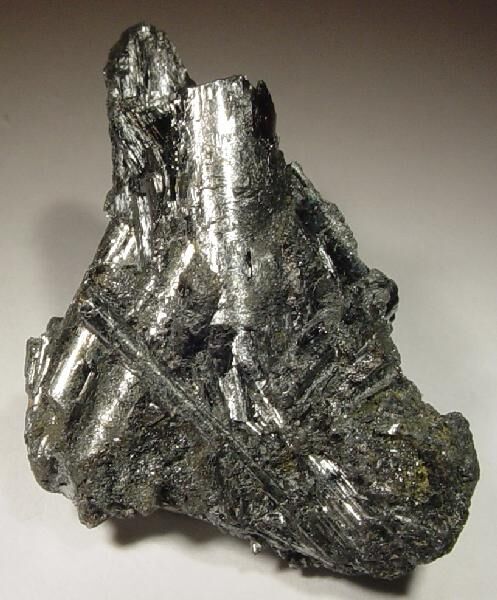
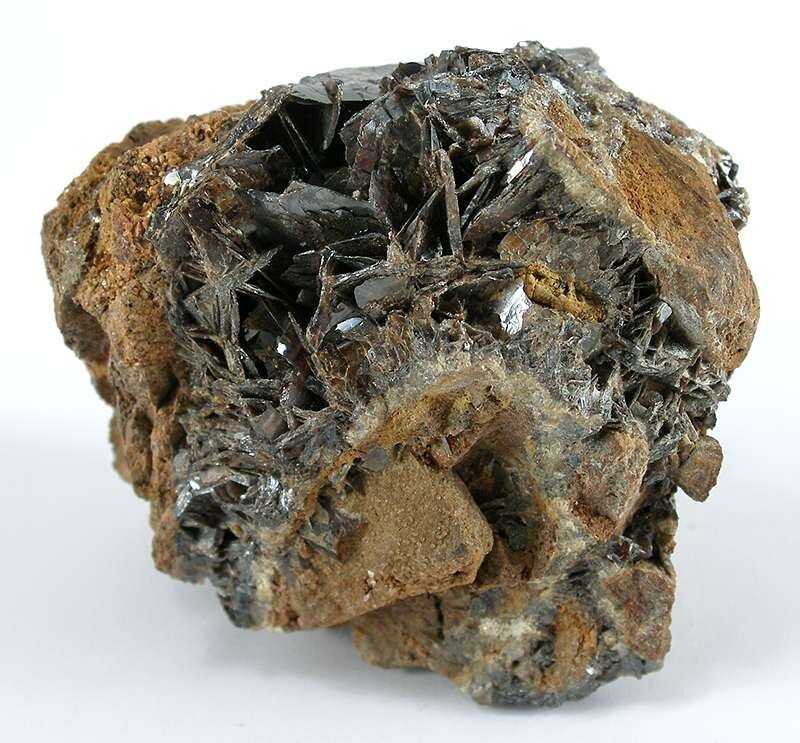
The mineral itself was first identified that same year in Cornwall, in the south-west of England. There it appeared as a dark grey sulfide that grew in fine, hair-like needles rather than blocky crystals.
That habit earned the mineral a working name. Miners and dealers called it feather ore, and sometimes grey antimony — plain descriptions of a dark mineral that splits into fibres as fine as down.
Industrial & practical applications
Jamesonite is not a mineral that industry chases. Where it gathers in quantity, in the lead-silver-zinc veins it favours, it can be worked as a minor ore of lead. The same rock often yields antimony, a brittle metal used to harden lead alloys, so smelters of such ore recover both metals together. But jamesonite is never the prize. It turns up as a late-stage mineral alongside galena and stibnite — the far richer lead and antimony ores that carry a mine's economics.
So its main draw is to collectors and mineralogists. The fine, hair-like needles that earned it the name feather ore make tangled silvery sprays that are prized as display specimens rather than as feedstock.
Where it forms, where it's found
- Geological setting
Late stage hydrothermal mineral formed at moderate to low temperature.
- Type locality
- Cornwall
- England
- UK
Safety & handling
Physical
Optical
- Pleochroism
- Visible
Distinct.
- Optical colour
- Grey-black
- Anisotropism
- Strong
- Tropism
- Anisotropic
- Reflectance R%
- (38.4,45.1) 400, (38.1,44.9) 420, (37.7,44.8) 440, (37.6,45.0) 460, (37.4,45.1) 480, (37.3,45.0) 500, (37.0,44.7) 520, (36.6,44.3) 540, (36.1,43.8) 560, (35.7,43.2) 580, (35.3,42.6) 600, (34.8,41.9) 620, (34.2,41.0) 640, (33.6,40.1) 660, (33.0,39.2) 680, (32.5,38.5) 700
Crystallography
- Space group
- P1 21/c 1
- Cell parameters
- a = 4.030(4) Å · b = 19.125(3) Å · c = 15.750(6) Å
- Cell angles
- β = 91.68(8) °
- Ratio a:b:c
- 1 : 4.746 : 3.908
- Z
- 2
- Morphology
Acicular to fibrous [001] and striated parallel [001]. In felted masses of needles. Also massive, fibrous to columnar; radial or plumose at times. In subparallel aggregates of prismatic crystals, forming a columnar mass.
- Twinning
On (100).
Chemical composition
- Impurities
- Cu
- Zn
- Ag
- Bi
Synonyms
- Axotomer Antimonglanz
- Axotomous Antimony Glance
- Bergzundererz
- Bleiantimonit
- Bleischimmer
- Comuccit
- Comuccita
- Comuccite
- Cornuccit
- Cornuccita
- Cornuccite
- Domingit
- Domingita
- Domingite
- Haarförmiger Antimonglanz
- Haarförminges Grauspiessglanzerz
- Jamesonite (of Haidinger)
- Lumpenerz
- Pfaffite (of Huot)
- Pilite (of Schulze)
- Querspiessglanz
- Tinder Ore
- Warrenite (of Eakins)
- Wolfsbergite (of Huot)
- Zundererz
In other languages
- French
- Comuccite · Domingite · Jamesonite · Pfaffite · Sakharovaite · Warrenite · Wolfsbergite
- German
- Jamesonit
- Spanish
- jamesonita
- Italian
- Jamesonite
- Japanese
- 毛鉱
- Chinese
- 脆硫锑铅矿
- Russian
- Джемсонит
- Arabic
- جيمسونايت · جيمسونيت
Classification
2.HB.15
- 2Sulfides and SulfosaltsClass
- 2.HSulfosalts of SnS archetypeDivision
- 2.HBWith Cu, Ag, Fe, Sn and PbGroup
- 2.HB.15JamesoniteSpecies
03.06.07.01
- 03SulfosaltsClass
- 03.062 < ø < 2.49Type
- 03.06.07— unnamed intermediate level —Group
- 03.06.07.01JamesoniteSpecies
5.8.5
- 5Sulphosalts - Sulpharsenites and Sulphobismuthites (those containing Sn, Ge,or V are in Section 6)Class
- 5.8Sulpharsenites etc. of Mn, Fe, Co and NiGroup
- 5.8.5JamesoniteSpecies
Group, growth & confusion
Literature, links & citation
- 1821Jameson (1821) 285.
- 1824Mohs (1824) 586.
- 1825Mohs, Frederick; Haidinger, William (1825) Treatise on Mineralogy Vol. 1.
- 1825Mohs, F., Haidinger, W. (1825) XI. Order. Glance. VII. Antimony-glance. Jamesonite. in Treatise on Mineralogy, or the Natural History of the Mineral Kingdom, Volume 1, Archibald Constable and Co. (Edinburgh): 451-451.
- 1825Haidinger (1825) 3: 26.
Entry last updated
@misc{mineral2026,
  author    = {Mineral Index editorial board},
  title     = {Jamesonite — Mineral Index},
  year      = {2026},
  url       = {https://mineralindex.org/minerals/jamesonite-2072}
}