Where it forms, where it's found
- Geological setting
Albitite dike
- Type locality
- Luku Mine
- Yanbian County
- Panzhihua
- Sichuan
- China
26.6199°, 101.9772°
6recorded occurrences
Physical
Optical
- Optical type
- Biaxial (+) · 2V measured = 72° · 2V calc = 76°
- Refractive index
- 1.729 – 1.852
- Surface relief
- High
- Principal indices
- nα 1.729 · nβ 1.802 · nγ 1.852
- Birefringence
- 0.123
- Pleochroism
- Strong
X = light golden yellow; Y = brownish yellow; Z = brownish red.
- Dispersion
- r < v
- Extinction
- X ∧ c = 13°.
- UV response
- Not fluorescent.
Δ = 0Δmax
PPLpleochroism per grain
XPLindependent extinctions · rotate the stage
PPLpleochroism only · colour blends on rotation
XPLinterference colour · extinct every 90°
Retardation1230 nm
Order3rd order
XPL colour
Crystallography
- Cell parameters
- a = 8.7331(2) Å · b = 8.7366(2) Å · c = 11.0404(3) Å
- Cell angles
- α = 81.477(1) ° · β = 110.184(1) ° · γ = 104.384(1) °
- Ratio a:b:c
- 1 : 1.000 : 1.264
- Unit cell volume
- 764.03 ų
- Twinning
Pseudo-monoclinic due to nanoscale polysynthetic twinning on the (001) composition plane.
- Comment
Cell data from Jin et al. (2018). SG C2/m (Sokolova et al., 2009), not P2/m, as originally reported (original cell parameters: 5.350, 6.909, 20.96 A, 99.83°). As pointed out by Sokolova et al. (2009), the structure determination of Rastsvetaeva et al. (2008) is erroneous in several points.
Crystal structure
Chemical composition
- Impurities
- Hf
- TR
- Al
- Ta
- Mg
- Sr
- K
- H2O
Synonyms
- IMA1981-061
- Jinshajiangiet
In other languages
- French
- Jinshajiangite
- German
- IMA 1981-061 · Jinshajiangit
- Italian
- Jinshajiangite
- Arabic
- جينشجيانجيت
Classification
Strunz
10th ed.9.BE.67
- 9SilicatesClass
- 9.BSorosilicatesDivision
- 9.BESi2O7 groups, with additional anions; cations in octahedral [6] and greater coordinationGroup
- 9.BE.67JinshajiangiteSpecies
Dana
8th ed.78.01.05.01
- 78Unclassified SilicatesClass
- 78.01MiscellaneousType
- 78.01.05Jinshianghite groupGroup
- 78.01.05.01JinshajiangiteSpecies
CIM
—17.1.27
- 17Silicates Containing other AnionsClass
- 17.1Silicates with fluoride (not containing Al)Group
- 17.1.27JinshajiangiteSpecies
Group, growth & confusion
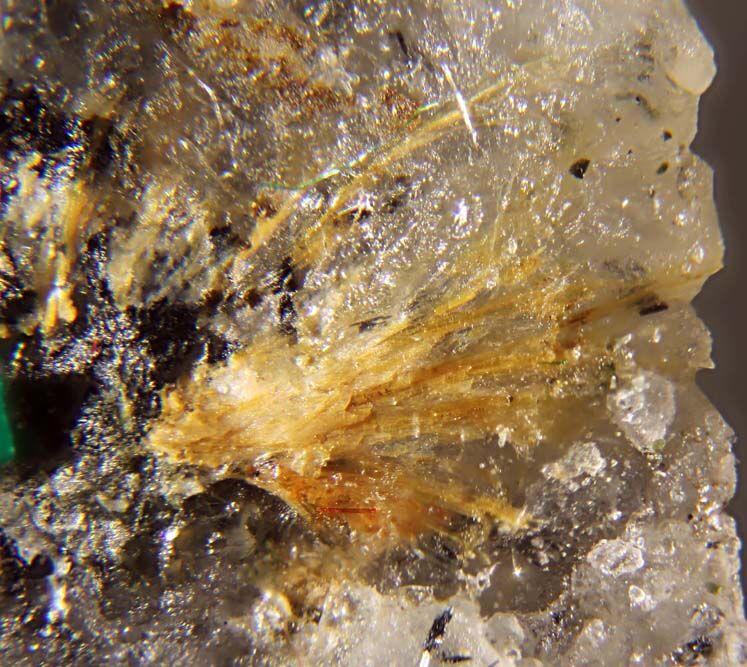 BafertisiteBa2Fe2+4Ti2(Si2O7)2O2(OH)2F2Mineral—
- BobshannoniteNa2KBa(Mn,Na)8(Nb,Ti)4(Si2O7)4O4(OH)4(O,F)2Mineral—
- BusseniteBa4(Na,◻)2(Fe2+,Na)2Ti2(Si2O7)2(CO3)2O2(OH)2(H2O)2F2Mineral—
- CámaraiteBa3NaFe2+8Ti4(Si2O7)4O4(OH)4F3Mineral—
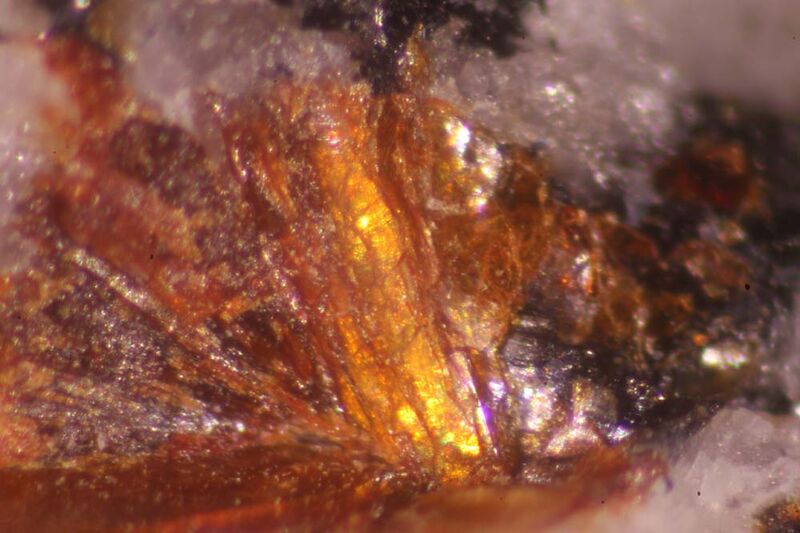 HejtmaniteBa2Mn2+4Ti2(Si2O7)2O2(OH)2F2Mineral—
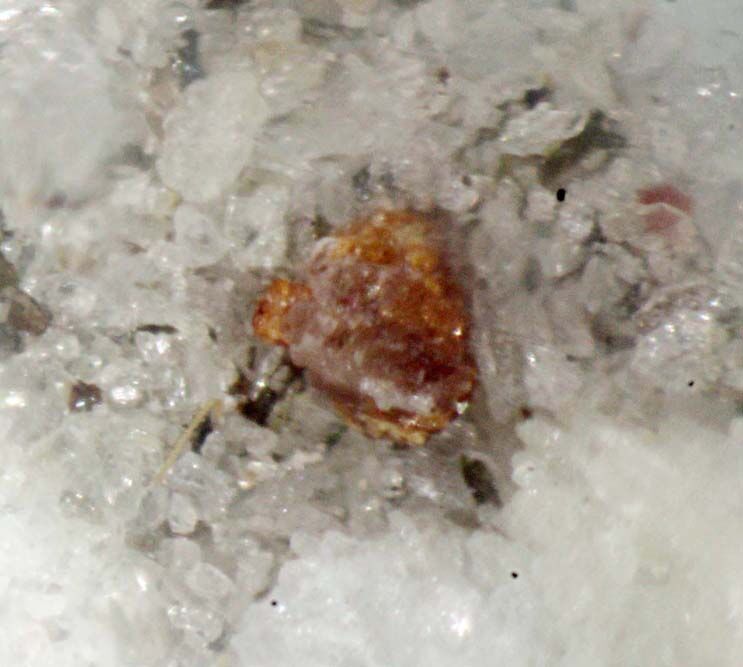 PerraultiteKBa3Ca2Na2Mn16Ti8(Si2O7)8O8(OH)4(F,O,OH)8Mineral—
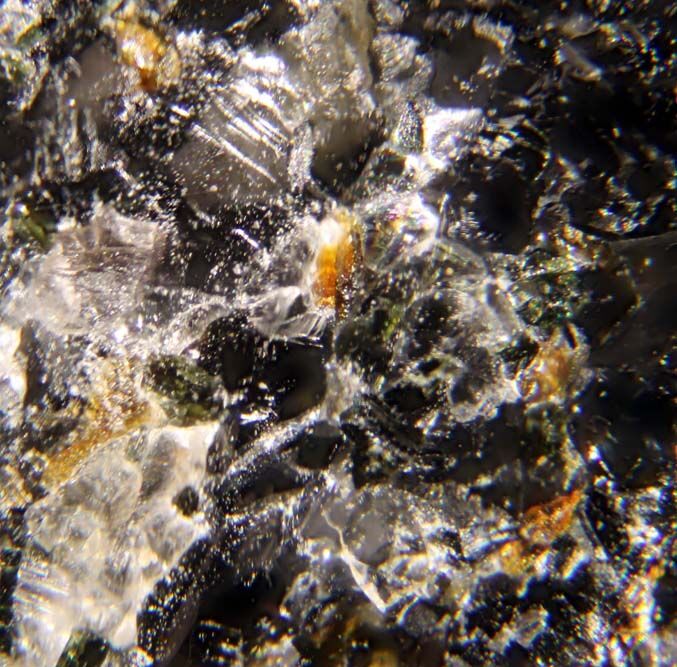 YoshimuraiteBa4Mn2+4Ti2(Si2O7)2(PO4)2O2(OH)2Mineral—
Literature, links & citation
Citations
- 1981Hong, W., Fu, P. (1981) Jinshajiangite, a new Ba-Mn-Fe-Ti-bearing silicate mineral. Acta Mineralogica Sinica: 1(1): 16-23 (in Chinese with English abstract).
- 1982Hong, W., Fu, P. (1982) Jinshajiangite - a new Ba-Mn-Fe-Ti-bearing silicate mineral. Geochemistry: 1: 458-464.
- 1984Dunn, Pete J., Chao, George Y., Grice, Joel D., Ferraiolo, James A., Fleischer, Michael, Pabst, Adolf, Zilczer, Janet A. (1984) New mineral names. American Mineralogist, 69 (5-6) 565-569
- 2001(2001) Jinshajiangite. Handbook of Mineralogy. Mineralogical Society of America
- 2003Rozenberg, K.A., Rastsvetaeva, R.K., Verin, I.A. (2003) Crystal structure of surkhobite - new mineral from the family of titanosilicate mica. Crystallography Reports: 48: 384-389.
Cite this entry
Entry last updated
@misc{mineral2025,
  author    = {Mineral Index editorial board},
  title     = {Jinshajiangite — Mineral Index},
  year      = {2025},
  url       = {https://mineralindex.org/minerals/jinshajiangite-2097}
}