Where it forms, where it's found
- Geological setting
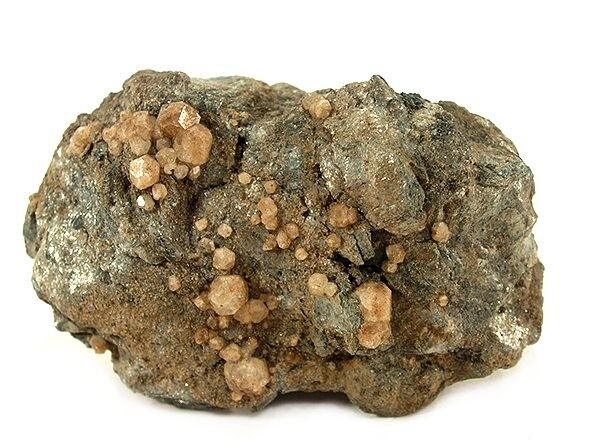
Altered lazurite-bearing metasomatic rock.
- Type locality
- Malo-Bystrinskoe lazurite deposit
- Malaya Bystraya River Valley
- Slyudyanka
- Russia
51.6219°, 103.4119°
1recorded occurrences
Physical
Optical
- Optical type
- Biaxial (+) · 2V measured = 80° · 2V calc = 82°
- Refractive index
- 1.506 – 1.513
- Surface relief
- Moderate
- Principal indices
- nα 1.506 · nβ 1.509 · nγ 1.513
- Pleochroism
- Strong
X = colorless; Y = green; Z = greenish-blue.
- Dispersion
- Distinct.
- Extinction
- Orientation could not be determined because of the absence of cleavage and crystal forms.
- UV response
- Not fluorescent.
- Notes
Absorption: X < Y < Z.
Δ = 0Δmax
PPLpleochroism per grain
XPLindependent extinctions · rotate the stage
PPLpleochroism only · colour blends on rotation
XPLinterference colour · extinct every 90°
Retardation70 nm
Order1st order
XPL colour
Crystallography
- Cell parameters
- a = 9.0523(4) Å · b = 12.8806(6) Å · c = 25.681(1) Å
- Cell angles
- α = 89.988(2) ° · β = 90.052(1) ° · γ = 90.221(1) °
- Ratio a:b:c
- 1 : 1.423 : 2.837
- Z
- 1
- Morphology
Anhedral.
- Parting
- None observed.
- Type-locality form
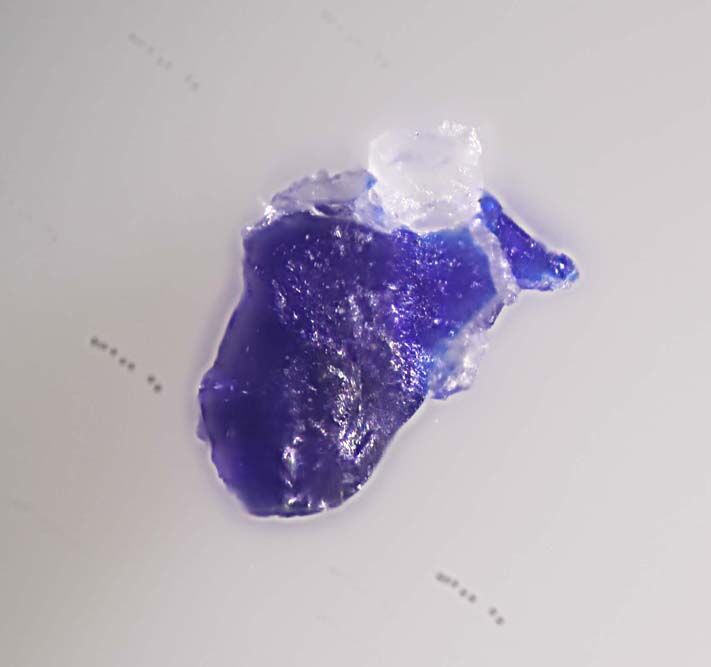
Green to pale blue isolated anhedral equant grains up to 0.5 cm across and their aggregates.
Synonyms
- IMA2021-062a
- Slyudyankaiet
In other languages
- German
- Slyudyankait
Classification
Strunz
10th ed.9.FB
- 9SilicatesClass
- 9.FTektosilicates without zeolitic H2ODivision
- 9.FBTektosilicates with additional anionsGroup
- 9.FBSlyudyankaiteSpecies
Group, growth & confusion
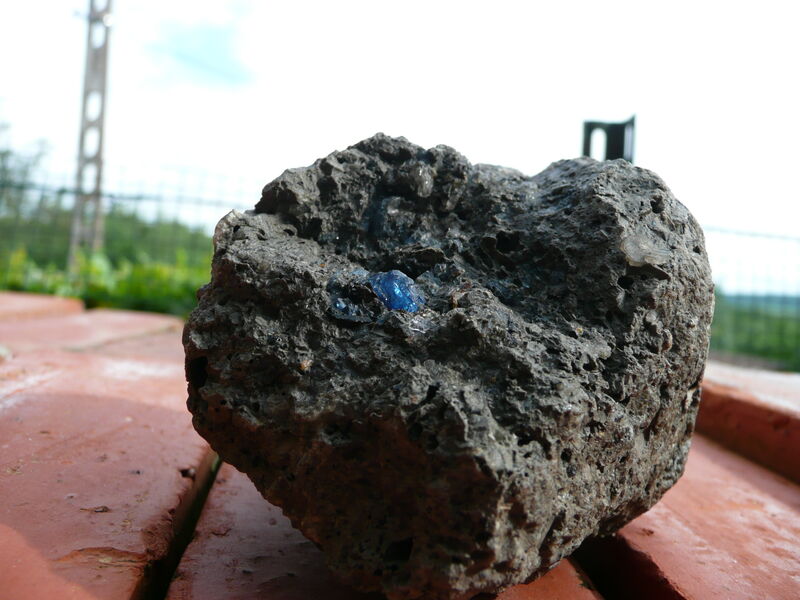
- Bolotinaite(Na7◻)(Al6Si6O24)F · 4H2OMineral—
 HaüyneNa3Ca(Si3Al3)O12(SO4)Mineral—
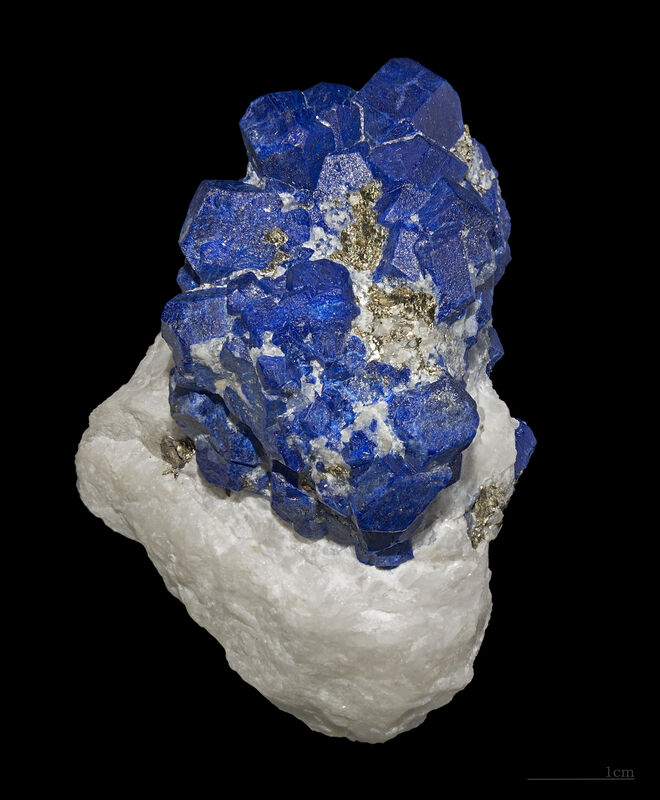 LazuriteNa7Ca(Al6Si6O24)(SO4)(S3)1- · H2OMineral—
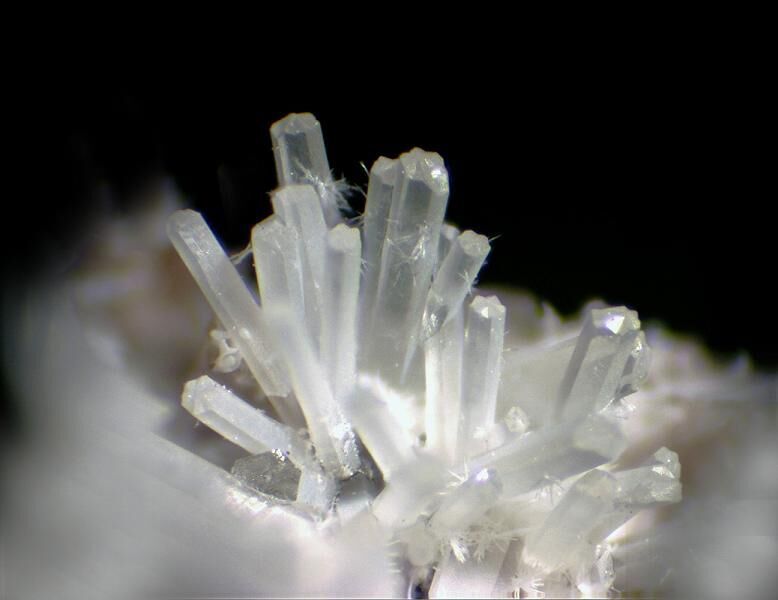 NoseanNa8(Si6Al6)O24(SO4) · H2OMineral—
- SapozhnikoviteNa8(Al6Si6O24)(HS)2Mineral—
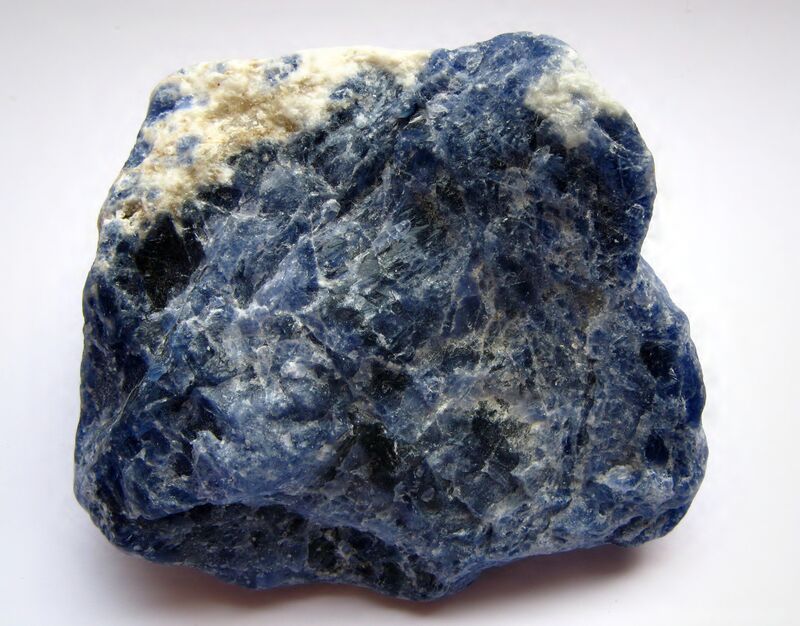 SodaliteNa4(Si3Al3)O12ClMineral—
 TsaregorodtseviteN(CH3)4Si4(SiAl)O12Mineral—
 VladimirivanoviteNa6Ca2[Al6Si6O24](SO4,S3,S2,Cl)2 · H2OMineral—
Literature, links & citation
Citations
- 2022(2022) Slyudyankaite. Handbook of Mineralogy. Mineralogical Society of America
- 2022Miyawaki, Ritsuro, Hatert, Frédéric, Pasero, Marco, Mills, Stuart J. (2022) IMA Commission on New Minerals, Nomenclature and Classification (CNMNC) – Newsletter 65. European Journal of Mineralogy, 34 (1) 143-148 doi:10.5194/ejm-34-143-2022 DOI: 10.5194/ejm-34-143-2022
- 2023Chivers, Tristram, Oakley, Richard T. (2023) Structures and Spectroscopic Properties of Polysulfide Radical Anions: A Theoretical Perspective. Molecules, 28 (15). 5654 doi:10.3390/molecules28155654DOI: 10.3390/molecules28155654
- 2023SAPOZHNIKOV, ANATOLY N, BOLOTINA, NADEZHDA B, CHUKANOV, NIKITA V, YU, ROMAN, SHENDRIK, EKATERINA V, VIGASINA, MARINA F, IVANOVA, LARISA A, TAUSON, VLADIMIR L, LIPKO, SERGEY V (2023) Slyudyankaite, Na28Ca4 (Si24Al24O96)(SO4) 6 (S6)(CO2)· 2H2O, a new sodalite-group mineral from the Malo-Bystrinskoe lazurite deposit, Baikal Lake area, Russia. 108 (9) 1805-1817
Cite this entry
Entry last updated
@misc{mineral2026,
  author    = {Mineral Index editorial board},
  title     = {Slyudyankaite — Mineral Index},
  year      = {2026},
  url       = {https://mineralindex.org/minerals/slyudyankaite-55752}
}