Where it forms, where it's found
- Geological setting
The Malo-Bystrinskoe lazurite gem deposit, Baikal Lake area, Eastern Siberian region, Russia.
Contact metamorphic mineral in marble and skarns. Also in some syenites and alkaline volcanics.
- Type locality
- Malo-Bystrinskoe lazurite deposit
- Malaya Bystraya River Valley
- Slyudyanka
- Russia
51.6219°, 103.4119°
Physical
- Hardness
- 1Talc
- 2Gypsum
- 3Calcite
- 4Fluorite
- 5Apatite
- 6Orthoclase
- 7Quartz
- 8Topaz
- 9Corundum
- 10Diamond
- Transparency
- Opaque
- Colour
- Ultramarine · midnight blue · bluish green · green
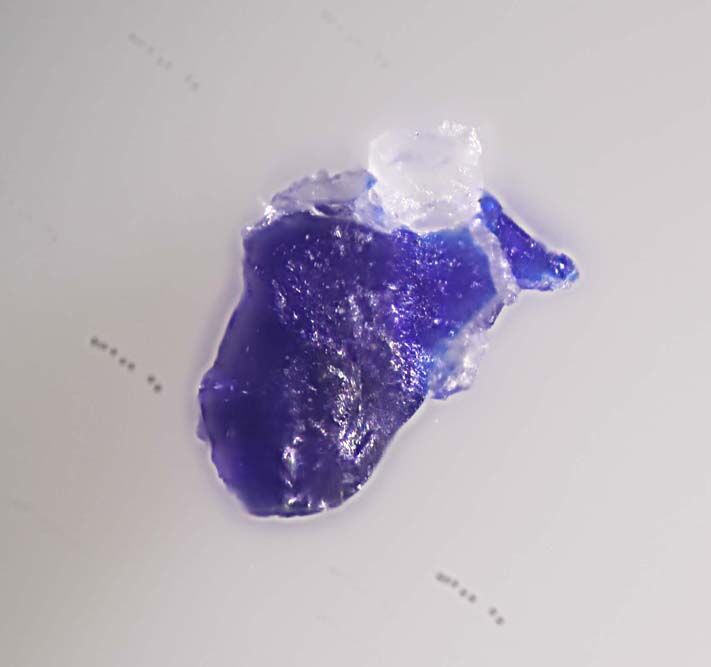
Ultramarine to midnight blue are the usual gem colours. The chromofore is the trisulfide radical anion (S3#-1#). Modulated translucent blue and green small cell hauynes with a white streak have been wrongly called lazurite and do not have enough S3- to deaden the fluorescence. Lapis lazuli color is divided into four grades: Fancy, Fancy Intense, Fancy Deep, and Fancy Dark. Sulfur is the primary chromophore in lapis lazuli, and it occurs in multiple valence states and chemical forms. The UV-Vis spectra show that all samples exhibit a broad absorption band around 600 nm in the visible region, with some samples also displaying a weak absorption peak at 400 nm. The broad absorption band at 600 nm is attributable to [S3]·−, Combined spectroscopic evidence identifies [S3]·− as the key chromophore driving the blue color change: its delocalized negative charge enables electronic transitions that produce the complex absorption peak near 600 nm, while a weak absorption band near 400 nm is attributable to S2− and SO2−4 species. Only the broad absorption band at 600 nm exhibits a significant correlation with lapis lazuli’s colorimetric parameters. [[2]]
- Streak
- Bright blue for lazurite, white for the small cell hauynes.
- Tenacity
- brittle
- Cleavage
- Imperfect/Fair
Imperfect on (110)
- Fracture
- Sub-Conchoidal
- Density
- 2.38 g/cm³
Optical
- Optical type
- Isotropic
- Surface relief
- Moderate
- Principal indices
- n 1.502 – 1.522
- Birefringence
- slight (neotype): α' = 1.523(2), γ' = 1.525(2).
- UV response
- The opaque ultramarine and midnight blue Lazurites are not fluorescent. The translucent green and blue hauynes have an orange brown fluorescence under Long Wave UV.
- Notes
Anomalously anisotropic.
- Single index
- n = 1.512
Crystallography
- Space group
- #212
- Cell parameters
- a = 9.087(3) Å
- Z
- 1
- Morphology
Dodecahedrons, cubes, granular, disseminated, massive.
- Twinning
None observed
- Type-locality form
Velvet Lazurite of Sapozhnikov et al (2021)
- Comment
Has monoclinic (Lazurite-C) and orthorhombic polytypes (Lazurite-O). The latter was originally thought to be triclinic. An orthorhombic variant was a approved as Vladimirivanovite; another is UM1976-26-SiOSO:AlCaClHNa. (In)commensurately modulated green lazurite from Baffin Island (Hassan et al., 1985) and Ladjuar Medan (F. Camara, priv. comm. 2009) both have a cell edge of 9.05 A; see also Sapozhnikov et al. (1992) and Bolotina (2007) and references therein.
Chemical composition
- Impurities
- Fe
- Mg
- K
- H2O
Synonyms
- Cyaneus
- Lasurite (of Brogger)
- Lasurstein
- Lazurite (of Dana)
- Sapphis (of Agricola)
- Ultramarine
In other languages
- French
- lazurite
- German
- Lasurit
- Spanish
- lazurita
- Italian
- lazurite
- Portuguese
- lazurita
- Japanese
- 青金石
- Chinese
- 青金石
- Traditional Chinese
- 青金石
- Russian
- лазурит
Classification
9.FB.10
- 9SilicatesClass
- 9.FTektosilicates without zeolitic H2ODivision
- 9.FBTektosilicates with additional anionsGroup
- 9.FB.10LazuriteSpecies
76.02.03.04
- 76Tectosilicates Al-si FrameworkClass
- 76.02Al-Si Framework Feldspathoids and related speciesType
- 76.02.03Sodalite groupGroup
- 76.02.03.04LazuriteSpecies
17.9.1
- 17Silicates Containing other AnionsClass
- 17.9Silicates with sulphide or sulphiteGroup
- 17.9.1LazuriteSpecies
Group, growth & confusion
- Bolotinaite(Na7◻)(Al6Si6O24)F · 4H2OMineral—
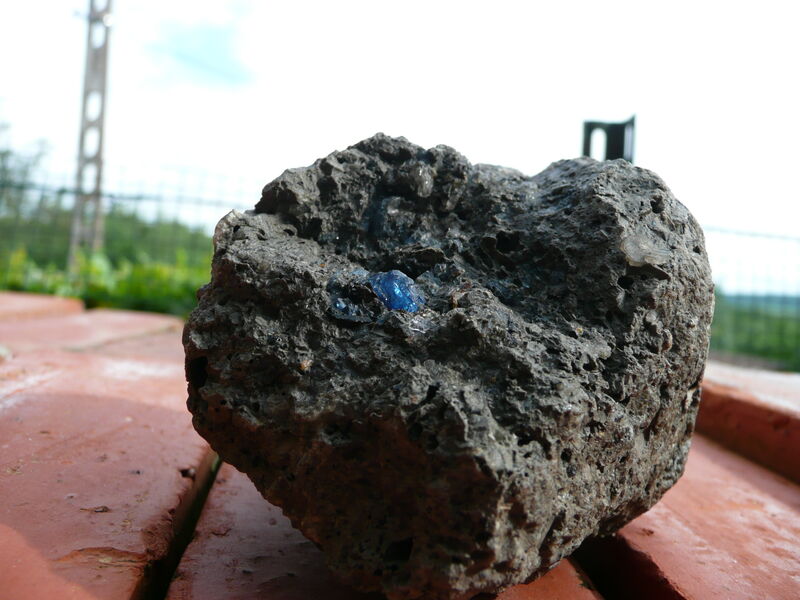 HaüyneNa3Ca(Si3Al3)O12(SO4)Mineral—
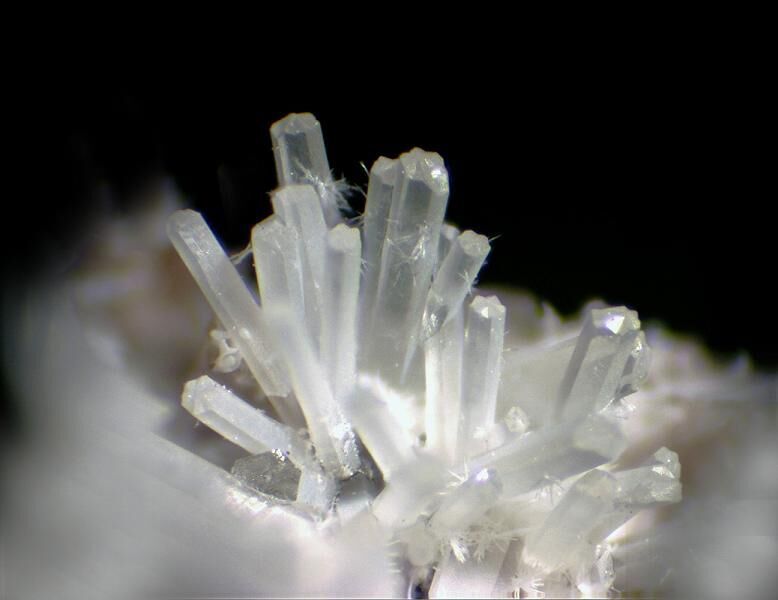 NoseanNa8(Si6Al6)O24(SO4) · H2OMineral—
- SapozhnikoviteNa8(Al6Si6O24)(HS)2Mineral—
- SlyudyankaiteNa28Ca4(Si24Al24O96)(SO4)6(S6)1/3(CO2) · 2H2OMineral—
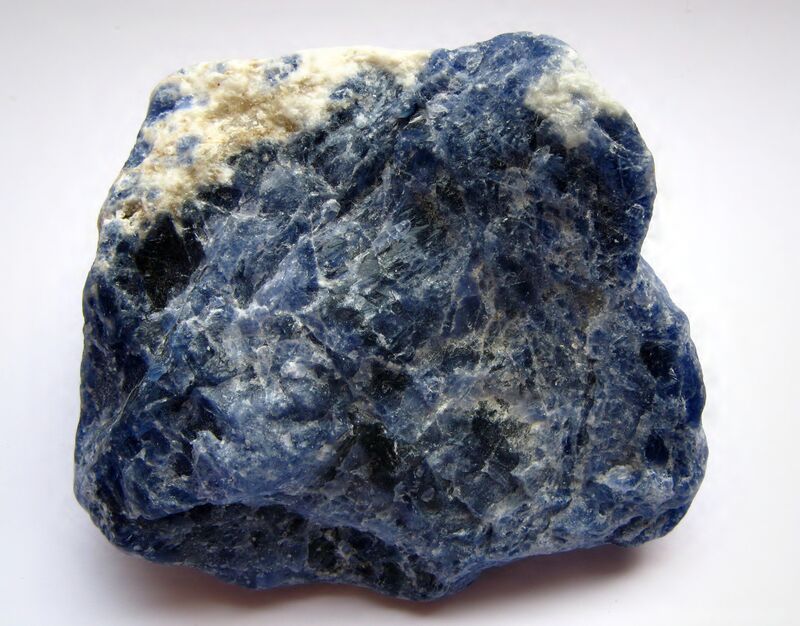 SodaliteNa4(Si3Al3)O12ClMineral—
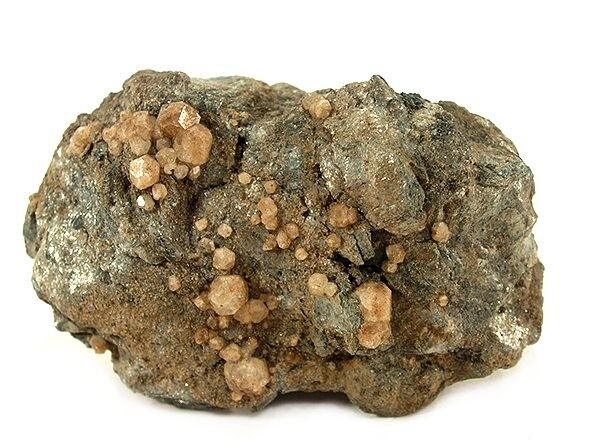 TsaregorodtseviteN(CH3)4Si4(SiAl)O12Mineral—
 VladimirivanoviteNa6Ca2[Al6Si6O24](SO4,S3,S2,Cl)2 · H2OMineral—
Literature, links & citation
- 1869Fischer, H. (1869) [Resultate seiner microscopisch-mineralogischen studien]. Neues Jahrbuch fuer Mineralogie 1869, 344-347.
- 1873Zirkel, Ferdinand (1873) Die mikroskopische Beschaffenheit der Mineralien und Gesteine. Verlag von Wilhelm Engelmann, Leipzig, page 165.
- 1873Vogelsang, Hermann (1873) Über die natürlichen ultramarin-verbindungen. Med. Akad., Amsterdam, v. 7, p. 161. (See also "Über die natürlichen Ultramarin-Verbindungen", Max Cohen & Sohn, Bonn, pp. 39.
- 1891Brögger, W. C., Bäckström, H. (1891) Die Mineralien der Granatgruppe. Zeitschrift für Krystallographie, 18 (1). 209-276 doi:10.1524/zkri.1891.18.1.209DOI: 10.1524/zkri.1891.18.1.209
- 1938Voskoboinikova, N. (1938) The mineralogy of the Slyudyanka deposits of lazurite. Zapiski Vserossiyskogo Mineralogicheskogo Obshchestva: 67: 601-622 (in Russian).
Entry last updated
@misc{mineral2026,
  author    = {Mineral Index editorial board},
  title     = {Lazurite — Mineral Index},
  year      = {2026},
  url       = {https://mineralindex.org/minerals/lazurite-2357}
}