History
The name says it plainly. Sodalite is named for the sodium locked inside it — a feldspathoid, meaning a silicate that forms where there is too little silica to make feldspar. Its colour is a deep, even royal blue, and that blue is the reason anyone remembers it.
Long before any chemist studied the stone, it was already moving along trade routes. The people of the Caral culture, on the coast of what is now Peru, traded for sodalite carried down from the Collao altiplano, the high Andean Plateau.
The mineral entered European science in 1811, described from rock collected in the Ilímaussaq complex near Narsaq, in West Greenland. That Greenland outcrop remains its type locality — the place the first studied specimens came from.
For most of the 19th century the Greenland find stayed a scientific curiosity. Sodalite did not matter as an ornamental stone until 1891, when miners struck vast deposits of fine material in Ontario, Canada. Those Canadian sources — chiefly around Bancroft — turned a laboratory mineral into a carving and jewellery stone.
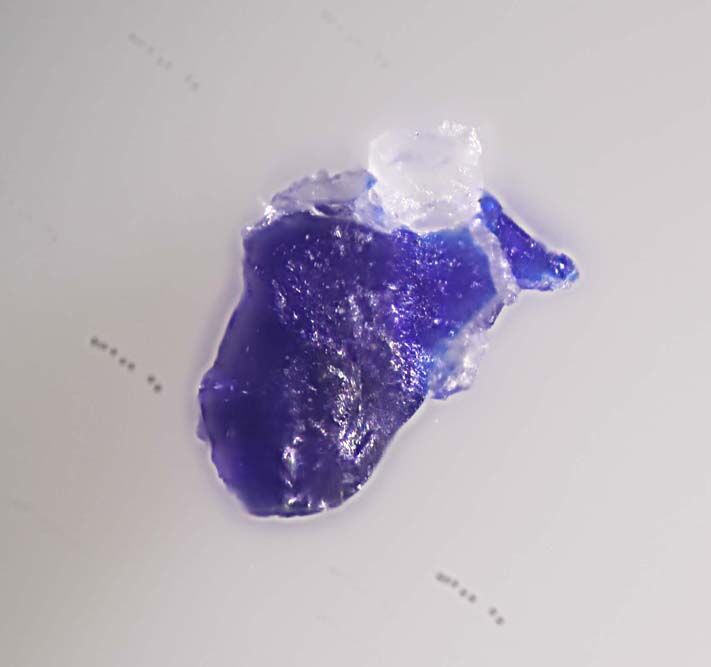
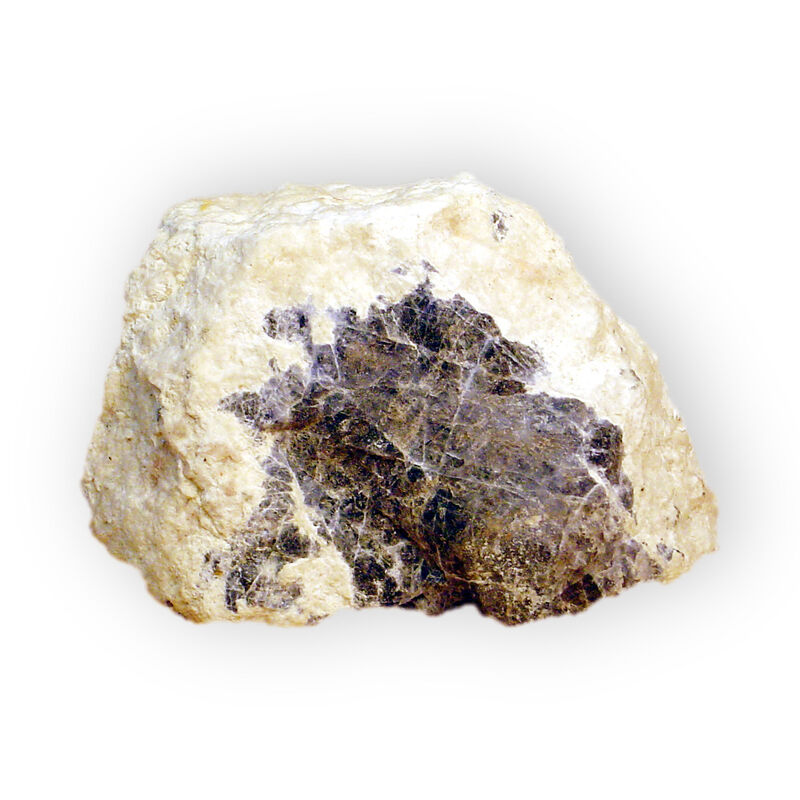
One variety carries a stranger reputation. Hackmanite is sodalite that shows tenebrescence: its colour changes with light, then changes back. Stone freshly cut from Mont-Saint-Hilaire in Quebec or from Ilímaussaq in Greenland comes out pale to deep violet, but fades quickly to a greyish or greenish white. Hackmanite from Afghanistan and Myanmar does the reverse — creamy white at first, it turns violet to pink-red in sunlight, and pales again in the dark.
Industrial & practical applications
Sodalite earns its keep as a decorative stone, not as an ore. Its even royal blue is the whole appeal, and almost every use is lapidary — the cutting and polishing of stone for ornament.
The most uniformly blue material goes into jewellery, cut into cabochons — smooth, domed, unfaceted stones — and into beads. Less even material is put to humbler work, used as facing or inlay: thin slabs set into a surface for colour rather than carved in the round.
A buyer should not confuse it with lapis lazuli, the famous blue rock it resembles. Sodalite rarely carries the flecks of pyrite that speckle lapis, and its blue reads as a traditional royal blue rather than the deeper ultramarine of lapis.
One variety draws collectors for a reason beyond colour. Hackmanite is sodalite that changes hue under light and reverts in the dark — a reversible colour shift called tenebrescence. That trick makes it a prized curiosity for mineral collectors and a recurring subject in research on photochromic minerals, rather than an industrial material.
Where it forms, where it's found
- Geological setting
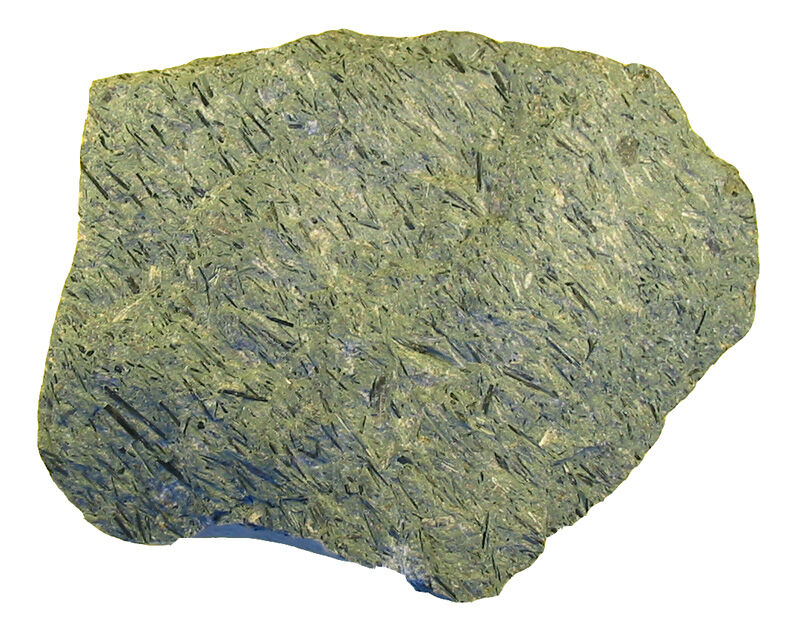
Nepheline Seyenite
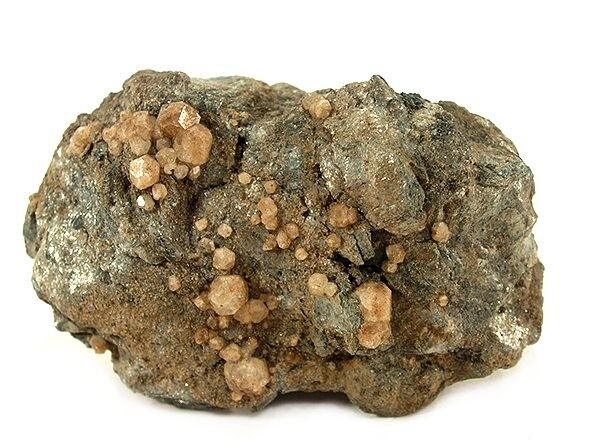
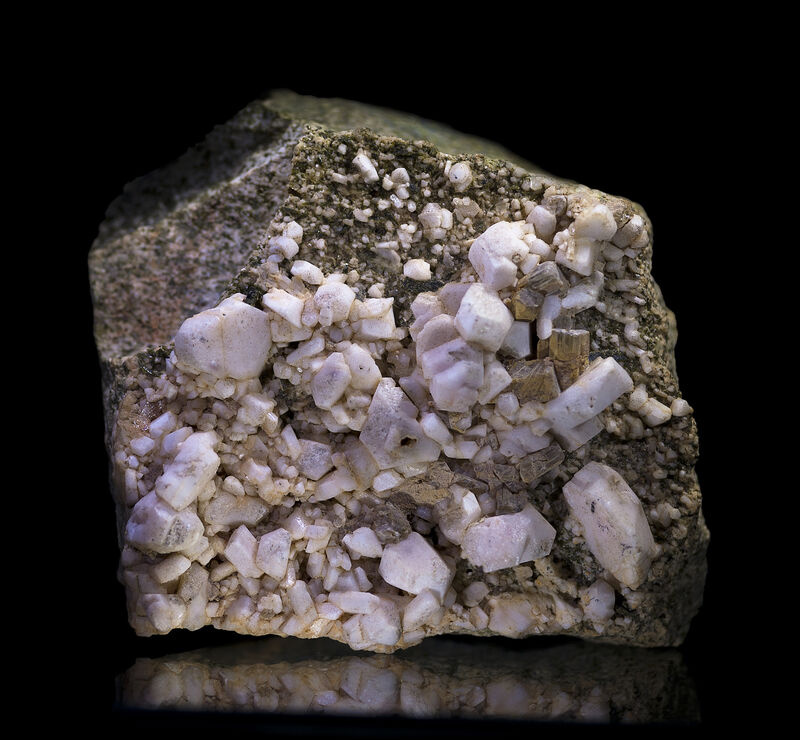
Sodalites occur: - in alkaline intrusives (Princess Mine, Bancroft, Ontario, Canada); - in alkaline pegmatites (Mont St Hilaire, Quebec, Canada); - in carbonatites (Magnet Cove, Arkansas, USA); - in marble skarns or metasomatized calcareous rocks (Ladjuar Medan, Sar-e-Sang, Afghanistan); - in phonolites and volcanic ejecta (Mount Vesuvius, Italy).
- Type locality
- Ilímaussaq complex
- Kujalleq
- Greenland
Varieties
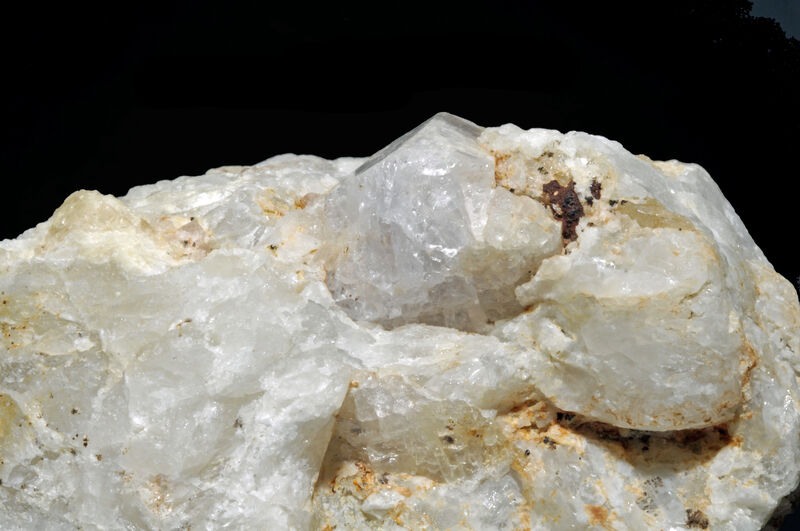
Physical
- Hardness
- 1Talc
- 2Gypsum
- 3Calcite
- 4Fluorite
- 5Apatite
- 6Orthoclase
- 7Quartz
- 8Topaz
- 9Corundum
- 10Diamond
- Transparency
- Transparent · Translucent
- Colour
- All Colours
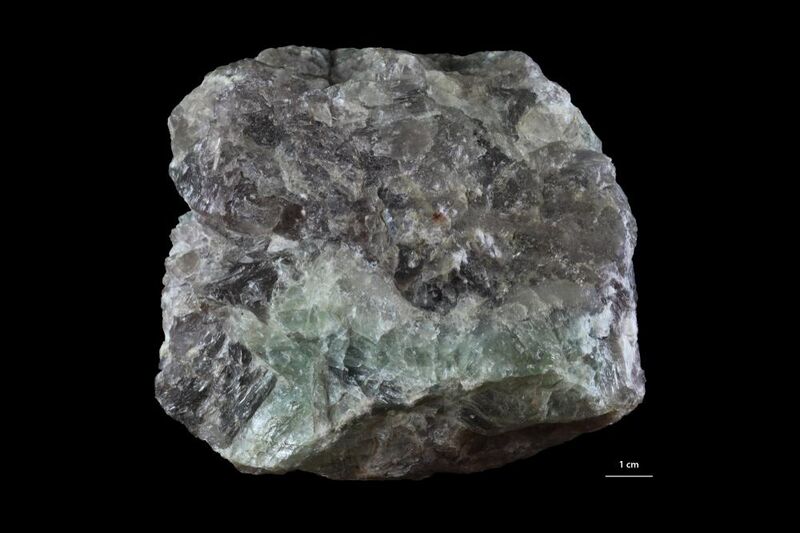
Colourless, white, light yellow, green, light to very dark blue, gray, pink to violet
- Streak
- White
- Tenacity
- brittle
- Cleavage
- Poor/Indistinct
Poor on (110)
- Fracture
- Sub-Conchoidal
- Density
- 2.27 g/cm³
Optical
- Optical type
- Isotropic
- Principal indices
- n 1.483 – 1.487
- Pleochroism
- Non-pleochroic
- UV response
- Bright red-orange under SW UV light and blue, white, pink, red, yellow under LW UV light. Cathodoluminescent (the effect is quenched by high concentrations of S, as shown by Zahoransky et al., 2016). Yellowish phosphorescence may be photochromic in magentas.
- Single index
- n = 1.485
Crystallography
- Space group
- #212
- Cell parameters
- a = 8.876(6) Å
- Z
- 1
- Morphology
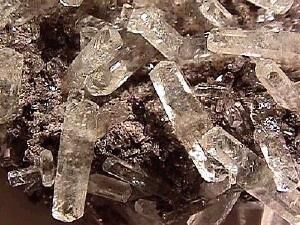
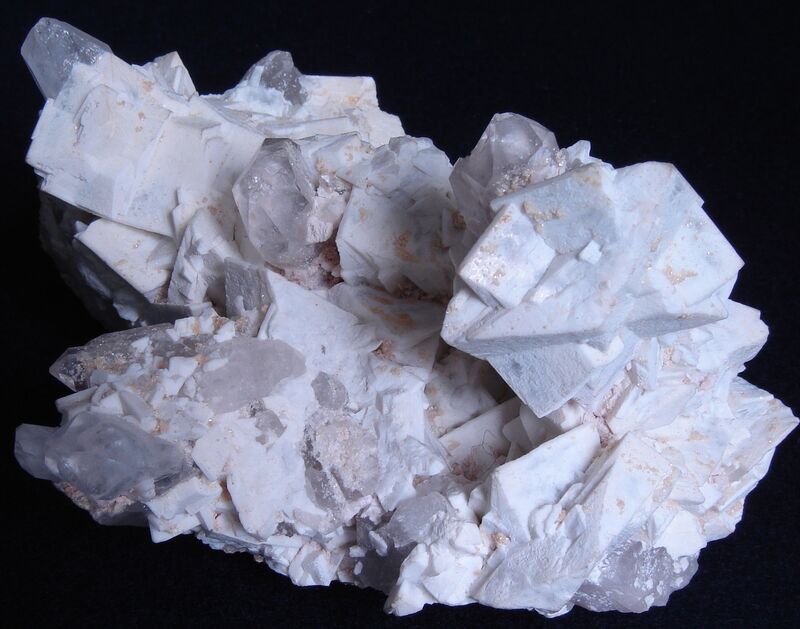
Crystals rare, dodecahedron.
- Twinning
Common on (111) forming pseudohexagonal prisms. (This may not be twinning, but merely elongated growth in the (111) direction). Twinning can occur in these elongated crystals. These have re-entrants in the terminations and 6 terminal faces instead of 3 for an elongated dodecahedron.
- Comment
Range: 8.870 - 8.882 A.
Chemical composition
- Impurities
- Fe
- Mn
- K
- Ca
- H2O
- S
- Br
Synonyms
- Alomit
- Alomita
- Alomite
- Canadian Blue Stone
- Canadian Lapis
- Ditroit
- Glaucolite
In other languages
- French
- Alomite · Ditroite · Glaucolite · Sodalite
- German
- Sodalith
- Spanish
- sodalita
- Italian
- Sodalite
- Portuguese
- sodalita · Sodalite
- Japanese
- ソーダライト · 方ソーダ石 · 方曹達石
- Chinese
- 方钠石
- Traditional Chinese
- 方鈉石
- Russian
- Содалит
- Arabic
- سوداليت · صودالايت · صوداليت
Classification
9.FB.10
- 9SilicatesClass
- 9.FTektosilicates without zeolitic H2ODivision
- 9.FBTektosilicates with additional anionsGroup
- 9.FB.10SodaliteSpecies
76.02.03.01
- 76Tectosilicates Al-si FrameworkClass
- 76.02Al-Si Framework Feldspathoids and related speciesType
- 76.02.03Sodalite groupGroup
- 76.02.03.01SodaliteSpecies
17.3.3
- 17Silicates Containing other AnionsClass
- 17.3Silicates with chloride (including aluminosilicates)Group
- 17.3.3SodaliteSpecies
Group, growth & confusion
- Bolotinaite(Na7◻)(Al6Si6O24)F · 4H2OMineral—
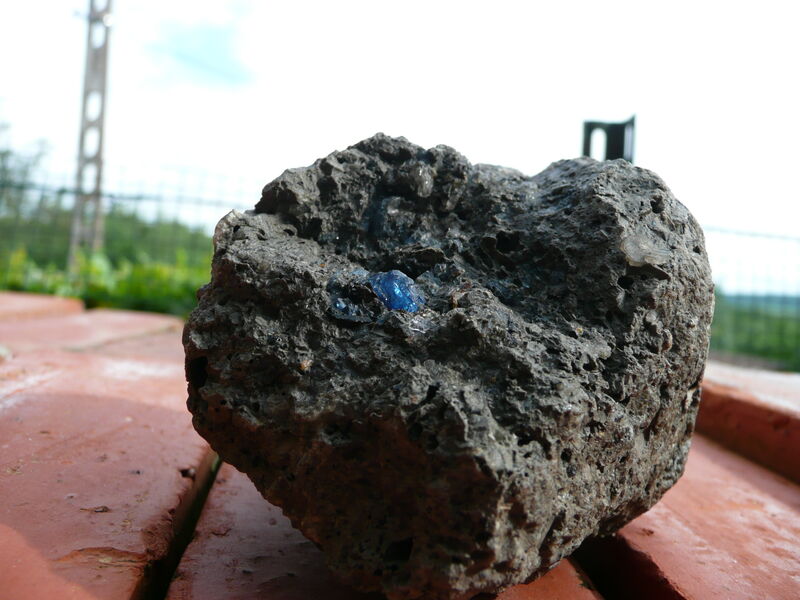 HaüyneNa3Ca(Si3Al3)O12(SO4)Mineral—
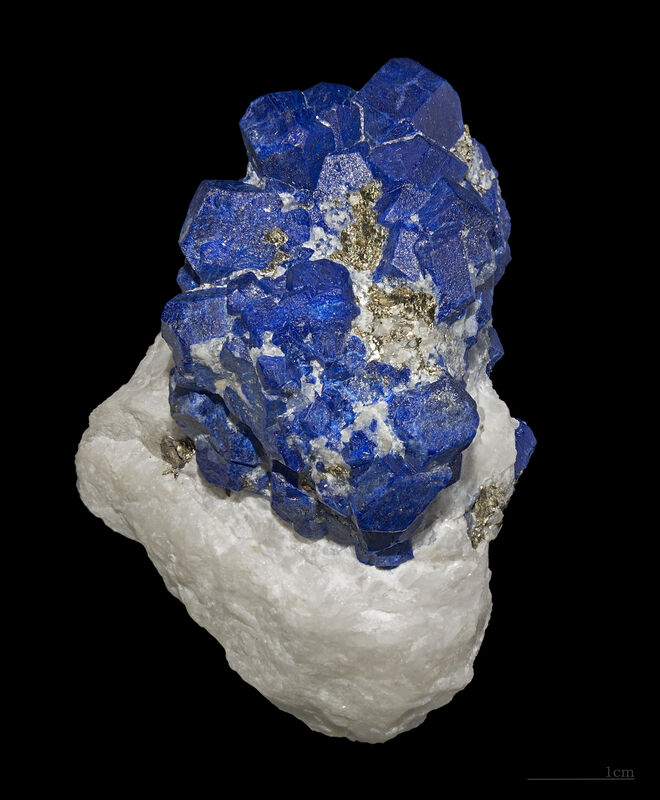 LazuriteNa7Ca(Al6Si6O24)(SO4)(S3)1- · H2OMineral—
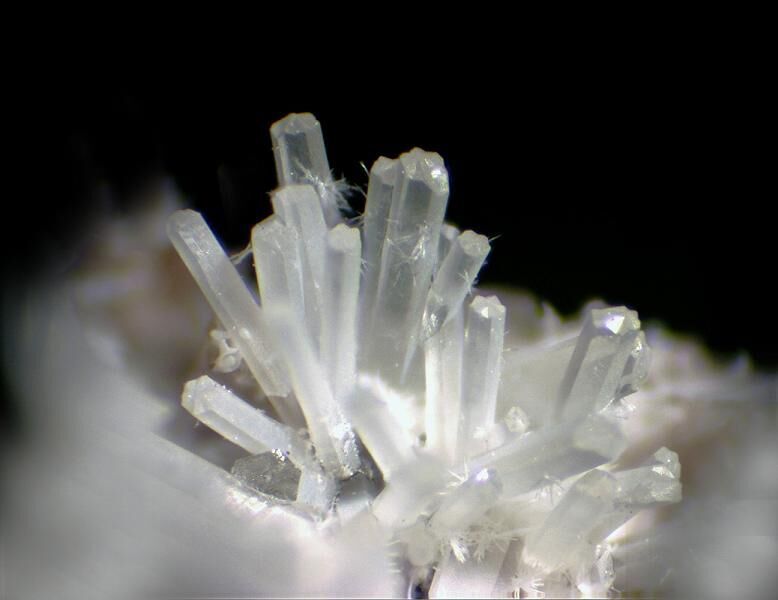 NoseanNa8(Si6Al6)O24(SO4) · H2OMineral—
- SapozhnikoviteNa8(Al6Si6O24)(HS)2Mineral—
- SlyudyankaiteNa28Ca4(Si24Al24O96)(SO4)6(S6)1/3(CO2) · 2H2OMineral—
 TsaregorodtseviteN(CH3)4Si4(SiAl)O12Mineral—
 VladimirivanoviteNa6Ca2[Al6Si6O24](SO4,S3,S2,Cl)2 · H2OMineral—
Literature, links & citation
- 1811Thomson, T. (1811) A chemical analysis of Sodalite, a new mineral from Greenland. Journal of natural Philosophy, Chemistry and the Arts: 29: 285-292.
- 1811Thomson, T. (1811) Einige mineralogische Merkwürdigkeiten, 1) Drei grönländische Mineralien (Sodalith, Allanit, Chryolit), Annalen der Physik und Chemie: 39: 127.
- 1812Thomson, T. (1812) A chemical analysis of sodalite, a new mineral from Greenland. Transactions of the Royal Society of Edinburgh: 6: 387-395.
- 1819Dunin Barkowski, St. (1819) Sodalith entdeckt am Vesuv (Fosso grande). Annalen der Physik und Chemie: 63: 382.
- 1839Rose, G. (1839) Ueber den Sodalith und Cancrinit. Journal für Praktische Chemie: 17: 348-351.
Entry last updated
@misc{mineral2026,
  author    = {Mineral Index editorial board},
  title     = {Sodalite — Mineral Index},
  year      = {2026},
  url       = {https://mineralindex.org/minerals/sodalite-3701}
}