Where it forms, where it's found
- Geological setting
Late-stage, low-temperature, secondary alteration mineral. Mineralisation occurs in a narrow hydrothermal vein hosted by volcanoclastic rocks.
- Type locality
- Jote Mine
- Pampa Larga mining district
- Tierra Amarilla
- Copiapó Province
- Atacama
- Chile
-27.6086°, -70.1564°
1recorded occurrences
Safety & handling
Physical
Optical
- Optical type
- Biaxial (+) · 2V calc = 71°
- Refractive index
- 1.73 – 1.76
- Surface relief
- High
- Principal indices
- nα 1.73 · nβ 1.74 · nγ 1.76
- Pleochroism
- Non-pleochroic
- Extinction
- Even small crystal fragments exhibit undulatory extinction.
- UV response
- Does not fluoresce with LW or SW UV.
- Notes
Optical orientation could not be determined.
Δ = 0Δmax
PPLpleochroism per grain
XPLindependent extinctions · rotate the stage
PPLpleochroism only · colour blends on rotation
XPLinterference colour · extinct every 90°
Retardation300 nm
Order1st order
XPL colour
Crystallography
- Cell parameters
- a = 5.343(5) Å · b = 5.501(5) Å · c = 7.329(5) Å
- Cell angles
- α = 67.72(2) ° · β = 69.06(2) ° · γ = 69.42(2) °
- Ratio a:b:c
- 1 : 1.030 : 1.372
- Z
- 1
- Morphology
Crude diamond-shaped tablets intergrown in crude spherical aggregates.
- Twinning
None observed.
- Type-locality form
Crude diamond-shaped tablets up to about 0.1 mm intergrown in crude spherical aggregates to about 0.5 mm in diameter.
Chemical composition
Synonyms
- Alumolukrahniet
- Alumolukrahnitt
- IMA2022-059
In other languages
- German
- Alumolukrahnit
Classification
Strunz
10th ed.8.CG
- 8Phosphates, Arsenates, VanadatesClass
- 8.CPhosphates without additional anions, with H2ODivision
- 8.CGWith large and medium-sized cations, RO4:H2O = 1:1Group
- 8.CGAlumolukrahniteSpecies
Group, growth & confusion
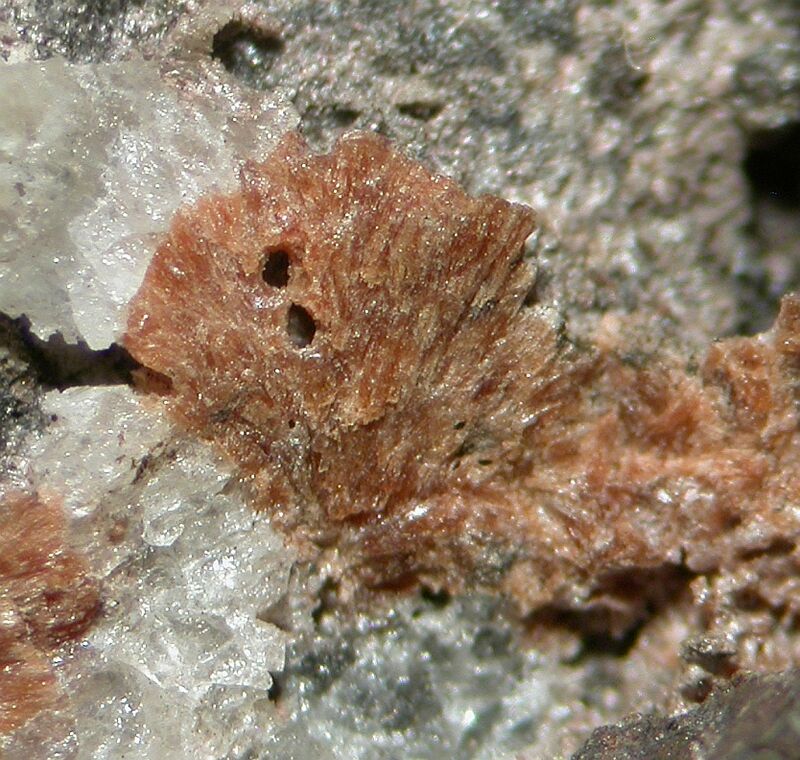 CabalzariteCaMg2(AsO4)2 · 2H2OMineral—
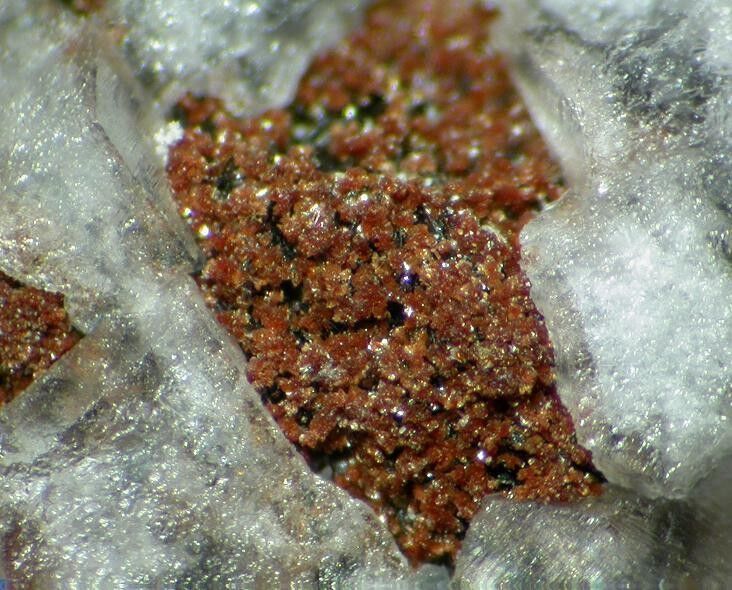 CobaltlotharmeyeriteCaCo2(AsO4)2 · 2H2OMineral—
- CobalttsumcoritePbCo2(AsO4)2 · 2H2OMineral—
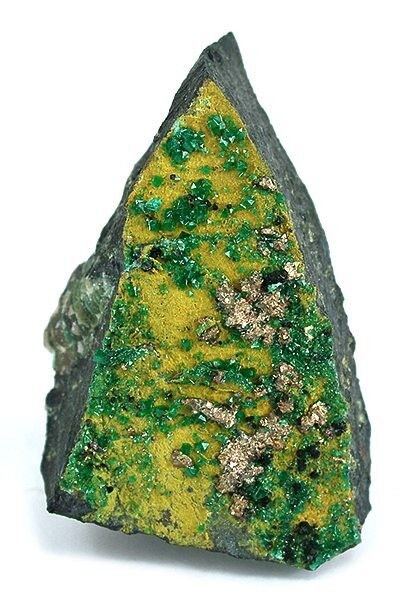 FerrilotharmeyeriteCaZnFe3+(AsO4)2(OH) · H2OMineral—
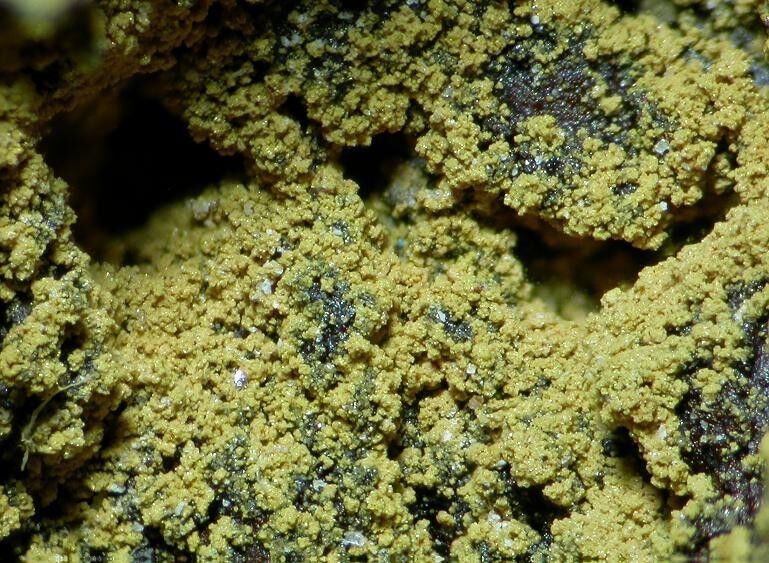 GartrellitePbCuFe3+(AsO4)2(OH) · H2OMineral—
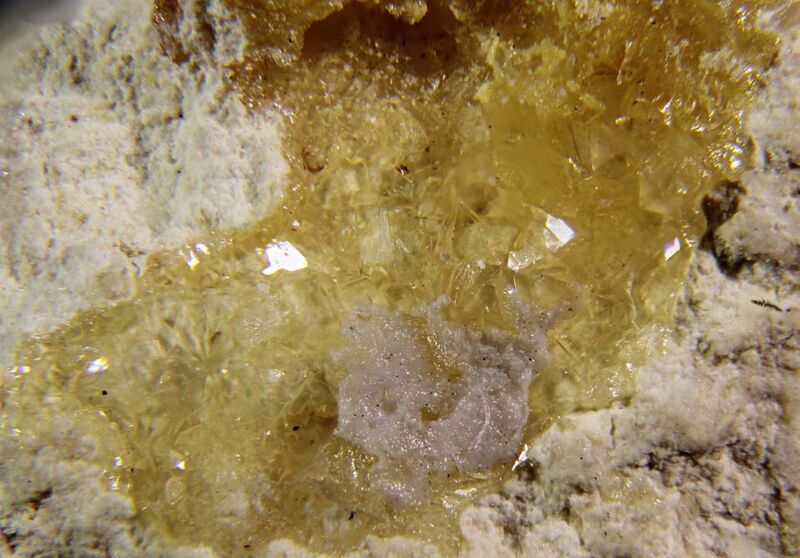 HelmutwinkleritePbZn2(AsO4)2 · 2H2OMineral—
- KaliochalciteKCu2(SO4)2[(OH)(H2O)]Mineral—
- KrettnichitePbMn3+2(VO4)2(OH)2Mineral—
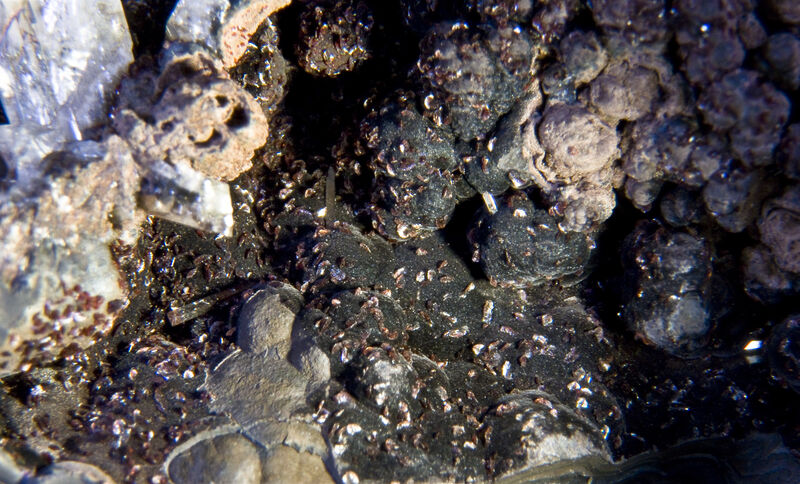 LotharmeyeriteCaZn2(AsO4)2 · 2H2OMineral—
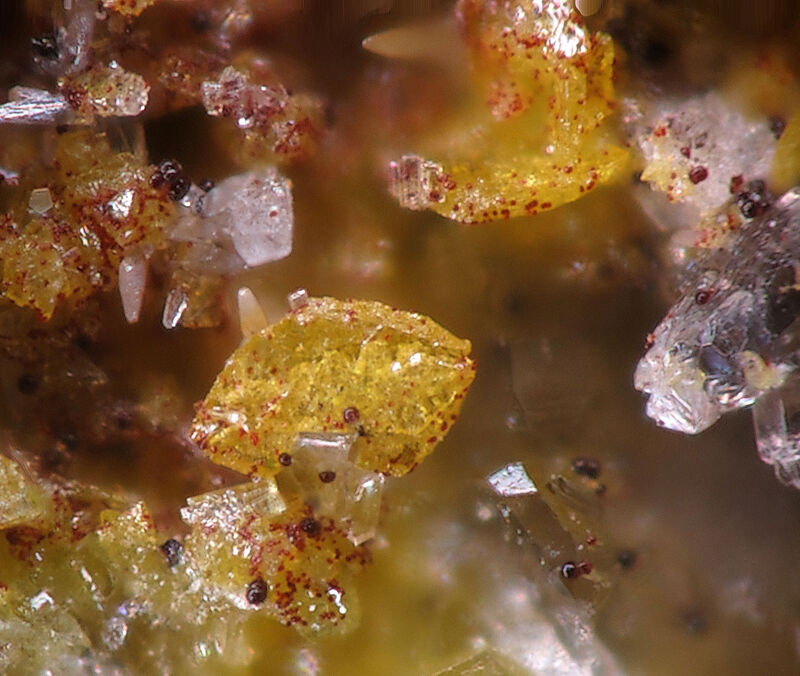 LukrahniteCaCuFe3+(AsO4)2(OH,H2O)2Mineral—
Literature, links & citation
Citations
- 2022Miyawaki, Ritsuro, Hatert, Frédéric, Pasero, Marco, Mills, Stuart J. (2022) IMA Commission on New Minerals, Nomenclature and Classification (CNMNC) – Newsletter 70. European Journal of Mineralogy, 34 (6) 591-601 doi:10.5194/ejm-34-591-2022 DOI: 10.5194/ejm-34-591-2022
- 2023Kampf, Anthony R., Mills, Stuart J., Nash, Barbara P., Dini, Maurizio, Donoso, Arturo A. Molina (2023) Alumolukrahnite, CaCu2+Al(AsO4)2(OH)(H2O), the aluminium analogue of lukrahnite from the Jote mine, Copiapó Province, Chile. Mineralogical Magazine, 87 (3) 465-469 doi:10.1180/mgm.2022.142DOI: 10.1180/mgm.2022.142
Cite this entry
Entry last updated
@misc{mineral2025,
  author    = {Mineral Index editorial board},
  title     = {Alumolukrahnite — Mineral Index},
  year      = {2025},
  url       = {https://mineralindex.org/minerals/alumolukrahnite-470380}
}