History
The name reaches for a flash of light. It comes from the Greek augḗ — shine, or luster. The word was chosen for the bright glint that some specimens throw off their cleavage surfaces, the flat planes along which the crystal splits cleanly. The irony is that most augite is anything but bright. Ordinary specimens are a dull dark green, brown, or black; only the occasional crystal earns the name.
The German geologist Abraham Gottlob Werner gave augite that name in 1792. Werner was one of the figures who built the early vocabulary of mineralogy. He worked when the field had barely settled on what counted as a distinct mineral. Much of his effort went into sorting minerals into named kinds.
Beyond its naming, augite carries little documented human story. It was never worked as a gemstone, ground for a pigment, or struck into coin, and the record holds no early cultural use of the mineral itself.
Industrial & practical applications
Augite is mined for nothing. There is no industrial or economic use for the mineral itself — no metal locked inside it worth smelting, no property that a factory needs. What value it holds is to the people who study how rock forms.
That value is real. Augite is a clinopyroxene — one of the pyroxene minerals whose crystals are read by geologists the way others read a thermometer. The technique, clinopyroxene thermobarometry, works out the temperature and pressure of the magma at the moment the mineral crystallized. Augite is one of the main clinopyroxenes used this way. It is common as a phenocryst — a crystal that grew early and large in a cooling melt — and easy to identify.
The readings feed wider questions. From the temperature and pressure locked in a crystal, researchers reconstruct how magma crystallized and how some ore deposits formed. The same figures track how rocks were reheated and cooled during metamorphism. They also build models of the deep crust and mantle, which in turn sharpen forecasts of volcanic eruptions and earthquakes.
Any commercial worth lies not in augite but in the rock it helps build. It is the dark pyroxene that gives basalt and gabbro their grey-to-black colour, and those rocks are quarried in bulk. Hard, tough igneous stone of this kind — commonly called trap rock — makes an excellent source of crushed stone for road base, concrete, and asphalt aggregate. Basalt is also cut into building blocks and cobblestones, and extruded into stone wool for thermal insulation.
Where it forms, where it's found
- Geological setting
Major rock forming mineral in mafic igneous rocks, ultramafic rocks, and some high-grade metamorphic rocks.
Varieties
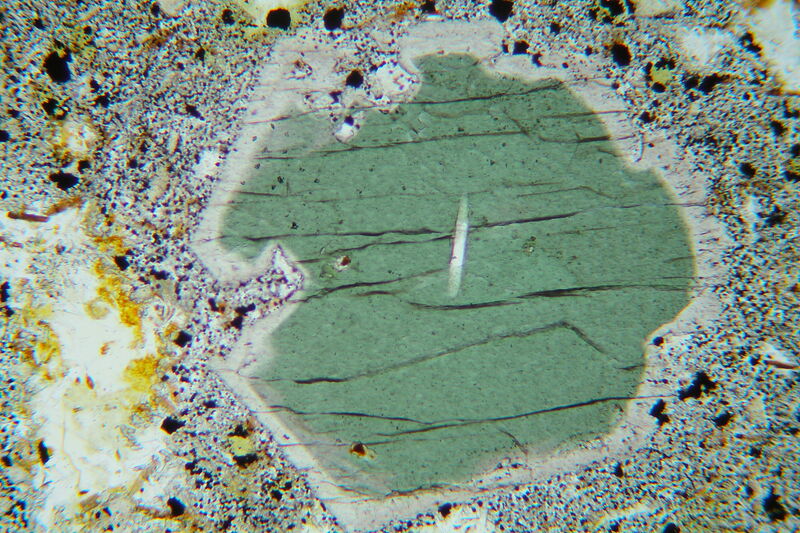
Physical
- Hardness
- 1Talc
- 2Gypsum
- 3Calcite
- 4Fluorite
- 5Apatite
- 6Orthoclase
- 7Quartz
- 8Topaz
- 9Corundum
- 10Diamond
- Lustre
- Vitreous · resinous
- Transparency
- Translucent · Opaque
- Colour
- Brown-green · black · green-black · brown · purplish brown
- Streak
- Greenish gray, light to dark brown
- Tenacity
- brittle
- Cleavage
- Distinct/Good
Good on (110)
- Fracture
- Irregular/Uneven · Sub-Conchoidal
- Density
- 3.19 g/cm³
Optical
- Optical type
- Biaxial (+) · 2V measured = 40 – 52° · 2V calc = 48 – 68°
- Refractive index
- 1.68 – 1.774
- Surface relief
- High
- Principal indices
- nα 1.68 – 1.735 · nβ 1.684 – 1.741 · nγ 1.706 – 1.774
- Birefringence
- 0.032
- Pleochroism
- Visible
X= pale green, pale brown, green, greenish yellow Y= pale brown, pale yellow-green, violet Z= pale green, grayish green, violet
- Dispersion
- r > v weak to distinct
- Extinction
- Z : c = 35°-48°
- UV response
- Not fluorescent
Crystallography
- Space group
- C2/c
- Cell parameters
- a = 9.699 Å · b = 8.844 Å · c = 5.272 Å
- Cell angles
- β = 106.97 °
- Ratio a:b:c
- 1 : 0.912 : 0.544
- Z
- 4
- Morphology
Stubby prismatic crystals.
- Twinning
Simple or multiple on (100), also on (001)
- Parting
- on (100) and (010)
- Comment
Axial setting is C1 2/c 1.
Chemical composition
- Impurities
- Ti
- Cr
- Na
- Mn
- K
Synonyms
- Hedenbergite-Ågirin
- Violatit
- Violatita
- Violatite
- Volcanic Shorl
- Volcanite (of Delamétherie)
In other languages
- French
- Augite
- German
- Augit
- Spanish
- augita
- Italian
- augite
- Japanese
- オージャイト · 普通輝石
- Chinese
- 普通辉石
- Simplified Chinese
- 普通辉石
- Traditional Chinese
- 普通輝石
- Russian
- авгит
- Arabic
- أغويط · أوجيت · اوجيت
Classification
9.DA.15
- 9SilicatesClass
- 9.DInosilicatesDivision
- 9.DAInosilicates with 2-periodic single chains, Si2O6; pyroxene familyGroup
- 9.DA.15AugiteSpecies
65.01.3a.03
- 65Inosilicates Single-width, Unbranched Chains, (w=1)Class
- 65.01Single-Width Unbranched Chains, W=1 with chains P=2Type
- 65.01.3a— unnamed intermediate level —Group
- 65.01.3a.03AugiteSpecies
16.23.1
- 16Silicates Containing Aluminum and other MetalsClass
- 16.23Aluminosilicates of Fe, Ca, and MgGroup
- 16.23.1AugiteSpecies
Group, growth & confusion
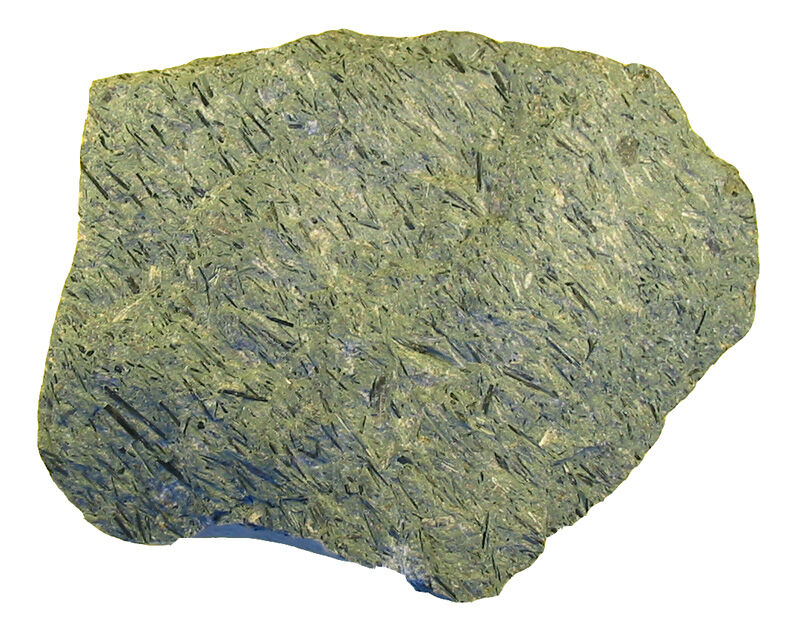 AegirineNaFe3+Si2O6Mineral—
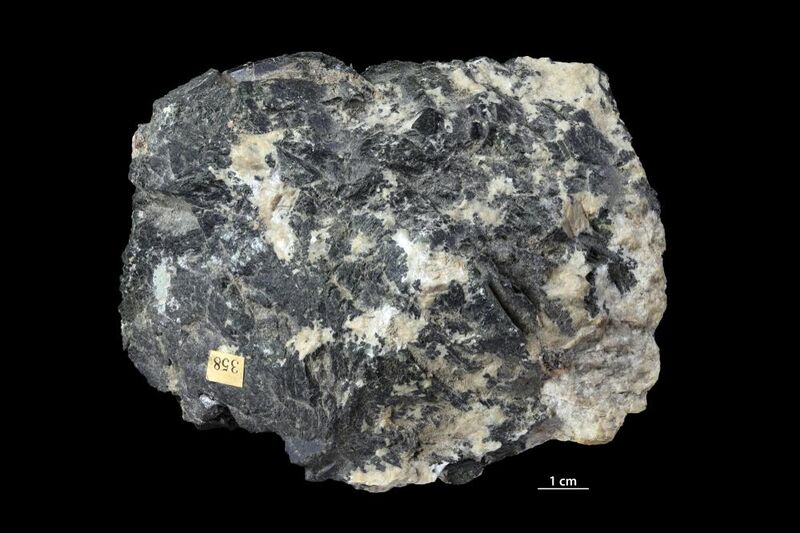 Aegirine-augite(Ca,Na)(Fe3+,Mg,Fe2+)Si2O6Mineral—
- BurnettiteCaVAlSiO6Mineral—
- ClinoenstatiteMg2Si2O6Mineral—
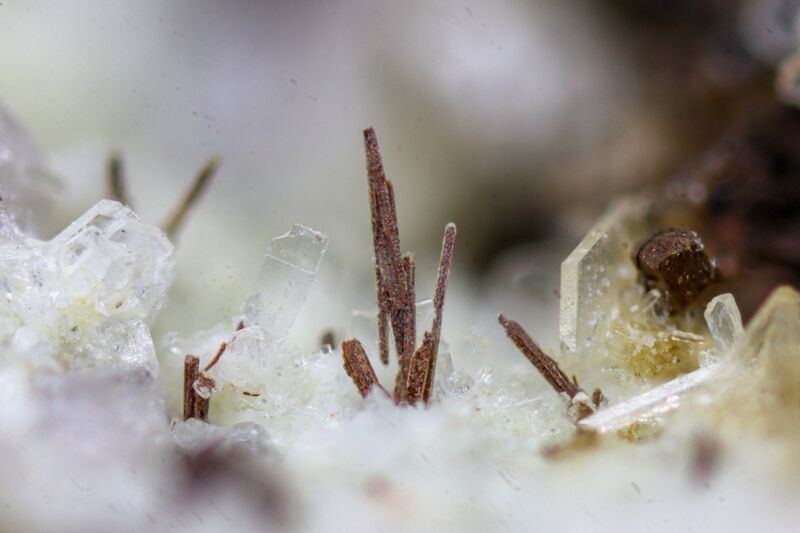 ClinoferrosiliteFe2+2Si2O6Mineral—
- ColomeraiteNaTi3+Si2O6Mineral—
- DavisiteCaScAlSiO6Mineral—
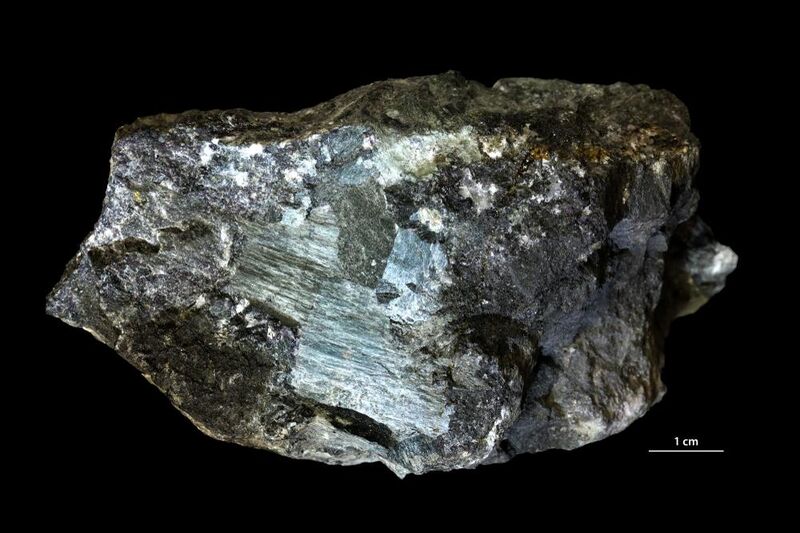 DiopsideCaMgSi2O6Mineral—
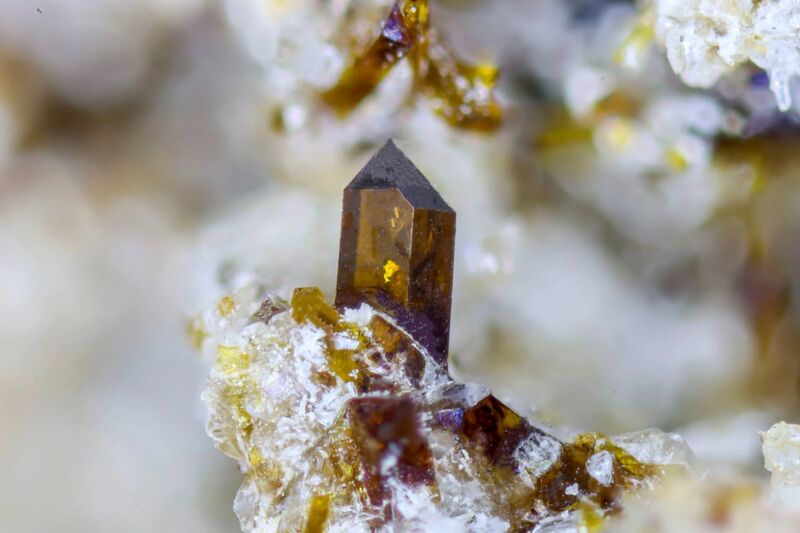 EsseneiteCaFe3+AlSiO6Mineral—
- GrossmaniteCa(Ti3+,Mg,Ti4+)AlSiO6Mineral—
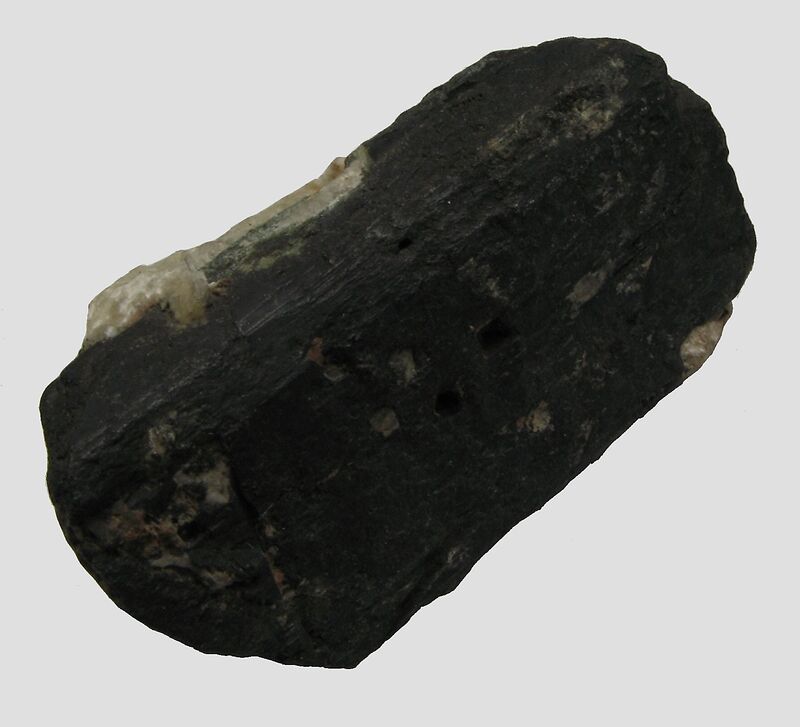
Literature, links & citation
- 1892Dana, E.S. (1892) Dana's System of Mineralogy, 6th edition, New York, NY: 352-364.
- 1951Poldervaart, A., Hess, H. H. (1951) Pyroxenes in the Crystallization of Basaltic Magma. The Journal of Geology, 59 (5) 472-489 doi:10.1086/625891DOI: 10.1086/625891
- 1966Preston, J. (1966) An unusual hourglass structure in augite. American Mineralogist, 51 (7) 1227-1232
- 1969Clark, J.R., Appleman, D.E., Papike, J.J. (1969) Crystal-chemical characterization of clinopyroxenes based on eight new structure refinements. MSA Special Paper: 2: 31-50.
- 1969Strong, D. F. (1969) Formation of the hour-glass structure in augite. Mineralogical Magazine, 37 (288) 472-479 doi:10.1180/minmag.1969.037.288.07 DOI: 10.1180/minmag.1969.037.288.07
Entry last updated
@misc{mineral2026,
  author    = {Mineral Index editorial board},
  title     = {Augite — Mineral Index},
  year      = {2026},
  url       = {https://mineralindex.org/minerals/augite-419}
}