Where it forms, where it's found
- Geological setting
Low temperature hydrothermal veins.
Complex granitic pegmatites, a low temperature hydrothermal alteration product of primary phosphates.
- Type locality
- Devon
- England
- UK
101recorded occurrences
Physical
- Hardness
- 1Talc
- 2Gypsum
- 3Calcite
- 4Fluorite
- 5Apatite
- 6Orthoclase
- 7Quartz
- 8Topaz
- 9Corundum
- 10Diamond
- Transparency
- Transparent · Translucent
- Colour
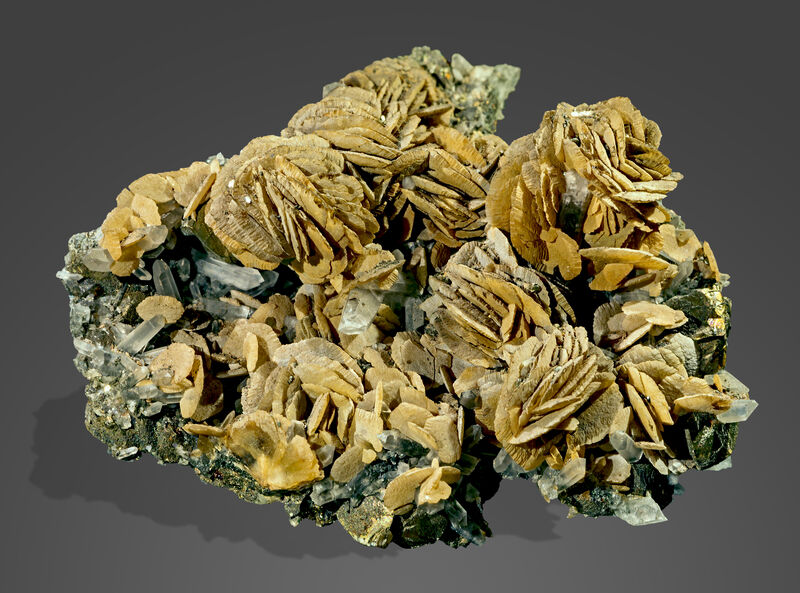
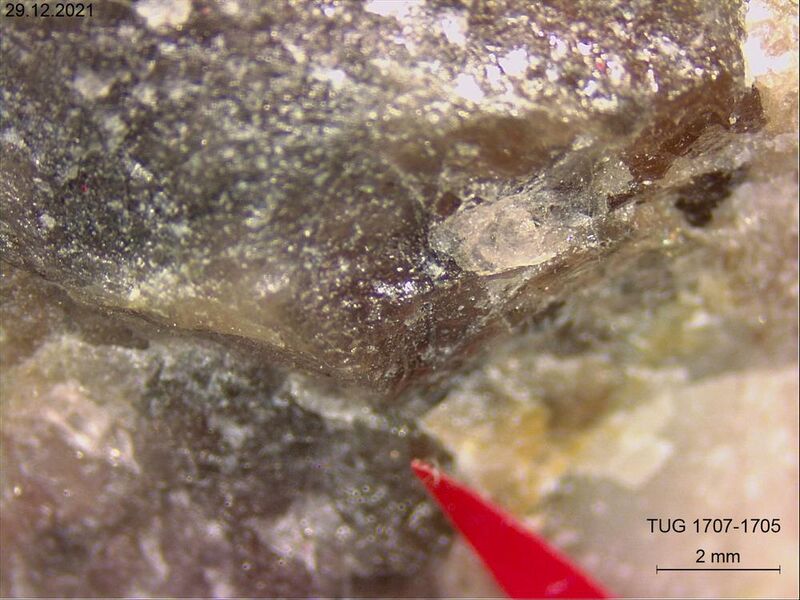
- Yellowish brown · brown · clove-brown
Colourless in transmitted light.
- Streak
- White
- Tenacity
- brittle
- Cleavage
- Poor/Indistinct
Poor on (100)
- Fracture
- Irregular/Uneven · Sub-Conchoidal
- Density
- 3.11 g/cm³
Optical
- Optical type
- Biaxial (-) · 2V measured = 40 – 45° · 2V calc = 50°
- Refractive index
- 1.644 – 1.691
- Surface relief
- High
- Principal indices
- nα 1.644 – 1.649 · nβ 1.662 – 1.683 · nγ 1.671 – 1.691
- Birefringence
- 0.035
- Pleochroism
- Visible
X= yellow Y= pink Z= pale pink to colourless
- Dispersion
- r > v strong
- Extinction
- X = a; Y = b; Z = c. In optically twined matrial Y ∧ c = 4°-8°.
- UV response
- Not Fluorescent
Δ = 0Δmax
PPLpleochroism per grain
XPLindependent extinctions · rotate the stage
PPLpleochroism only · colour blends on rotation
XPLinterference colour · extinct every 90°
Retardation350 nm
Order1st order
XPL colour
Crystallography
- Space group
- #20
- Cell parameters
- a = 10.41 Å · b = 13.42 Å · c = 6.92 Å
- Cell angles
- α = 90 ° · β = 90 ° · γ = 90 °
- Ratio a:b:c
- 1 : 1.289 : 0.665
- Morphology
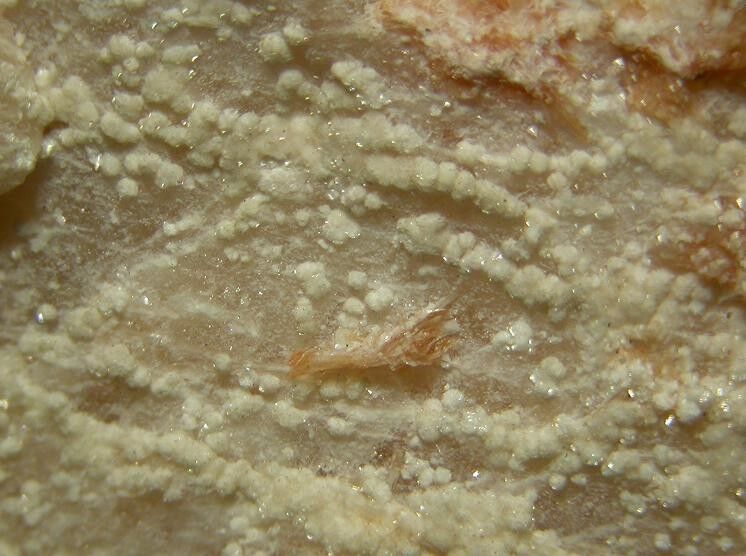
Equant to pyramidal crystals, short prismatic [001], tabular, platy, radiating groups, fibrous crusts, massive.
- Twinning
Common. May show on (100) and (001). Twins evident when of varying proportions but symmetrical twins consist of four to eight individuals in sectors with four individuals comprising a "termination". Visible twinning is uncommon.
- Type-locality form
Small yellow crystals on quartz.
- Comment
Bba2; possibly monoclinic pseudo-orthorhombic.
Crystal structure
Chemical composition
- Impurities
- Ca
- Mn
Synonyms
- Childreniet
In other languages
- French
- Childrénite
- German
- Childrenit
- Spanish
- Childrenita
- Italian
- Childrenite
- Chinese
- 磷铝铁石
- Russian
- Чилдренит
- Arabic
- تشلدرنايت
Classification
Strunz
10th ed.8.DD.20
- 8Phosphates, Arsenates, VanadatesClass
- 8.DPhosphates, etc. with additional anions, with H2ODivision
- 8.DDWith only medium-sized cations, (OH, etc.):RO4= 2:1Group
- 8.DD.20ChildreniteSpecies
Dana
8th ed.42.07.01.01
- 42Hydrated Phosphates, Etc.containing Hydroxyl or HalogenClass
- 42.07(AB)2(XO4)Zq·xH2OType
- 42.07.01Childrenite GroupGroup
- 42.07.01.01ChildreniteSpecies
CIM
—19.12.57
- 19PhosphatesClass
- 19.12Phosphates of MnGroup
- 19.12.57ChildreniteSpecies
Group, growth & confusion
Literature, links & citation
Citations
- 1823Brooke, H.J.A. (1823) On some undescribed minerals. Childrenite. The Quarterly Journal of Science, Literature, and the Arts: 16: 274-277.
- 1852Rammelsberg, K.F.A. (1852) On the chemical constitution of childrenite. The London, Edinburgh, and Dublin Philosophical Magazine and Journal of Science: 4(23): 118-120.
- 1863Brush, G.J. (1863) On Childrenite from Hebron in Maine. American Journal of Science and Arts: 36(107): 257.
- 1873Church, A. H. (1873) New analyses of certain mineral arseniates and phosphates. Journal of the Chemical Society, 26. 101-111 doi:10.1039/js8732600101DOI: 10.1039/js8732600101
- 1913(1913) Atlas Der Krystallformen Vol. 2 - Text - Band II - Calaverit-Cyanochroit. Carl Winters Universitätsbuchhandlung, Heidelberg.
Cite this entry
Entry last updated
@misc{mineral2025,
  author    = {Mineral Index editorial board},
  title     = {Childrenite — Mineral Index},
  year      = {2025},
  url       = {https://mineralindex.org/minerals/childrenite-1003}
}