History
Long before it had a name, goethite was on the walls of caves. The mineral turns up in paint samples from the caves of Lascaux in France. It is one of the brown ochres — earth pigments built around iron oxides. Paleolithic painters also heat-treated it to produce a red pigment. Warmed enough, goethite — a hydrated iron oxide — loses its water and becomes hematite, a deep red iron oxide.
The mineral kept its place in the ochre trade long after the Paleolithic. One striking example comes from Phrygia in Asia Minor. The burial shroud of King Gordias was coloured with a dye containing goethite. In its un-faded state, the shroud would have looked as though it were woven from gold.
The formal mineralogical naming came much later. The mineral was first described in 1806, from samples at the Hollertszug Mine in Herdorf, Germany. It was named that year by the German mineralogist Johann Georg Lenz, in honour of Johann Wolfgang von Goethe. Goethe is remembered as a poet and novelist, but he was also a philosopher and a politician. He served as Chief Minister of State of Weimar. He was also a geoscientist with a working interest in minerals — and the dedication acknowledged that side of him.
Industrial & practical applications
The main modern use of goethite is as an iron ore. Mined in bulk, it is often called brown iron ore in the trade. It is the primary iron mineral in some important deposits — the Alsace-Lorraine basin in France being a long-standing example. Further major sources are spread across Brazil, South Africa, Russia, Australia and the southern Appalachians. Iron-rich lateritic soils — the deep red weathering layers that form in tropical climates — also yield goethite-bound iron and other metals when mined.
The mineral also remains in use as a pigment. It is the source of the artists' colour known as yellow ochre — an earth pigment built around hydrated iron oxide.
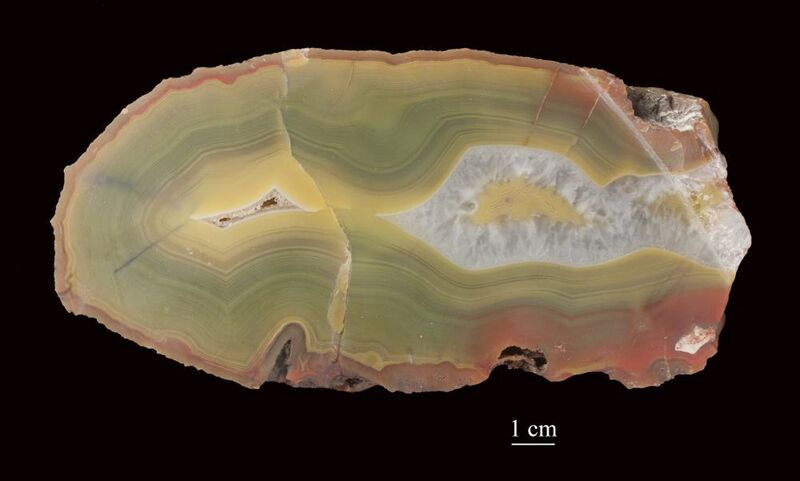
Goethite also has a small place in jewellery. Banded or iridescent varieties are cut and polished into cabochons — domed, unfaceted gems with a smooth top — and set for decorative use.
Where it forms, where it's found
- Geological setting
Common weathering product, primary hydrothermal mineral, bog and marine environments.
- Type locality
- Hollertszug Mine (Hollerter Zug Mine)
- Dermbach
- Herdorf
- Daaden-Herdorf
- Altenkirchen
- Rhineland-Palatinate
- Germany
50.7794°, 7.9300°
Varieties
Physical
- Hardness
- 1Talc
- 2Gypsum
- 3Calcite
- 4Fluorite
- 5Apatite
- 6Orthoclase
- 7Quartz
- 8Topaz
- 9Corundum
- 10Diamond
- Transparency
- Opaque
- Colour
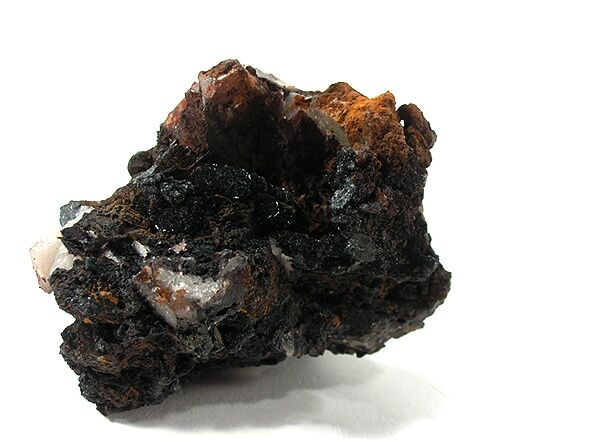
- Brownish black · yellow-brown · reddish brown
- Streak
- Yellowish brown, orange-yellow, ocher-yellow
- Tenacity
- brittle
- Cleavage
- Perfect
(010); (100) less perfect.
- Fracture
- Irregular/Uneven
- Density
- 4.27 g/cm³
Optical
- Optical type
- Biaxial (-) · 2V measured = 27° · 2V calc = 20°
- Refractive index
- 2.26 – 2.409
- Surface relief
- Very high
- Principal indices
- nα 2.260 – 2.275 · nβ 2.393 – 2.409 · nγ 2.393 – 2.409
- Pleochroism
- Strong
X = red b/yellow b = clear yellow Y = red a/yellow c = brown-yellow Z = red c/yellow a = orange-yellow
- Dispersion
- relatively strong r>v
- Extinction
- X = b; Y = c; Z = a.
- Optical colour
- Gray with bluish tint
- Anisotropism
- Distinct; in bluish grays
- Internal reflections
- Yellow, red, brown
- Tropism
- Anisotropic
- Reflectance R%
- (17.5,19.2) 400, (16.7,18.3) 420, (15.9,17.4) 440, (15.2,16.7) 460, (14.6,16.0) 480, (14.1,15.5) 500, (13.7,15.0) 520, (13.3,14.6) 540, (13.0,14.3) 560, (12.8,14.0) 580, (12.5,13.7) 600, (12.4,13.5) 620, (12.2,13.4) 640, (12.0,13.2) 660, (12.0,13.1) 680, (11.9,13.0) 700
- Notes
Absorption: Z > Y > X.
Crystallography
- Space group
- #71
- Cell parameters
- a = 4.608 Å · b = 9.956 Å · c = 3.0215 Å
- Ratio a:b:c
- 1 : 2.161 : 0.656
- Z
- 4
- Morphology
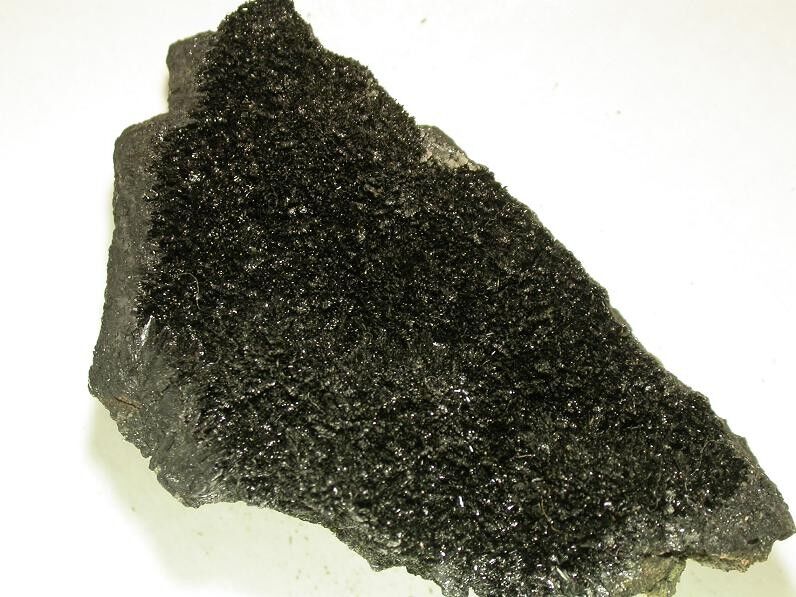
Prismatic [001] and striated [001]; also flattened into tablets or scales on (010). Velvety aggregates of capillary crystals to acicular [001] and long prismatic forms often radially grouped. Massive, reniform, botryoidal, stalactitic. Bladed or columnar. Compact or fibrous concretionary nodules. Oolitic.
- Twinning
Apparently none reported, but see https://www.mindat.org/mesg-631125.html and compare twinning in isostructural <m>diaspore</m>.
- Comment
Non-standard space-group setting Pbnm.
Chemical composition
Synonyms
- Aëtit
- Allcharit
- Allcharita
- Allcharite
- Chileit (of Breithaupt)
- Ehrenwerthite (of Cornu)
- Fullonit
- Fullonita
- Fullonite
- Geothite
- Goetite
- Götheit
- Götheita
- Götheite
- Göthit
- Göthita
- Göthite
- Haarförminge Brauneisenstein
- Haarförminger Brauneisenstein
- Hierro pardo
- Hydrohämatit
- Mesabit
- Mesabita
- Mesabite
- Nadeleisenerz
- Prismatisches Eisenerz
- Prismatisches Nadeleisenerz
- Przibramite (of Glocker)
- Samteisenerz
- Schwarzer Glaskopf
- Yanthosiderit
- Yanthosiderita
- Yanthosiderite
- α-Goethit
- α-Goethita
- α-Goethite
In other languages
- French
- 20344-49-4 · allcharite · alumogoethite · chiléite · ehrenwerthite · fer hydroxylé oolitique · fullonite · goethite · hydrohématite · mésabite · onégite · yanthosiderite
- German
- Brauner Glaskopf · Goethit · Nadeleisenerz · Samtblende
- Spanish
- goethita · goetita
- Italian
- Goethite
- Portuguese
- goethita · Goethite
- Japanese
- ゲーサイト · ゲータイト · 針鉄鉱
- Chinese
- 针铁矿
- Simplified Chinese
- 针铁矿
- Traditional Chinese
- 針鐵礦
- Russian
- гётит
- Arabic
- غوتيت
- Hindi
- गोएथाइट
Classification
4.00
- 4OxidesClass
- 4.0— unnamed intermediate level —Division
- 4.00— unnamed intermediate level —Group
- 4.00GoethiteSpecies
06.01.01.02
- 06Hydroxides and Oxides Containing HydroxylClass
- 06.01XO(OH)Type
- 06.01.01Diaspore group (Orthorhombic, Pnma or Pnmd)Group
- 06.01.01.02GoethiteSpecies
7.20.5
- 7Oxides and HydroxidesClass
- 7.20Oxides of FeGroup
- 7.20.5GoethiteSpecies
Group, growth & confusion
 AgateSiO2Variety—
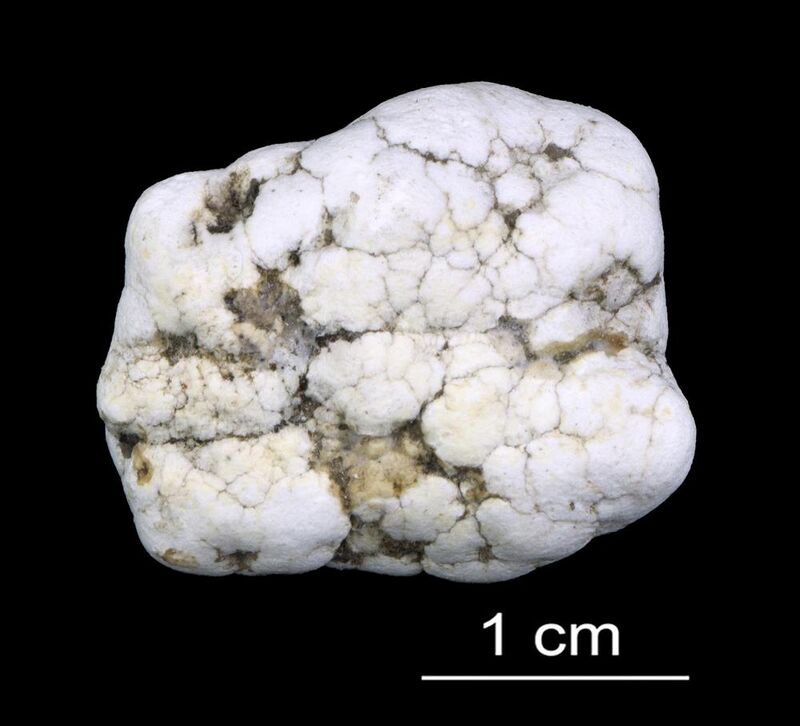 AluminiteAl2(SO4)(OH)4 · 7H2OMineral—
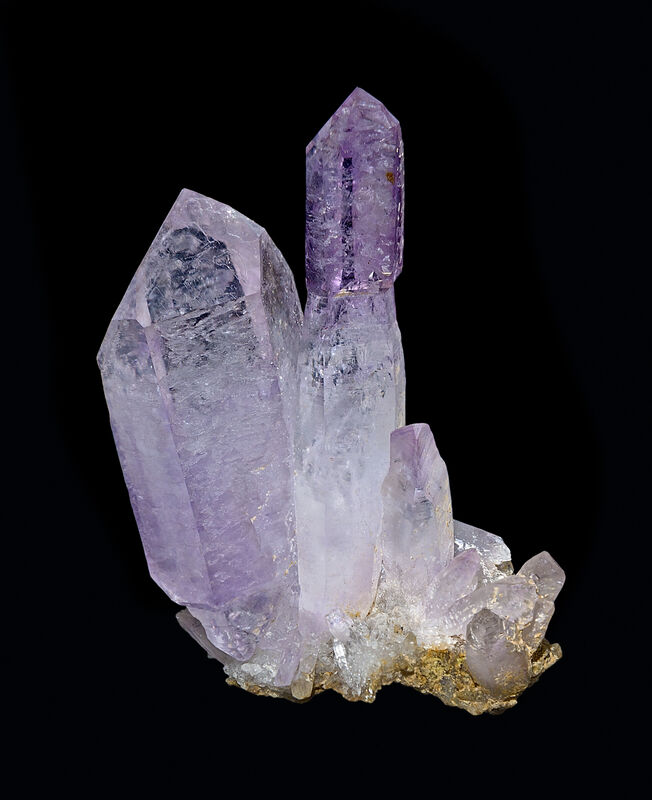 AmethystSiO2Variety—
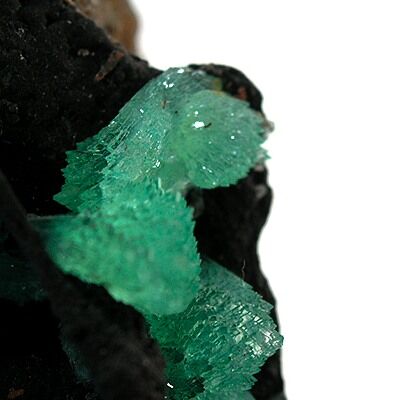 AnapaiteCa2Fe2+(PO4)2 · 4H2OMineral—
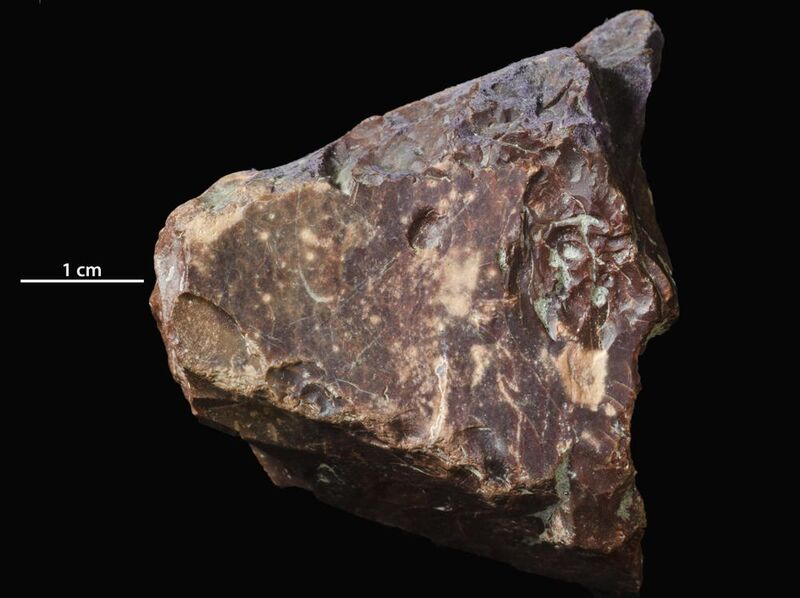 ChalcedonySiO2Variety—
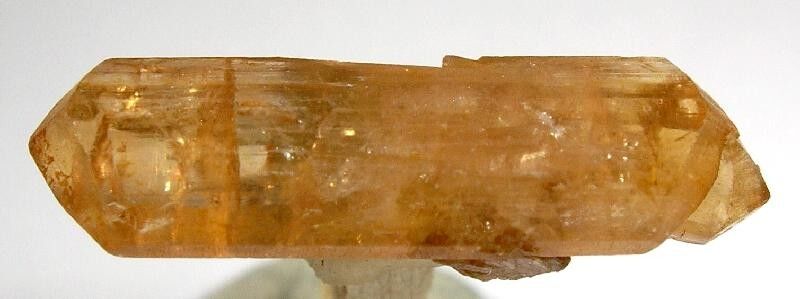 ChildreniteFe2+Al(PO4)(OH)2 · H2OMineral—
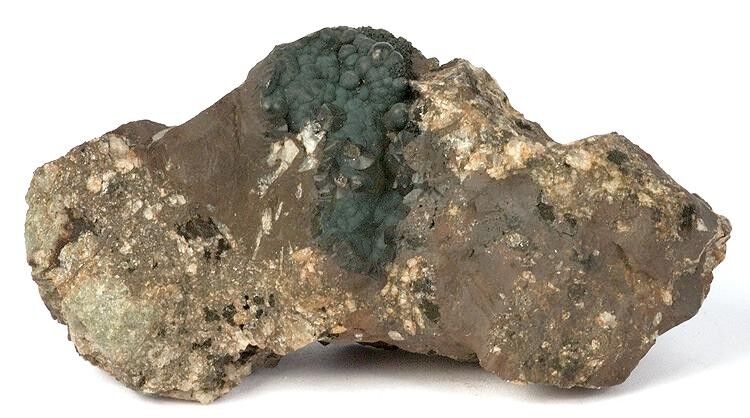 DufréniteCa0.5Fe2+Fe3+5(PO4)4(OH)6 · 2H2OMineral—
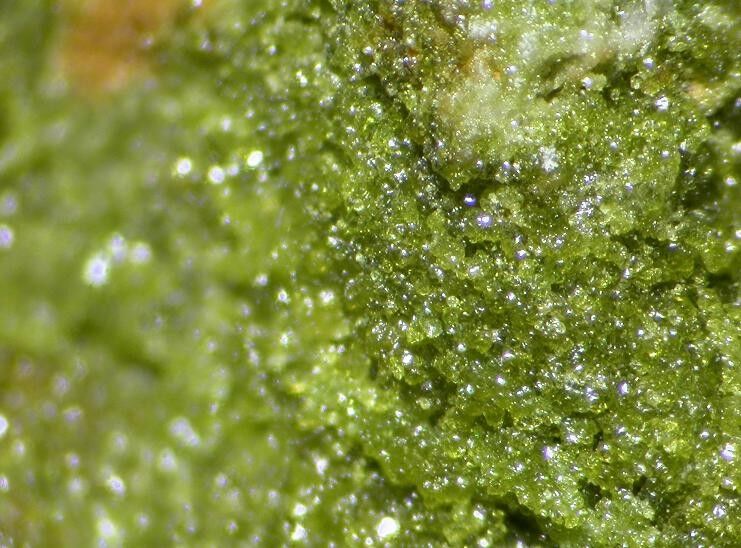 DussertiteBaFe3+3(AsO4)(AsO3OH)(OH)6Mineral—
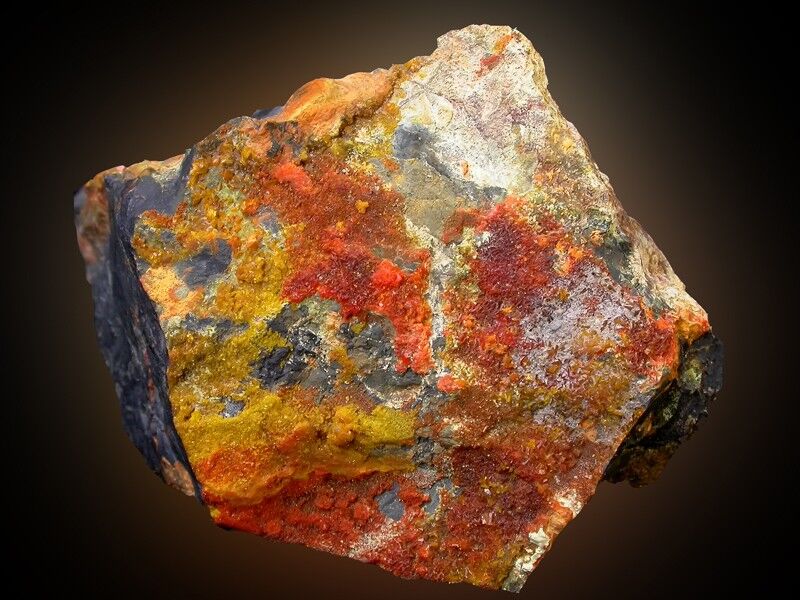 FourmarieritePb1-xO3-2x(UO2)4(OH)4+2x · 4H2OMineral—
 FuettereritePb3Cu2+6Te6+O6(OH)7Cl5Mineral—
Literature, links & citation
- 1806Lenz, J.G. (1806) Göthit. In: Tabellen über das gesammte Mineralreich. Göpferdts, Jena, 46-46.
- 1903Cesàro, G., Abraham, A. (1903) La goethite. Bulletin de l'Académie royale de Belgique, Classe des Sciences, 2, 179.
- 1919Posnjak, E., Merwin, H.E. (1919) The hydrated ferric oxides. American Journal of Science: 47: 311-348.
- 1919Spencer, L. J. (1919) Mineralogical characters of Turite ( = turgite) and some other iron-ores from Nova Scotia. Mineralogical Magazine and Journal of the Mineralogical Society, 18 (86) 339-348 doi:10.1180/minmag.1919.018.86.05 DOI: 10.1180/minmag.1919.018.86.05
- 1935Goldzstaub (1935) Bulletin soc. min., 58, 6.
Entry last updated
@misc{mineral2026,
  author    = {Mineral Index editorial board},
  title     = {Goethite — Mineral Index},
  year      = {2026},
  url       = {https://mineralindex.org/minerals/goethite-1719}
}