History
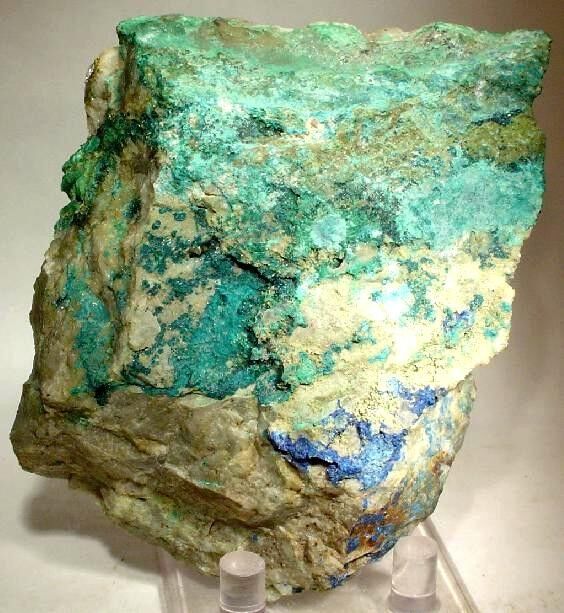
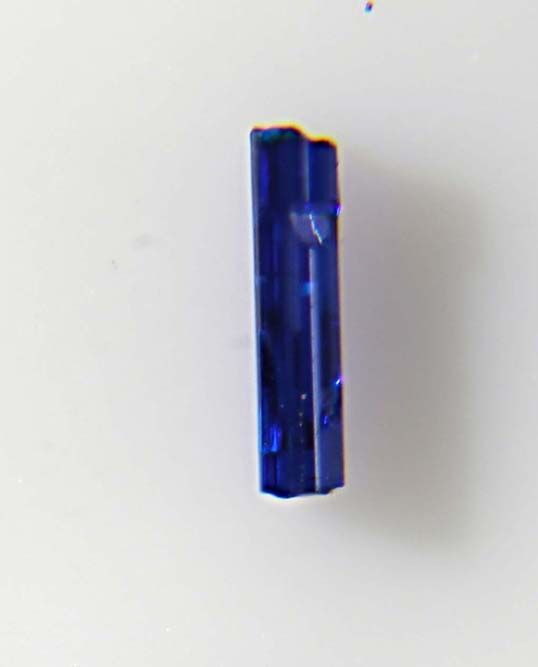
Connellite carries the name of a chemist who never found it, only weighed it. The mineral is one of the great blue rarities of Cornish copper mining — a fan of needle-thin crystals in the deepest azure, lining cavities in weathered copper ore.
Its story in print begins in 1802, when the Cornish collector Philip Rashleigh noted the strange blue tufts among copper minerals in Cornwall, England. Decades passed before anyone pinned down what they were. The first chemical study came in 1847, by Arthur Connell, a fellow of the Royal Society of Edinburgh and professor of chemistry at St Andrews University in Scotland.
The mineral got its modern name in 1850, when the American mineralogist James Dwight Dana described it and honoured Connell — the man who had first worked out its chemistry — by attaching his name to it. Connell himself was born in Edinburgh in 1794 and died at St Andrews in 1863.
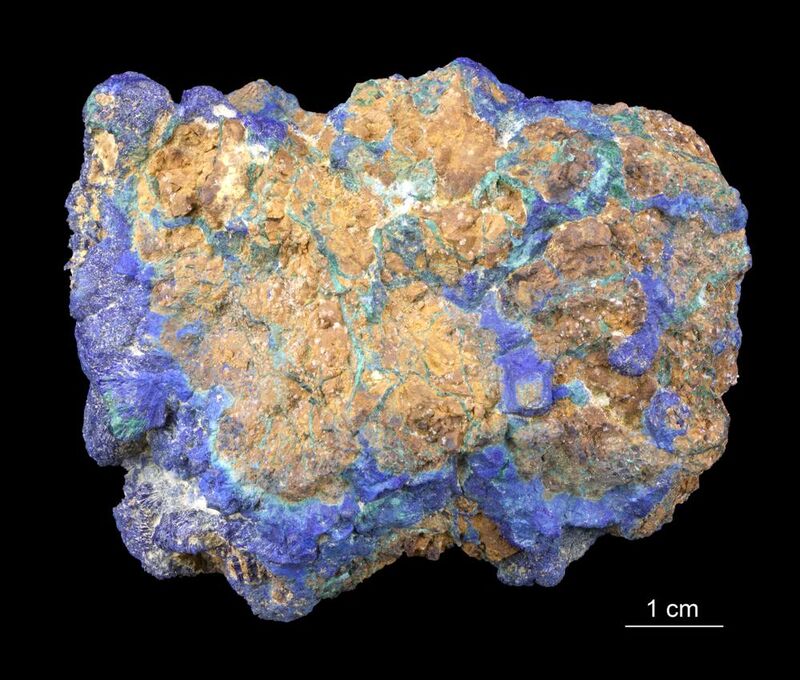
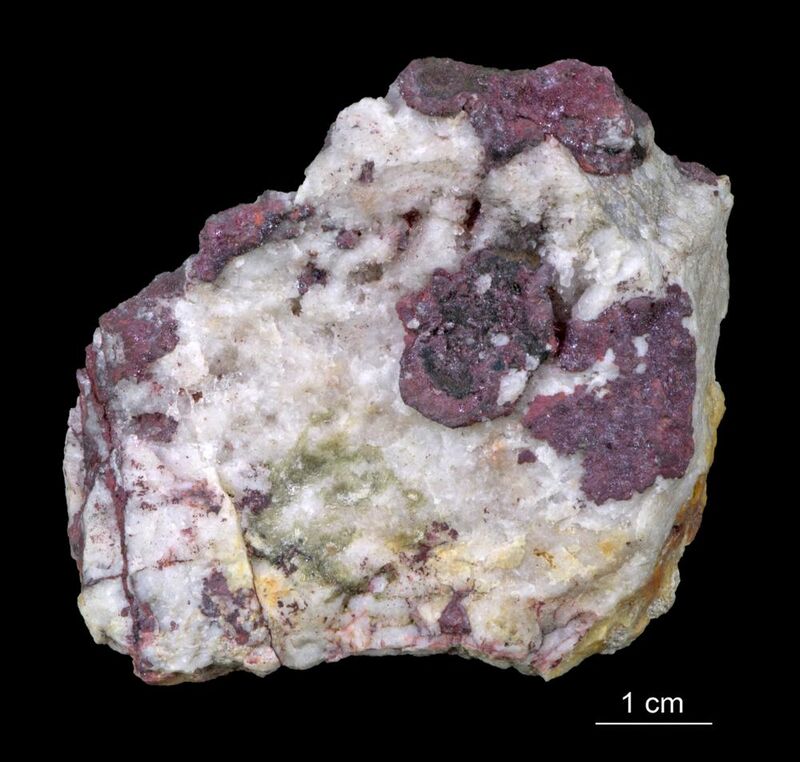
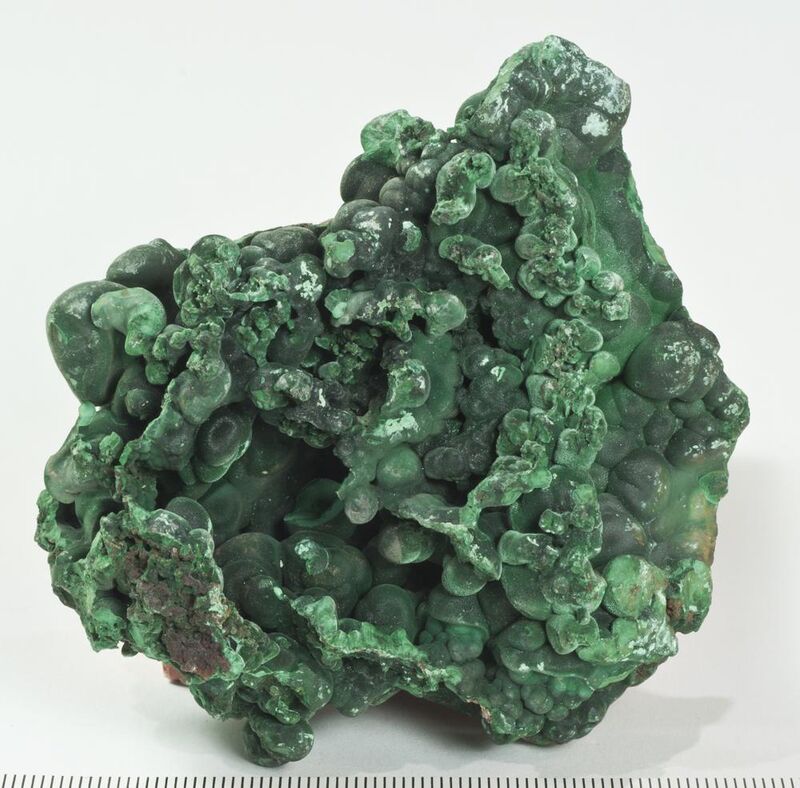
The crystals that started all this came from Wheal Providence, a copper mine at Carbis Bay in Cornwall — the locality that remains the mineral's defining find. Connellite forms there as a secondary mineral — one that grows late. It appears only after the original copper ore is chemically attacked by air and water near the surface. It keeps company with other such latecomers, among them cuprite and malachite.
Industrial & practical applications
Connellite has no industrial use, and the sources record none. It is too rare and too fragile to mine for anything — the deep-blue needles crumble at a touch and turn up only as thin crusts in old copper workings. What value it has is to people who study and collect minerals. A good cluster of its acicular crystals — slender and needle-like, in that unmistakable azure — is prized by collectors. Museums keep specimens as fine examples of the species. Beyond the cabinet and the display case, the mineral does no work.
Where it forms, where it's found
- Type locality
- Wheal Providence
- Providence Mines
- Carbis Bay
- St Ives
- Cornwall
- England
- UK
50.1931°, -5.4709°
Physical
Optical
- Optical type
- Uniaxial (+)
- Refractive index
- 1.724 – 1.758
- Surface relief
- High
- Principal indices
- nω 1.724 – 1.746 · nε 1.738 – 1.758
- Birefringence
- 0.026
- Pleochroism
- Non-pleochroic
- UV response
- Not fluorescent
Crystallography
- Space group
- P-62c
- Cell parameters
- a = 15.78 Å · c = 9.10 Å
- Z
- 2
- Morphology
Crystals acicular [0001] and striated [0001]; radiating groups of needles; felted aggregates.
- Type-locality form
Blue acicular crystals in divergent clusters, usually < 1 mm.
Chemical composition
Synonyms
- Carbonatian Connellite
- Ceruleofibrite
- Connelliet
- Footeit
- Footeita
- Footeite
- Sulphato-chloride of Copper
- Tallingit
- Tallingita
- Tallingite
In other languages
- French
- Céruléofibrite · Connellite · Footeite
- German
- Connellit
- Spanish
- Connellita
- Italian
- Connellite
- Japanese
- コネライト
- Arabic
- كونيليت
Classification
3.DA.25
- 3HalidesClass
- 3.DOxyhalides, hydroxyhalides and related double halidesDivision
- 3.DAWith Cu, etc., without PbGroup
- 3.DA.25ConnelliteSpecies
31.01.01.01
- 31Hydrated Sulfates Containing Hydroxyl or HalogenClass
- 31.01(AB)m(XO4)pZq·xH2O, where m:p > 6:1Type
- 31.01.01— unnamed intermediate level —Group
- 31.01.01.01ConnelliteSpecies
26.5
- 26Sulphates with HalideClass
- 26.5— unnamed intermediate level —Group
- 26.5ConnelliteSpecies
Group, growth & confusion
Literature, links & citation
- 1802Rashleigh (1802) Brit. Min.: 2: 13, Pl. 12, figs. 1, 6 (as Copper ore of an azure-blue color, composed of needle crystals).
- 1847Connell (1847) Report of the British Association (as Sulphato-chloride of Copper).
- 1850Dana, James D. (1850) A System of Mineralogy (3rd ed.) G. P. Putnam. p.711
- 1863Story Maskelyne, N. (1863) VI. Mineralogical notes. On connellite. Philosophical Magazine and Journal of Science: 25: 39.
- 1881Bertrand (1881) Bull. Soc. Min. IV.
Entry last updated
@misc{mineral2026,
  author    = {Mineral Index editorial board},
  title     = {Connellite — Mineral Index},
  year      = {2026},
  url       = {https://mineralindex.org/minerals/connellite-1120}
}