History
The name cuprite comes straight from the Latin cuprum — copper — chosen for the mineral's composition.
The mineral itself was known to miners long before it had its current name. In the oxidised zone above copper lodes — the weathered cap where rain and air break down the deeper sulfide ores — cuprite forms as deep red crystals and earthy red masses. Specimens reached European cabinets under a wide variety of local names that gradually accumulated as the mineral was found across copper districts.
In 1845 the mineralogist Wilhelm Karl Ritter von Haidinger gathered those scattered synonyms under a single new name, drawn directly from the Latin for copper. The deep red of the best crystals kept the popular tag ruby copper, still attached today to the most vividly coloured specimens.
Two earlier variety names survived the renaming and are still in use. Chalcotrichite — from the Ancient Greek for plush copper ore — describes loosely matted aggregates of hair-thin capillary crystals with a deep carmine colour. Tile ore names the brick-red earthy form.
Industrial & practical applications
Cuprite is a minor ore of copper today. It forms in the oxidised zone above copper lodes — the weathered cap where rain and air break down deeper sulfide ores — and is recovered when those zones are mined. Notable occurrences include Cornwall, Bisbee in Arizona, Tsumeb in Namibia, and Chessy in France.
The chemical compound — cuprous oxide, Cu₂O — has a wider industrial life, but the supply is made synthetically rather than mined. The dominant use is as a component of antifouling paints for ship hulls. The same compound is also used as a fungicide and as a pigment.
In the laboratory, cuprite holds steady interest as a semiconductor with an unusual optical signature. Its excitons — the bound electron-hole pairs that carry energy through the crystal — are extraordinarily long-lived, producing the narrowest bulk exciton resonance ever observed. The same Cu₂O chemistry has also surfaced in recent thin-film photovoltaic work. In December 2021 Toshiba reported a transparent Cu₂O solar cell with 8.4 percent conversion efficiency, the highest figure recorded for cells of that type at the time.
Beyond industry and the lab, the mineral has a steady following with collectors. Deep red crystals from Onganja in Namibia are among the localities mineralogists point to for the species, and the popular name ruby copper still attaches to the most vividly red specimens.
Where it forms, where it's found
- Geological setting
Found in the oxidised zones of copper deposits.
Varieties
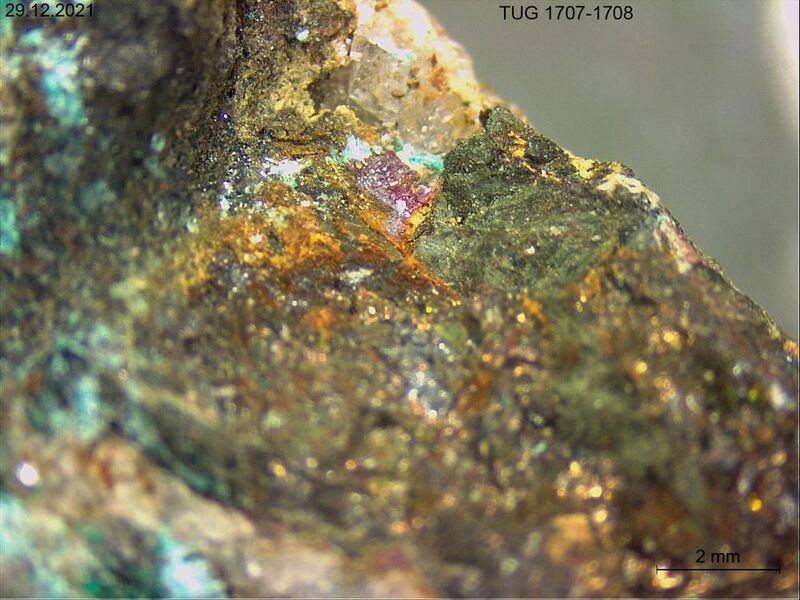
Physical
- Hardness
- 1Talc
- 2Gypsum
- 3Calcite
- 4Fluorite
- 5Apatite
- 6Orthoclase
- 7Quartz
- 8Topaz
- 9Corundum
- 10Diamond
- Lustre
- Adamantine to sub-metallic
- Transparency
- Transparent · Translucent
- Colour
- Dark red to cochineal red · sometimes almost black.
- Streak
- Shining metallic brownish-red.
- Tenacity
- brittle
- Cleavage
- Imperfect/Fair
Interrupted on (111), more rarely on (001).
- Fracture
- Conchoidal
- Density
- 6.14 g/cm³
Optical
- Optical type
- Isotropic
- Surface relief
- Very high
- Principal indices
- n 2.849
- Pleochroism
- Visible
- Optical colour
- Bluish white
- Anisotropism
- Anomalous
- Internal reflections
- Blood-red
- Tropism
- Anisotropic
- Single index
- n = 2.849
Crystallography
- Space group
- #229
- Cell parameters
- a = 4.2685 Å
- Z
- 2
- Morphology
Crystals octahedral or cubic, rarely dodecahedral, sometimes highly modified. In the variety <M>chalcotrichite</M> the crystals are greatly elongated [001] into capillary shapes.
- Twinning
Penetration twins common.
Chemical composition
Synonyms
- Aes caldarium rubro-fuscum
- Cobre Rojo
- Cuivre oxidulé
- Cuprum tessulatum nudum
- Haarförmiges Rotkupfererz
- Hydrocuprite
- Kopparglas (of Cronstedt)
- Kupferbraun
- Kupfergewächs
- Kupferglas
- Kupferlebererz
- Kupferoxydul
- Kupferroth
- Lebererzkupfer
- Leberkupfererz
- Mine de cuivre vitreuse rouge
- Minerai rouge de cuivre
- Octahedral Copper
- Octahedral Copper Ore
- Oxydulated Copper
- Red Copper
- Red Glassy Copper Ore
- Rødkobbererts
- Rotes Kupferglas
- Rothkupfererz
- Rothkupferez
- Rotkupfererz
- Ruberit
- Ruberita
- Ruberite
- Ruby Copper
- Vulgo Kupferglas
- Ziguéline (Synonym)
In other languages
- French
- cuivre oxidulé · cuivre oxidulé capillaire · cuprite · mine de cuivre vitreuse rouge · minerai rouge de cuivre · rubérite · ziguéline
- German
- Cuprit · Kupferblüte · Kupferroth · Lebererzkupfer · Rotkupfererz · Ruberit
- Spanish
- Cuprita
- Italian
- Cuprite
- Portuguese
- cuprita · Cuprite
- Japanese
- 赤銅鉱
- Chinese
- 赤銅礦
- Simplified Chinese
- 赤铜矿
- Traditional Chinese
- 赤銅礦
- Russian
- Куприт
- Arabic
- كوبريت
Classification
4.AA.10
- 4OxidesClass
- 4.AMetal: Oxygen = 2:1 and 1:1Division
- 4.AACation:Anion (M:O) = 2:1 (and 1.8:1)Group
- 4.AA.10CupriteSpecies
04.01.01.01
- 04Simple OxidesClass
- 04.01A2XType
- 04.01.01— unnamed intermediate level —Group
- 04.01.01.01CupriteSpecies
7.3.1
- 7Oxides and HydroxidesClass
- 7.3Oxides of CuGroup
- 7.3.1CupriteSpecies
Group, growth & confusion
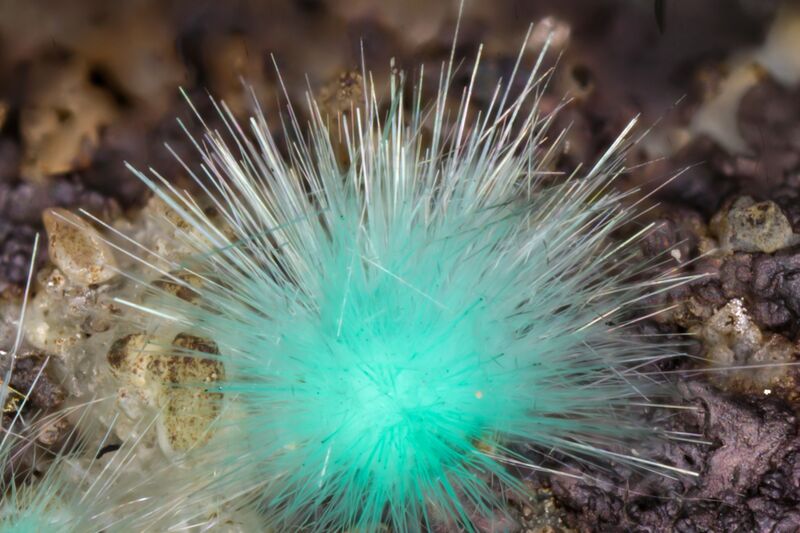 Agardite-(Y)YCu2+6(AsO4)3(OH)6 · 3H2OMineral—
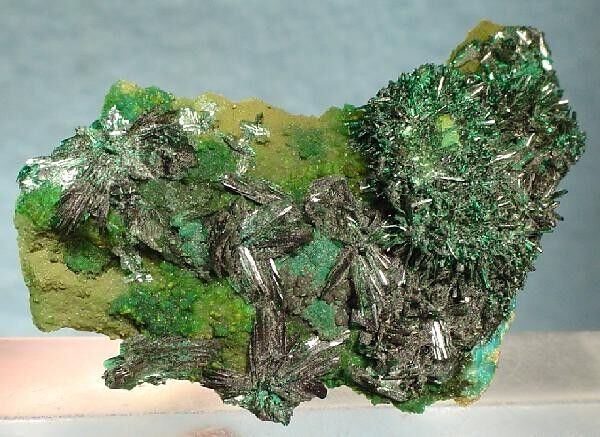 AtacamiteCu2Cl(OH)3Mineral—
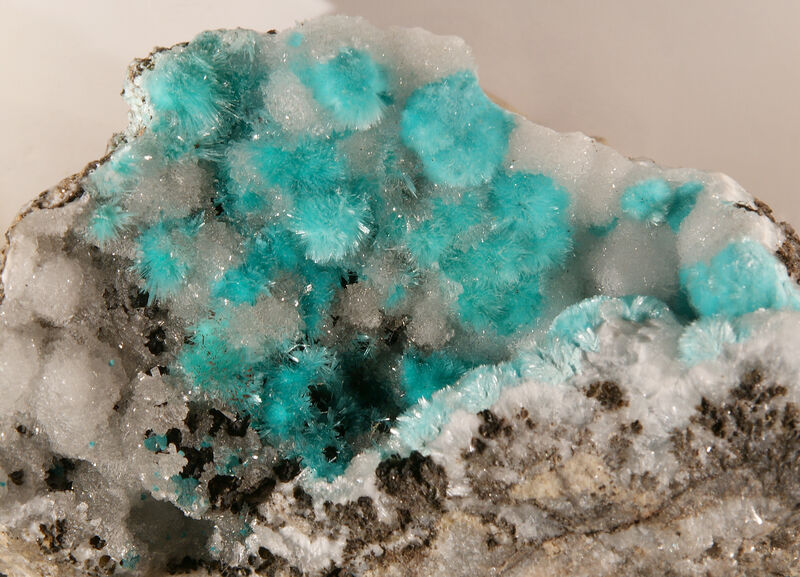 Aurichalcite(Zn,Cu)5(CO3)2(OH)6Mineral—
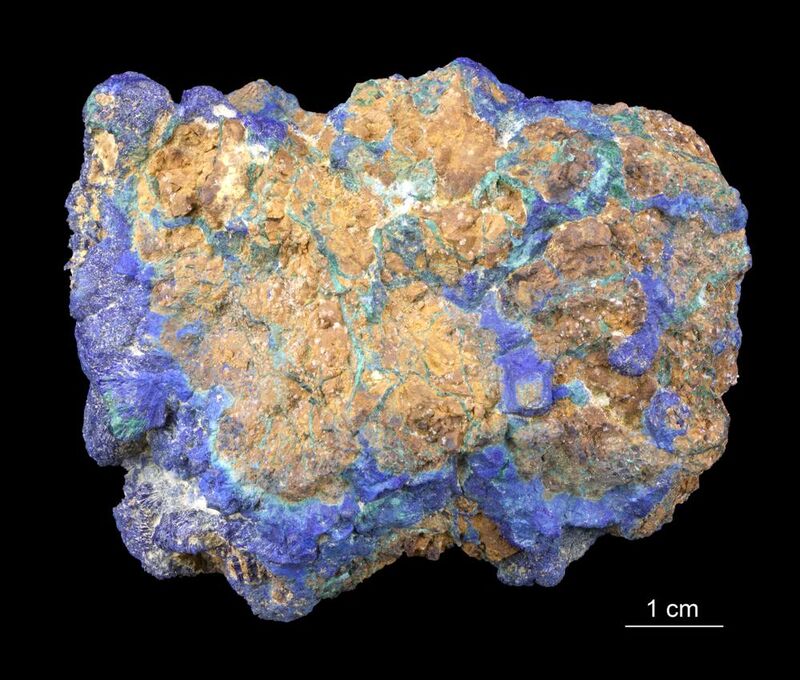 AzuriteCu3(CO3)2(OH)2Mineral—
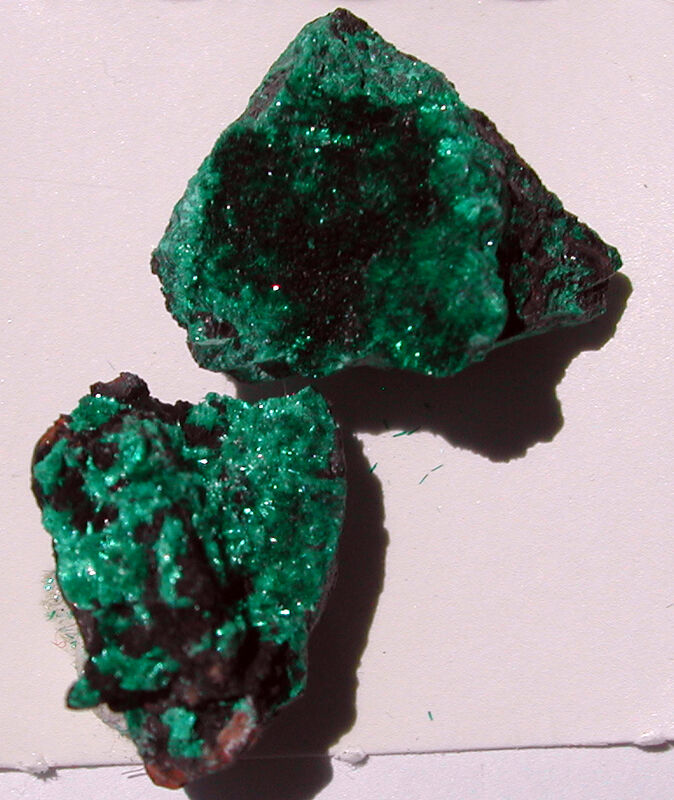 BrochantiteCu4(SO4)(OH)6Mineral—
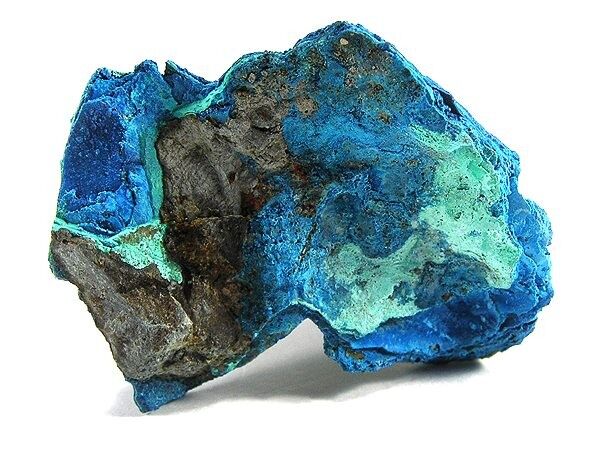 ConnelliteCu36(SO4)(OH)62Cl8 · 6H2OMineral—
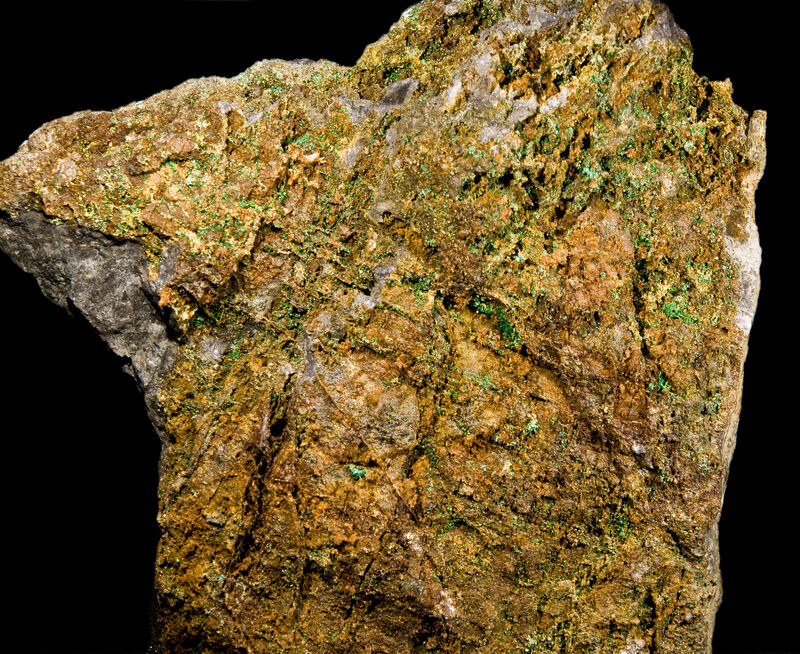 CornubiteCu5(AsO4)2(OH)4Mineral—
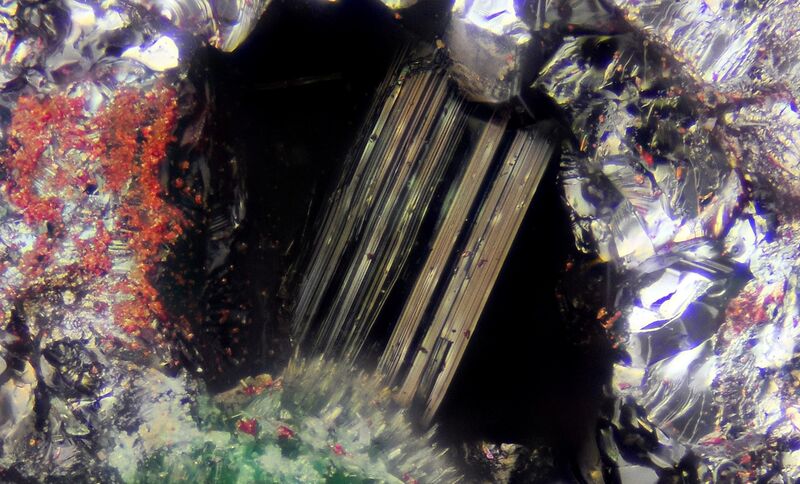 GerhardtiteCu2(NO3)(OH)3Mineral—
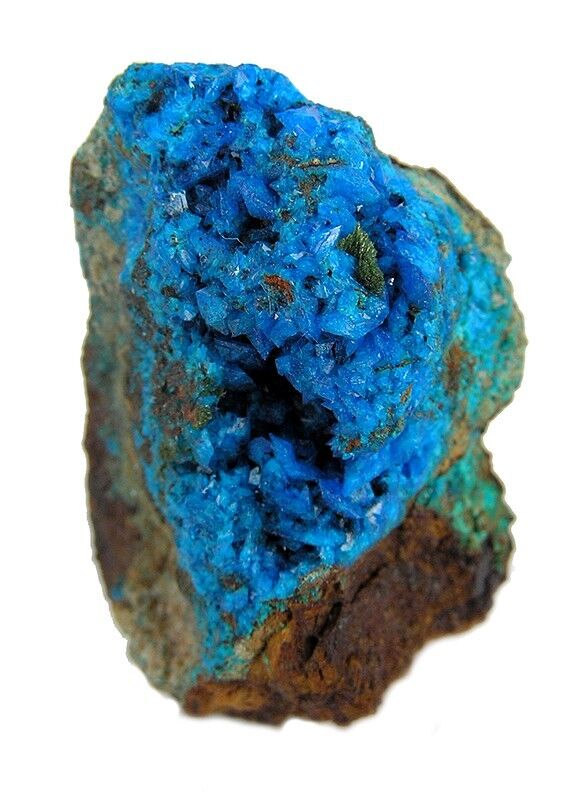 LiroconiteCu2Al(AsO4)(OH)4 · 4H2OMineral—
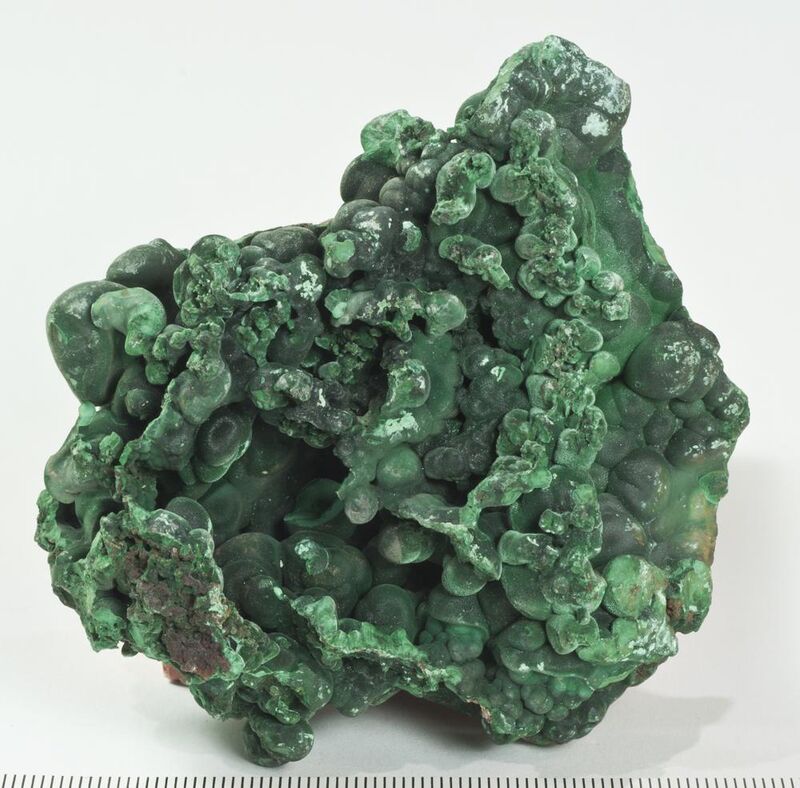 MalachiteCu2(CO3)(OH)2Mineral—
Literature, links & citation
- 1845Haidinger, W. (1845) Zweite Klasse: Geogenide. XI. Ordnung. Erze. III. Kupfererz. Cuprit.. in Handbuch der bestimmenden Mineralogie. Bei Braumüller and Seidel (Wien): 546-555.
- 1884Miers, H.A. (1884) Hemihedrism of cuprite. The Philosophical Magazine: 18: 127-130.
- 1915Bragg and Bragg (1915): 155.
- 1922Niggli, P. (1922) Die Kristallstruktur einiger Oxyde I. Zeitschrift für Kristallographie, 57 (1). 253-299 doi:10.1524/zkri.1922.57.1.253DOI: 10.1524/zkri.1922.57.1.253
- 1924Greenwood, G. (1924) The crystal structure of cuprite and rutile. Philosophical Magazine: 48: 654-663.
Entry last updated
@misc{mineral2026,
  author    = {Mineral Index editorial board},
  title     = {Cuprite — Mineral Index},
  year      = {2026},
  url       = {https://mineralindex.org/minerals/cuprite-1172}
}