History
For more than two centuries, azurite was the workhorse blue of European painting. The painter's alternative — lapis lazuli, ground into ultramarine — had to be shipped overland from Afghanistan; azurite was common in Europe. It earned its dominant role in European painting from the 15th to the middle of the 17th century.
Azurite's history runs deeper than that. Ancient Egyptians mined it in Sinai and used it as a pigment in Fourth-Dynasty artifacts (2613–2494 BCE) and in Fifth-Dynasty mummy contexts at Meidum. Mesopotamian writers later documented how to grind the mineral. Greek painters used it on the Acropolis in Athens. Roman writers knew of it, though they did not adopt it for wall painting.
The blue itself was finicky. Ground to different fineness levels, the powder gave a range of blues. Mixed with oil it turned slightly green; with egg yolk it took on a grey-green cast. Many medieval pieces were mislabeled lapis lazuli; modern analysis has identified the actual pigment as azurite.
In 1824, the French mineralogist and geologist François Sulpice Beudant gave the mineral its modern name. He drew azurite from the ancient Persian lazhward, meaning blue.
Industrial & practical applications
Azurite's brightest commercial role today is as a tip-off. Where a vivid blue stains a hillside, copper sulfide ores typically lie below. The azurite at the surface is a weathering product of the sulfides beneath.
The mineral itself is a very minor ore of copper. It is cut occasionally for jewellery, set as beads, or sold as polished ornamental pieces. Its softness and tendency to fade with weathering keep the market modest.
Collectors take the mineral for its intense colour. Specimens remain stable under ordinary storage conditions, despite a common belief to the contrary.
Notable deposits sit at Tsumeb in Namibia, Chessy in France, and Bisbee in Arizona.
Where it forms, where it's found
- Geological setting
Found largely in the oxidized portions of copper deposits, it is a secondary mineral formed by the action of carbonated water acting on copper-containing minerals, or from Cu-containing solutions, such as CuSO^4 or CuCl^2 reacting with limestones.
- Type locality
- Chessy copper mines
- Chessy
- Villefranche-sur-Saône
- Rhône
- Auvergne-Rhône-Alpes
- France
45.8958°, 4.6128°
Physical
- Hardness
- 1Talc
- 2Gypsum
- 3Calcite
- 4Fluorite
- 5Apatite
- 6Orthoclase
- 7Quartz
- 8Topaz
- 9Corundum
- 10Diamond
- Lustre
- Vitreous
- Transparency
- Transparent · Translucent
- Colour
- Azure blue · blue · light blue · or dark blue · light blue in transmitted light
- Streak
- Light blue
- Tenacity
- brittle
- Cleavage
- Perfect
Perfect on (011); on (100) fair; on (110) in traces.
- Fracture
- Conchoidal
- Density
- 3.77 g/cm³
Optical
- Optical type
- Biaxial (+) · 2V measured = 68° · 2V calc = 64°
- Refractive index
- 1.73 – 1.838
- Surface relief
- High
- Principal indices
- nα 1.73 · nβ 1.758 · nγ 1.838
- Pleochroism
- Visible
Shades of blue.
- Dispersion
- r > v; strong
- Extinction
- X = b; Z ∧ c = –12°36′.
- Luminescence
- None
- UV response
- None.
- Notes
Absorption: Z > Y > X.
Crystallography
- Space group
- #14
- Cell parameters
- a = 5 Å · b = 5.84 Å · c = 10.35 Å
- Cell angles
- β = 92.33 °
- Ratio a:b:c
- 1 : 1.168 : 2.070
- Z
- 2
- Morphology
Tabular (001), less common (102) or (02); prismatic [001] or [010]; sometimes equant or even rhombohedral; faces may be wavy with striations on (001) parallel to "a", on (100) parallel to "b." May also be massive, stalactic, or botryoidal.
- Twinning
Rare, across (01), (02) or (001).
- Parting
- None
Chemical composition
Synonyms
- Armenite (of Delamétherie)
- Azure Copper Ore
- Azurite (of Beudant)
- Azzurrita
- Bergblau
- Berglasur
- Bleu de montagne
- Bleu di Monte
- Blue Carbonate of Copper
- Blue Malachite
- Cæruleum
- Cæruleum montanum
- Chessy copper
- Chessylit
- Chessylita
- Chessylite
- Cobre Azul
- Cuivre azuré
- Cuivre Carbonaté Bleu
- Cuprum lazureum
- Kobberlasur
- Kobberlazur
- Koppar-Lazur
- Kupfer Lazur
- Kupferlapis
- Kupferlasur
- Lapis armenius
- Lasur
- Lasurit (of von Kobell)
- Lasurite (of Haidinger)
- Lazurit (of von Kobell)
- Rame carbonato azzurro
- Unächter Lasurstein
In other languages
- French
- Azur de cuivre · Azur de cuivre bleu · azurite · Chessylite · Cu3(CO3)2(OH)2 · Cuivre azuré · Cuivre carbonaté bleu · Fleur de cuivre bleu · Lasurite
- German
- Azurit · Chessylith · Kupferlasur
- Spanish
- azurita
- Italian
- azzurrite · Azzurro Biadetti di Spagna · Azzurro citramarino · Azzurro d'Alemagna · Azzurro della Magna · Azzurro di Biadetto · Azzurro di rame · Azzurro di vena naturale · Azzurro tedesco · Blu armeno · Blu di montagna · Caeruleum Cyprus · Cendree · Lapis Armenius · Tefer
- Portuguese
- Azurita · azurite
- Japanese
- アズライト · マウンテンブルー · 岩群青 · 藍銅鉱
- Chinese
- 石青 · 蓝铜矿
- Simplified Chinese
- 蓝铜矿
- Traditional Chinese
- 藍銅礦
- Russian
- азурит · Медная лазурь
- Arabic
- أزوريت
Classification
5.BA.05
- 5CarbonatesClass
- 5.BCarbonates with additional anions, without H2ODivision
- 5.BAWith Cu, Co, Ni, Zn, Mg, MnGroup
- 5.BA.05AzuriteSpecies
16a.02.01.01
- 16aAnhydrous Carbonates Containing Hydroxyl or HalogenClass
- 16a.02(AB)3(XO3)2ZqType
- 16a.02.01— unnamed intermediate level —Group
- 16a.02.01.01AzuriteSpecies
11.2.2
- 11CarbonatesClass
- 11.2Carbonates of CuGroup
- 11.2.2AzuriteSpecies
Group, growth & confusion
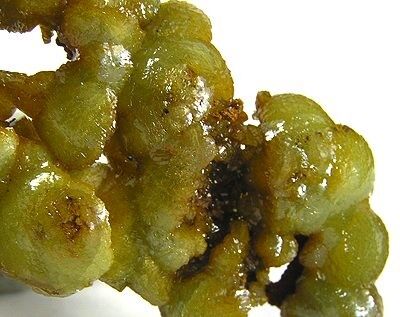 AdamiteZn2(AsO4)(OH)Mineral—
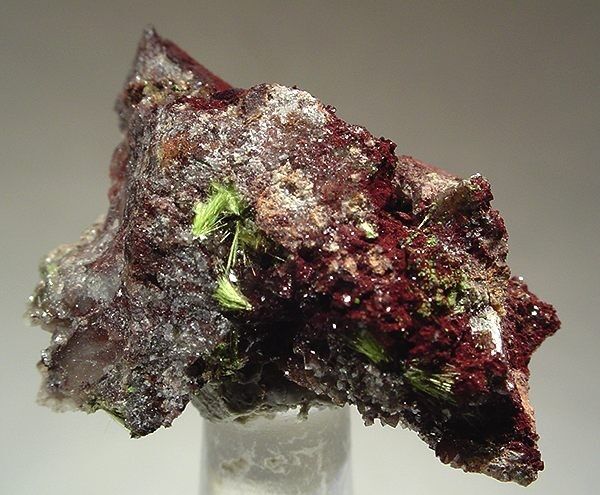 Agardite-(La)LaCu2+6(AsO4)3(OH)6 · 3H2OMineral—
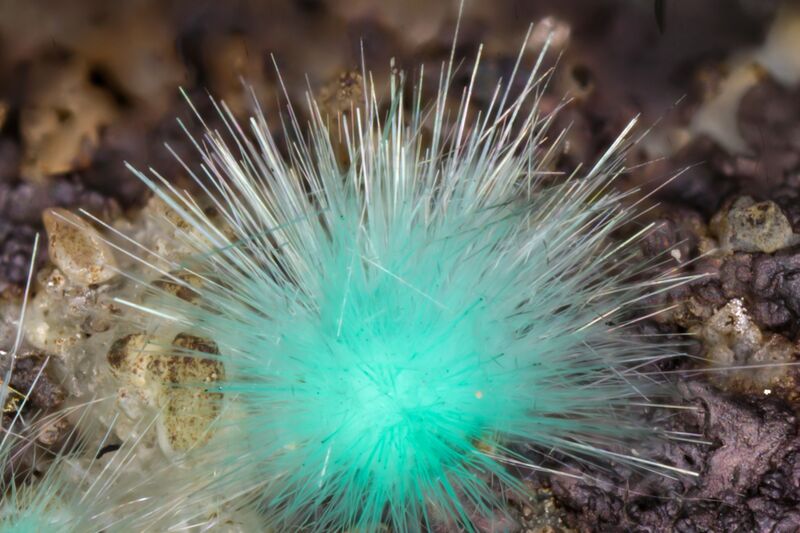 Agardite-(Y)YCu2+6(AsO4)3(OH)6 · 3H2OMineral—
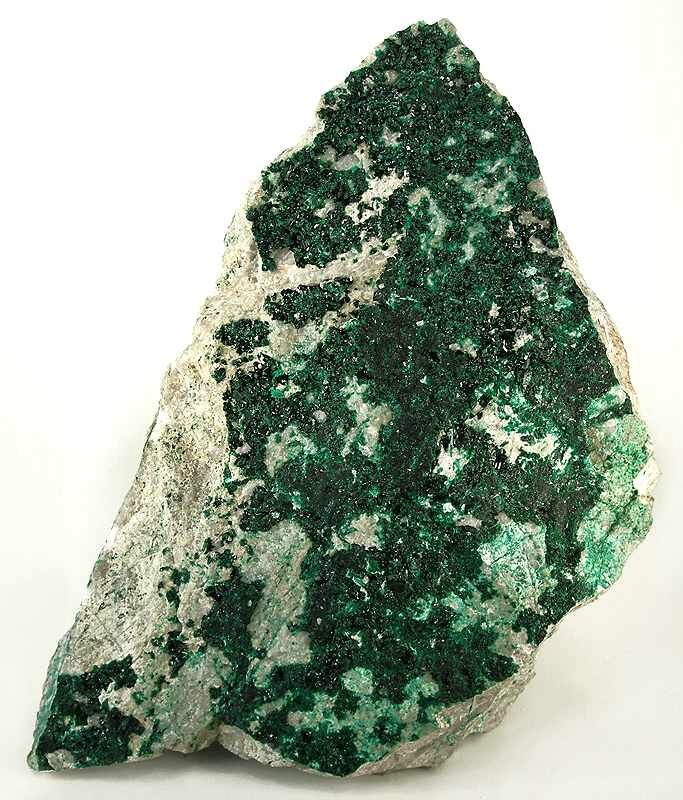 AntleriteCu2+3(SO4)(OH)4Mineral—
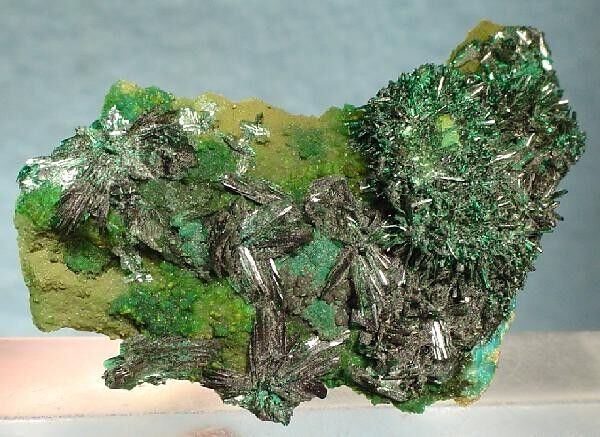 AtacamiteCu2Cl(OH)3Mineral—
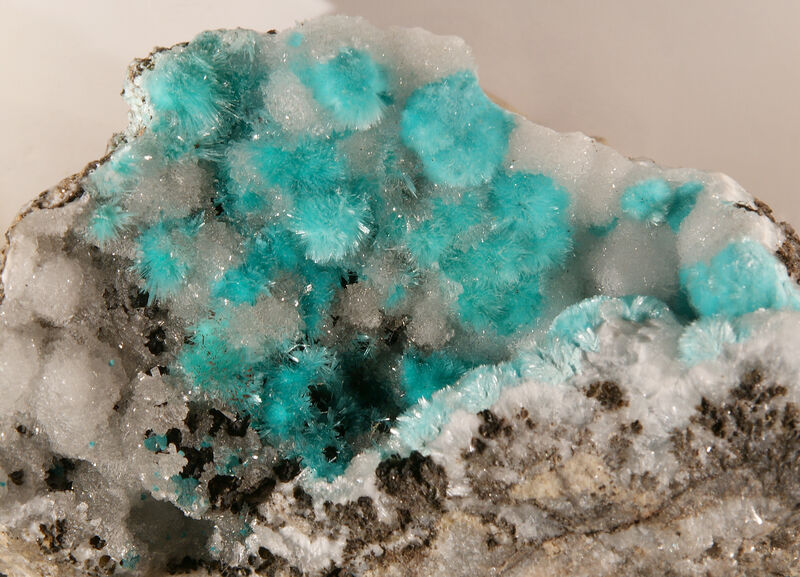 Aurichalcite(Zn,Cu)5(CO3)2(OH)6Mineral—
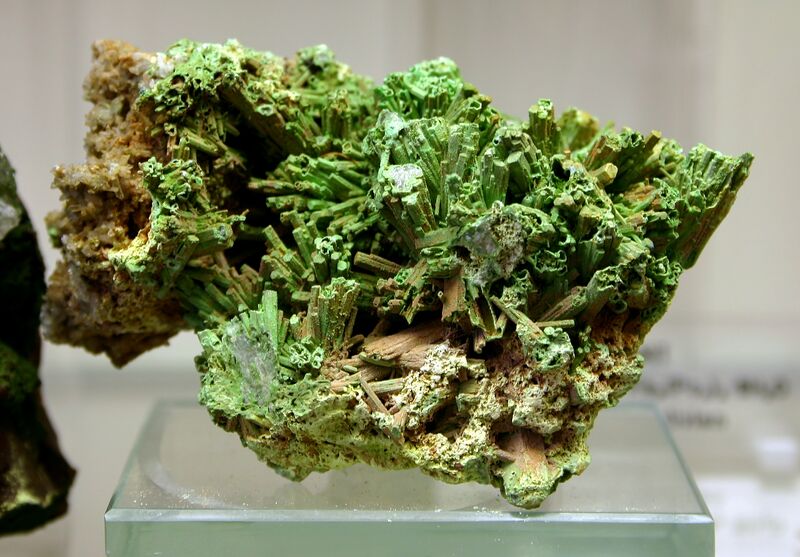 BayldoniteCu3PbO(AsO3OH)2(OH)2Mineral—
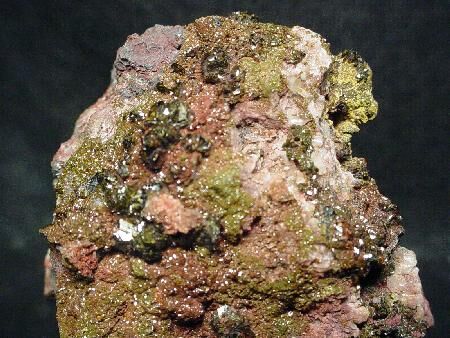 BeudantitePbFe3+3(AsO4)(SO4)(OH)6Mineral—
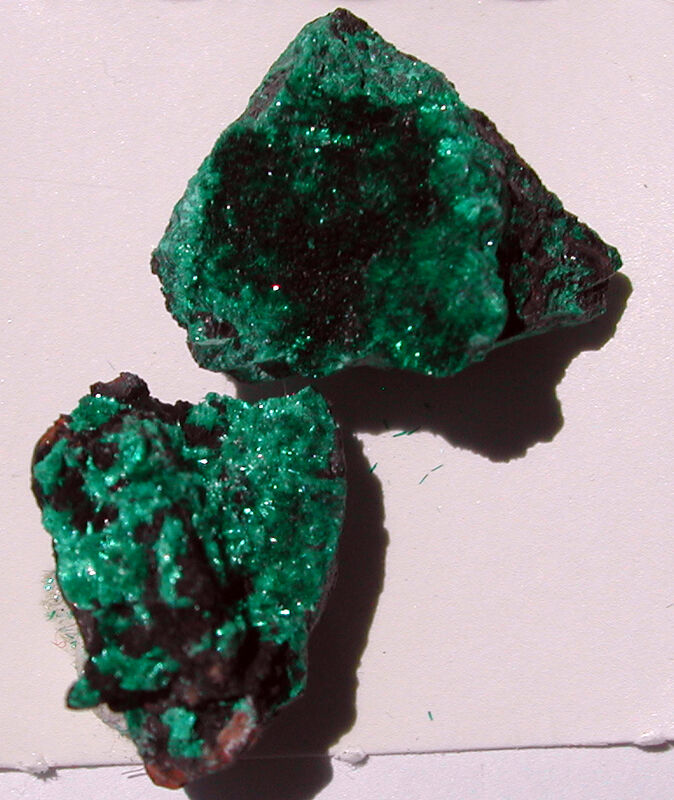 BrochantiteCu4(SO4)(OH)6Mineral—
 CalciteCa(CO3)Mineral—
Literature, links & citation
- 1747Wallerius, J.G (1747) Mineralogia, eller Mineralriket. Stockholm: 280 (as Cæruleum montanum).
- 1798Stütz (1798) Einricht. nat., Vienna: 49 (as Unächter Lasurstein).
- 1805Jameson, R. (1805) System of Mineralogy II. Bell and Bradfute Edinburgh, U.K. (542-544).
- 1830Beudant, François-Sulpice (1830) Traité élémentaire de minéralogie. Deuxiéme Edition [Elementary Treatise on Mineralogy. Second Edition] (2nd ed.) Vol. 1 - Tome Premier [Volume One]. Chez Verdière.
- 1845Haidinger, Wilhelm (1845) Handbuch der bestimmenden Mineralogie, enthaltend die Terminologie, Systematik, Nomenklatur und Charakteristik der Naturgeschichte des Mineralreiches (1st ed.) Braumüller & Seidel, Vienna.
Entry last updated
@misc{mineral2026,
  author    = {Mineral Index editorial board},
  title     = {Azurite — Mineral Index},
  year      = {2026},
  url       = {https://mineralindex.org/minerals/azurite-447}
}