Where it forms, where it's found
- Geological setting
In an aplitic dyke of a LCT-type granite pegmatite.
- Type locality
- Grotta d'Oggi
- San Piero in Campo
- Campo nell'Elba
- Livorno Province
- Tuscany
- Italy
42.7553°, 10.2152°
2recorded occurrences
Physical
- Hardness
- 1Talc
- 2Gypsum
- 3Calcite
- 4Fluorite
- 5Apatite
- 6Orthoclase
- 7Quartz
- 8Topaz
- 9Corundum
- 10Diamond
- Colour
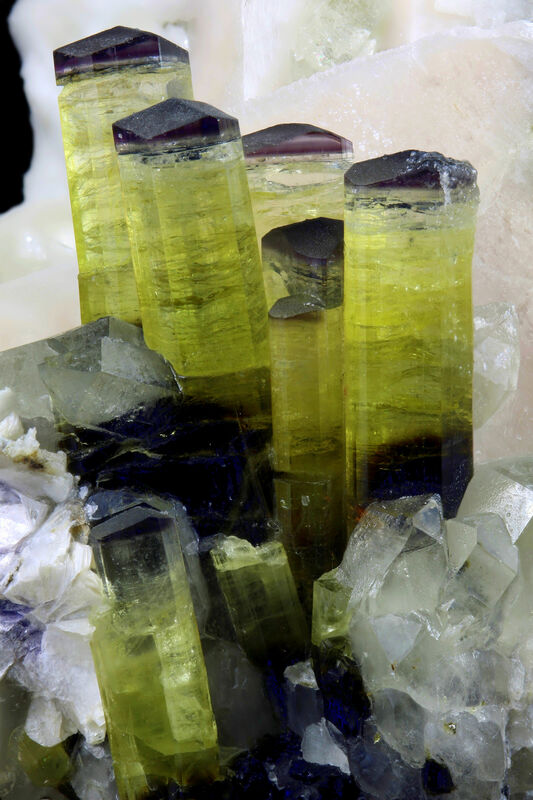
- Greenish yellow
The green-yellow colour of the fluor-tsilaisite can be ascribed to an Mn2+ — Ti4+ intervalence charge-transfer interaction which absorbs the violet-to-blue part of the visible spectrum.
- Streak
- White
- Fracture
- Sub-Conchoidal
- Density
- 3.134 g/cm³
Optical
- Optical type
- Uniaxial (-)
- Refractive index
- 1.625 – 1.645
- Surface relief
- Moderate
- Principal indices
- nω 1.645 · nε 1.625
- Pleochroism
- Visible
In plane-polarized light, O = pale greenish yellow and E = very pale greenish yellow
- UV response
- Not fluorescent
Δ = 0Δmax
PPLpleochroism per grain
XPLindependent extinctions · rotate the stage
PPLpleochroism only · colour blends on rotation
XPLinterference colour · extinct every 90°
Retardation200 nm
Order1st order
XPL colour
Crystallography
- Space group
- #86
- Cell parameters
- a = 15.9398(6) Å · c = 7.1363(3) Å
- Unit cell volume
- 1570.25 ų
- Z
- 3
- Morphology
Elongated (100) and (110) prisms terminated by a prominent (0001) pedion and small, minor (101) pyramidal faces. Prism faces are striated.
- Type-locality form
A zone from the basal region of a crystal that also includes tsilaisite and fluor-elbaite.
Crystal structure
Chemical composition
Synonyms
- Fluor-tsilaisiet
- IMA2012-044
In other languages
- German
- Fluor-Tsilaisit · IMA 2012-044
- Italian
- fluor-tsilaisite
Classification
Strunz
10th ed.9.CK.05
- 9SilicatesClass
- 9.CCyclosilicatesDivision
- 9.CK[Si6O18]12- 6-membered single rings, with insular complex anionsGroup
- 9.CK.05Fluor-tsilaisiteSpecies
Group, growth & confusion
- AdachiiteCaFe2+3Al6(Si5AlO18)(BO3)3(OH)3(OH)Mineral—
- Alumino-oxy-rossmaniteAl3Al6(Si5AlO18)(BO3)3(OH)3OMineral—
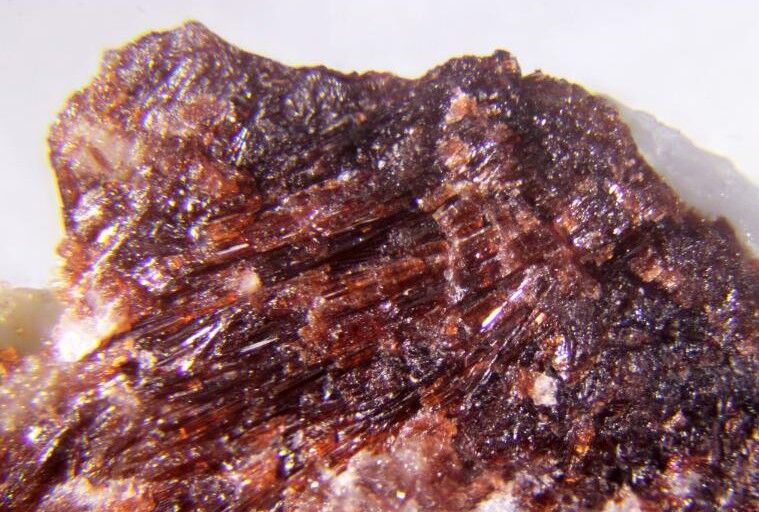 BosiiteNaFe3+3(Al4Mg2)(Si6O18)(BO3)3(OH)3OMineral—
 Celleriite◻(Mn2+2Al)Al6(Si6O18)(BO3)3(OH)3(OH)Mineral—
- Chromium-draviteNaMg3Cr3+6(Si6O18)(BO3)3(OH)3(OH)Mineral—
- Chromo-alumino-povondraiteNaCr3(Al4Mg2)(Si6O18)(BO3)3(OH)3OMineral—
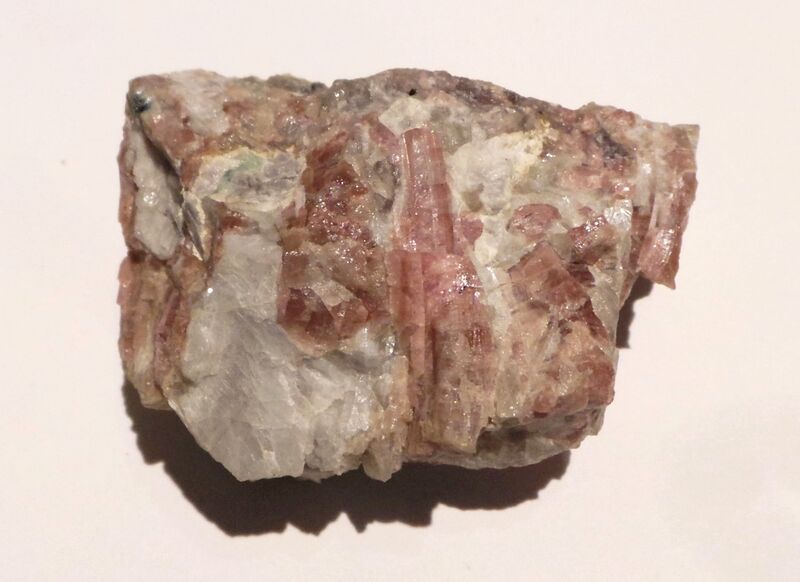 DarrellhenryiteNa(Al2Li)Al6(Si6O18)(BO3)3(OH)3OMineral—
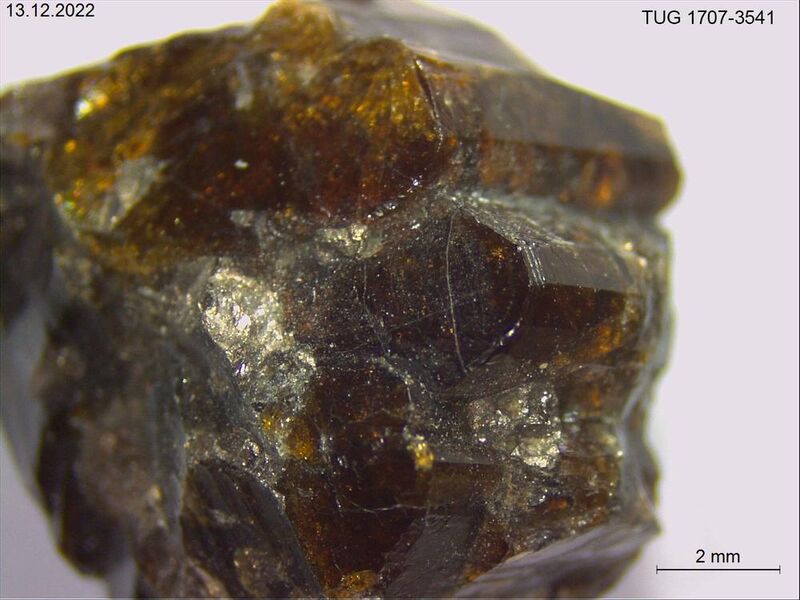 DraviteNaMg3Al6(Si6O18)(BO3)3(OH)3(OH)Mineral—
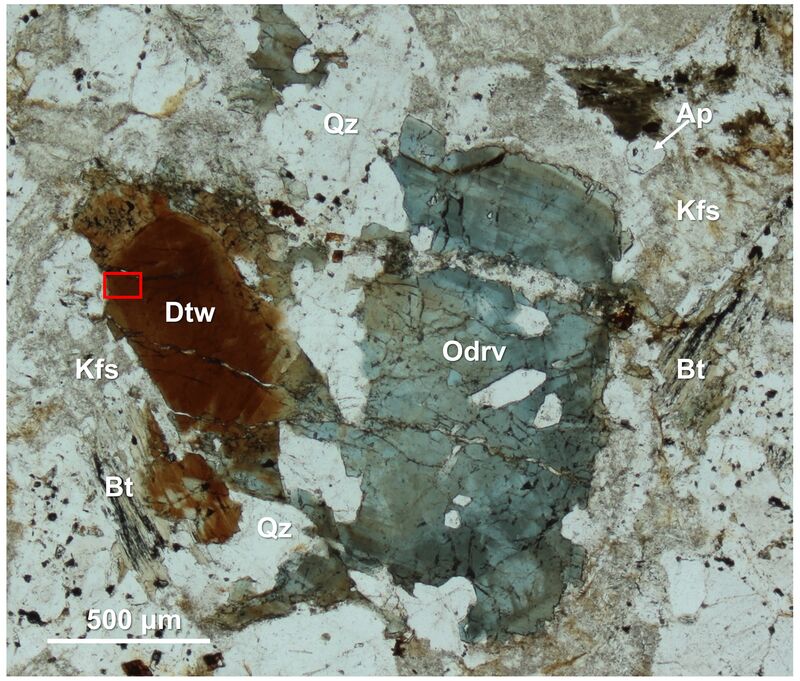 DutrowiteNa(Fe2+2.5Ti0.5)Al6(Si6O18)(BO3)3(OH)3OMineral—
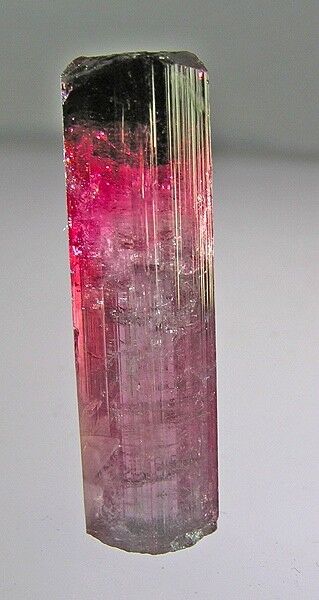 ElbaiteNa(Al1.5Li1.5)Al6(Si6O18)(BO3)3(OH)3(OH)Mineral—
Literature, links & citation
Citations
- 2012Williams, P. A., Hatert, F., Pasero, M., Mills, S. J. (2012) New minerals and nomenclature modifications approved in 2012. CNMNC Newsletter No 14. Mineralogical Magazine, 76 (5) 1281-1288 doi:10.1180/minmag.2012.076.5.15DOI: 10.1180/minmag.2012.076.5.15
- 2015Bosi, Ferdinando, Andreozzi, Giovanni B., Agrosi, Giovanna, Scandale, Eugenio (2015) Fluor-tsilaisite, NaMn3Al6(Si6O18)(BO3)3(OH)3F, a new tourmaline from San Piero in Campo (Elba, Italy) and new data on tsilaisitic tourmaline from the holotype specimen locality. Mineralogical Magazine, 79 (1) 89-101 doi:10.1180/minmag.2015.079.1.08 DOI: 10.1180/minmag.2015.079.1.08
- 2016(2016) Fluor-tsilaisite. Handbook of Mineralogy. Mineralogical Society of America
Cite this entry
Entry last updated
@misc{mineral2025,
  author    = {Mineral Index editorial board},
  title     = {Fluor-tsilaisite — Mineral Index},
  year      = {2025},
  url       = {https://mineralindex.org/minerals/fluor-tsilaisite-43353}
}