Where it forms, where it's found
- Geological setting
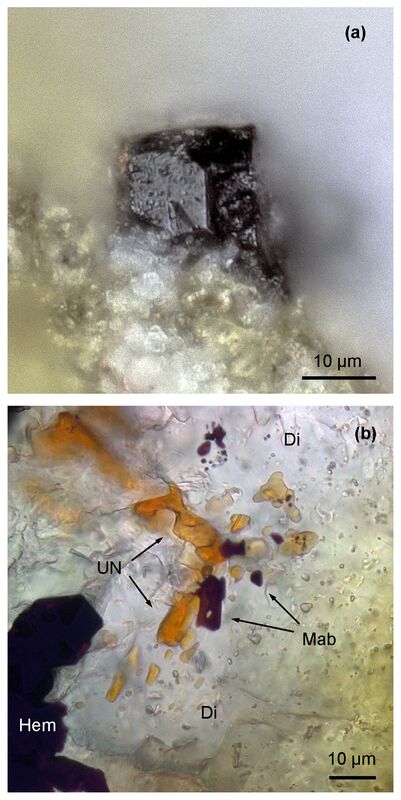
The gas temperature in the fumarole where it was found was 410–420 C.
- Type locality
- Northern Breakthrough (North Breach)
- Great Fissure eruption (Main Fracture)
- Tolbachik Volcanic field
- Milkovsky District
- Kamchatka Krai
- Russia
1recorded occurrences
Safety & handling
Physical
Optical
- Optical type
- Biaxial (+) · 2V measured = 60° · 2V calc = 77°
- Refractive index
- 1.82 – 1.833
- Surface relief
- Very high
- Principal indices
- nα 1.820 · nβ 1.825 · nγ 1.833
- Pleochroism
- Non-pleochroic
- UV response
- none
Δ = 0Δmax
PPLpleochroism per grain
XPLindependent extinctions · rotate the stage
PPLpleochroism only · colour blends on rotation
XPLinterference colour · extinct every 90°
Retardation130 nm
Order1st order
XPL colour
Crystallography
- Space group
- C2/c
- Cell parameters
- a = 12.640 Å · b = 13.007 Å · c = 6.700 Å
- Cell angles
- β = 113.828 °
- Ratio a:b:c
- 1 : 1.029 : 0.530
- Z
- 4
- Type-locality form
crystals up to 0.3 mm in maximal dimension, slightly elongated along [101] and flattened on (010)
Crystal structure
Chemical composition
Synonyms
- Hatertiet
- IMA2012-048
In other languages
- German
- Hatertit · IMA 2012-048
- Italian
- hatertite
Classification
Strunz
10th ed.8.AC.05
- 8Phosphates, Arsenates, VanadatesClass
- 8.APhosphates, etc. without additional anions, without H2ODivision
- 8.ACWith medium-sized and large cationsGroup
- 8.AC.05HatertiteSpecies
Group, growth & confusion
 Alluaudite◻NaMnFe3+2(PO4)3Mineral—
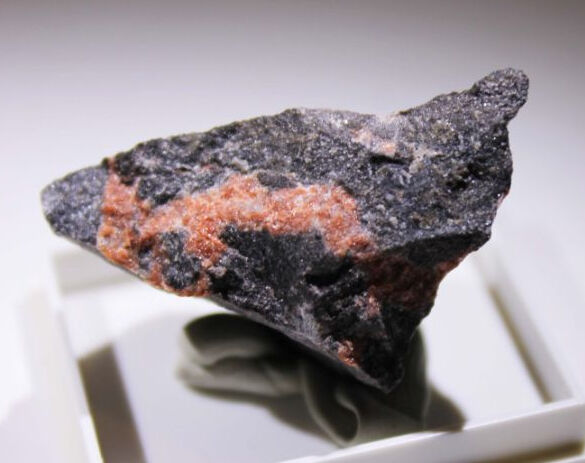 ArseniopleiteNaCaMnMn2(AsO4)3Mineral—
- BadaloviteNaNaMg(MgFe3+)(AsO4)3Mineral—
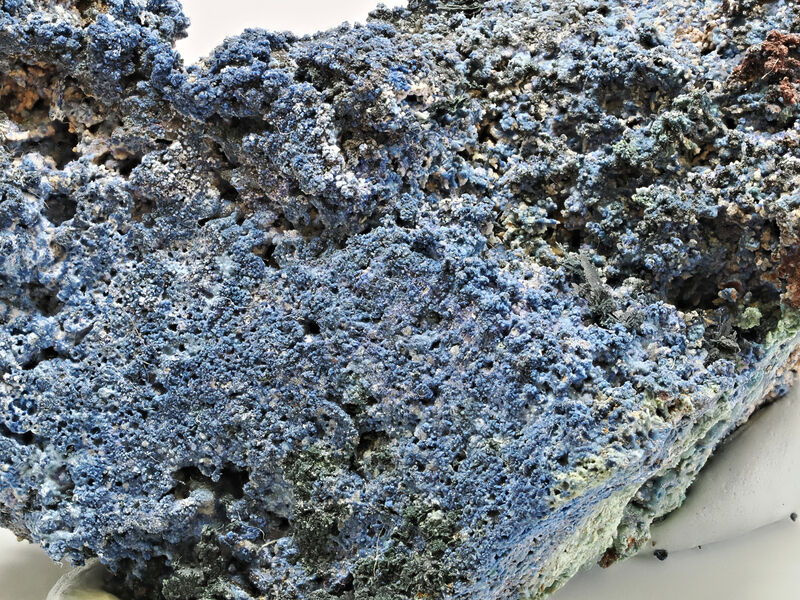 BradaczekiteNaCuCuCu2(AsO4)3Mineral—
- CalciohatertiteNaNaCa(CaFe3+)(AsO4)3Mineral—
- CalciojohilleriteNaCaMgMg2(AsO4)3Mineral—
- CamanchacaiteNa◻CaMg2(AsO4)2[AsO2(OH)2]Mineral—
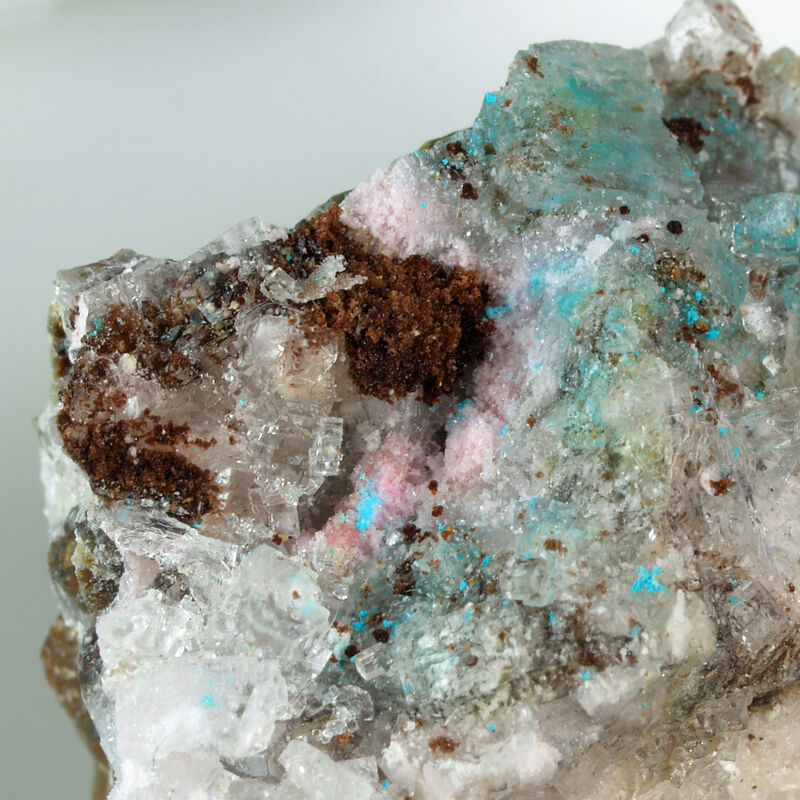 CanutiteNa◻MnMn2(AsO4)[AsO3(OH)]2Mineral—
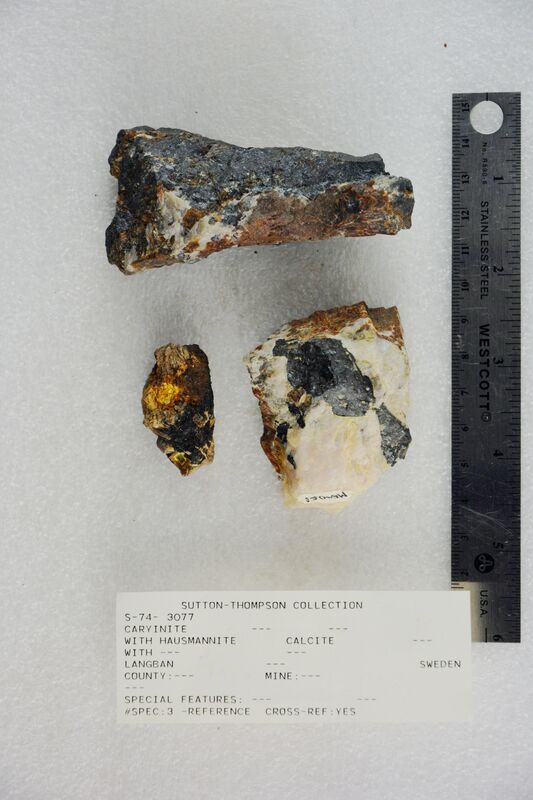 CaryiniteNaCaCaMn2(AsO4)3Mineral—
- Erikapohlite(◻0.5Cu0.5)CuCaZn2(AsO4)3 · H2OMineral—
Literature, links & citation
Citations
- 2013Williams, P. A., Hatert, F., Pasero, M., Mills, S. J. (2013) IMA Commission on New Minerals, Nomenclature and Classification. CNMNC Newsletter No. 15. Mineralogical Magazine, 77 (1) 1-12 doi:10.1180/minmag.2013.077.1.01DOI: 10.1180/minmag.2013.077.1.01
- 2013Krivovichev, Sergey V., Vergasova, Lidiya P., Filatov, Stanislav K., Rybin, Dmitry S., Britvin, Sergey N., Ananiev, Vladimir V. (2013) Hatertite, Na2(Ca,Na)(Fe3+,Cu)2(AsO4)3, a new alluaudite-group mineral from Tolbachik fumaroles, Kamchatka peninsula, Russia. European Journal of Mineralogy, 25 (4) 683-691 doi:10.1127/0935-1221/2013/0025-2311 DOI: 10.1127/0935-1221/2013/0025-2311
- 2022(2022) Hatertite. Handbook of Mineralogy. Mineralogical Society of America
Cite this entry
Entry last updated
@misc{mineral2025,
  author    = {Mineral Index editorial board},
  title     = {Hatertite — Mineral Index},
  year      = {2025},
  url       = {https://mineralindex.org/minerals/hatertite-43573}
}