Where it forms, where it's found
- Type locality
- Las Asperezas mine
- Sierra de Cacho
- Villa Castelli
- General Lamadrid Department
- La Rioja Province
- Argentina
-28.9189°, -68.6839°
63recorded occurrences
Safety & handling
Physical
Optical
- Anisotropism
- Strong; brownish gray to gray-white
- Tropism
- Anisotropic
- Reflectance R%
- (16.2,38.9) 400, (16.6,40.2) 420, (16.9,40.8) 440, (17.0,40.6) 460, (17.0,40.2) 480, (17.0,39.6) 500, (16.8,38.9) 520, (16.4,38.0) 540, (15.8,37.0) 560, (15.0,36.0) 580, (14.3,34.7) 600, (13.9,33.6) 620, (13.9,32.5) 640, (14.5,31.5) 660, (15.8,30.5) 680, (17.7,29.9) 700
- UV response
- Not fluorescent in UV
Reflected-light panel
R̄ 15.9 %anisotropic · dual curve
Specimen
White reference
R₁ R₂
Mode
Crystallography
- Space group
- P63/mmc
- Cell parameters
- a = 3.94 Å · c = 17.25 Å
- Z
- 6
Crystal structure
Chemical composition
In other languages
- French
- Klockmannite
- German
- Klockmannit
- Spanish
- Klockmannita
- Italian
- Klockmannite
Classification
Strunz
10th ed.2.CA.05b
- 2Sulfides and SulfosaltsClass
- 2.CMetal Sulfides, M: S = 1: 1 (and similar)Division
- 2.CAWith CuGroup
- 2.CA.05bKlockmanniteSpecies
Dana
8th ed.02.08.12.02
- 02SulfidesClass
- 02.08AmXp, with m:p = 1:1Type
- 02.08.12Covellite GroupGroup
- 02.08.12.02KlockmanniteSpecies
CIM
—3.1.14
- 3Sulphides, Selenides, Tellurides, Arsenides and Bismuthides (except the arsenides, antimonides and bismuthides of Cu, Ag and Au, which are included in Section 1)Class
- 3.1Sulphides etc. of CuGroup
- 3.1.14KlockmanniteSpecies
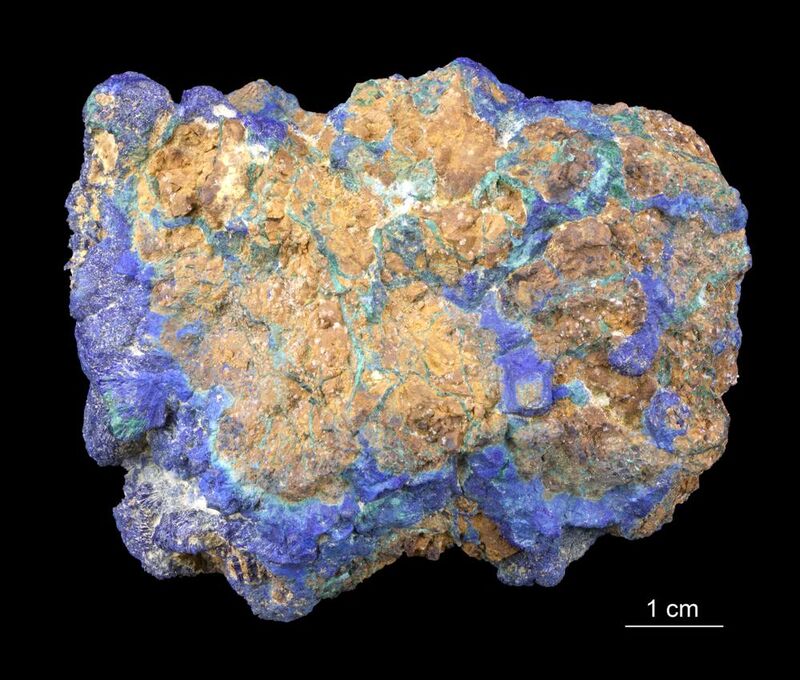
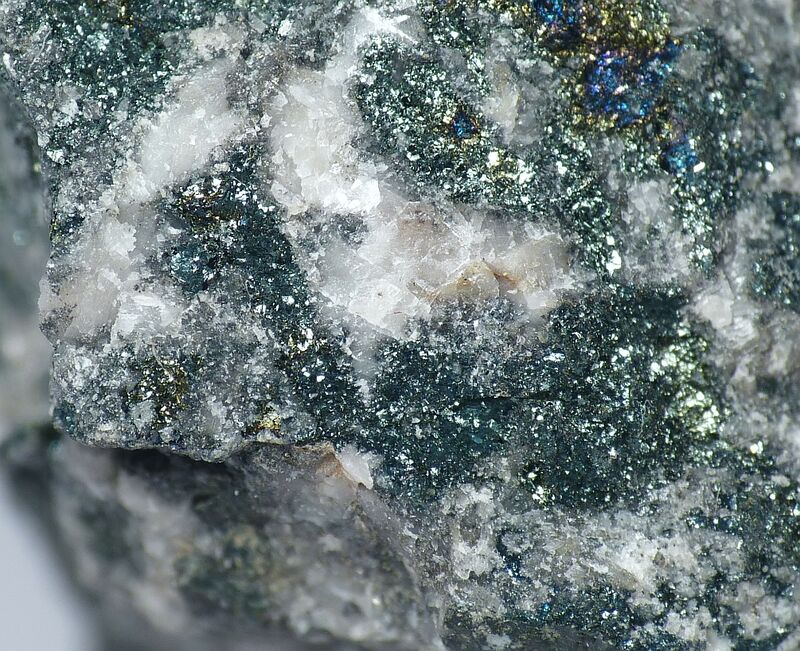
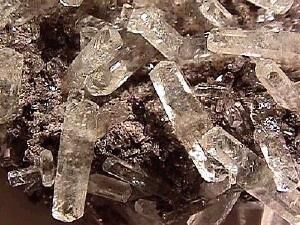
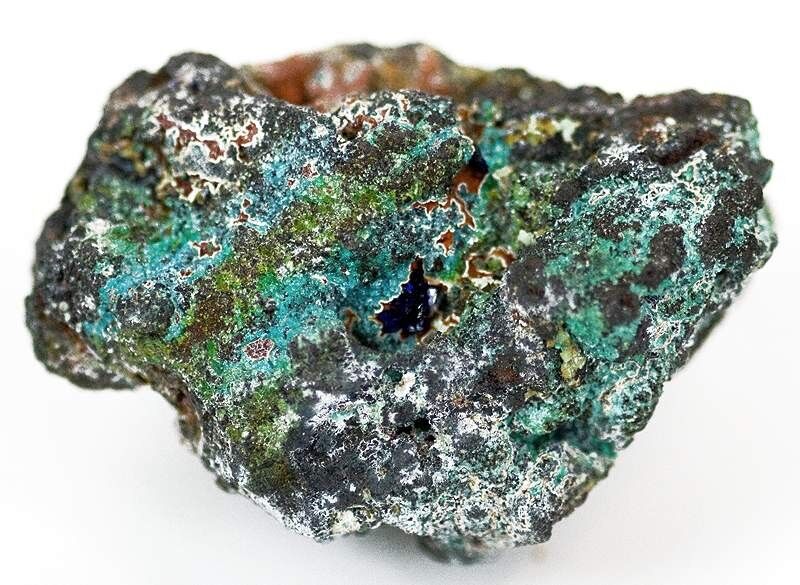
Group, growth & confusion
Literature, links & citation
Citations
- 1928Ramdohr, P. (1928) Klockmannit, ein neues natürliches Kupferselenid. Centralblatt für Mineralogie, Geologie und Paläontologie: 1928: 225-232.
- 1929Foshag, W.F. (1929) New mineral names. American Mineralogist, 14, 41-42.
- 1931Schneiderhöhn, Hans, Ramdohr, Paul (1931) Lehrbuch der Erzmikroskopie Vol. 2. Borntraeger.
- 1944Palache, Charles, Berman, Harry, Frondel, Clifford (1944) The System of Mineralogy (7th ed.) Vol. 1 - Elements, Sulfides, Sulfosalts, Oxides. John Wiley and Sons, New York.
- 1949Earle, J. W. (1949) Studies of natural and artificial selenides: I-Klockmannite, CuSe. American Mineralogist, 34 (5-6) 435-440
Cite this entry
Entry last updated
@misc{mineral2026,
  author    = {Mineral Index editorial board},
  title     = {Klockmannite — Mineral Index},
  year      = {2026},
  url       = {https://mineralindex.org/minerals/klockmannite-2226}
}