Where it forms, where it's found
- Geological setting
dolomite carbonatite cutting phosphorites
- Type locality
- Kovdor Zheleznyi Mine
- Kovdor Massif
- Kovdorsky District
- Murmansk Oblast
- Russia
67.5597°, 30.4258°
2recorded occurrences
Physical
Optical
- Optical type
- Biaxial (+) · 2V measured = 75 – 80° · 2V calc = 77°
- Refractive index
- 1.581 – 2
- Surface relief
- High
- Principal indices
- nα 1.581 · nβ 1.600 – 2 · nγ 1.631
- Pleochroism
- Visible
X = b, Y + c pale pink on Y to pinkish grey on Z
- Dispersion
- weak, r < v
- UV response
- None
Δ = 0Δmax
PPLpleochroism per grain
XPLindependent extinctions · rotate the stage
PPLpleochroism only · colour blends on rotation
XPLinterference colour · extinct every 90°
Retardation500 nm
Order1st order
XPL colour
Crystallography
- Space group
- C2/m
- Cell parameters
- a = 10.034(4) Å · b = 13.341(3) Å · c = 4.67(3) Å
- Cell angles
- β = 105.02(2) °
- Ratio a:b:c
- 1 : 1.330 : 0.465
- Unit cell volume
- 603.8 ų
- Z
- 2
- Morphology
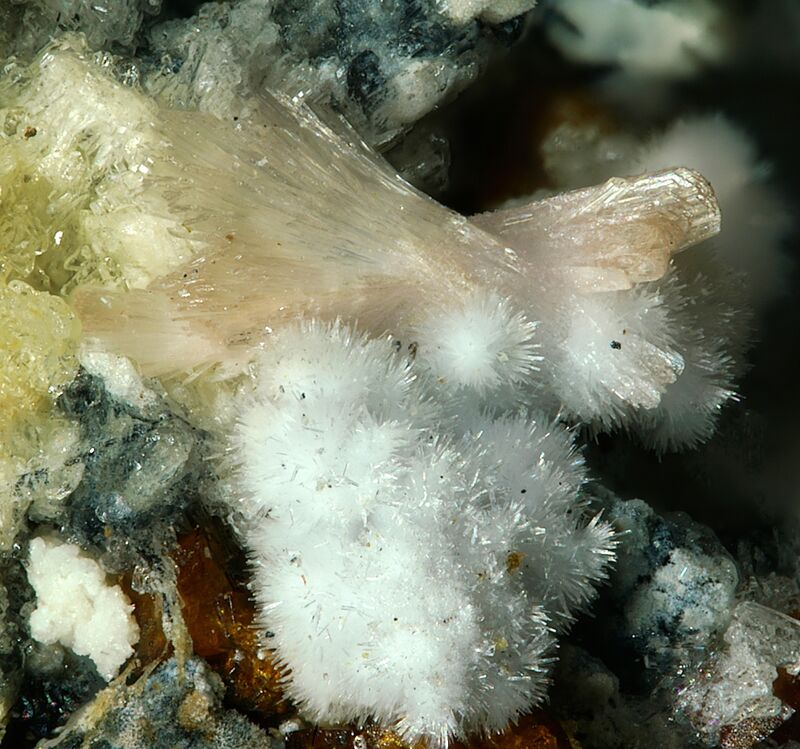
Groups of small spherulites (up to 0.5 mm diameter) and rosettes (up to 0.05 mm diameter) of well-shaped tabular crystals.
- Twinning
none
- Type-locality form
groups (up to 3 x 3 x 2 cm) of small spherulites (up to 0.5 mm diameter) and rosettes (up to 0.05 mm diameter) of tabular crystals, growing on walls of leached fissures in dolomitic carbonatite
Chemical composition
- Impurities
- Mg
- Mn
- Ni
- Fe
Synonyms
- IMA2004-021
- Pakhomovskyiet
In other languages
- German
- IMA 2004-021 · Pakhomovskyit
- Italian
- pakhomovskyite
Classification
Strunz
10th ed.8.CE.40
- 8Phosphates, Arsenates, VanadatesClass
- 8.CPhosphates without additional anions, with H2ODivision
- 8.CEWith only medium-sized cations, RO4:H2O about 1:2.5Group
- 8.CE.40PakhomovskyiteSpecies
Group, growth & confusion
 AnnabergiteNi3(AsO4)2 · 8H2OMineral—
 ArupiteNi3(PO4)2 · 8H2OMineral—
 BabánekiteCu3(AsO4)2 · 8H2OMineral—
 Barićite(Mg,Fe)3(PO4)2 · 8H2OMineral—
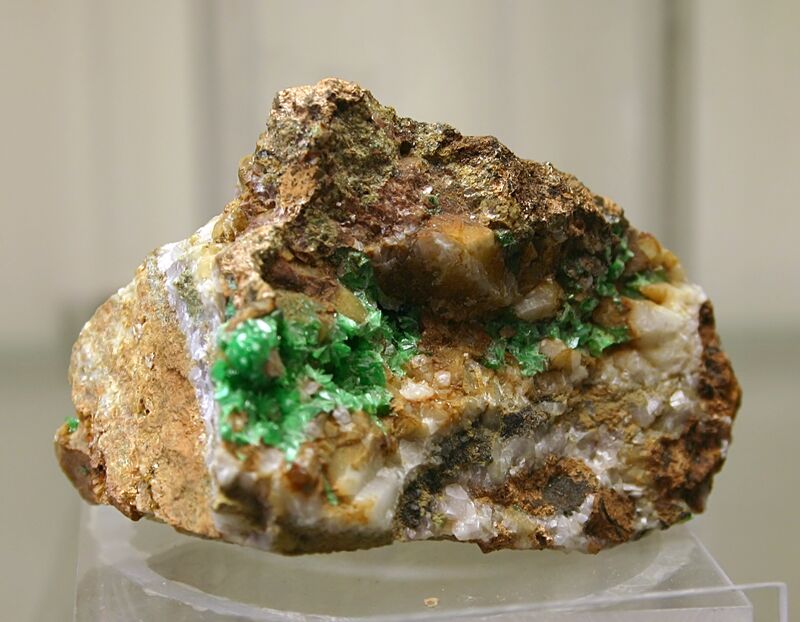 CabreriteNiMg2(AsO4)2·8H2OMineral—
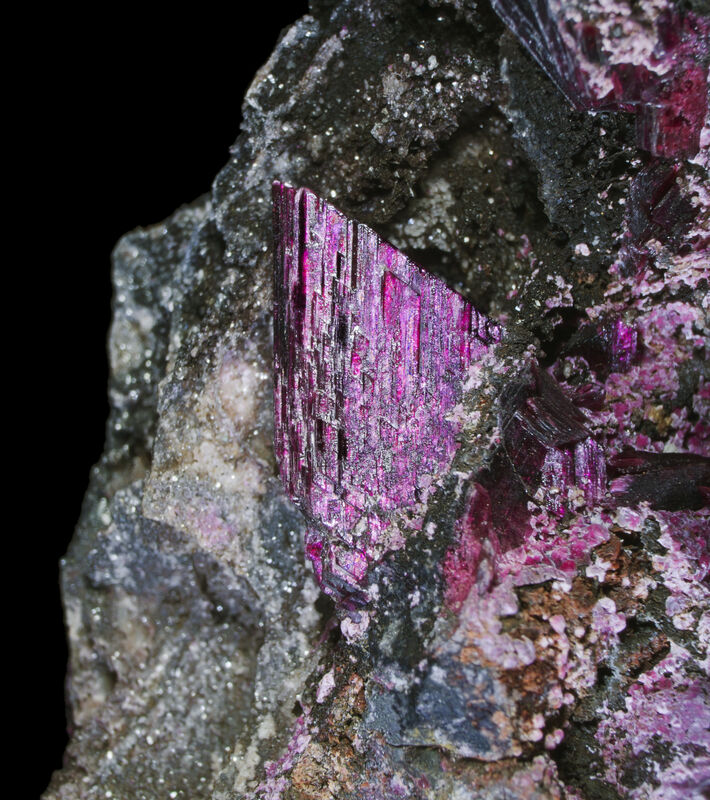 ErythriteCo3(AsO4)2 · 8H2OMineral—
- GritsenkoiteCoMg2(AsO4)2(H2O)8Mineral—
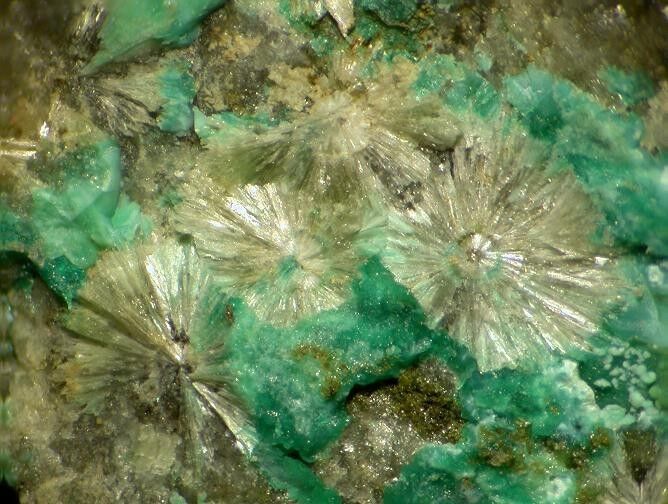 HörnesiteMg3(AsO4)2 · 8H2OMineral—
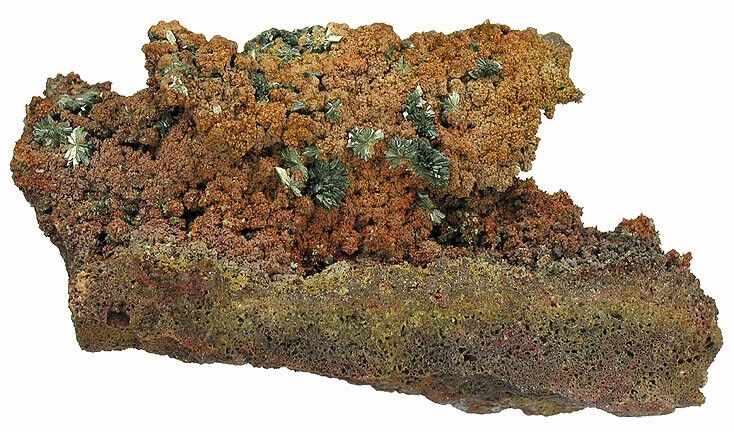 KöttigiteZn3(AsO4)2 · 8H2OMineral—
 ManganohörnesiteMn2+3(AsO4)2 · 8H2OMineral—
Literature, links & citation
Citations
- 2006Yakovenchuk, V. N., Ivanyuk, G. Yu., Mikhailova, Y. A., Selivanova, E. A., Krivovichev, S. V. (2006) Pakhomovskyite, Co3(PO4)2·8H2O, a new mineral species from Kovdor, Kola Peninsula, Russia. The Canadian Mineralogist, 44 (1) 117-123 doi:10.2113/gscanmin.44.1.117 DOI: 10.2113/gscanmin.44.1.117
- 2015(2015) Pakhomovskyite. Handbook of Mineralogy. Mineralogical Society of America
Cite this entry
Entry last updated
@misc{mineral2025,
  author    = {Mineral Index editorial board},
  title     = {Pakhomovskyite — Mineral Index},
  year      = {2025},
  url       = {https://mineralindex.org/minerals/pakhomovskyite-27472}
}