Where it forms, where it's found
- Type locality
- Red Lead Mine
- Dundas mineral field
- Zeehan mining district
- West Coast municipality
- Tasmania
- Australia
-41.8894°, 145.4308°
2recorded occurrences
Safety & handling
Physical
- Hardness
- 1Talc
- 2Gypsum
- 3Calcite
- 4Fluorite
- 5Apatite
- 6Orthoclase
- 7Quartz
- 8Topaz
- 9Corundum
- 10Diamond
- Lustre
- Pearly
- Transparency
- Translucent
- Colour
- Pale to deep lilac · pinkish violet · pale gray
- Streak
- Violet, pale
- Cleavage
- Imperfect/Fair
Fair parallel to (100) also possibly (010)
"Fracture and tenacity could not be observed."
- Density
- 3.947 g/cm³
Optical
- Optical type
- Biaxial (-) · 2V calc = 62°
- Refractive index
- 1.704 – 1.842
- Surface relief
- High
- Principal indices
- nα 1.704 · nβ 1.802 · nγ 1.842
- Pleochroism
- Visible
X = Y = colorless to pale grayish pink; Z = grayish pink.
- Dispersion
- r > v weak
- Extinction
- X = a; Y = b; Z = c.
- UV response
- Not fluorescent.
- Notes
Absorption: X < Z.
Δ = 0Δmax
PPLpleochroism per grain
XPLindependent extinctions · rotate the stage
PPLpleochroism only · colour blends on rotation
XPLinterference colour · extinct every 90°
Retardation1380 nm
Order3rd order
XPL colour
Crystallography
- Cell parameters
- a = 9.079(3) Å · b = 16.321(9) Å · c = 5.786(7) Å
- Ratio a:b:c
- 1 : 1.798 : 0.637
- Z
- 4
- Morphology
Crystals are poorly developed, flattened on (010), and slightly elongate along [001] or, less commonly, [100]. Terminations, in the direction of [001], typically have a frayed appearance.
- Twinning
No twinning.
- Parting
- No parting.
- Type-locality form
Earthy, pale purplish mineral in crocoite-bearing gossan.
- Comment
Space Group: [P bnm] (by analogy to dundasite).
Chemical composition
Synonyms
- IMA1999-034
- Petterdiet
In other languages
- German
- IMA 1999-034 · Petterdit
- Italian
- Petterdite
Classification
Strunz
10th ed.5.DB.10
- 5CarbonatesClass
- 5.DCarbonates with additional anions, with H2ODivision
- 5.DBWith large and medium-sized cationsGroup
- 5.DB.10PetterditeSpecies
Group, growth & confusion
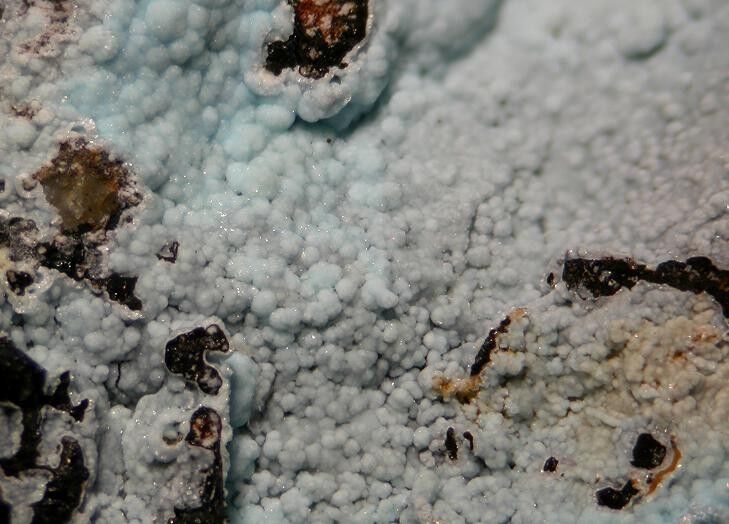 AlumohydrocalciteCaAl2(CO3)2(OH)4 · 4H2OMineral—
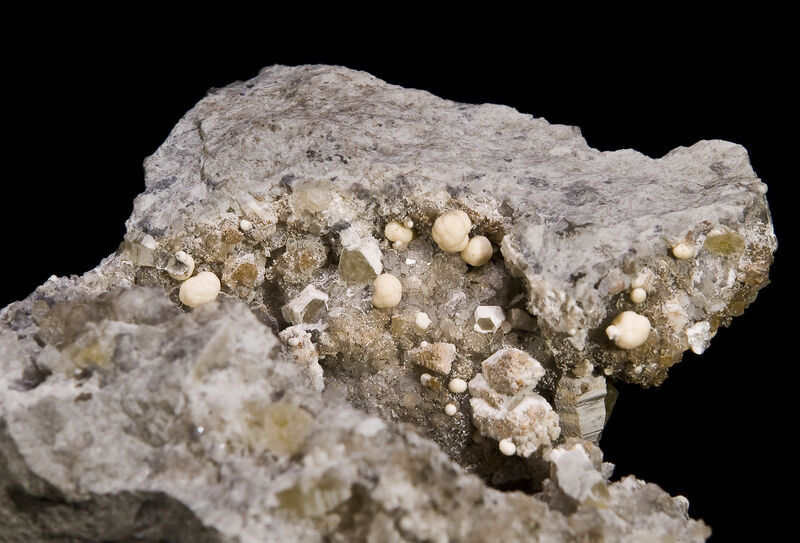 DresseriteBa2Al4(CO3)4(OH)8 · 3H2OMineral—
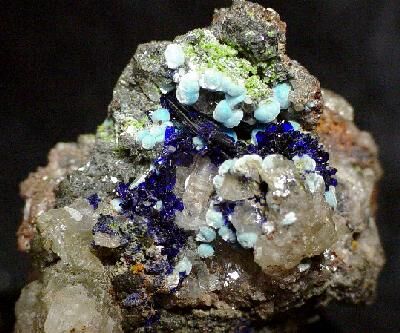 DundasitePbAl2(CO3)2(OH)4 · H2OMineral—
- GrguriciteCaCr2(CO3)2(OH)4 · 4H2OMineral—
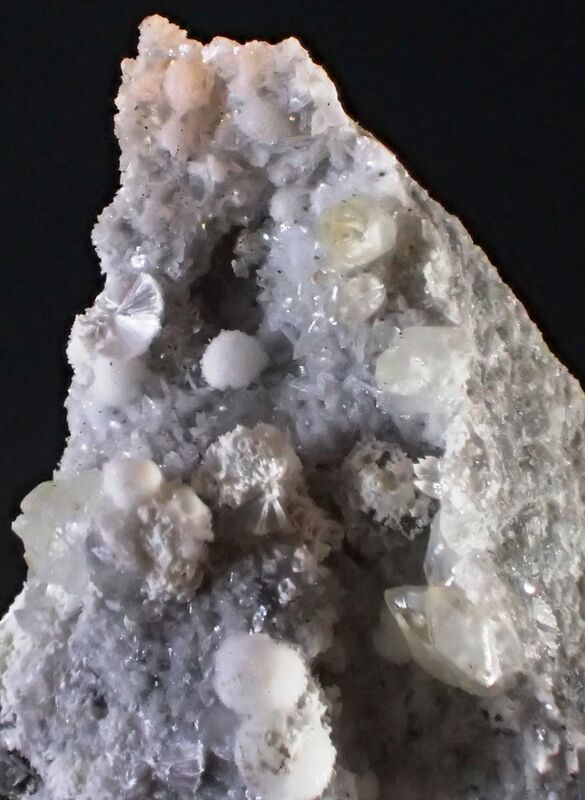 HydrodresseriteBaAl2(CO3)2(OH)4 · 3H2OMineral—
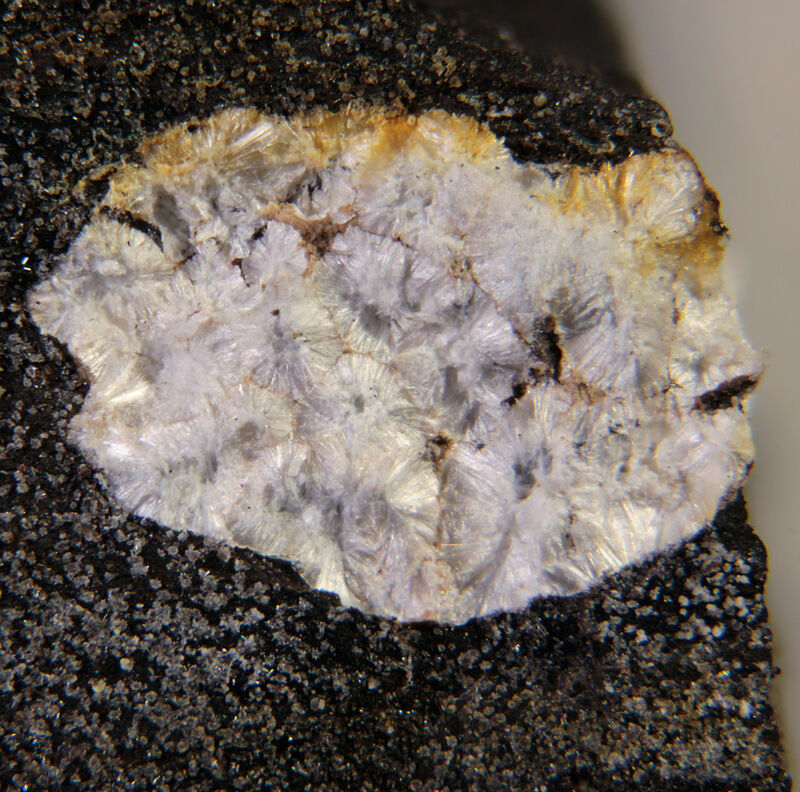 KochsándoriteCaAl2(CO3)2(OH)4 · H2OMineral—
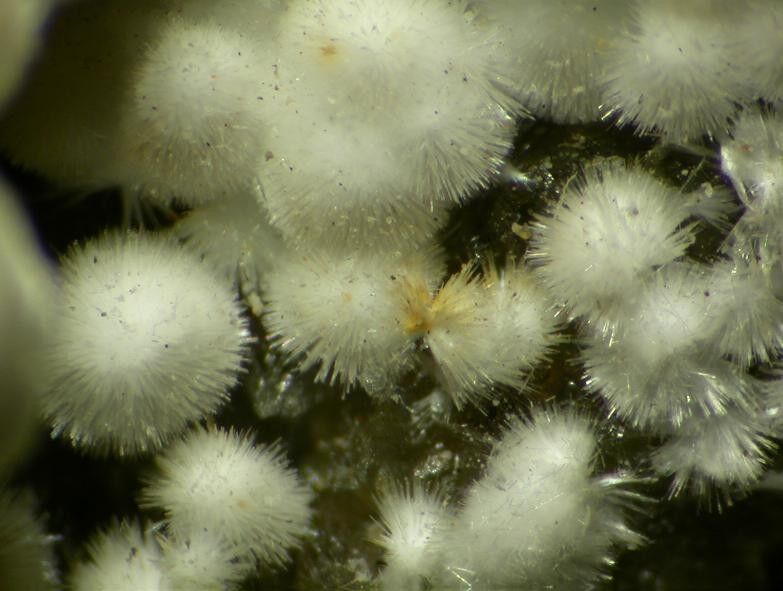 StrontiodresseriteSrAl2(CO3)2(OH)4 · H2OMineral—
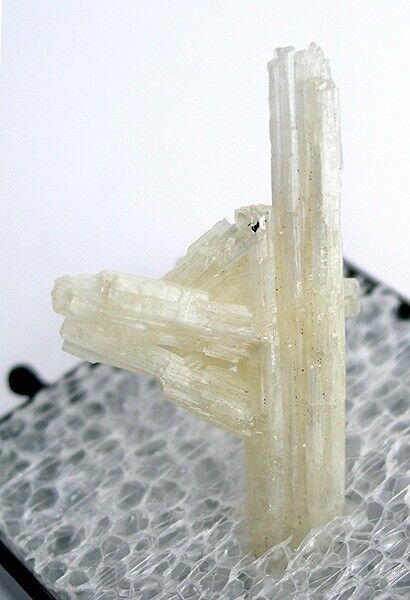
Literature, links & citation
Citations
- 2000Birch, W. D., Kolitsch, U., Witzke, T., Nasdala, L., Bottrill, R. S. (2000) Petterdite, the Cr-dominant analogue of dundasite: a new mineral species from Dundas, Tasmania, Australia and Callenberg, Saxony, Germany. The Canadian Mineralogist, 38 (6) 1467-1476 doi:10.2113/gscanmin.38.6.1467 DOI: 10.2113/gscanmin.38.6.1467
- 2005(2005) Petterdite. Handbook of Mineralogy. Mineralogical Society of America
Cite this entry
Entry last updated
@misc{mineral2026,
  author    = {Mineral Index editorial board},
  title     = {Petterdite — Mineral Index},
  year      = {2026},
  url       = {https://mineralindex.org/minerals/petterdite-7099}
}