History
The mineral's name is younger than the substance it was named after. Cerussa — the Latin word for white lead — described a powder Roman cosmeticians and painters knew well, long before anyone identified the natural carbonate ore from which lead itself can be drawn.
White lead, as a cosmetic, has a history that runs through Egypt, Greece and Rome. The pigment was used in ancient Rome to whiten the skin, and lead carbonate was likewise applied throughout ancient Egypt and Greece as a white cosmetic, the substance itself called cerussa. Romans manufactured it deliberately: sheets of lead were placed in clay pots half-filled with vinegar, sealed, and left for weeks. The vapours ate at the metal and produced a soft, opaque white powder used to cover blemishes and even out skin tone. The chemistry was crude but reliable. The powder Roman women patted onto their faces was, in modern terms, basic lead carbonate — close kin to the natural mineral but not identical to it.
The natural form entered written mineralogy in 1565, when the Swiss naturalist Conrad Gessner mentioned a Cerussa nativa — a native white lead — separating the rock from the pot. Miners in lead districts had their own working vocabulary for it: lead-spar and white-lead-ore, names that survived into the 19th century. The French mineralogist François Sulpice Beudant applied the form céruse to the mineral in 1832. The modern name cerussite is due to the Austrian mineralogist Wilhelm Karl von Haidinger, who drew it straight from the older cerussa in 1845.
The pigment outlived the cosmetic. White lead remained the key white pigment in oil paint until well into the 20th century. The toxicity of lead — ingested through chipped paint, absorbed through the skin — finally ended its run in cosmetics and paints in Western countries. Major historical sources of fine cerussite specimens include Murcia in Spain, Tsumeb in Namibia, Broken Hill in New South Wales, and Leadville in Colorado.
Industrial & practical applications
Where lead-bearing rock weathers near the surface, galena breaks down and cerussite takes its place. The carbonate that forms is itself an important ore of lead. Pure cerussite is more than three-quarters lead by weight — up to 77.5 percent — which makes even modest deposits worth mining.
Where the ore body also carries silver in solid solution, cerussite delivers both metals to the smelter: lead as the main product, silver as a by-product of refining.
Almost all of the lead that comes out the other end becomes batteries. In the United States, lead-acid storage batteries accounted for about 88 percent of lead consumption by the early 2000s. The rest is split across small uses — ammunition at three percent, oxides for glass and ceramics at three, casting metals at two, sheet lead at one. Lead also goes into radiation shielding, usually alloyed with about four percent antimony for stiffness.
Where it forms, where it's found
- Geological setting
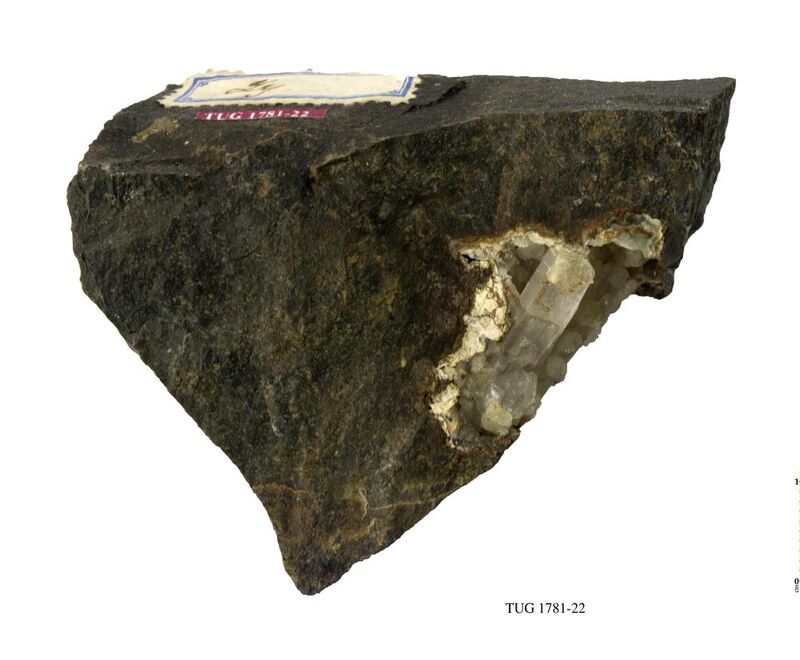
Commonly occurs in the upper oxidized zones of base metal deposits, especially lead-silver deposits.
- Type locality
- Vicenza Province
- Veneto
- Italy
Varieties
Safety & handling
Physical
- Hardness
- 1Talc
- 2Gypsum
- 3Calcite
- 4Fluorite
- 5Apatite
- 6Orthoclase
- 7Quartz
- 8Topaz
- 9Corundum
- 10Diamond
- Lustre
- Adamantine
- Transparency
- Transparent · Translucent
- Colour
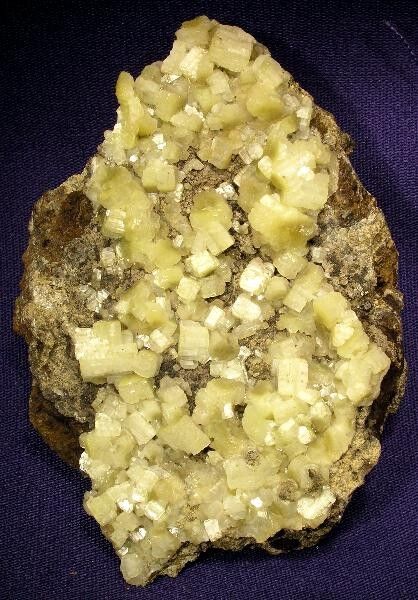
- Colourless · white · gray · blue · or green · colourless in transmitted light
- Streak
- White
- Tenacity
- very brittle
- Cleavage
- Distinct/Good
On (110) and (021) distinct; on (010) and (012) in traces.
- Fracture
- Conchoidal
- Density
- 6.53 g/cm³
Optical
- Optical type
- Biaxial (-) · 2V measured = 8 – 14° · 2V calc = 8°
- Refractive index
- 1.803 – 2.076
- Surface relief
- Very high
- Principal indices
- nα 1.803 · nβ 2.074 · nγ 2.076
- Dispersion
- relatively strong
- Extinction
- X = c; Y = b; Z = a.
- Tropism
- Anisotropic
- Reflectance R%
- (10.1,15.3) 400, (9.3,15.0) 420, (8.6,14.3) 440, (8.6,14.1) 460, (8.6,13.9) 470, (8.5,13.7) 480, (8.4,13.6) 500, (8.4,13.5) 520, (8.3,13.4) 540, (8.3,13.4) 546, (8.3,13.3) 560, (8.3,13.3) 580, (8.3,13.3) 689, (8.3,13.2) 600, (8.3,13.0) 620, (8.2,12.9) 640, (8.2,12.9) 650, (8.2,12.8) 660, (8.2,12.7) 680, (8.1,12.5) 700
- Luminescence
- None
- UV response
- Occasionally fluorescent under SW and MW UV lights showing a yellow color. Yellow/white under SW UV light, but less intense.
Crystallography
- Cell parameters
- a = 5.179(1) Å · b = 8.492(3) Å · c = 6.141(2) Å
- Ratio a:b:c
- 1 : 1.640 : 1.186
- Z
- 4
- Morphology
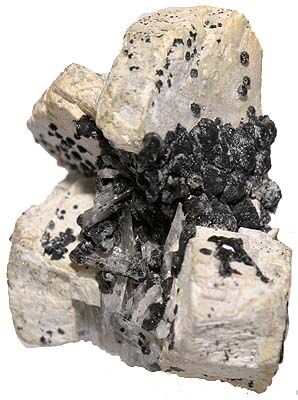
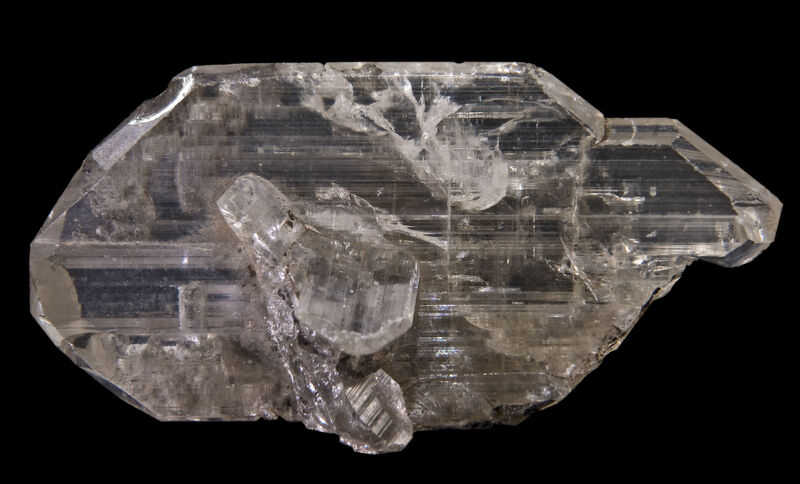
Crystal morphology extremely varied. Simple crystals often tabular (010) and elongated [001] or [100]. Also equant or dipyramidal and then pseudo-hexagonal. Rarely acicular [001] or very thin tabular (001). (010) and {0kl} usually striated [100]; (111) often striated [1_10] or [11_2]. Reticular twin aggregates common. Massive, granular, dense, compact. Stalactitic at times; powdery to earthy. Fibrous rare.
- Twinning
Almost universal. Most commonly on (110), as twin lamellae or as contact twin types producing stellate pseudo-hexagonal groups or reticulated aggregates. On (130) less common, mainly as contact twins with a heart-shaped outline. Both laws may occur simultaneously.
- Comment
Non-standard space group setting (Pmcn). Other source gives cell parameters 5.173, 8.48, 6.13 A.
Chemical composition
Synonyms
- Acrusit
- Acrusita
- Acrusite
- Black Lead Ore
- Bleispath
- Bly-Ochra
- Bly-Spat
- Blyspath
- Carbonate of Lead
- Cerrusite
- Céruse
- Cerussa
- Cerussa nativa
- Cerussa nativa ex agro Vicentino
- Kohlensaures Blei
- Lead Spar
- Minera plumbi spathacea
- Minera spathiforma alba, vel grisea
- Plomb carbonaté
- Plomb spathique
- Plombe blanche
- Plumbum acido aero mineralisatum
- Plumbum spathosum
- Spatum Plumbi
- Weissbleierz
- Weißbleierz
- White Lead
- White Lead Ore
- Zerusita
- Ψιρύθιου
In other languages
- French
- 598-63-0 · Cérusite · Cérussite
- German
- Acrusit · Cerussit · Weißbleierz
- Spanish
- Cerusita · PbCO3
- Italian
- Cerussite
- Japanese
- 白鉛鉱
- Chinese
- 白铅矿
- Simplified Chinese
- 白铅矿
- Traditional Chinese
- 白鉛礦
- Russian
- PbCO3 · Белая свинцовая руда · Свинцовая земля · церуссит · Черная свинцовая руда
- Arabic
- السيروسيت · سيروسيت
Classification
5.AB.15
- 5CarbonatesClass
- 5.ACarbonates without additional anions, without H2ODivision
- 5.ABAlkali-earth (and other M2+) carbonatesGroup
- 5.AB.15CerussiteSpecies
14.01.03.04
- 14Anhydrous Normal CarbonatesClass
- 14.01A(XO3)Type
- 14.01.03Aragonite Group (Orthorhombic: Pmcn)Group
- 14.01.03.04CerussiteSpecies
11.9.1
- 11CarbonatesClass
- 11.9Carbonates of Pb, Zr and ThGroup
- 11.9.1CerussiteSpecies
Group, growth & confusion
 Agardite-(La)LaCu2+6(AsO4)3(OH)6 · 3H2OMineral—
 AlamositePbSiO3Mineral—
 AltaitePbTeMineral—
 AnglesitePb(SO4)Mineral—
 AragoniteCa(CO3)Mineral—
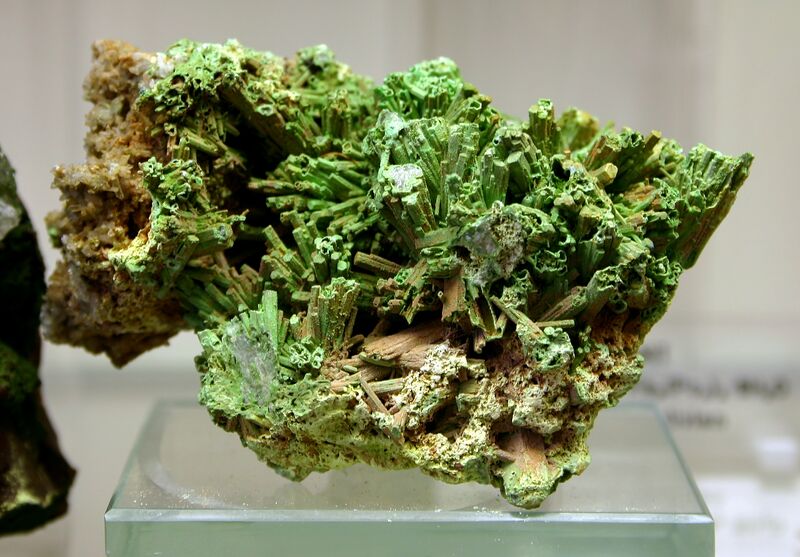 BayldoniteCu3PbO(AsO3OH)2(OH)2Mineral—
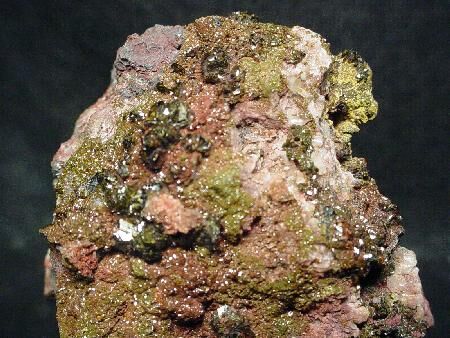 BeudantitePbFe3+3(AsO4)(SO4)(OH)6Mineral—
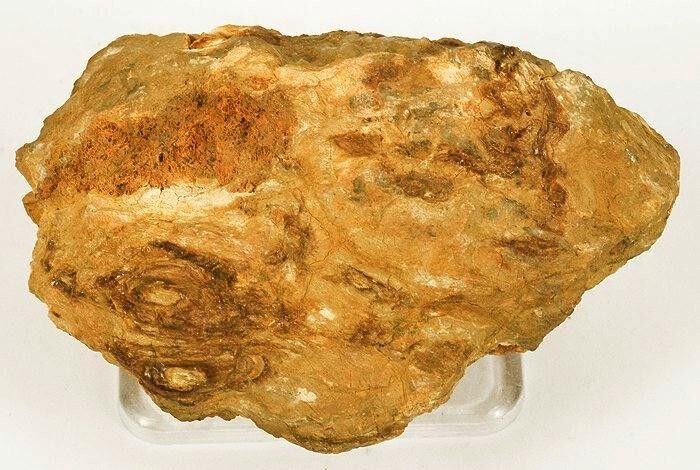 BindheimitePb2Sb2O6OMineral—
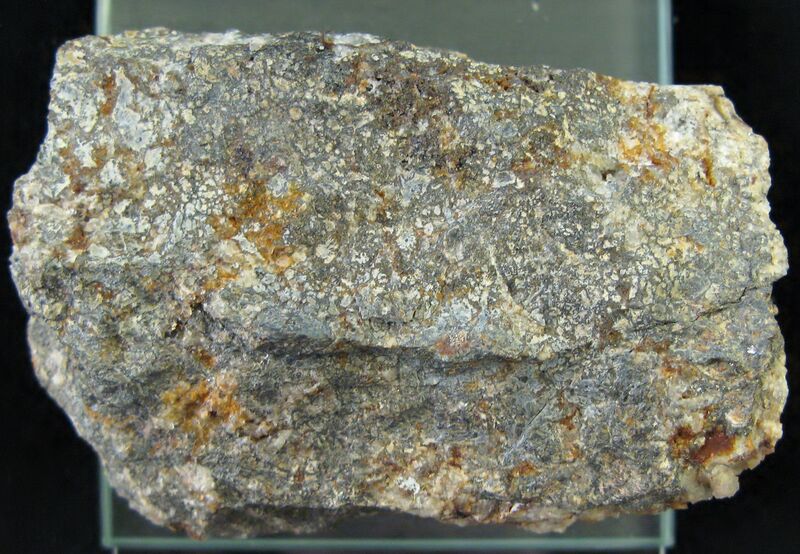 BismutiteBi2O2(CO3)Mineral—
 BrackebuschitePb2Mn3+(VO4)2(OH)Mineral—
Literature, links & citation
- 1565Conrad Gesner (1565) De Omni Rervm Fossilivm Genere.
- 1747Wallerius, J.G (1747) Mineralogia, eller Mineralriket. Stockholm: 295 (as Minera Plumbi spathacea).
- 1753Wallerius, J.G. (1753) French edition of “Mineralogia, eller Mineralriket.” 2 volumes, Paris: 1: 536 (as Plomb spathique).
- 1780Bergmann, T. (1780) Opuscula of Tobernus Bergmann: 2: 426 (as Plumbum acido aero mineralisatum).
- 1832Karsten (1832) Journal für Chemie und Physik, Nuremberg: 45: 365.
Entry last updated
@misc{mineral2026,
  author    = {Mineral Index editorial board},
  title     = {Cerussite — Mineral Index},
  year      = {2026},
  url       = {https://mineralindex.org/minerals/cerussite-934}
}