Where it forms, where it's found
- Type locality
- Red Lead Mine
- Dundas mineral field
- Zeehan mining district
- West Coast municipality
- Tasmania
- Australia
-41.8894°, 145.4308°
72recorded occurrences
Safety & handling
Physical
- Hardness
- 1Talc
- 2Gypsum
- 3Calcite
- 4Fluorite
- 5Apatite
- 6Orthoclase
- 7Quartz
- 8Topaz
- 9Corundum
- 10Diamond
- Transparency
- Transparent · Translucent
- Colour
- Colourless · white · yellow · green or grey · pale blue
Colour depends on impurity elements (commonly Fe, Cu).
- Fracture
- Conchoidal
- Density
- 5.39 g/cm³
Optical
- Optical type
- Uniaxial (+/-)
- Refractive index
- 1.79
- Surface relief
- High
- Principal indices
- nα 1.79 · nβ 1.790
- Notes
Biaxial in pseudocubic sectors, anomalously isotropic
Crystallography
- Space group
- R-3m
- Cell parameters
- a = 7.13(4) Å · c = 17.11(6) Å
- Z
- 3
- Type-locality form
usually as massive to earthy crusts.
Crystal structure
Chemical composition
Synonyms
- IMA1981-029
- Philipsborniet
In other languages
- German
- IMA 1981-029 · Philipsbornit
- Italian
- Philipsbornite
Classification
Strunz
10th ed.8.BL.10
- 8Phosphates, Arsenates, VanadatesClass
- 8.BPhosphates, etc., with additional anions, without H2ODivision
- 8.BLWith medium-sized and large cations, (OH, etc.):RO4 = 3:1Group
- 8.BL.10PhilipsborniteSpecies
Dana
8th ed.42.07.04.02
- 42Hydrated Phosphates, Etc.containing Hydroxyl or HalogenClass
- 42.07(AB)2(XO4)Zq·xH2OType
- 42.07.04Arsenocrandallite GroupGroup
- 42.07.04.02PhilipsborniteSpecies
CIM
—20.5.5
- 20Arsenates (also arsenates with phosphate, but without other anions)Class
- 20.5Arsenates of Ti and PbGroup
- 20.5.5PhilipsborniteSpecies
Group, growth & confusion
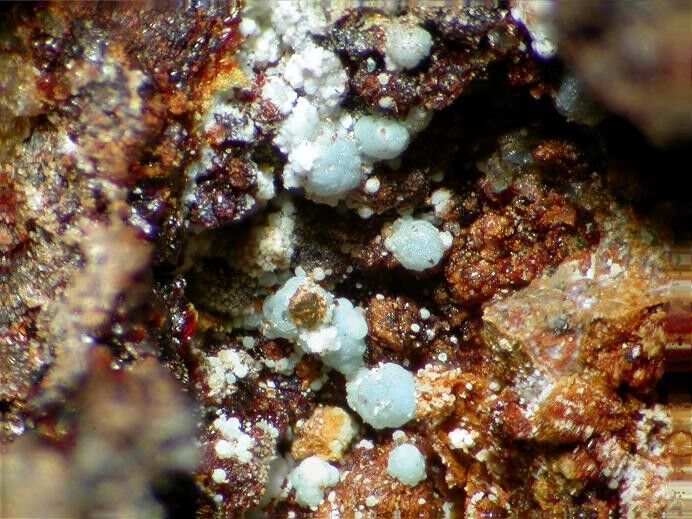 ArsenocrandalliteCaAl3(AsO4)(AsO3OH)(OH)6Mineral—
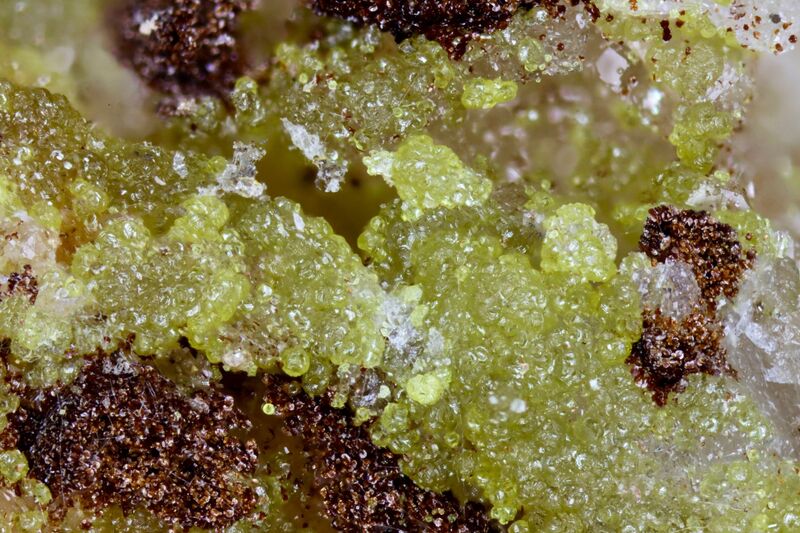 Arsenoflorencite-(Ce)CeAl3(AsO4)2(OH)6Mineral—
- Arsenoflorencite-(La)LaAl3(AsO4)2(OH)6Mineral—
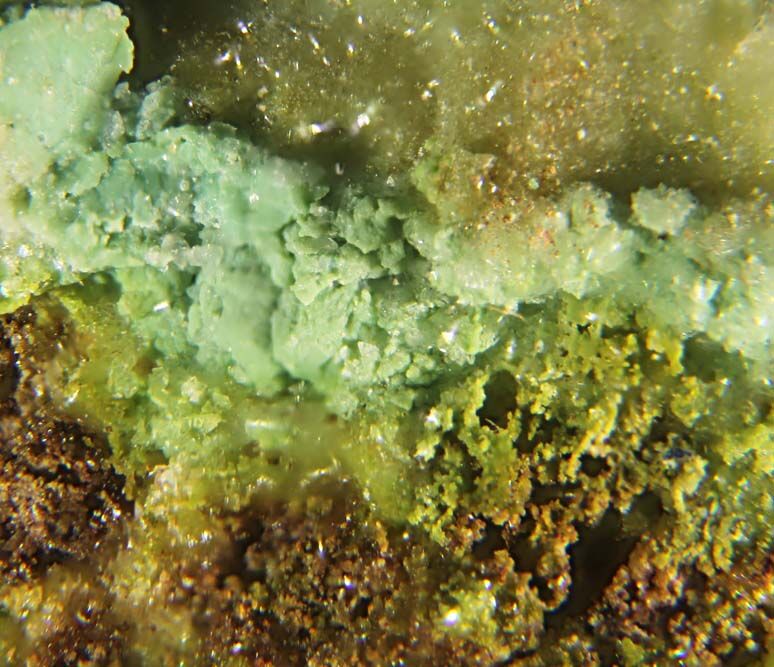 ArsenogorceixiteBaAl3(AsO4)(AsO3OH)(OH)6Mineral—
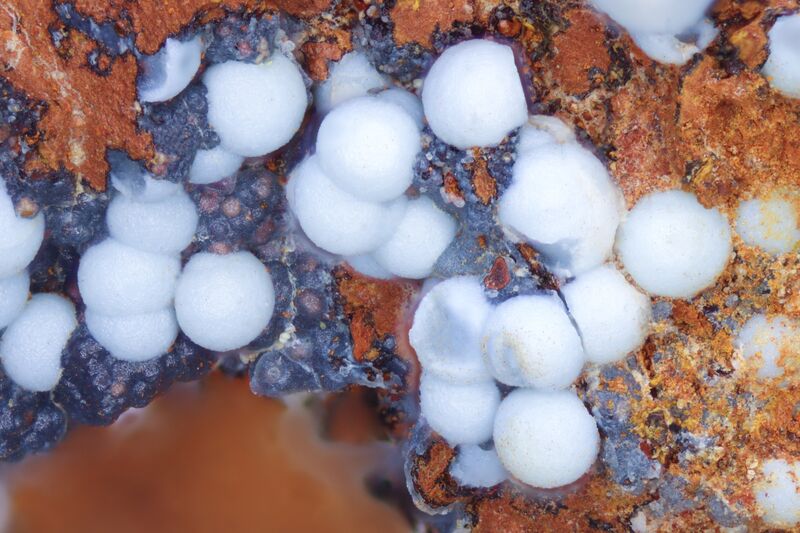 ArsenogoyaziteSrAl3(AsO4)(AsO3OH)(OH)6Mineral—
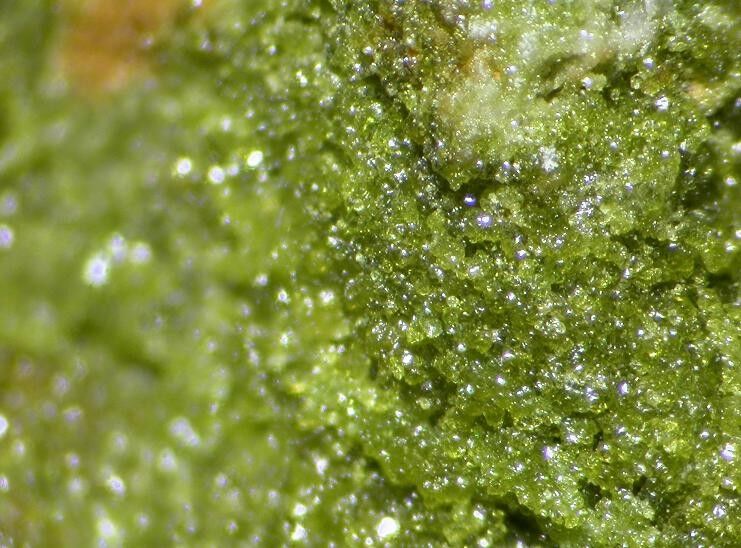 DussertiteBaFe3+3(AsO4)(AsO3OH)(OH)6Mineral—
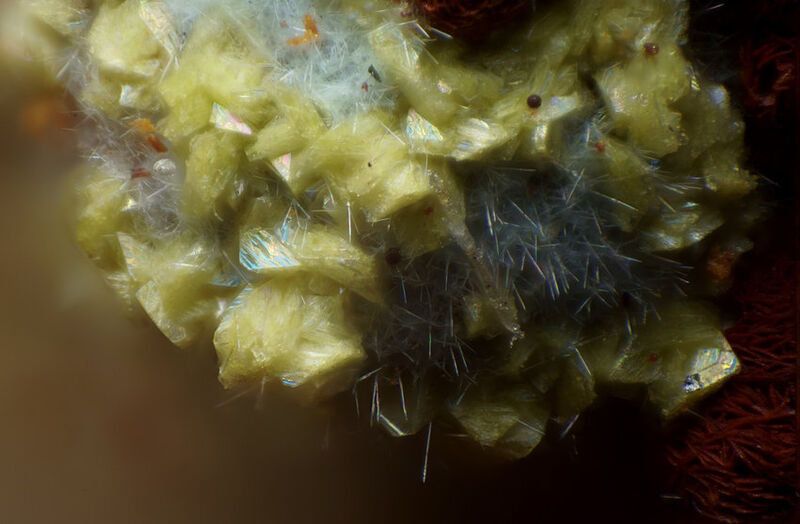 Graulichite-(Ce)CeFe3+3(AsO4)2(OH)6Mineral—
- Graulichite-(La)LaFe3+3(AsO4)2(OH)6Mineral—
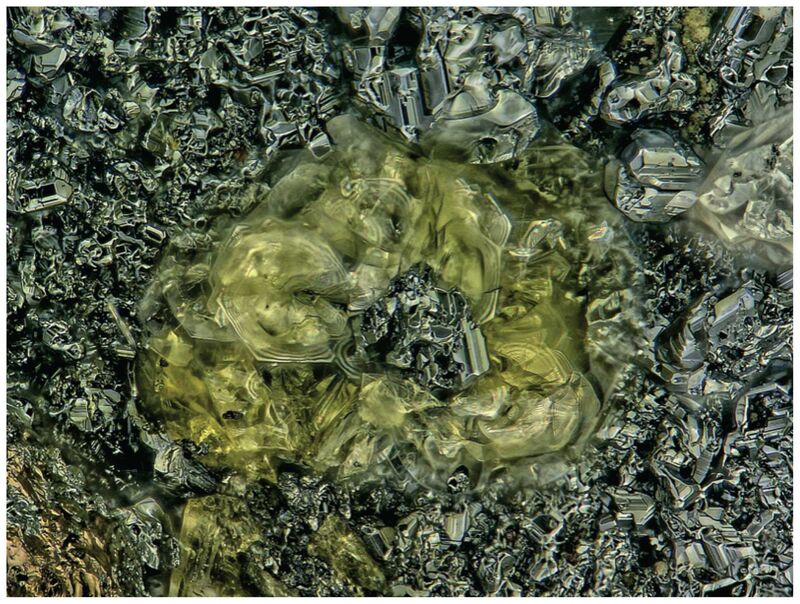 Karlseifertite Pb(Ga2Ge)(AsO4)2(OH)6Mineral—
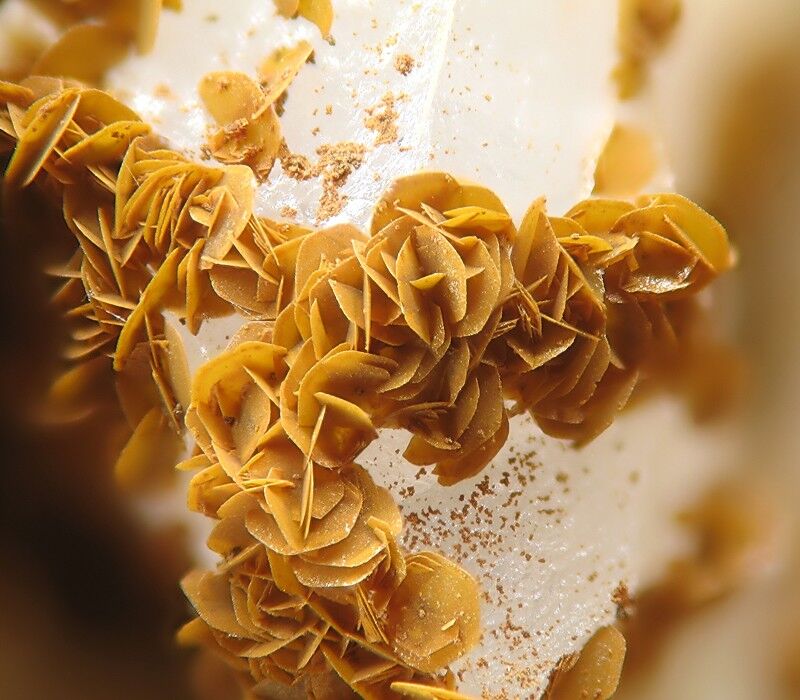 SegnititePbFe3+3(AsO4)(AsO3OH)(OH)6Mineral—
Literature, links & citation
Citations
- 1982Walenta, K., Zwiener, M. and Dunn, P. J. (1982): Philipsbornit, ein neues Mineral der Crandallitreihe von Dundas auf Tasmanien. Neues Jahrbuch für Mineralogie, Monatshefte (1982): 1-5. (in German).
- 1982American Mineralogist (1982): 67: 859.
- 1991Schwab, R.G., Götz, C., Herold, H., Pinto de Oliveira, N. (1991) Compounds of the crandallite type: Synthesis and properties of pure (Ca, Sr, Ba, Pb, La, Ce to Eu) - arsenocrandallites. Neues Jahrbuch für Mineralogie, Monatshefte: 1991: 97-112.
- 1998Sejkora, J., Čejka, J., Šrein, V., Novotná, M., Ederová, J. (1998) Minerals of the plumbogummite-philipsbornite series from Moldava deposit. Neues Jahrbuch für Mineralogie - Monatshefte, 1998. 145-163
- 2005(2005) Philipsbornite. Handbook of Mineralogy. Mineralogical Society of America
Cite this entry
Entry last updated
@misc{mineral2025,
  author    = {Mineral Index editorial board},
  title     = {Philipsbornite — Mineral Index},
  year      = {2025},
  url       = {https://mineralindex.org/minerals/philipsbornite-3190}
}