Where it forms, where it's found
- Geological setting
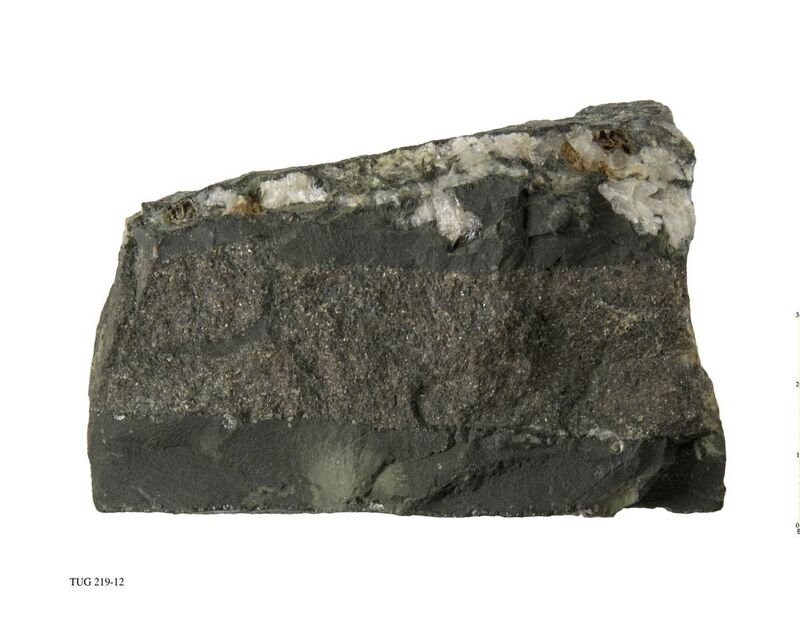
Hydrothermal alteration of a Permian quartz-porphyry-tuff.
Disseminated in hematite ore, probably of hydrothermal origin. Occuras as an authigenic mineral in aeolian sandstones. Also in low-grade metamorphic assemblages (e.g. Ottré, Belgium).
- Type locality
- Knollenberg Keuper formation
- Lützelbach
- Plochingen
- Esslingen
- Stuttgart Region
- Baden-Württemberg
- Germany
55recorded occurrences
Physical
- Hardness
- 1Talc
- 2Gypsum
- 3Calcite
- 4Fluorite
- 5Apatite
- 6Orthoclase
- 7Quartz
- 8Topaz
- 9Corundum
- 10Diamond
- Transparency
- Translucent
- Colour
- White to light green
- Cleavage
- Perfect
(001)
- Density
- 2.63 g/cm³
Optical
- Optical type
- Biaxial (-) · 2V measured = 64 – 70° · 2V calc = 68 – 72°
- Refractive index
- 1.581 – 1.601
- Surface relief
- Moderate
- Principal indices
- nα 1.581 – 1.583 · nβ 1.584 – 1.589 · nγ 1.591 – 1.601
- Dispersion
- none
Δ = 0Δmax
PPLpleochroism per grain
XPLindependent extinctions · rotate the stage
PPLpleochroism only · colour blends on rotation
XPLinterference colour · extinct every 90°
Retardation140 nm
Order1st order
XPL colour
Crystallography
- Space group
- C2/m
- Cell parameters
- a = 5.237(3) Å · b = 9.070(5) Å · c = 14.285(13) Å
- Cell angles
- β = 97.02(5) °
- Ratio a:b:c
- 1 : 1.732 : 2.728
- Z
- 2
- Morphology
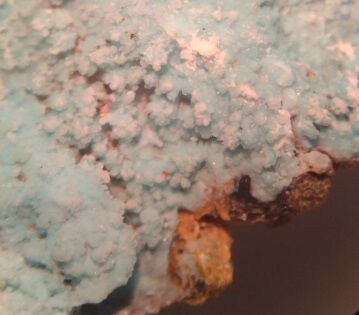
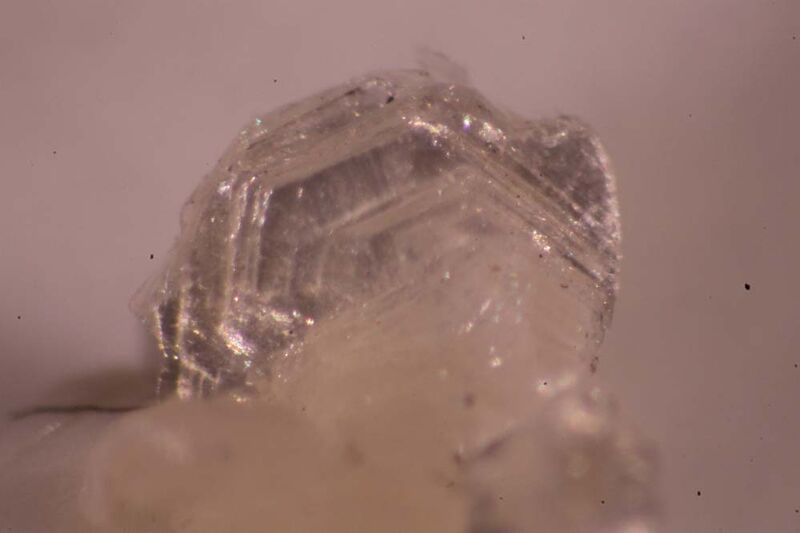
Fine-grained.
Crystal structure
Chemical composition
- Impurities
- Ti
- Mn
- Ca
- K
- H2O
Synonyms
- IMA1966-027
In other languages
- French
- Sudoïte
- German
- IMA 1966-027 · Sudoit
- Italian
- Sudoite
- Japanese
- 須藤石
Classification
Strunz
10th ed.9.EC.55
- 9SilicatesClass
- 9.EPhyllosilicatesDivision
- 9.ECPhyllosilicates with mica sheets, composed of tetrahedral and octahedral netsGroup
- 9.EC.55SudoiteSpecies
Dana
8th ed.71.04.01.03
- 71Phyllosilicates Sheets of Six-membered RingsClass
- 71.04Sheets of 6-membered rings interlayered 1:1, 2:1, and octahedraType
- 71.04.01Chlorite group (Tri-Dioctahedral)Group
- 71.04.01.03SudoiteSpecies
CIM
—16.19.21
- 16Silicates Containing Aluminum and other MetalsClass
- 16.19Aluminosilicates of Fe and MgGroup
- 16.19.21SudoiteSpecies
Group, growth & confusion
 Baileychlore(Zn,Fe2+,Al,Mg)6(Si,Al)4O10(OH)8Mineral—
 BorocookeiteLiAl4(Si3B)O10(OH)8Mineral—
 Chamosite(Fe2+,Mg,Al,Fe3+)6(Si,Al)4O10(OH,O)8Mineral—
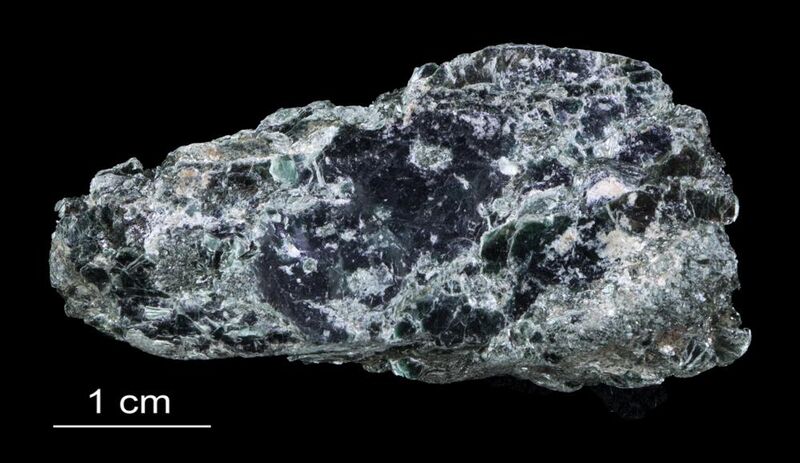 ClinochloreMg5Al(AlSi3O10)(OH)8Mineral—
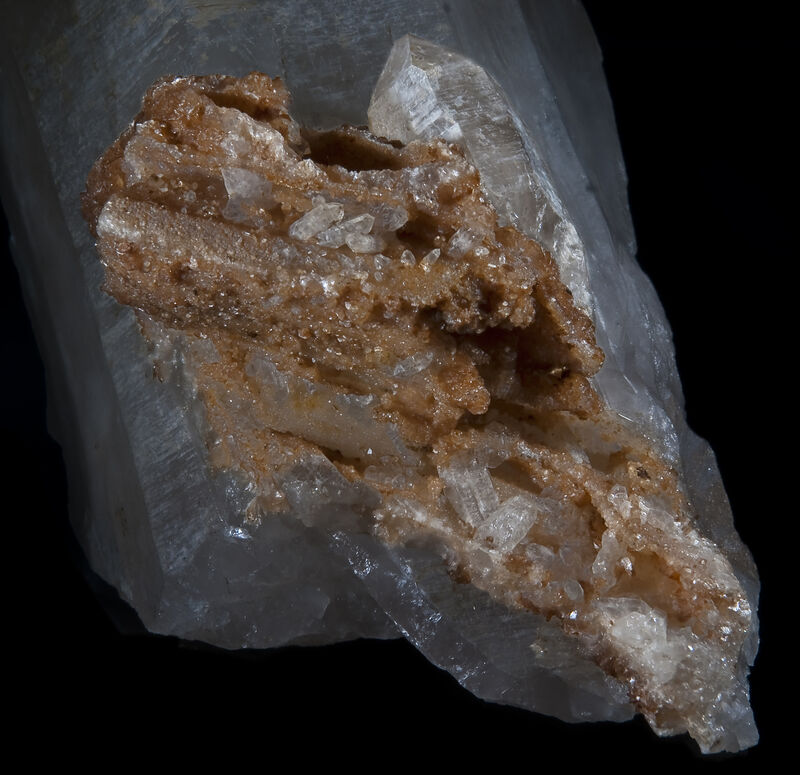 Cookeite(Al,Li)3Al2(Si,Al)4O10(OH)8Mineral—
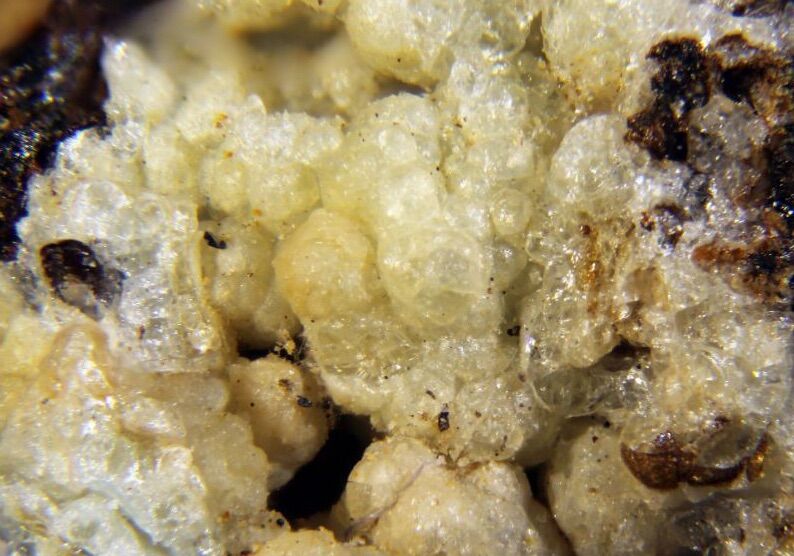 DonbassiteAl2(Si3Al)O10(OH)2 · Al2.33(OH)6Mineral—
- FranklinfurnaceiteCa2Mn2+3Mn3+Fe3+Zn2Si2O10(OH)8Mineral—
- GlagoleviteNa(Mg,Al)6(Si3Al)O10(OH,O)8Mineral—
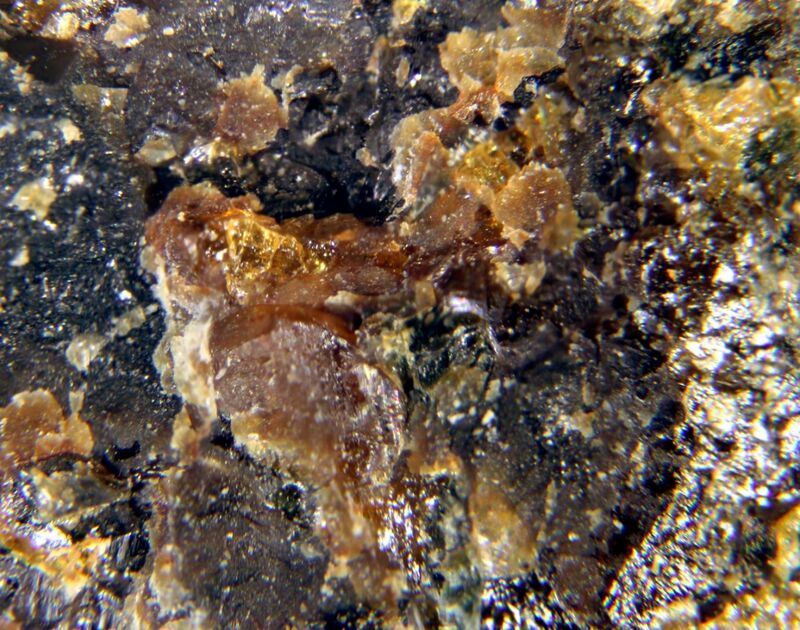 GonyeriteMn2+5Fe3+(Si3Fe3+O10)(OH)8Mineral—
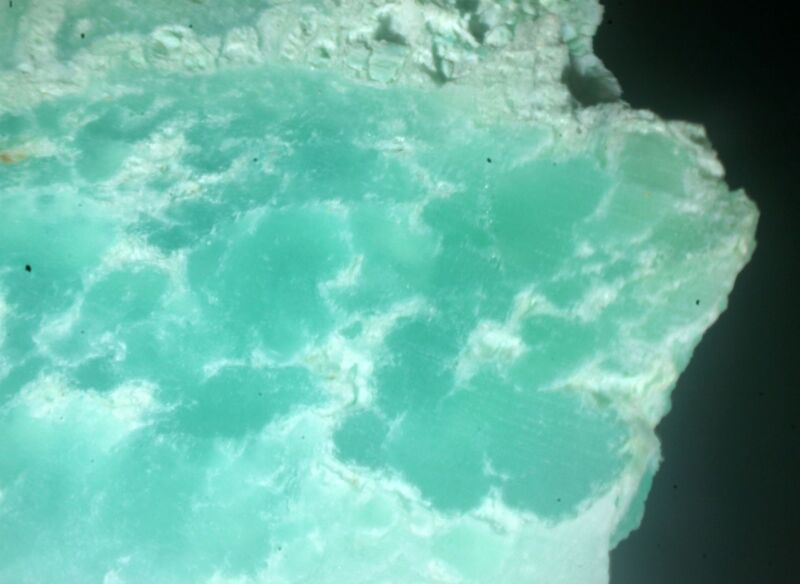 Nimite(Ni,Mg,Al)6(Si,Al)4O10(OH)8Mineral—
Literature, links & citation
Citations
- 1956Brindley, G. W., Gillery, F. H. (1956) X-ray identification of chlorite species. American Mineralogist, 41 (3-4) 169-186
- 1958Weaver, C.E. (1958) Geologic interpretation of argillaceous sediments Part I. Origin and significance of clay minerals in sedimentary rocks. Bulletin of the American Association of Petroleum Geologists: 42: 254-271.
- 1961Brydon, J. E.; Clark, J. S.; Osborne, Vincent (1961) Dioctahedral chlorite. The Canadian Mineralogist, 6 (5). 595-609
- 1962von Engelhardt, W., Müller, G., Kromer, H. (1962) Dioktaedrischer Chlorit ("Sudoit") in Sedimenten des Mittleren Keupers von Plochingen (Württ.). Naturwissenschaften: 49: 205-206.
- 1963Fleischer, Michael (1963) New Mineral Names. American Mineralogist, 48 (1-2) 209-217
Cite this entry
Entry last updated
@misc{mineral2025,
  author    = {Mineral Index editorial board},
  title     = {Sudoite — Mineral Index},
  year      = {2025},
  url       = {https://mineralindex.org/minerals/sudoite-3820}
}