History
The name clinochlore is a hybrid built from two Greek roots — klinein, to incline, and chloros, green. The first half points to a piece of crystal optics, the second to the green colour the mineral wears almost everywhere it appears.
Long before clinochlore had its own name, the broader family did. In 1789 the German geologist Abraham Gottlob Werner labelled a class of soft, green, flaky minerals chlorite, taking the word straight from the Greek for "green". For more than half a century, "chlorite" covered everything in that loose group, with no clean separation between species. Working specimens carried a tangle of overlapping names — ripidolite, prochlorite, pennine (from the Pennine Alps), leuchtenbergite, sheridanite — depending on locality, colour, and which mineralogist had handled them last.
The split came in 1851, when the American mineralogist William Phipps Blake proposed clinochlore for the magnesium-rich member of the group. The "klino" half of the name carried a technical idea in shorthand: under a polarising microscope, the two optic axes of the crystal are visibly inclined, and Blake chose the name in allusion to that feature.
Several of the older names were eventually pulled into clinochlore as varieties rather than independent species. Kämmererite is the red, chromium-bearing form. Seraphinite is a massive, dark green to grey variety from the Korshunovskoye iron skarn deposit in Irkutsk Oblast, in eastern Siberia. Its feather-like internal pattern — a chatoyancy in the chlorite plates — gave it a trade name borrowed from the biblical seraphim angels. Cut and polished, it is the only form of clinochlore that has ever made a steady appearance in the gem trade.
Industrial & practical applications
Clinochlore has no significant industrial role of its own. It is one of the commonest minerals in chloritic schists and altered greenstones. But the industries that consume "chlorite" take it as a component of clay or crushed schist — not as identified clinochlore picked out from its neighbours.
The closest thing to a dedicated use is decorative. Chlorite schist has long been worked as a soft, easily carved stone. Near Ely, Minnesota, the rock was quarried for green roofing granules glued to asphalt shingles, until synthetic substitutes displaced it. The single clinochlore variety with a real market is seraphinite — a massive dark-green to grey form from the Korshunovskoye iron skarn deposit in eastern Siberia. Its surface shines with feather-like silvery streaks, a chatoyancy caused by light bouncing off oriented chlorite plates, and that pattern is what put it in the gem trade. Seraphinite has a hardness of only 2 to 4 on the Mohs scale, too soft for ring stones; it is typically cut into cabochons set as pendants or used in carvings.
Beyond that, demand is collector- and research-driven. Well-formed clinochlore crystals are sought as specimens — particularly the red, chromium-bearing variety kämmererite. The species also turns up in studies of low-grade metamorphism and hydrothermal alteration. Chlorite is one of the most common minerals produced by propylitic alteration in the "green rock" assemblage, alongside epidote, actinolite and albite.
Where it forms, where it's found
- Geological setting
Hydrothermal alteration product of amphibole, pyroxene, and biotite in many igneous rocks. An important rock forming mineral in many sedimentary and metamorphic rocks.
- Type locality
- Brinton's Quarry
- Westtown Township
- Chester County
- Pennsylvania
- USA
39.9147°, -75.5941°
Varieties
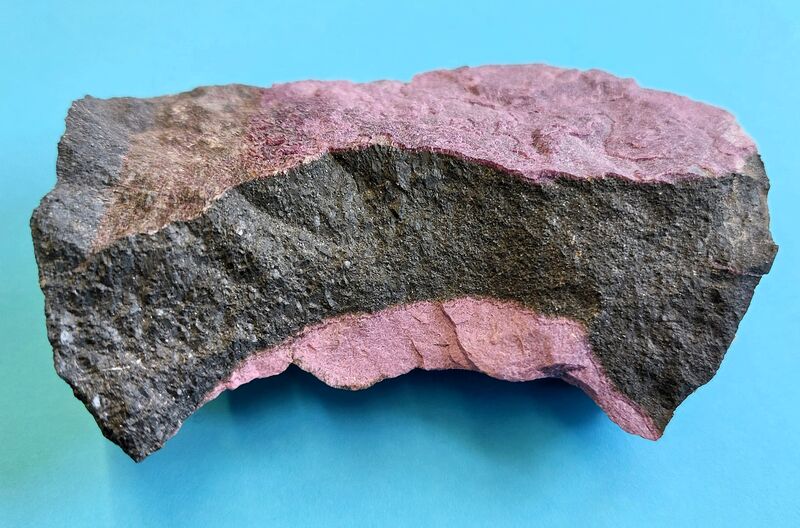 Chromium-bearing ClinochloreMg5(Al,Cr)2Si3O10(OH)8Variety—
- Colerainite4MgO·Al2O3·2SiO2·5H2OVariety—
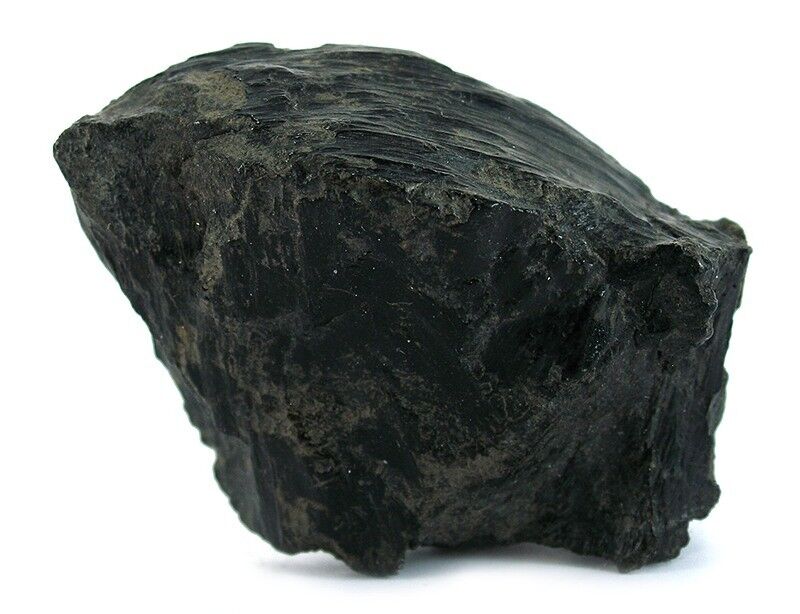 Diabantite(Mg,Fe,Al)6((Si,Al)4O10)(OH)8Variety—
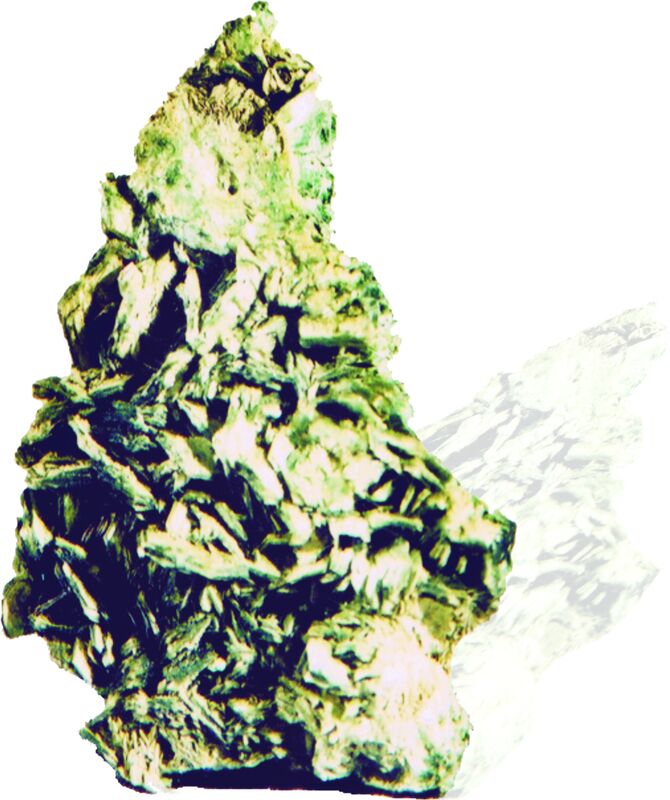 LeuchtenbergiteMg5Al(AlSi3O10)(OH)8Variety—
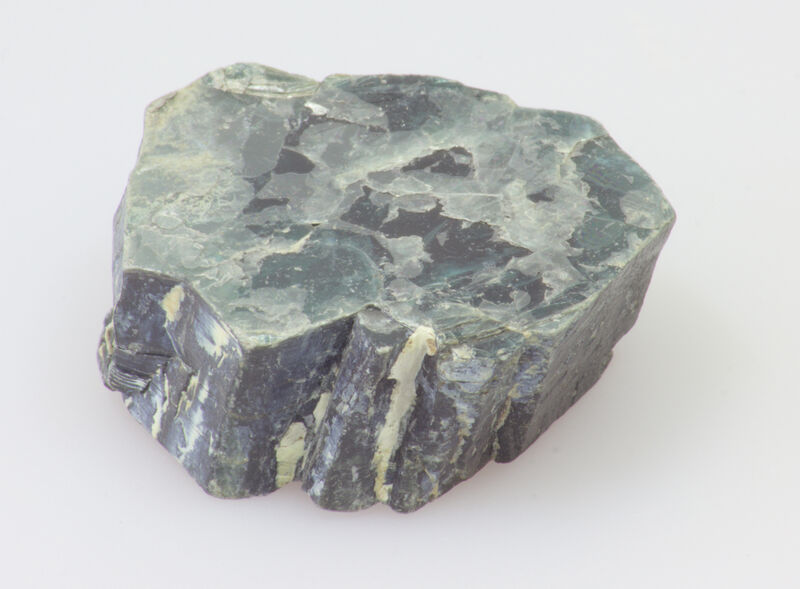 PennineMg5Al(AlSi3O10)(OH)8Variety—
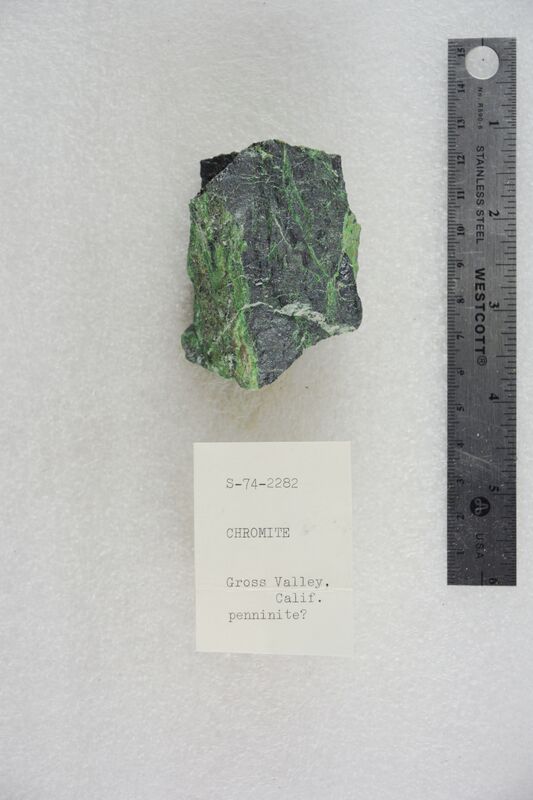 PenniniteVariety—
- PycnochloriteMg5Al(AlSi3O10)(OH)8Variety—
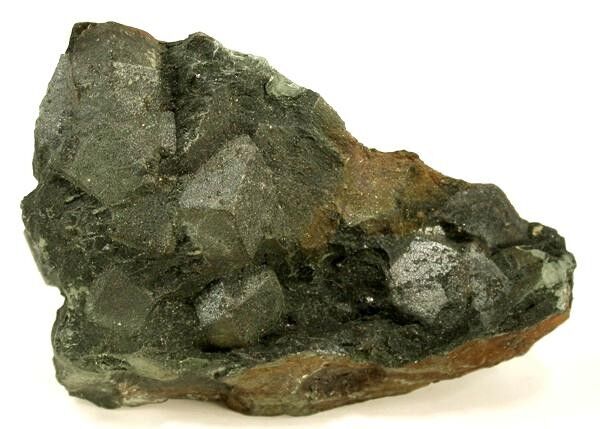 Ripidolite(Mg,Fe,Al)6(Si,Al)4O10(OH)8Variety—
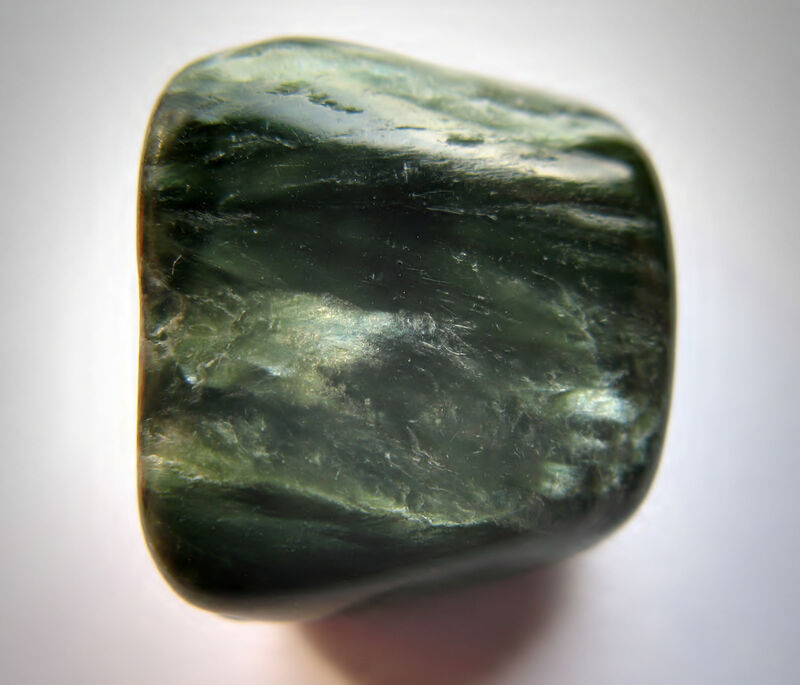 SeraphiniteMg5Al(AlSi3O10)(OH)8Variety—
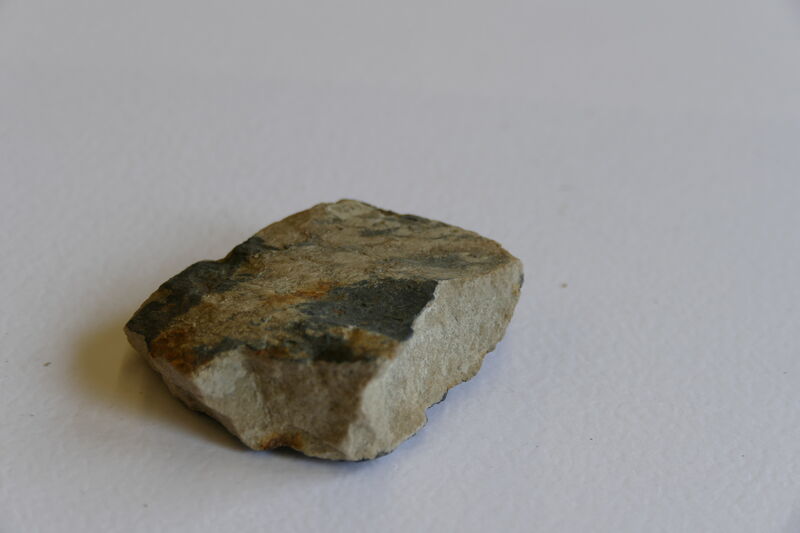 Sheridanite(Mg,Al,Fe)6(Si,Al)4O10(OH)8Variety—
Physical
- Hardness
- 1Talc
- 2Gypsum
- 3Calcite
- 4Fluorite
- 5Apatite
- 6Orthoclase
- 7Quartz
- 8Topaz
- 9Corundum
- 10Diamond
- Lustre
- Vitreous · Pearly
- Transparency
- Transparent · Translucent
- Colour
- Green · yellowish green · olive green · blackish green · bluish green · white · pink
End-member clinochlore is white to colorless. Ferrous and ferric iron substitutions may darken the colour of clinochlore to medium or dark green and near-black. Chromian clinochlores may be pink to purple. Other substitutions may change the colour to golden brown.
- Streak
- Greenish white to white
- Tenacity
- flexible
- Cleavage
- Perfect
(001) Perfect
- Fracture
- Micaceous
- Density
- 2.6 g/cm³
Optical
- Optical type
- Biaxial (+) · 2V measured = 40° · 2V calc = 36°
- Refractive index
- 1.571 – 1.599
- Surface relief
- Moderate
- Principal indices
- nα 1.571 – 1.588 · nβ 1.571 – 1.589 · nγ 1.576 – 1.599
- Pleochroism
- Visible
X= light yellow-green to light blue-green Y=Z= light greenish yellow to light blue-green
- Dispersion
- r < v
Crystallography
- Space group
- C2/m
- Cell parameters
- a = 5.350(3) Å · b = 9.267(5) Å · c = 14.27(1) Å
- Cell angles
- β = 96.35(1) °
- Ratio a:b:c
- 1 : 1.732 : 2.667
- Z
- 2
- Morphology
Thin to thick pseudohexagonal platey crystals; rarely fibrous.
- Twinning
Plane (001), axis [310], composition plane (001)
- Comment
Polytype IIb? 6 polytypes possible
Chemical composition
- Impurities
- Fe
- Mn
- Zn
- Ca
- Cr
Synonyms
- Chlorophoeite
- Clinochlorit
- Clinochlorita
- Clinochlorite
- Grastit
- Grastita
- Grastite
- Lofoit
- Lophoit
- Prochlorite
- Tabergite
In other languages
- French
- Clinochlore · minéral vert
- German
- Clinochlor · Klinochlor
- Spanish
- Clinocloro
- Italian
- Clinochlore · Clinocloro
- Chinese
- 斜綠泥石 · 斜绿泥石 · 斜镁绿泥石
- Russian
- Клинохлор
Classification
9.EC.55
- 9SilicatesClass
- 9.EPhyllosilicatesDivision
- 9.ECPhyllosilicates with mica sheets, composed of tetrahedral and octahedral netsGroup
- 9.EC.55ClinochloreSpecies
71.04.01.04
- 71Phyllosilicates Sheets of Six-membered RingsClass
- 71.04Sheets of 6-membered rings interlayered 1:1, 2:1, and octahedraType
- 71.04.01Chlorite group (Tri-Dioctahedral)Group
- 71.04.01.04ClinochloreSpecies
16.19.17
- 16Silicates Containing Aluminum and other MetalsClass
- 16.19Aluminosilicates of Fe and MgGroup
- 16.19.17ClinochloreSpecies
Group, growth & confusion
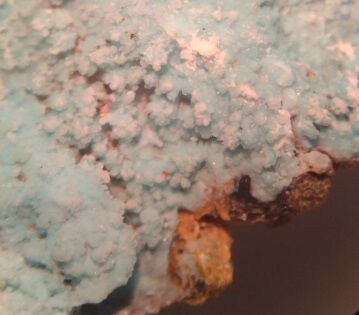 Baileychlore(Zn,Fe2+,Al,Mg)6(Si,Al)4O10(OH)8Mineral—
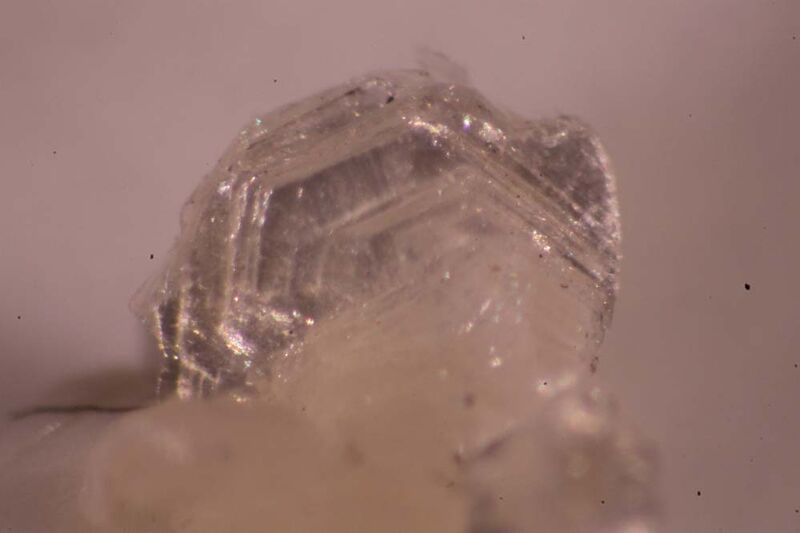 BorocookeiteLiAl4(Si3B)O10(OH)8Mineral—
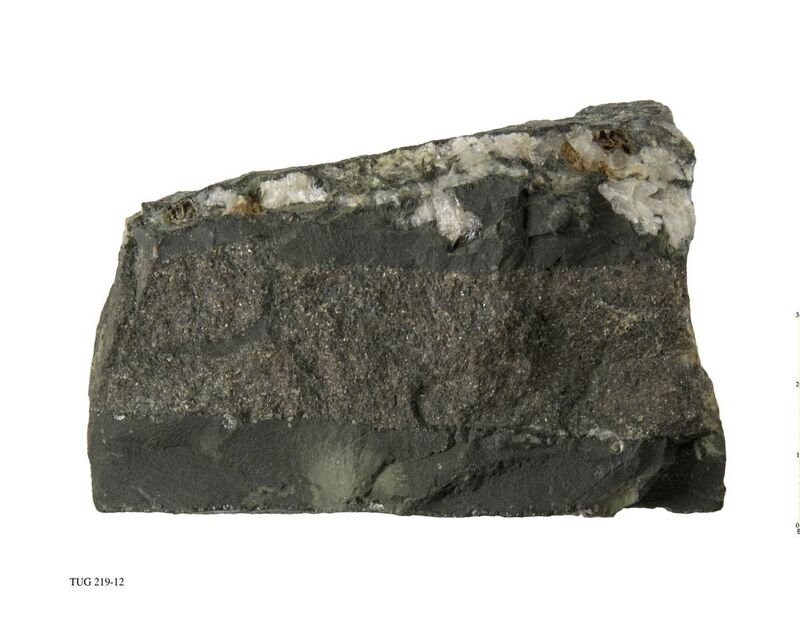 Chamosite(Fe2+,Mg,Al,Fe3+)6(Si,Al)4O10(OH,O)8Mineral—
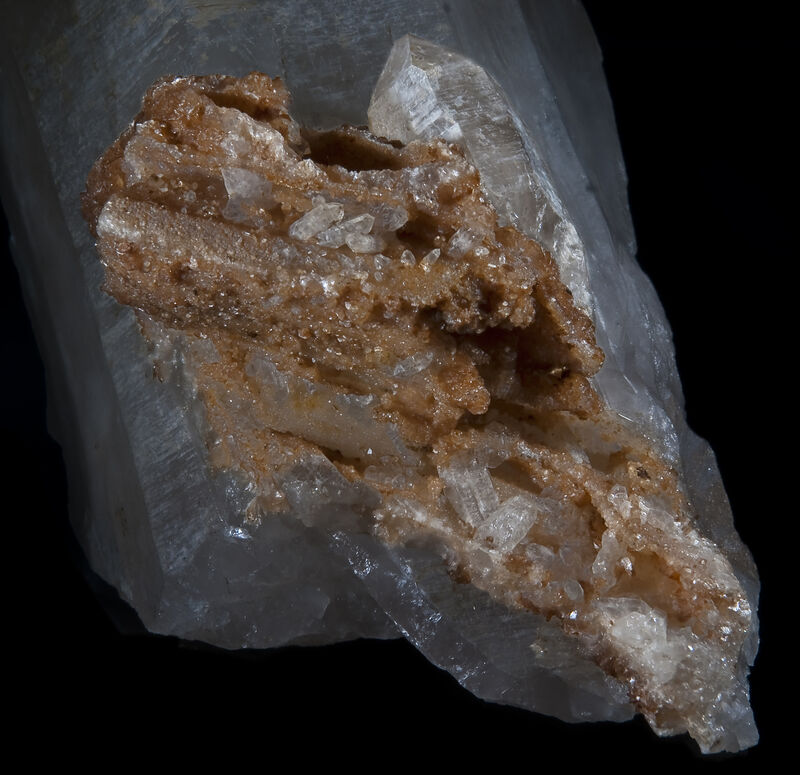 Cookeite(Al,Li)3Al2(Si,Al)4O10(OH)8Mineral—
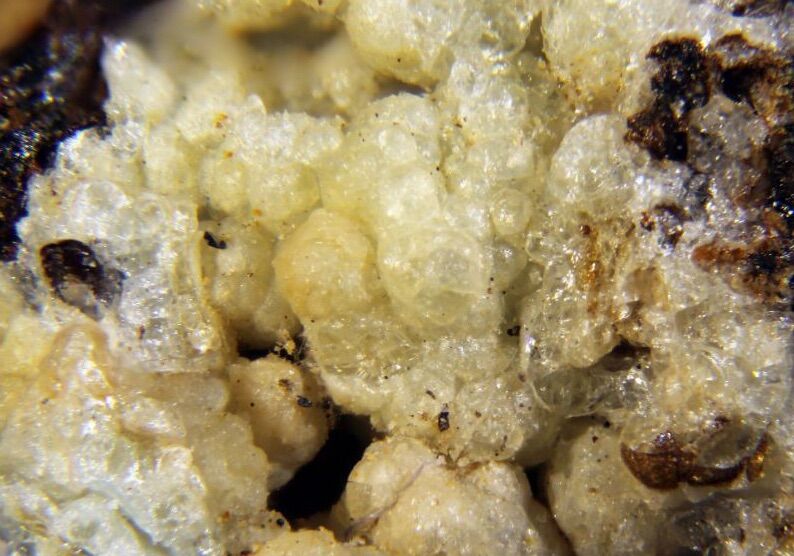 DonbassiteAl2(Si3Al)O10(OH)2 · Al2.33(OH)6Mineral—
- FranklinfurnaceiteCa2Mn2+3Mn3+Fe3+Zn2Si2O10(OH)8Mineral—
- GlagoleviteNa(Mg,Al)6(Si3Al)O10(OH,O)8Mineral—
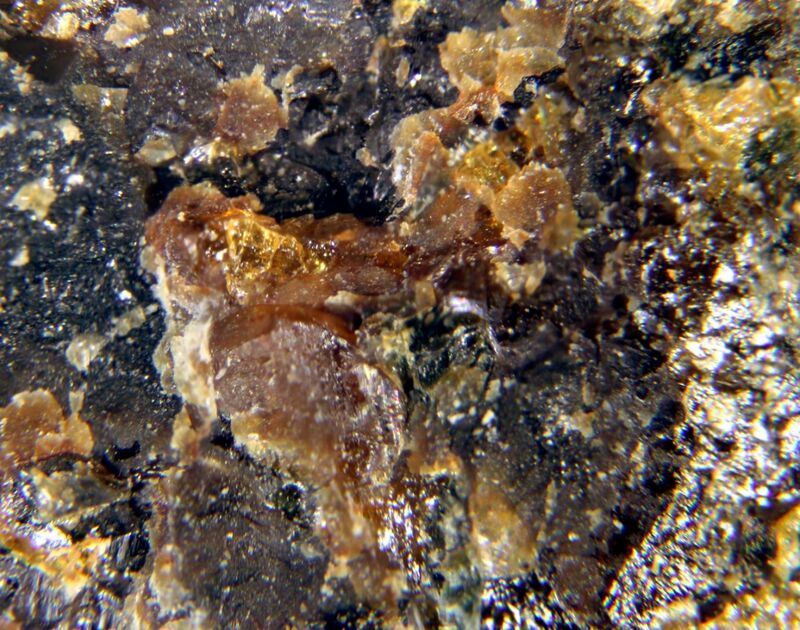 GonyeriteMn2+5Fe3+(Si3Fe3+O10)(OH)8Mineral—
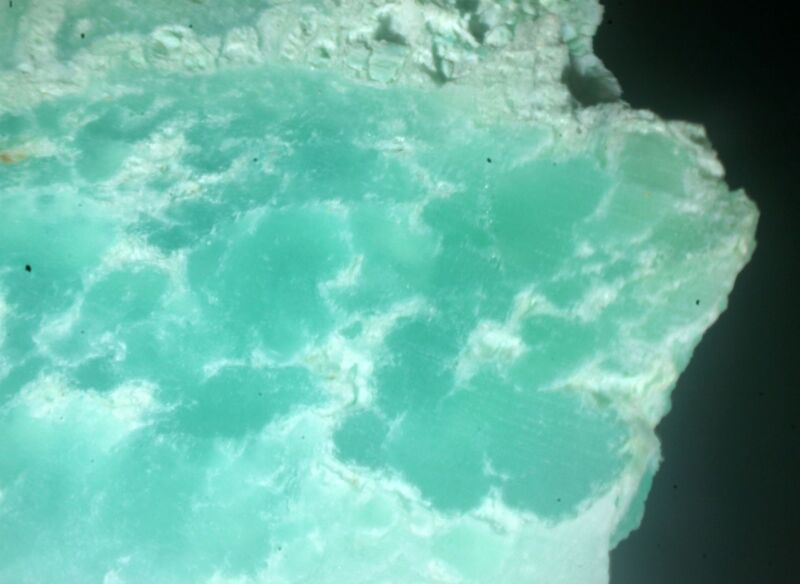 Nimite(Ni,Mg,Al)6(Si,Al)4O10(OH)8Mineral—
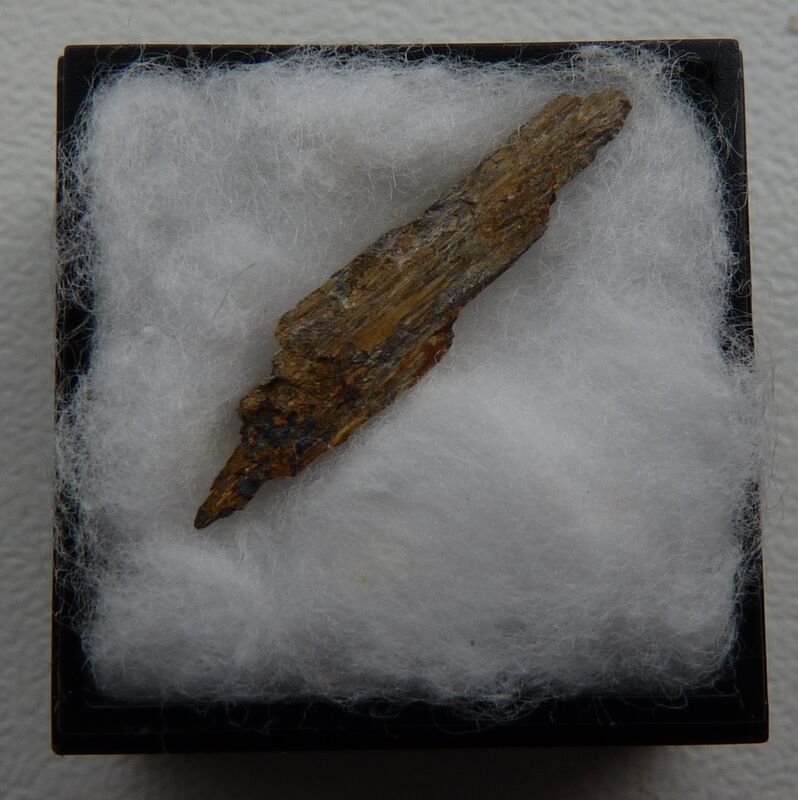
- PennantiteMn2+5Al(Si3Al)O10(OH)8Mineral—
Literature, links & citation
- 1963Segnit, E. R. (1963) Synthesis of clinochlore at high pressures. American Mineralogist, 48 (9-10) 1080-1089
- 1974Chernosky, Joseph V. (1974) The upper stability of clinochlore at low pressure and the free energy of formation of Mg-cordierite. American Mineralogist, 59 (5-6) 496-507
- 1978Chernosky, Joseph V. Jr. (1978) The stability of clinochlore + quartz at low pressure. American Mineralogist, 63 (1-2) 73-82
- 1984Spinnler, Gerard E., Self Peter G., Iijima, Sumio, Buseck, Peter R. (1984) Stacking disorder in clinochlore chlorite. American Mineralogist, 69 (3-4) 252-263
- 1986Berg, Richard B. (1986) Clinochlore from the Silver Star District, Madison County, Montana. Clays and Clay Minerals, 34 (4) 496-498 doi:10.1346/ccmn.1986.0340417DOI: 10.1346/ccmn.1986.0340417
Entry last updated
@misc{mineral2026,
  author    = {Mineral Index editorial board},
  title     = {Clinochlore — Mineral Index},
  year      = {2026},
  url       = {https://mineralindex.org/minerals/clinochlore-1070}
}