History
In the early 17th century, Vincenzo Casciarolo found a radiating form of the mineral near Bologna. When calcined in a fire, the stone glowed in the dark. The Bologna Stone fascinated alchemists across Europe.
In 1774, the chemist Carl Scheele identified a new element within baryte — though he could only isolate barium oxide.
In 1800, Dietrich Ludwig Gustav Karsten named the mineral baryte from the Greek barys, meaning heavy. The name picked out what made the stone strange to handle: an unusual heaviness for a non-metallic mineral.
Sir Humphry Davy completed the chemistry in 1808, isolating pure barium for the first time by electrolysing one of its molten salts.
The spelling has wandered. American mineralogy settled on barite. The International Mineralogical Association initially followed suit, then reverted to the older baryte — a decision American sources have not fully accepted.
Industrial & practical applications
Every oil well drilled today owes a kilogram or two of its existence to baryte. Crushed and added to the drilling fluid, the mineral's weight does what no light material can. It presses back against the high pressures the drill bit meets underground. That keeps the fluid in the borehole and gas out of the air above.
This single use absorbs the bulk of world production. Recent figures put the share at 69 to 77 percent of all baryte mined globally.
Outside drilling, baryte serves as a white pigment and inert filler. It goes into paints, cosmetics, polymers, and paper-coating mixes. Its high density and inertness suit it to roles ordinary fillers cannot match. Automobile-finish coatings use it for smoothness and corrosion resistance.
The same density gives baryte two roles around X-rays. In medicine, it serves as a high-contrast medium for X-ray and computed-tomography scans of the digestive tract. In construction, baryte-loaded concrete is an effective radiation shield.
Baryte is also the main industrial source of the element barium and the barium compounds derived from it.
China, India, and Morocco lead world production, with significant additional output from the United States and Iran. Global mine output reached about 9.5 million tonnes in 2019.
Where it forms, where it's found
- Geological setting
Commonly found as a gangue mineral in metallic ore deposits of epithermal or mesothermal origin; but it may also be found as lenses or replacement deposits in sedimentary rocks, both of hypogene and supergene origin.
Varieties
Physical
- Hardness
- 1Talc
- 2Gypsum
- 3Calcite
- 4Fluorite
- 5Apatite
- 6Orthoclase
- 7Quartz
- 8Topaz
- 9Corundum
- 10Diamond
- Lustre
- Vitreous to Resinous · Pearly on cleavage surfaces.
- Transparency
- Transparent · Translucent · Opaque
- Colour
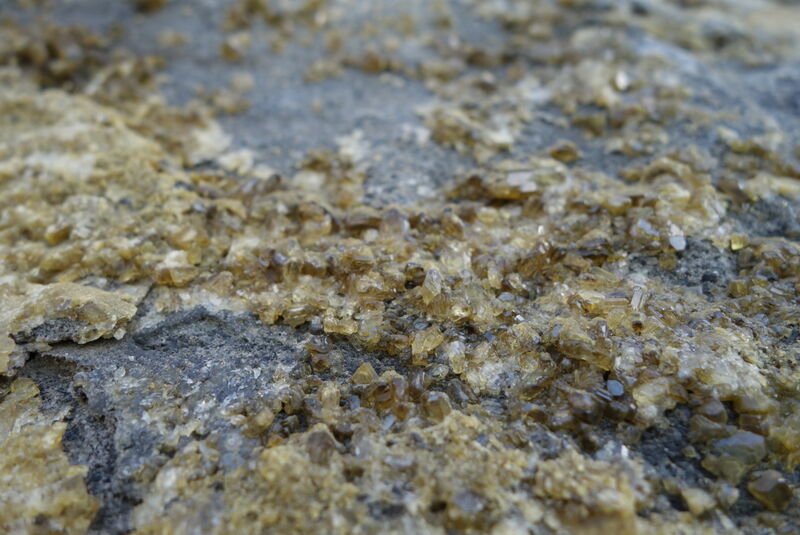
- Colourless · white · yellow · brown · grey · blue · etc. · colourless in transmitted light (also tinted yellow · brown · green · blue · etc.)
- Streak
- white
- Tenacity
- brittle
- Cleavage
- Perfect
Perfect on (001); less so on (210); Imperfect on (010).
- Fracture
- Irregular/Uneven
- Density
- 4.50 g/cm³
Optical
- Optical type
- Biaxial (+) · 2V measured = 36 – 42° · 2V calc = 36 – 40°
- Refractive index
- 1.636 – 1.648
- Surface relief
- Moderate
- Principal indices
- nα 1.636 · nβ 1.637 · nγ 1.648
- Pleochroism
- Visible
Brown: X = Straw-yellow, Y = Wine-yellow, Z = Violet; Yellow: X = Light yellow-brown, Y = Yellow-brown, Z = Brown; Green: X = Nearly colourless, Y = Light green, Z = Amethyst; Blue-green: X = Blue-violet, Y = Bluish green, Z = Violet
- Dispersion
- weak r > v
- Extinction
- X = c; Y = b; Z = a.
- Luminescence
- Fluoresces yellows, orange, or pink in LW; phophsphoresces strongly greenish-white.
- UV response
- Shades of yellow, occasionally orange or pink (LW UV). Shades of yellow, white (Franklin & Sterling Hill, NJ). May phosphoresce strongly greenish-white.
- Notes
Absorption: Z > Y > X.
Crystallography
- Space group
- Pnma
- Cell parameters
- a = 8.884(2) Å · b = 5.457(3) Å · c = 7.157(2) Å
- Ratio a:b:c
- 1 : 0.614 : 0.806
- Z
- 4
- Morphology
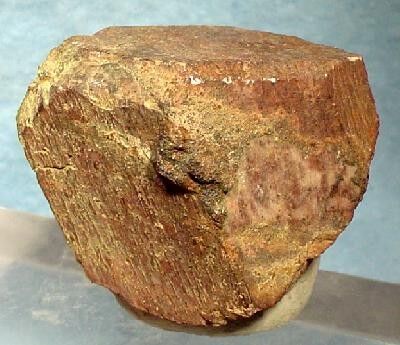
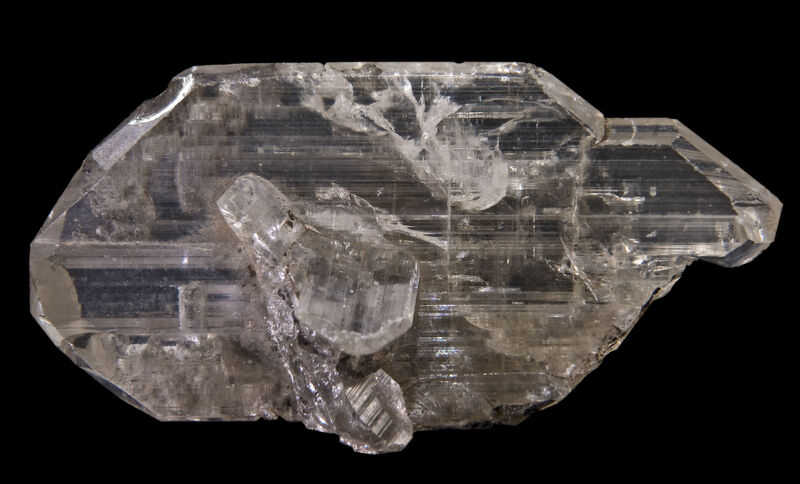
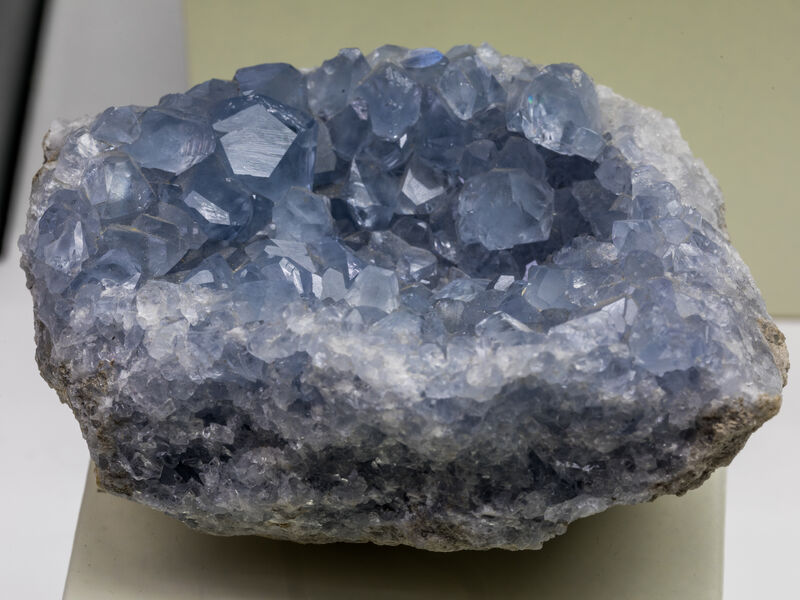
Usually thin to thick tabular (001), bounded by (210) alone or in combination with (101), (011) or other forms. Also flattened (001), and elongated to prismatic [010] or [100]. More rarely prismatic [001], or equant. Often as aggregates or clusters of tabular crystals with edges projecting into crest-like forms, or as rosettes. Also found as massive material, compact, laminated or concretionary; and in fibrous, stalactic, and earthy masses.
Chemical composition
Synonyms
- Achrenstein
- Aehrenstein
- Astapia
- Astrapia
- Baritit
- Baritita
- Baritite
- Baroit
- Baroite
- Baroselenit
- Baroselenita
- Baroselenite
- Barote
- Baryte sulfatée
- Barytes
- Barytite
- Bologna stone
- Bologneserspath
- Bologneserstein
- Bolognian Spar
- Bononian stone
- Bononiensisk sten
- Boulanit
- Boulanita
- Boulanite
- Boulonit
- Boulonite
- Calk
- Calstronbarite
- Cauk
- Cawk
- Cerriche
- Dreeit
- Dreelite
- Dréelite
- Espato pesado
- Fetid Heavy Spar
- Gypsum irregulare
- Gypsum ponderosum
- Heavy Spar
- Lamellosum
- Lapis Bononiensis
- Lapis hepaticus
- Leswersten
- Litheophosphorus
- Litheosphorus
- Lysesten
- Marmor metallicum
- Michel-lévyte
- Pietra di Bologna
- Pietra fosforica di Bologna
- Prismatischer Halbaryt
- Schwefelsaures Baryt
- Schwerspat
- Schwerspath
- Spath pesant ou séléniteux
- Spathum ponderosum
- Spato pesato
- Spatum Bononiense
- Spatum tessulare
- Stangenspath
- Strahlbaryt
- Terra calcarea phlogisto et acido vitrioli mixta
- Tiff
- Tungspat
- Volnyn
- Volnyne
- Yellow Spar
In other languages
- French
- baritite · barosélénite · Baryte · Baryte sulfatée · barytine · Dréelite · Gyspum spathosum · Lithéosphore · Marmor metalicum · Spath pesant · Wolnyne
- German
- Baryt · Schwerspat
- Spanish
- barita · baritina · Sulfato de bario
- Italian
- barite · baritina
- Portuguese
- barita · Barite
- Japanese
- バライト · 重晶石
- Chinese
- 重晶石
- Simplified Chinese
- 重晶石
- Traditional Chinese
- 重晶石
- Russian
- барит · Тяжелый шпат
- Arabic
- الباريت · باريت
- Hindi
- बेराइट
Classification
7.AD.35
- 7SulfatesClass
- 7.ASulfates (selenates, etc.) without additional anions, without H2ODivision
- 7.ADWith only large cationsGroup
- 7.AD.35BaryteSpecies
28.03.01.01
- 28Anhydrous Acid and Normal SulfatesClass
- 28.03AXO4Type
- 28.03.01Barite GroupGroup
- 28.03.01.01BaryteSpecies
25.4.17
- 25SulphatesClass
- 25.4Sulphates of Ca, Sr and BaGroup
- 25.4.17BaryteSpecies
Group, growth & confusion
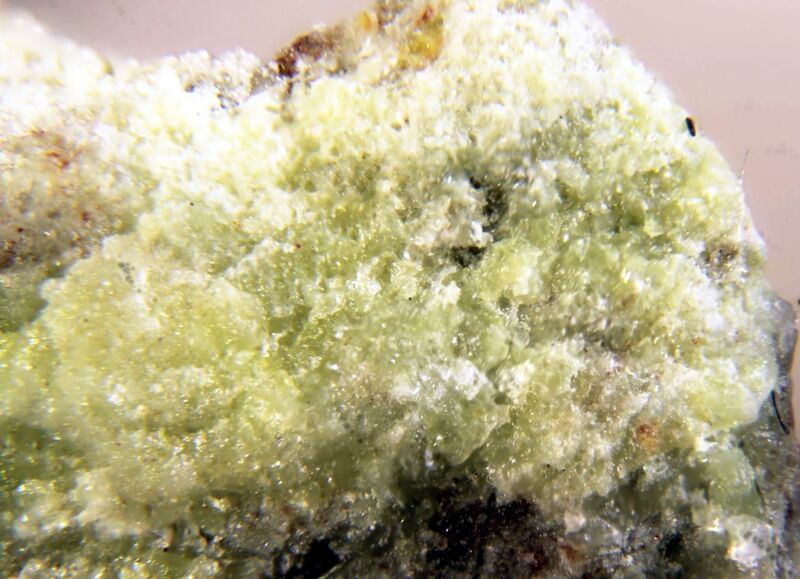
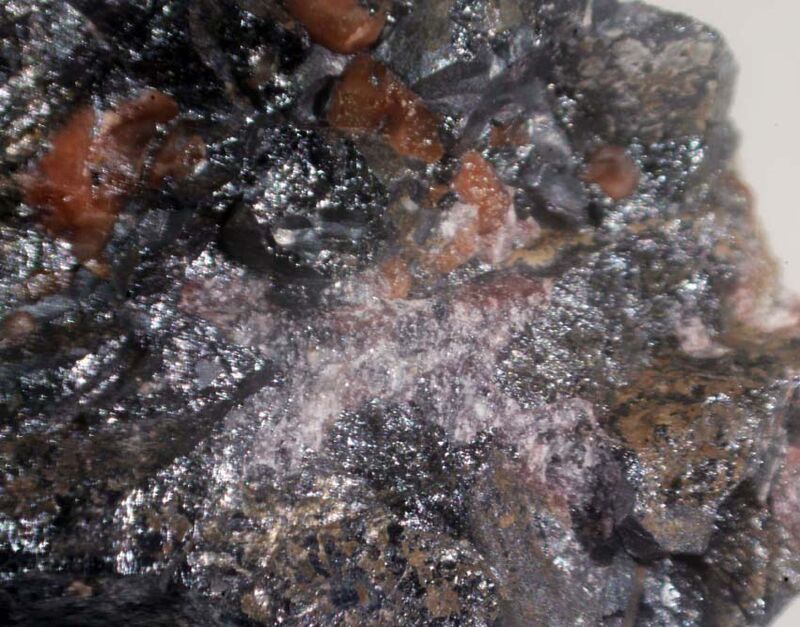 AdeliteCaMg(AsO4)(OH)Mineral—
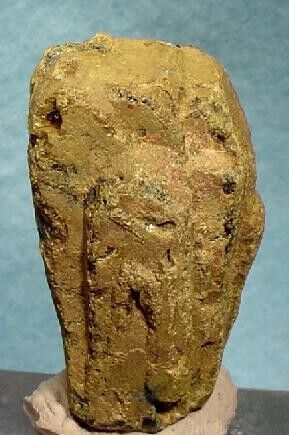 Aeschynite-(Nd)Nd(TiNb)O6Mineral—
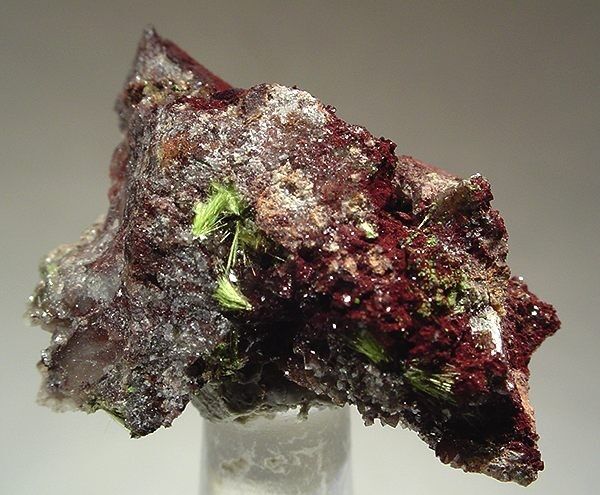 Agardite-(La)LaCu2+6(AsO4)3(OH)6 · 3H2OMineral—
 AllactiteMn2+7(AsO4)2(OH)8Mineral—
 AlleghanyiteMn2+5(SiO4)2(OH)2Mineral—
 AlstoniteBaCa(CO3)2Mineral—
 AlumohydrocalciteCaAl2(CO3)2(OH)4 · 4H2OMineral—
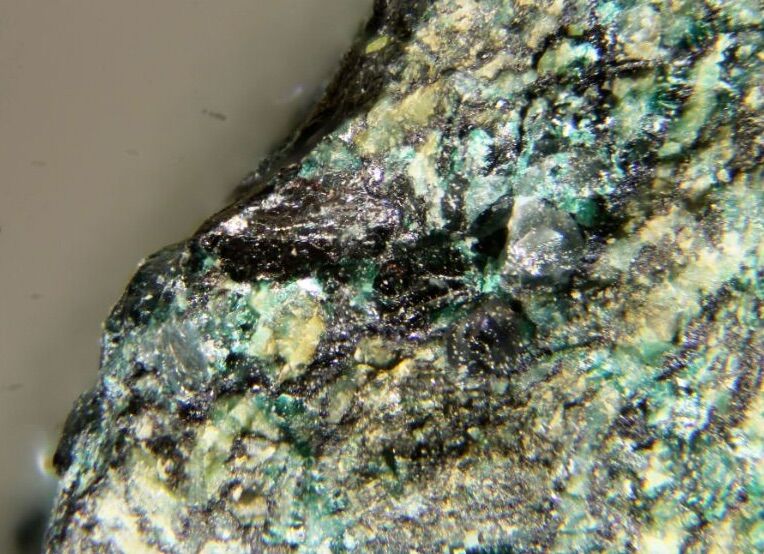 BalkaniteAg5Cu9HgS8Mineral—
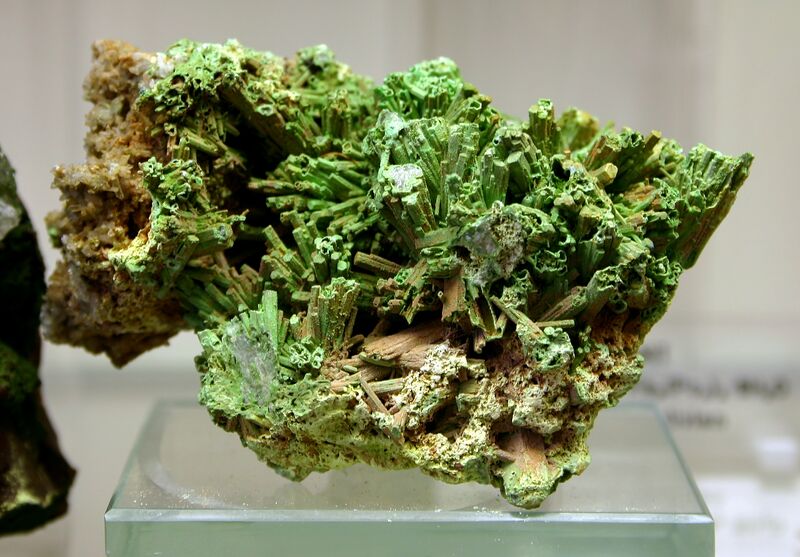 BayldoniteCu3PbO(AsO3OH)2(OH)2Mineral—
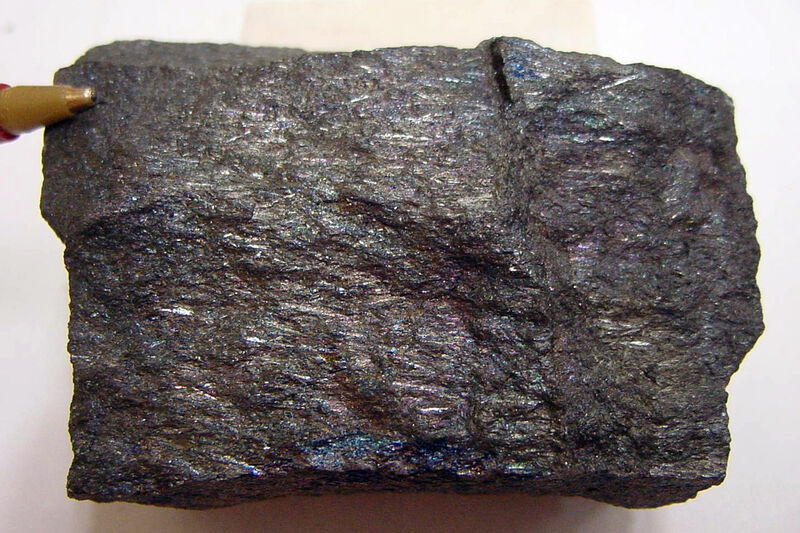 BerthieriteFeSb2S4Mineral—
Literature, links & citation
- —Eaton, in: Macneven: Atomic Theory Chym., New York: 19 (as Schoharite).
- 1640Licetus, F. (1640) (as Lapis Bononiensis, Litheophorus).
- 1673Mentzel (1673) Misc. Ac. Nat. Cur.
- 1675Mentzel (1675) Obscuro lucens (as Lapis Bononiensis).
- 1747Wallerius, J.G (1747) Mineralogia, eller Mineralriket. Stockholm: 56 (as Lysesten, Bononiensisksten, Gypsum irregulare, lamellosum).
Entry last updated
@misc{mineral2026,
  author    = {Mineral Index editorial board},
  title     = {Baryte — Mineral Index},
  year      = {2026},
  url       = {https://mineralindex.org/minerals/baryte-549}
}