History
The mineral now called anglesite spent its first half-century under a chemist's name, not a geographic one. In 1783 the English physician William Withering described it as the vitriol of lead — vitriol being the old term for any sulfate. The description appeared in his Outlines of Mineralogy, an expanded translation of work by the Swedish chemist Torbern Bergman. Withering had recognised the species in specimens from the Parys copper mine on the island of Anglesey, in north-west Wales.
The lead-vitriol label survived in mineralogical literature into the early 19th century, in German as Bleivitriol and in French as plomb vitriolé. It described the chemistry honestly — a sulfate of lead — but it did not single the species out from other sulfates in the way the science of the period was beginning to demand.
That separation came in 1832, when the French mineralogist François Sulpice Beudant renamed the species anglésine in his treatise on mineralogy, after the type locality on Anglesey. The form was later anglicised to anglesite and is the name the International Mineralogical Association still recognises. The Parys Mountain workings on Anglesey — a vast open copper-and-lead pit worked heavily through the 18th century — remain the type locality.
Industrial & practical applications
Anglesite is heavy and easy to smelt — three-quarters of its weight is lead. Even so, it holds only a modest place in the modern lead supply. The metal industry runs almost entirely on galena, the lead sulfide from which anglesite is itself derived by weathering. Anglesite earns its keep in the oxidised upper portions of lead deposits. Those are the zones where rainwater and air have worked on galena long enough to convert it.
In two parts of the world, those oxidised zones are rich enough to mine in their own right. Anglesite has been worked as an ore of lead in large masses at deposits in Australia and Mexico. There it is recovered alongside the cerussite and galena that usually accompany it. In most other localities the mineral is too disseminated to bother with. It appears in small amounts on the rims of weathered galena. The smelter only collects it when it happens to come along with the primary ore.
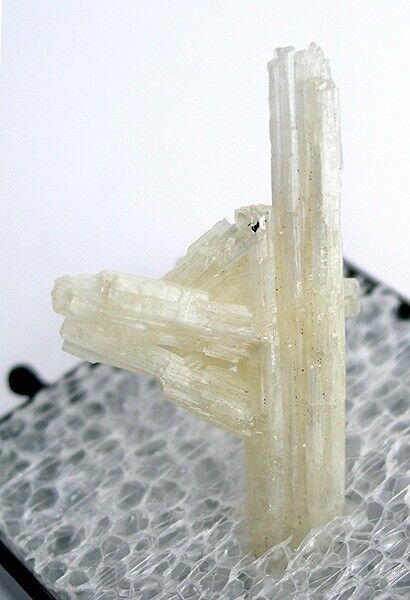
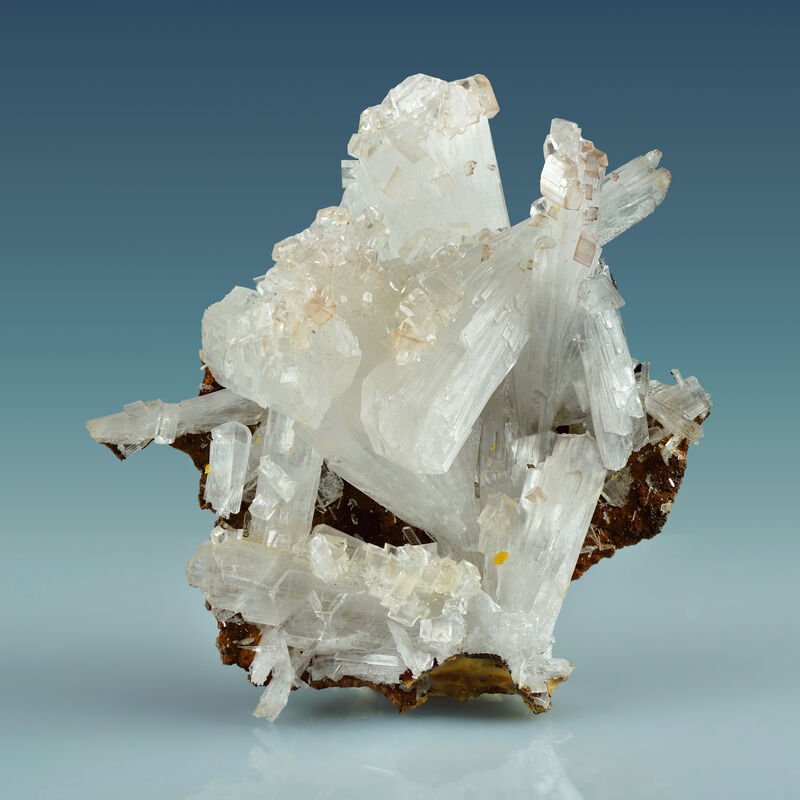
Beyond that ore role, anglesite finds an occasional second life as a cut gemstone. The crystals are clear and take a high adamantine polish — the diamond-like lustre prized by collectors. They are also soft and easily cleaved, so the stones stay strictly the preserve of collectors rather than the jewellery trade.
Where it forms, where it's found
- Type locality
- Parys Mountain Mines
- Amlwch
- Isle of Anglesey
- Wales
- UK
53.3869°, -4.3444°
Safety & handling
Physical
- Hardness
- 1Talc
- 2Gypsum
- 3Calcite
- 4Fluorite
- 5Apatite
- 6Orthoclase
- 7Quartz
- 8Topaz
- 9Corundum
- 10Diamond
- Lustre
- Adamantine to resinous · or vitreous.
- Transparency
- Transparent · Translucent · Opaque
- Colour
- Colorless to white · often tinted grey · yellow · green or blue · colourless in transmitted light.
- Streak
- Colorless
- Tenacity
- brittle
- Cleavage
- Distinct/Good
Good on (001), distinct on (201); on (010) in traces.
- Fracture
- Conchoidal
- Density
- 6.37 g/cm³
Optical
- Optical type
- Biaxial (+) · 2V measured = 75° · 2V calc = 68°
- Refractive index
- 1.878 – 1.895
- Surface relief
- Very high
- Principal indices
- nα 1.878 · nβ 1.883 · nγ 1.895
- Dispersion
- relatively strong
- Luminescence
- Often flouresces yellow under LW UV.
- UV response
- Shades of yellow and golden-yellow (UV).
Crystallography
- Space group
- #71
- Cell parameters
- a = 8.482(2) Å · b = 5.398(2) Å · c = 6.959(2) Å
- Ratio a:b:c
- 1 : 0.636 : 0.820
- Z
- 4
- Morphology
Crystals frequently thin to thick tabular (001), commonly with (210), (101) and rhomboidal in outline. Also extended [100] or [010] at times. Prismatic [001] with large (210) and vertically striated; prismatic [100], with large (011); stout prismatic [010], with (101), (102); tabular (100); equant or pyramidal with (111), (211) or otherwise. (100) and (210) commonly striated [001]. Massive; granular to compact; nodular; stalactitic.
- Twinning
None observed.
- Parting
- Translation gliding and twin gliding occur (as in baryte).
- Epitaxy
Anglesite on baryte in parallel position. Also with galena.
Chemical composition
- Impurities
- Ba
- Cu
Synonyms
- Anglésine
- Lead mineralized by vitriolic acid
- Lead sulphate
- Lead Vitriol
- Plomb sulfaté
- Plumbum acido vitriolico mineralisatum
- Sardinian
- Sulphate of Lead
- Vitriol de Plomb
- Vitriolbleierz
- Vitriolo nativo de plomo
- Weisbachit
In other languages
- French
- 7446-14-2 · Anglésine · Anglésite · Barytoanglésite · Plomb sulfaté · Vitriol de plomb · Vitriol de plomb natif
- German
- Anglesit · Blei(II)-sulfat · Bleivitriol · Vitriolbleierz
- Spanish
- anglesita
- Italian
- anglesite
- Portuguese
- anglesita · Anglesite
- Japanese
- 硫酸鉛鉱
- Chinese
- 鉛礬 · 铅矾
- Russian
- Англезит
- Arabic
- أنغلزيت · أنغليزيت · انجلزيت · انجليزيت
Classification
7.AD.35
- 7SulfatesClass
- 7.ASulfates (selenates, etc.) without additional anions, without H2ODivision
- 7.ADWith only large cationsGroup
- 7.AD.35AnglesiteSpecies
28.03.01.03
- 28Anhydrous Acid and Normal SulfatesClass
- 28.03AXO4Type
- 28.03.01Barite GroupGroup
- 28.03.01.03AnglesiteSpecies
25.7.3
- 25SulphatesClass
- 25.7Sulphates of PbGroup
- 25.7.3AnglesiteSpecies
Group, growth & confusion
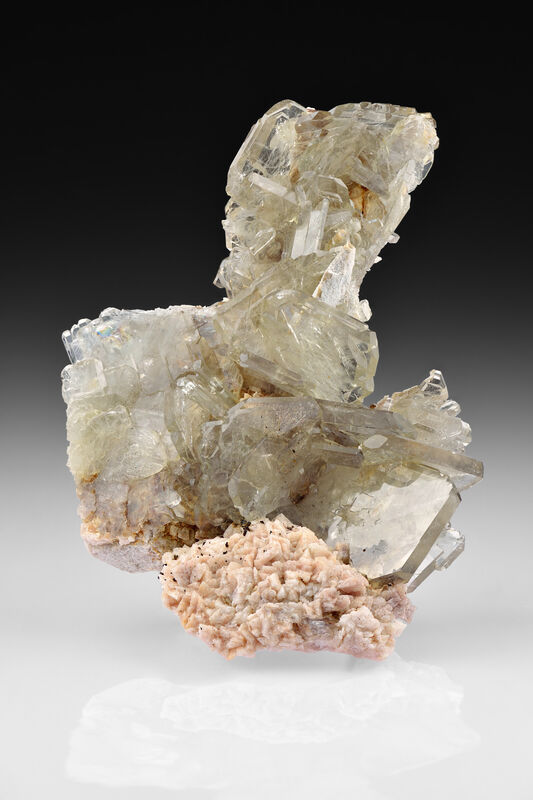
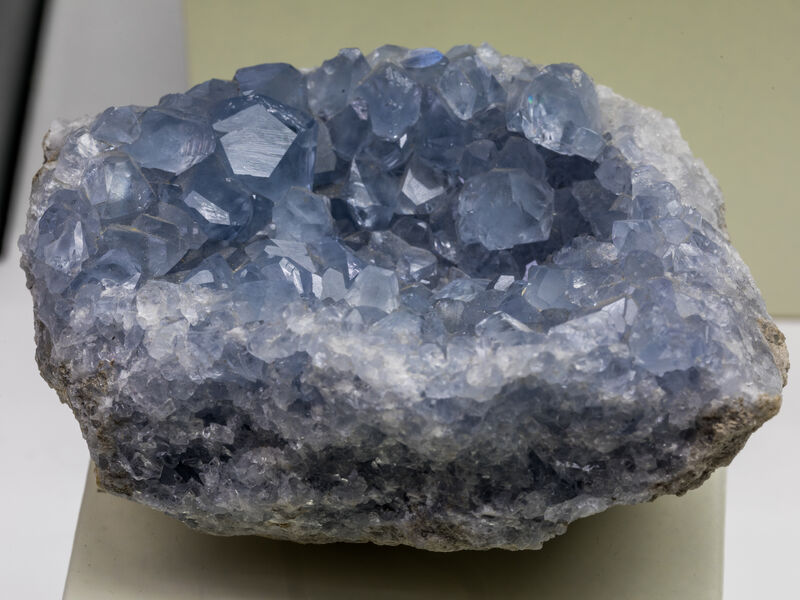
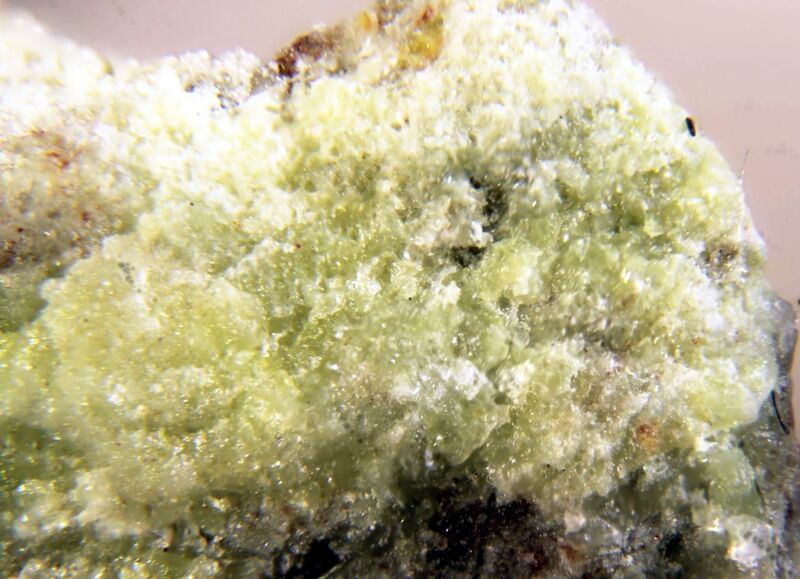
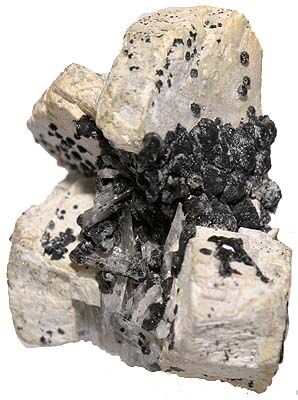 AlamositePbSiO3Mineral—
 BayldoniteCu3PbO(AsO3OH)2(OH)2Mineral—
 BeudantitePbFe3+3(AsO4)(SO4)(OH)6Mineral—
 CarminitePbFe3+2(AsO4)2(OH)2Mineral—
 CerussitePb(CO3)Mineral—
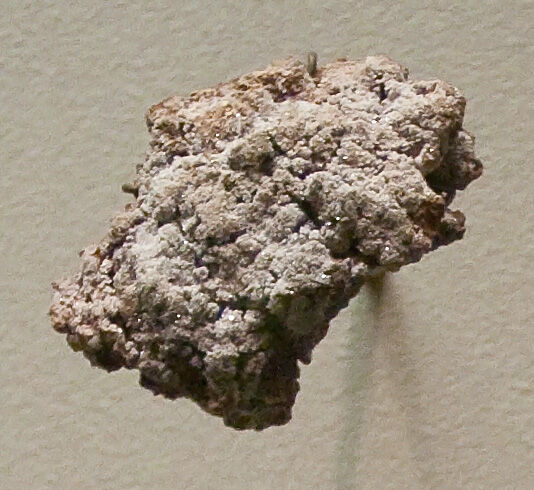 CotunnitePbCl2Mineral—
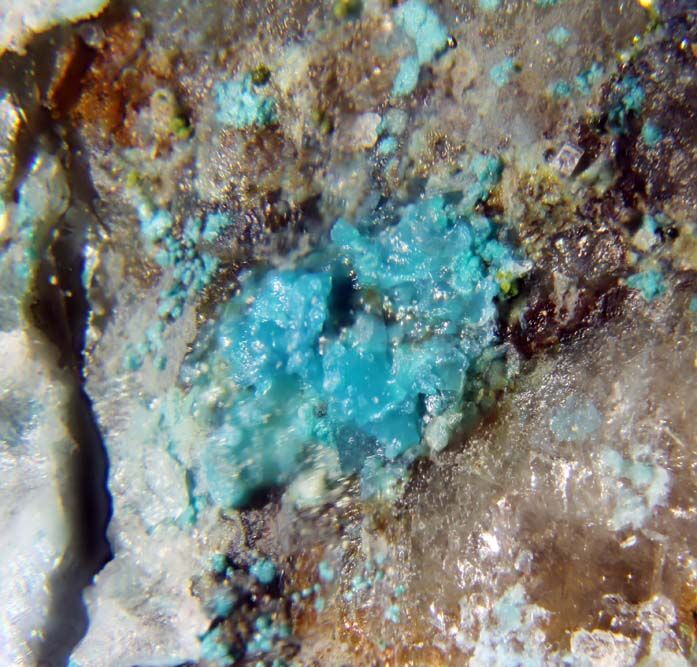 FuettereritePb3Cu2+6Te6+O6(OH)7Cl5Mineral—
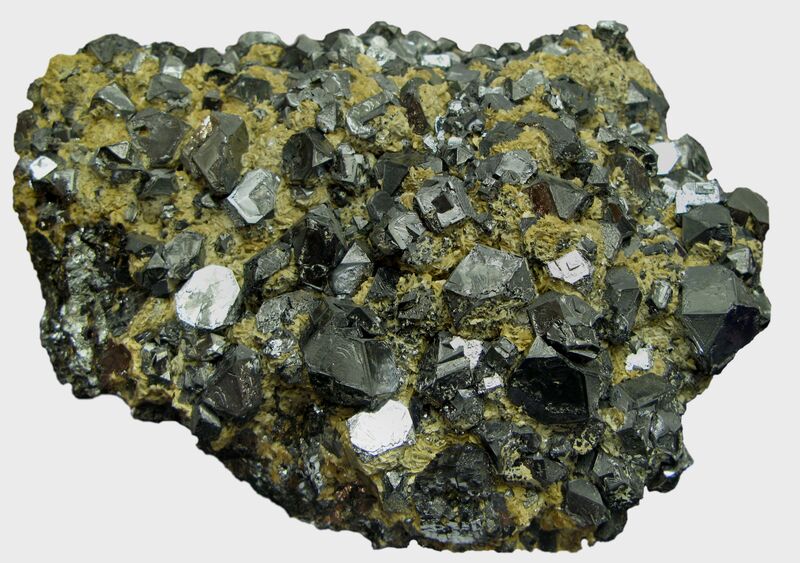 GalenaPbSMineral—
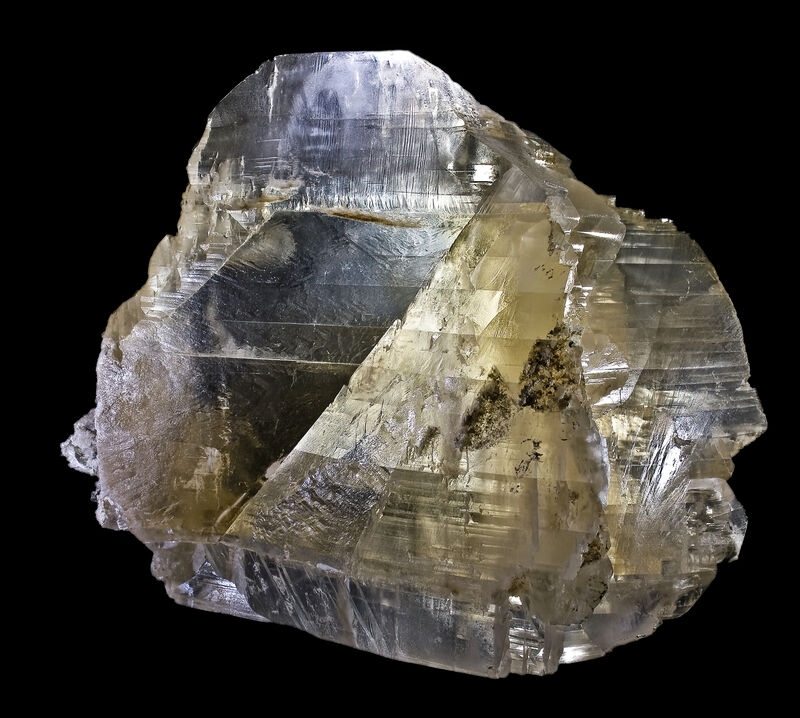 GypsumCa(SO4) · 2H2OMineral—
 HemimorphiteZn4(Si2O7)(OH)2 · H2OMineral—
Literature, links & citation
- —Sella, Q. (1878) Delle forme cristalline dell'anglesite di Sardegna. Transunti della Regia Accademia dei Lincei: 3, serie III: 150-158.
- 1779Monnet (1779) System of Mineralogy: 371. [as Vitriol de Plomb]
- 1783Bergman, Torbern (1783) Sciagraphia Regni Mineralis Secundum Principia Proxima Digesti [Sketch of the Mineral Kingdom According to the Proximate Principles of Digestion]. Apud Johannem Murray, Londini. 165pp.
- 1787Proust (1787) Lettre de M. Proust a M. De La Métherie, sur le borax. Journal de Physique - Observations sur la Physique, sur L'Histoire Naturelle, et sur les Arts, Paris: 30: 393-396. [as Vitriol de Plomb]
- 1789Lasius (1789) Beob. Harzgeb.: 2: 355. [as Bleiglas]
Entry last updated
@misc{mineral2026,
  author    = {Mineral Index editorial board},
  title     = {Anglesite — Mineral Index},
  year      = {2026},
  url       = {https://mineralindex.org/minerals/anglesite-233}
}