Where it forms, where it's found
- Geological setting
Low-temperature hydrothermal deposit.
Typically in low-temperature hydrothermal Pb–Zn deposits; rare in carbonatites.
- Type locality
- Brownley Hill Mine (Bloomsberry Horse Level)
- Nenthead
- Alston Moor
- Eden
- Cumbria
- England
- UK
54.7964°, -2.3483°
Physical
- Hardness
- 1Talc
- 2Gypsum
- 3Calcite
- 4Fluorite
- 5Apatite
- 6Orthoclase
- 7Quartz
- 8Topaz
- 9Corundum
- 10Diamond
- Transparency
- Transparent · Translucent
- Colour
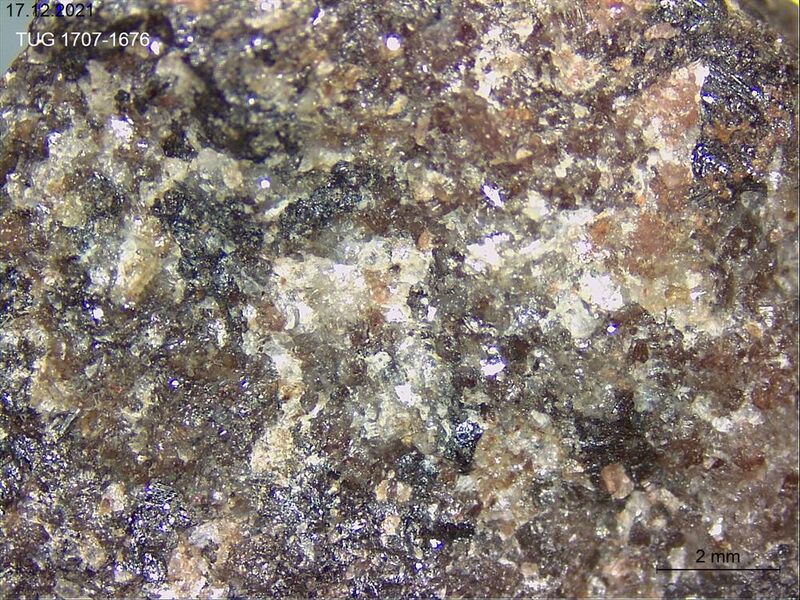
- Colourless to snow white · yellow-gray · pale gray · pale cream · pink to pale rose-red
may fade on exposure to light; colorless in transmitted light, showing six or twelve domains
- Streak
- White
- Cleavage
- Imperfect/Fair
On pseudo-orthorhombic (110), imperfect
- Fracture
- Irregular/Uneven
- Density
- 3.67 g/cm³
Optical
- Optical type
- Biaxial (-) · 2V measured = 6° · 2V calc = 8°
- Refractive index
- 1.526 – 1.672
- Surface relief
- Moderate
- Principal indices
- nα 1.526 · nβ 1.671 · nγ 1.672
- Dispersion
- r > v weak
- UV response
- Weak yellow fluorescence (SW & LW UV).
Crystallography
- Cell parameters
- a = 17.38 Å · b = 14.4 Å · c = 6.12 Å
- Cell angles
- α = 90.35 ° · β = 90.12 ° · γ = 120.08 °
- Ratio a:b:c
- 1 : 0.829 : 0.352
- Z
- 24
- Morphology
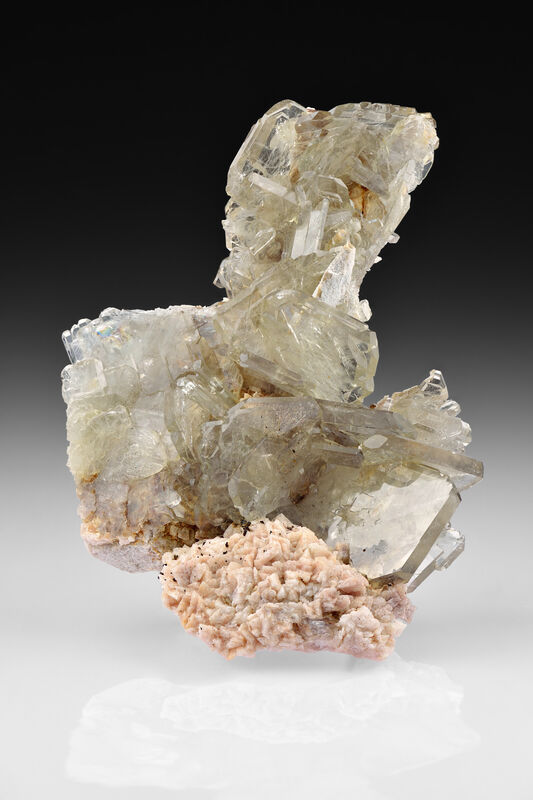
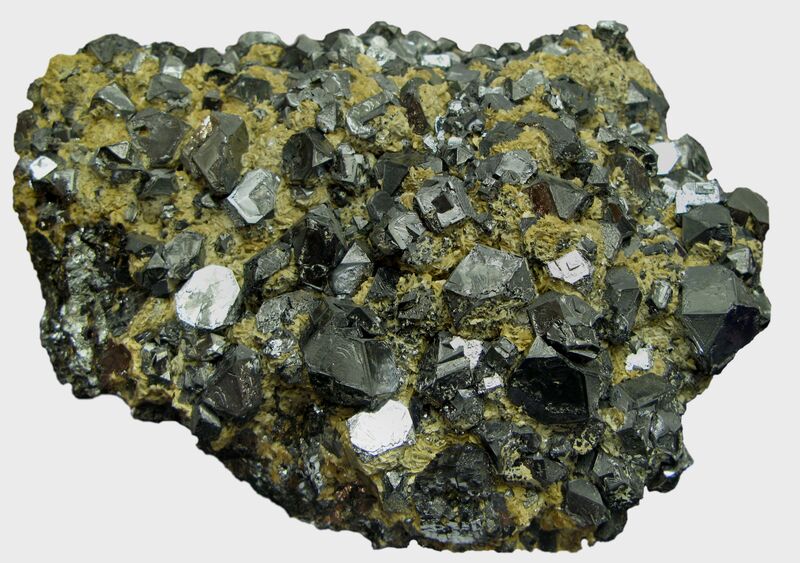
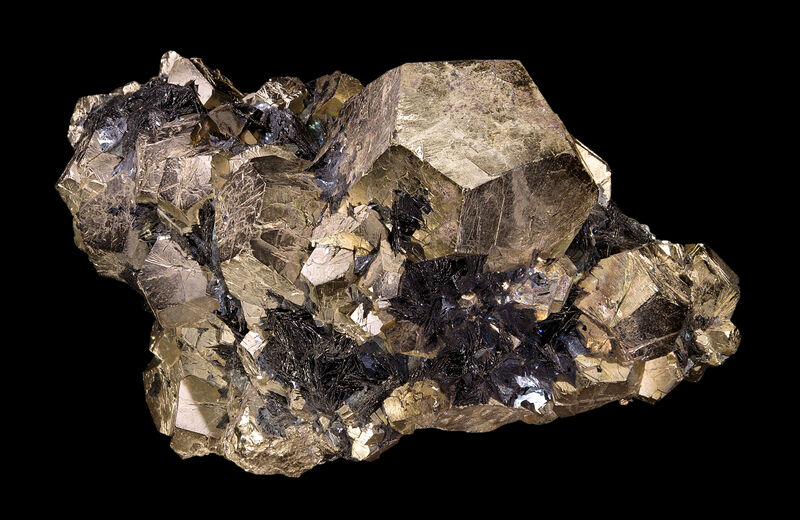
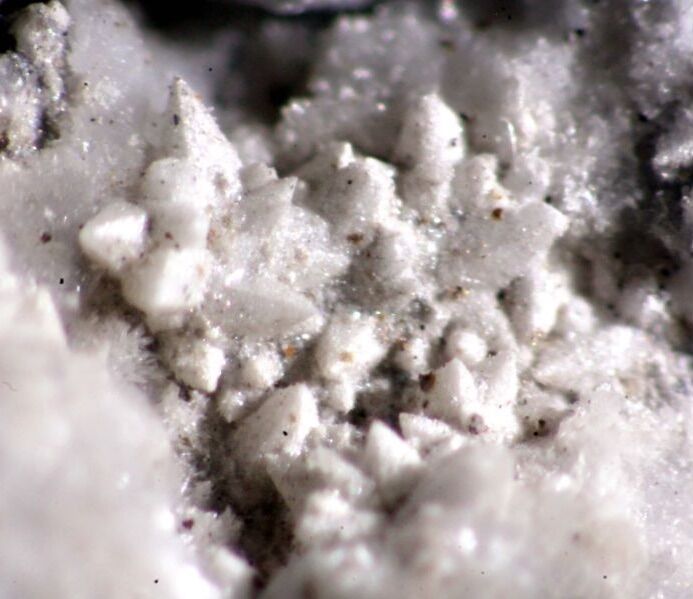
Crystals are pseudo-dihexagonal dipyramids formed by repeated twinning of individuals bounded by (111) and (021); also as acute dipyramids bounded by (221). The evident dipyramidal faces are strongly striated horizontally (perpendicular to pseudohexagonal [0001]) and are divided vertically by a medial, slightly reentrant twinning line parallel to the pseudohexagonal [0001].
- Twinning
Common on pseudo-orthorhombic (11) and (301), forming the pseudohexagonal groups.
- Comment
Point Group: 1 or _1; Space Group: C1 or C_1
Chemical composition
Synonyms
- Alstoniet
- Alstonitt
- Bariumaragonit
- Barytocalcite (of Johnston)
- Bicalcareocarbonate of Barytes
- Bromlit
- Bromlita
- Bromlite
In other languages
- French
- Alstonite
- German
- Alstonit
- Spanish
- Alstonita
- Italian
- alstonite
- Russian
- Альстонит
Classification
5.AB.35
- 5CarbonatesClass
- 5.ACarbonates without additional anions, without H2ODivision
- 5.ABAlkali-earth (and other M2+) carbonatesGroup
- 5.AB.35AlstoniteSpecies
14.02.05.01
- 14Anhydrous Normal CarbonatesClass
- 14.02AB(XO3)2Type
- 14.02.05— unnamed intermediate level —Group
- 14.02.05.01AlstoniteSpecies
11.5.4
- 11CarbonatesClass
- 11.5Carbonates of Sr and BaGroup
- 11.5.4AlstoniteSpecies
Group, growth & confusion
Literature, links & citation
- 1835Johnston, J.F.W. (1835) On the dimorphism of Baryto-calcite. Philosophical Magazine and Journal of Science: 6: 1-4. (as Barytocalcite)
- 1835Thomson, Thomas (1835) Account of some new Species of Minerals containing Barytes. Records of General Science, 1. 369-375
- 1837Johnston, J.F.W. (1837) LXXVI. On the composition of the right rhombic baryto-calcite, the Bicalcareo-carbonate of Baryta of Dr. Thomson. Philosophical Magazine and Journal of Science: 10(62): 373-376.
- 1837Thomson, T. (1837) IX. On the right rhombic Baryto-Calcite, with reference to Prof. Johnston's paper in the Phil. Mag. for May 1837. Philosophical Magazine and Journal of Science: 11: 45-48.
- 1841Breithaupt, J.F.A. (1841) Holoëdrites syntheticus oder Alstonit. in Vollständiges Handbuch der Mineralogie. Vol. 2: 255-256. (as Alstonite)
Entry last updated
@misc{mineral2025,
  author    = {Mineral Index editorial board},
  title     = {Alstonite — Mineral Index},
  year      = {2025},
  url       = {https://mineralindex.org/minerals/alstonite-146}
}