Where it forms, where it's found
- Geological setting
Uncommon in the secondary weathering zones of mercury deposits.
- Type locality
- Landsberg
- Obermoschel
- Nordpfälzer Land
- Donnersbergkreis
- Rhineland-Palatinate
- Germany
49.7250°, 7.7808°
88recorded occurrences
Safety & handling
Physical
- Hardness
- 1Talc
- 2Gypsum
- 3Calcite
- 4Fluorite
- 5Apatite
- 6Orthoclase
- 7Quartz
- 8Topaz
- 9Corundum
- 10Diamond
- Transparency
- Transparent
- Colour
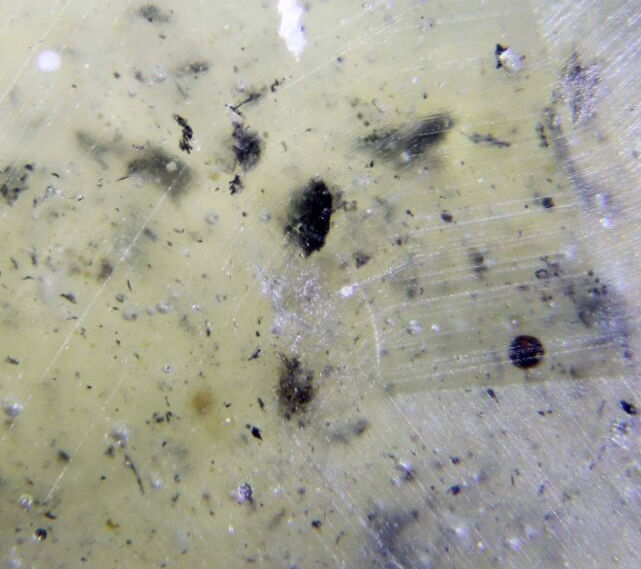
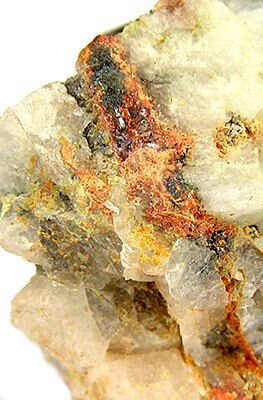
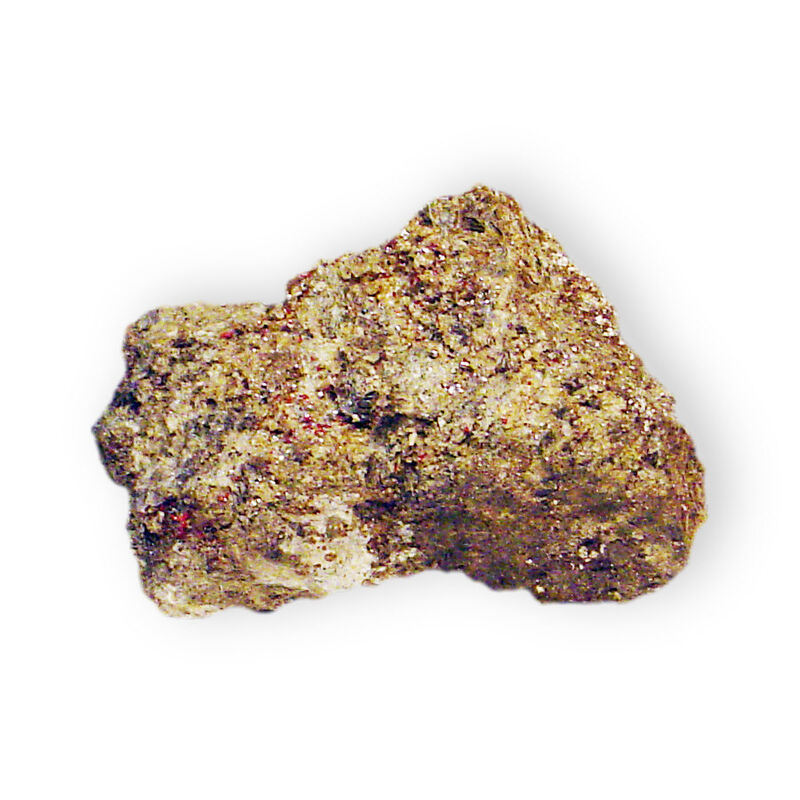
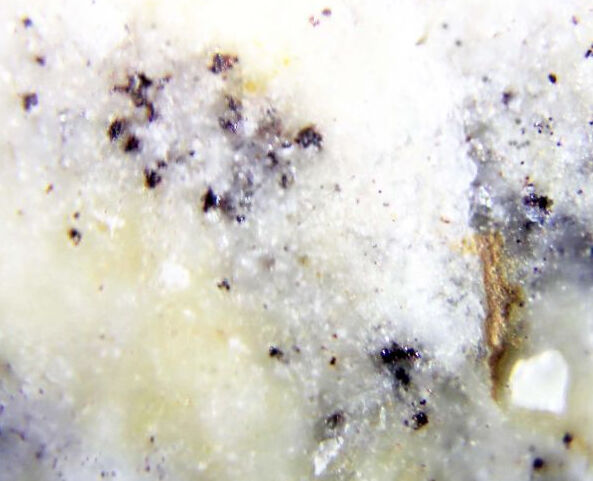
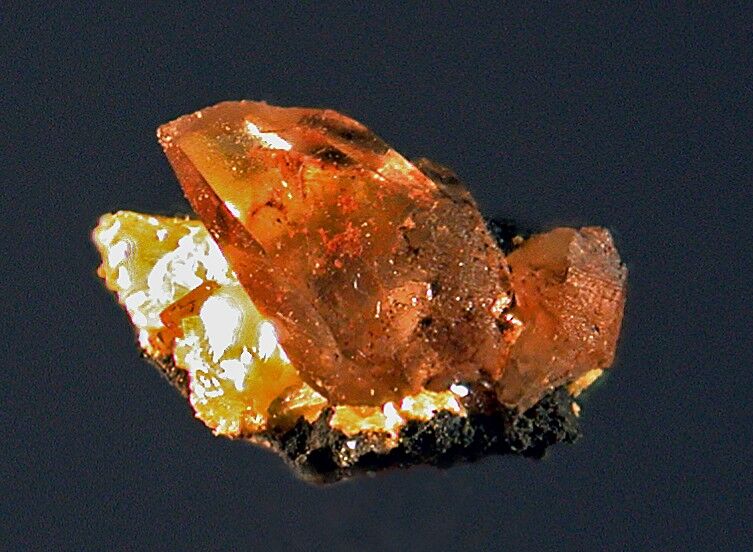
- Colourless · white · grayish · yellowish white · yellowish grey to ash-grey · brown · darkens upon exposure to light
- Streak
- Light yellowish white
- Tenacity
- sectile
- Cleavage
- Distinct/Good
(110) good but slightly uneven; (011) imperfect.
- Fracture
- Conchoidal
- Density
- 7.15 g/cm³
Optical
- Optical type
- Uniaxial (+)
- Refractive index
- 1.973 – 2.656
- Surface relief
- Very high
- Principal indices
- nω 1.973 · nε 2.656
- Pleochroism
- Weak
Absorption E greater than O.
- UV response
- Brick-red (UV)
- Notes
Mechanically deformed crystals may exhibit optical anomalies.
Δ = 0Δmax
PPLpleochroism per grain
XPLindependent extinctions · rotate the stage
PPLpleochroism only · colour blends on rotation
XPLinterference colour · extinct every 90°
Retardation6830 nm
Orderhigh order
XPL colour
Crystallography
- Space group
- #176
- Cell parameters
- a = 4.4795(5) Å · c = 10.9054(9) Å
- Z
- 4
- Morphology
Crystals often tabular (001); prismatic [001]; pyramidal; equant, especially in complex twins. Complex development often exhibited. Drusy crusts of minute crystals. Massive, earthy.
- Twinning
On (112). As contact or interpenetrant twins often repeated and with irregular and concealed boundaries.
Crystal structure
Chemical composition
Synonyms
- Calomelane
- Calomelit
- Calomelite
- Chlormercur
- Chlormerkurspath
- Chlorquecksilber
- Corneous Mercury
- Horn Mercury
- Horn Quicksilver
- Hydrargyrit
- Mercure chloruré
- Mercure muriaté
- Mercurio corneo
- Mercurio córneo
- Merkur-Hornerz
- Merkur-Kerat
- Merkurspath
- Plata iodurada mercurial
- Quecksilber-Hornerz
- Quecksilberchlorür
- Quecksilberhornerz
- Quecksilberhornspath
- Quecksilberspath
- Turpeth
In other languages
- French
- calomel
- German
- Kalomel
- Spanish
- calomelano
- Italian
- calomelano
- Russian
- Каломель
- Arabic
- كالوميل
Classification
Strunz
10th ed.3.AA.30
- 3HalidesClass
- 3.ASimple halides, without H2ODivision
- 3.AAM:X = 1:1, 2:3, 3:5, etc.Group
- 3.AA.30CalomelSpecies
Dana
8th ed.09.01.08.01
- 09Normal HalidesClass
- 09.01AXType
- 09.01.08Calomel GroupGroup
- 09.01.08.01CalomelSpecies
CIM
—8.5.2
- 8Halides - Fluorides, Chlorides, Bromides and Iodides; also Fluoborates and FluosilicatesClass
- 8.5Halides of Zn and HgGroup
- 8.5.2CalomelSpecies
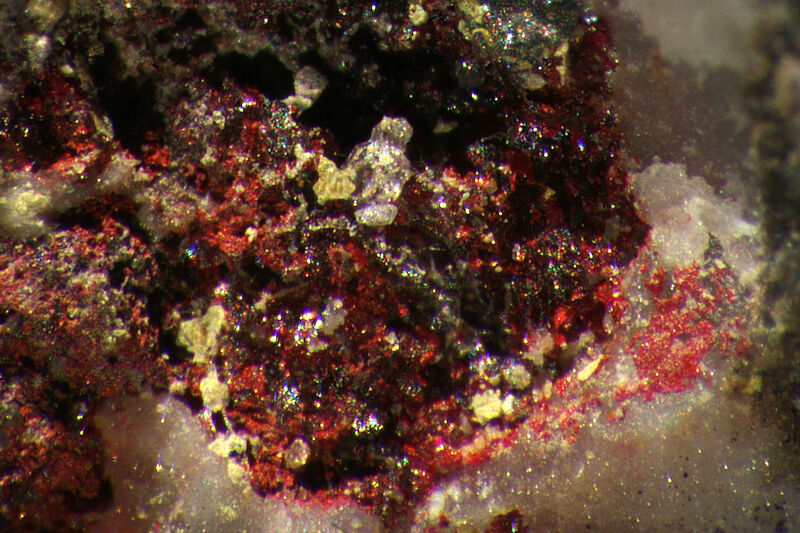
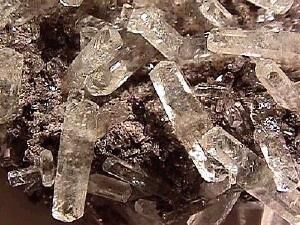
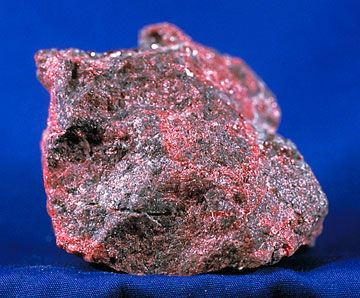
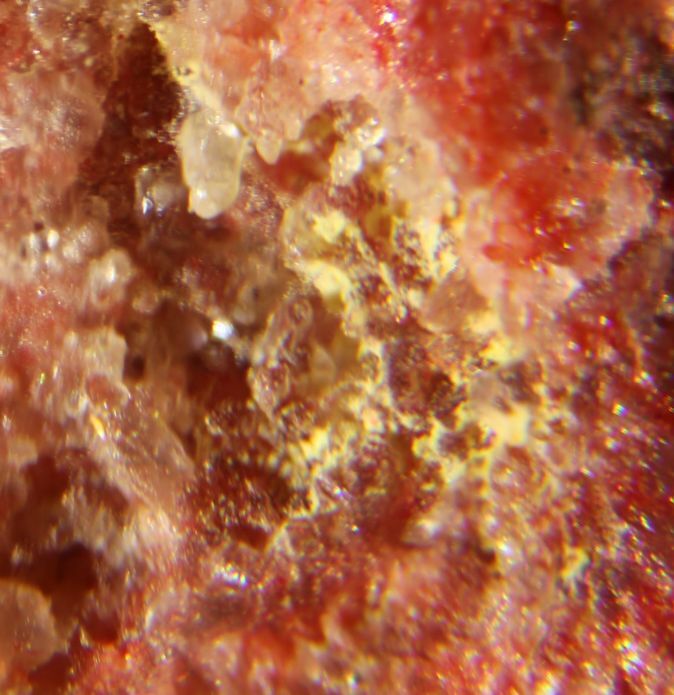
Group, growth & confusion
Literature, links & citation
Citations
- 1690de Mayerne, T.T., Charleton, W. (1690) De scirrho & cancro uteri.. in Praxeos Mayernianae In Morbis internis Præcipue Gravioribus & Chronicis Syntagma, ex Adversariis, Consiliis ac Epistolis Ejus, Summâ Curâ ac Diligentiâ Concinnatum., Impensis Sam. Smith (Londini), 432-433.
- 1821Whatton, W.R. (1821) On the origin of the name of calomel. Annals of Philosophy, 2, 427-430.
- 1827Reuss, F.A., Steinmann, J.J. (1827) Calomel. in Das Saidschitzer Bitterwasser, J.G. Calve'sche Buchhandlung (Prague), 78-90.
- 1830Beudant, François-Sulpice (1830) Traité élémentaire de minéralogie. Deuxiéme Edition [Elementary Treatise on Mineralogy. Second Edition] (2nd ed.) Vol. 1 - Tome Premier [Volume One]. Chez Verdière.
- 1903Moses, A.J. (1903) Eglestonite, terlinguaite, and montroydite, new mercury minerals from Terlingua, Texas. American Journal of Science, Fourth Series, 16, 253-263.
Cite this entry
Entry last updated
@misc{mineral2026,
  author    = {Mineral Index editorial board},
  title     = {Calomel — Mineral Index},
  year      = {2026},
  url       = {https://mineralindex.org/minerals/calomel-869}
}