Where it forms, where it's found
- Geological setting
Saline lake deposits, playas, and springs; as an efflorescence on clayey, alkalic soils; in caves and sheltered spot on recent lavas. Often deposited from saline waters in cold seasons in sea sprays.
199recorded occurrences
Physical
- Hardness
- 1Talc
- 2Gypsum
- 3Calcite
- 4Fluorite
- 5Apatite
- 6Orthoclase
- 7Quartz
- 8Topaz
- 9Corundum
- 10Diamond
- Lustre
- Vitreous
- Transparency
- Transparent · Opaque
- Colour
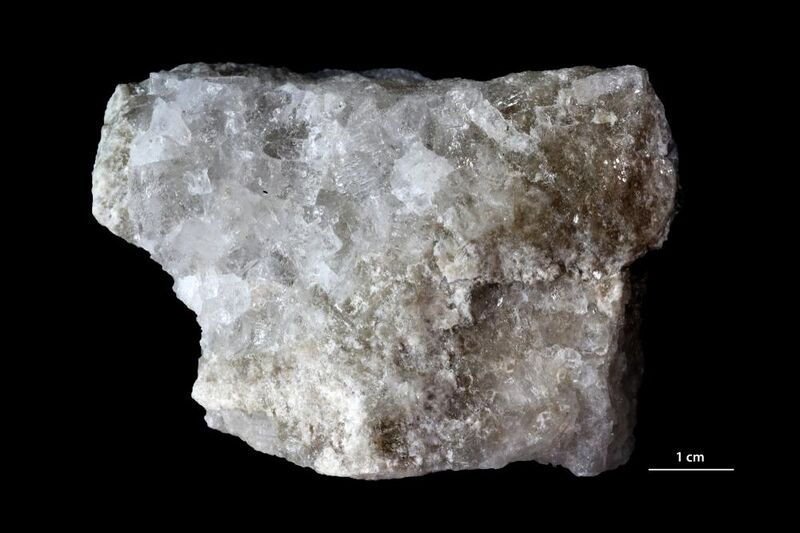
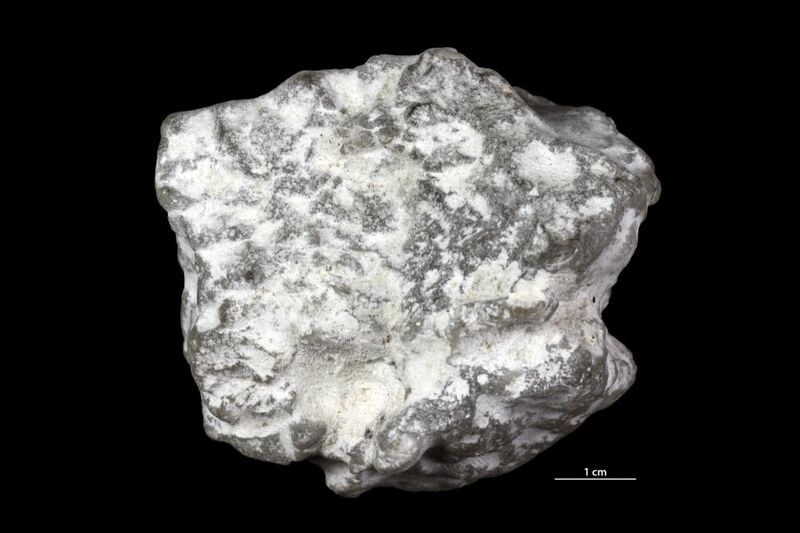
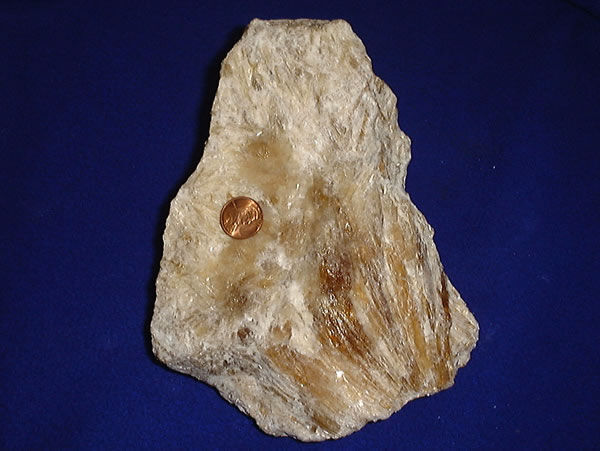
- Colourless · white · colourless in transmitted light
- Streak
- White
- Cleavage
- Perfect
On (100) perfect; also reported on (001), (010), and (011).
- Fracture
- Conchoidal
- Density
- 1.464 g/cm³
Optical
- Optical type
- Biaxial (-) · 2V measured = 75° · 2V calc = 74°
- Refractive index
- 1.391 – 1.398
- Principal indices
- nα 1.391 – 1.394 · nβ 1.394 – 1.396 · nγ 1.396 – 1.398
- Dispersion
- r < v, strong, crossed.
Δ = 0Δmax
PPLpleochroism per grain
XPLindependent extinctions · rotate the stage
PPLpleochroism only · colour blends on rotation
XPLinterference colour · extinct every 90°
Retardation45 nm
Order1st order
XPL colour
Crystallography
- Space group
- P21/c
- Cell parameters
- a = 12.847(2) Å · b = 10.370(3) Å · c = 11.512(3) Å
- Cell angles
- β = 107.789(10) °
- Ratio a:b:c
- 1 : 0.807 : 0.896
- Z
- 4
- Morphology
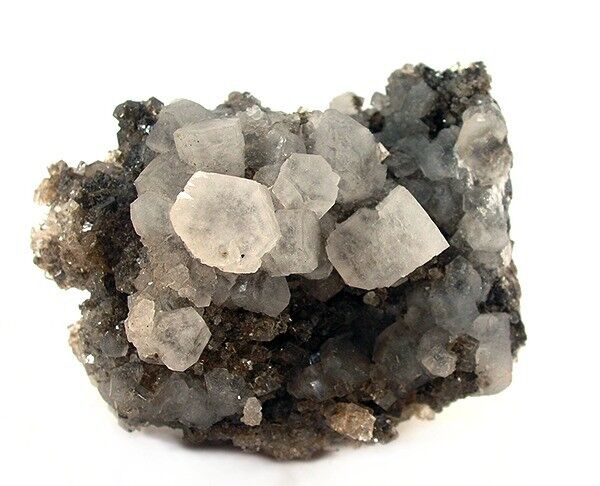
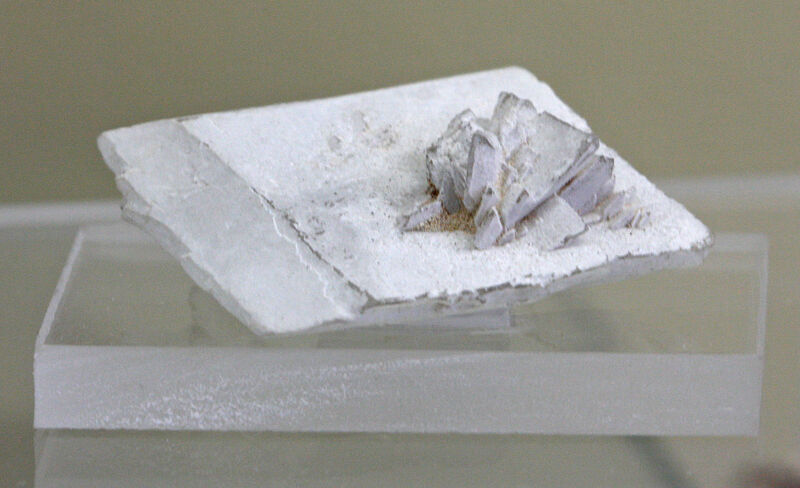
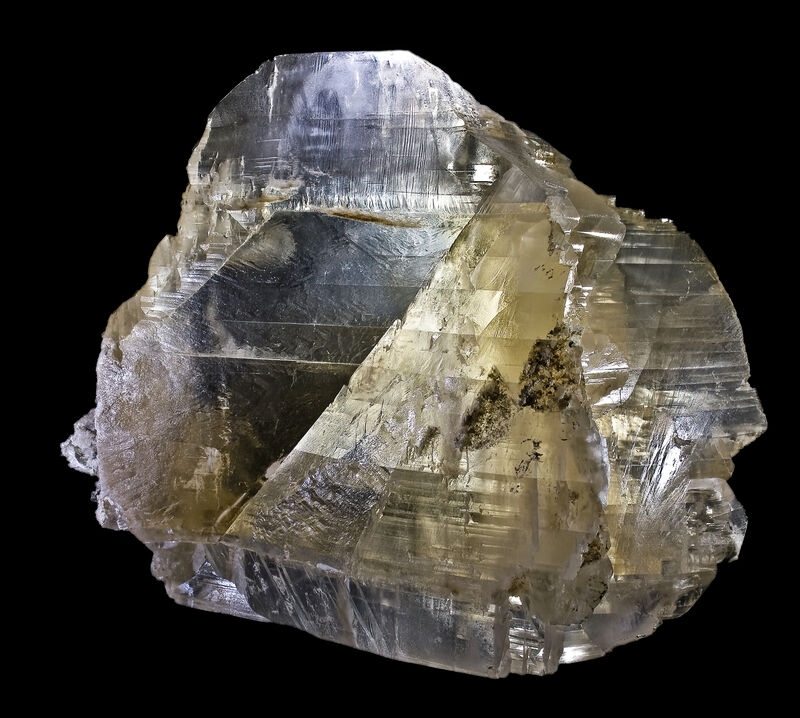
Crystals short prismatic [001]. Usually prismatic to acicular [010]; also thin tabular (100) or (001), or lath-like due to flattening on (100) and elongation parallel to [010] (artificial material). Massive; efflorescences or masses of interlocking fibers; granular; stalactitic.
- Twinning
Interpenetration twinning on (001); also on (100).
- Comment
synthetic
Crystal structure
Chemical composition
Synonyms
- Alcali minerale vitriolatum
- Exanthalose
- Gediegen Glaubersalz
- Glauber Salt
- Glaubersalz
- Natürliches Bittersalz
- Natürliches Wundersalz
- Reussin
- Sal mirabile
- Sel de Glauber
- Soude sulfatée
- Sulfate of Soda
In other languages
- French
- Mirabilite
- German
- Mirabilit
- Spanish
- Mirabilita
- Italian
- Mirabilite
- Japanese
- ミラビライト
- Chinese
- 芒硝
- Simplified Chinese
- 芒硝
- Traditional Chinese
- 芒硝
- Russian
- мирабилит
Classification
Strunz
10th ed.7.CD.10
- 7SulfatesClass
- 7.CSulfates (selenates, etc.) without additional anions, with H2ODivision
- 7.CDWith only large cationsGroup
- 7.CD.10MirabiliteSpecies
Dana
8th ed.29.02.02.01
- 29Hydrated Acid and Normal SulfatesClass
- 29.02A2XO4·xH2OType
- 29.02.02— unnamed intermediate level —Group
- 29.02.02.01MirabiliteSpecies
CIM
—25.1.3
- 25SulphatesClass
- 25.1Sulphates of the alkali metals and ammoniumGroup
- 25.1.3MirabiliteSpecies
Group, growth & confusion
Literature, links & citation
Citations
- —Gill K.K., Jagniecki, E.A., Benison, K., Gibson, M. (2023): A Mars-analog sulfate mineral, mirabilite, preserves biosignatures. Geology, 51, 818–822.
- 1658Glauber (1658) Tractatus de natura salium (as Sal mirabile).
- 1783Bergman, Torbern (1783) Sciagraphia Regni Mineralis Secundum Principia Proxima Digesti [Sketch of the Mineral Kingdom According to the Proximate Principles of Digestion]. Apud Johannem Murray, Londini. 165pp.
- 1791Reuss (1791) Crell’s Chemical Journal, London: 2: 18 (as Gediegen Glaubersalz).
- 1794Lenz, D.G. (1794) Versuch einer vollständigen Anleitung zur Kenntniss der Mineralien. 2 volumes, Leipzig: 1: 489 (as Natürliches Bittersalz).
Cite this entry
Entry last updated
@misc{mineral2026,
  author    = {Mineral Index editorial board},
  title     = {Mirabilite — Mineral Index},
  year      = {2026},
  url       = {https://mineralindex.org/minerals/mirabilite-2725}
}