History
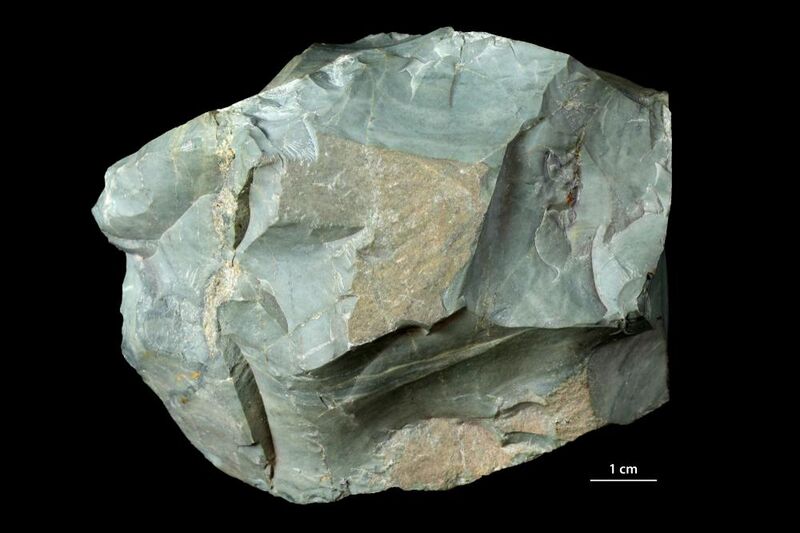
The name chalcedony is borrowed almost intact from the Latin chalcedonius, and most likely from the ancient Greek town of Chalkedon in Asia Minor — a place that survives today as Kadıköy, a district on the Asian side of Istanbul. The connection has been called very doubtful by careful etymologists, but the geographic association has stuck since antiquity. The first-century Roman naturalist Pliny the Elder, in his Natural History, used the word as a name for a translucent kind of jaspis — the broad classical term that covered several silica gemstones.
The mineral was worked by human hands long before any of these names existed. Archaeological sites in the Cleland Hills of Central Australia have yielded chalcedony flakes dated to around 32,000 years ago, brought in from quarries many kilometres away. The same fine-grained silica was crushed for pigment: chalcedony supplied the green and yellow tones in the prehistoric cave paintings of the Bhimbetka rock shelters in India.
By the Bronze Age the stone had taken on a different role around the Mediterranean. On Minoan Crete, chalcedony seals recovered from the Palace of Knossos date to roughly 1800 BCE. Seals stay the throughline. The mineral has a useful property for the job — hot sealing wax does not stick to a polished chalcedony surface, so a seal pressed into wax lifts away cleanly.
Across the Central Asian trade routes that linked the classical Mediterranean to Han China, artisans cut chalcedony — and its red variety carnelian — into intaglios, ring bezels, and beads, often carrying strong Greco-Roman influence in their designs. Intaglio is the lapidary term for a design cut into the stone's surface, the reverse of a cameo, in which the design stands proud.
The Book of Revelation, written in Koine Greek in the late first century, lists khalkedón as one of the twelve foundation stones of the New Jerusalem (Revelation 21:19). The word appears nowhere else in the Bible — a hapax legomenon, a term that occurs only once in a body of literature — which has left the exact stone the author meant a matter of debate ever since.
Industrial & practical applications
Chalcedony has no industrial use of consequence today. Its modern role is almost entirely lapidary — cut and polished as an ornamental stone, set in jewellery, or carved as a small decorative object. It has been the stone most used by the gem engraver in every age, and many of its coloured varieties are still cut for ornament.
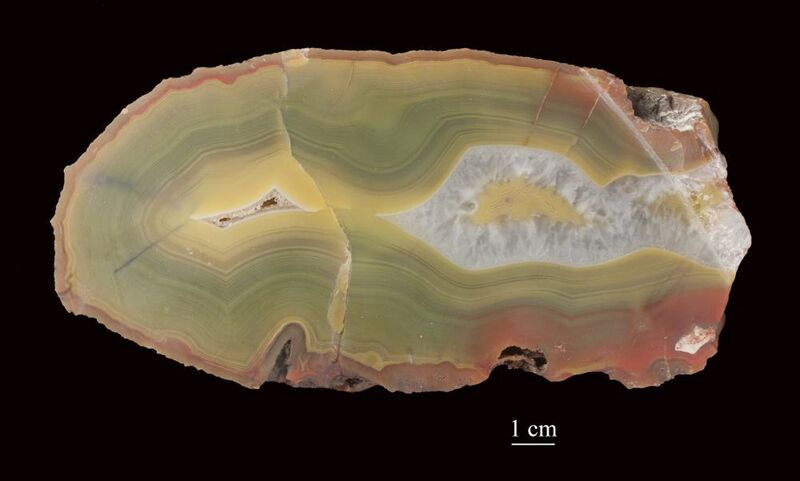
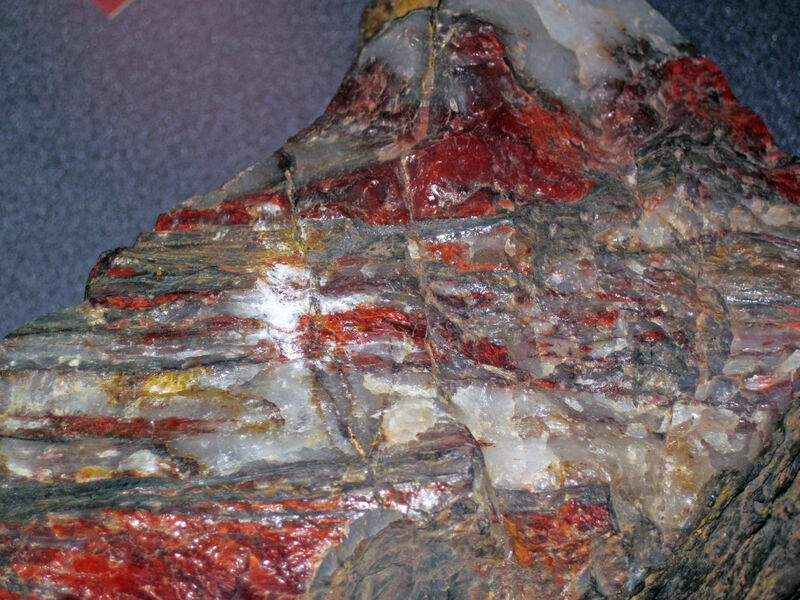
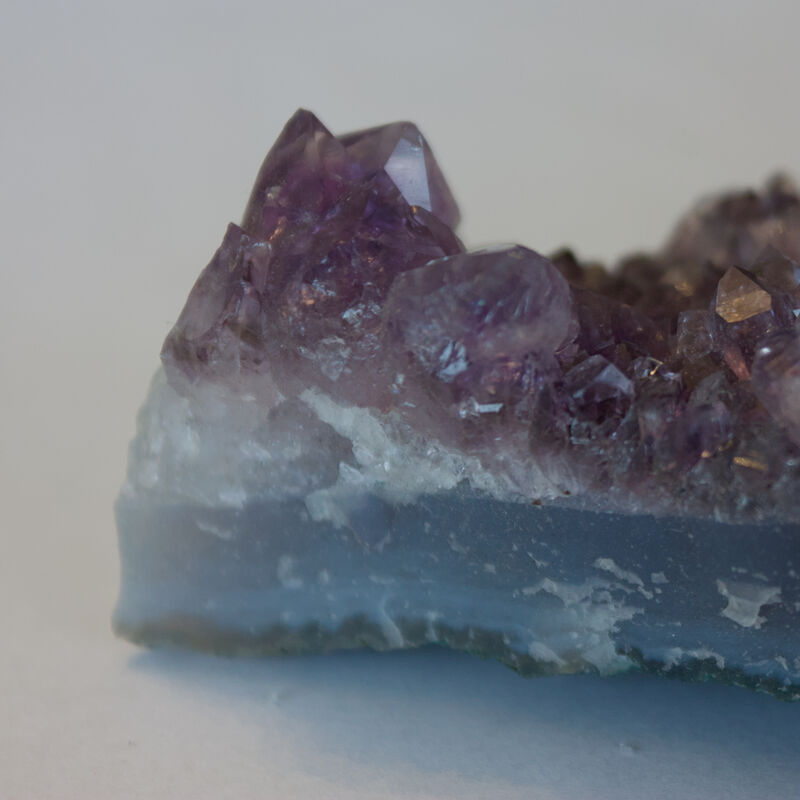
Most of what reaches the gem trade is sold under the name of one of its varieties rather than as chalcedony itself. The fibrous, banded form is agate. The clear reddish-brown form is carnelian. A green form coloured by nickel oxide is chrysoprase. Agate with sharp black-and-white banding is onyx. A green variety speckled with red iron-oxide inclusions is heliotrope, more commonly called bloodstone.
Much of the rough chalcedony entering the lapidary market is treated to deepen or shift its colour. Commercial stones are routinely dyed or heated to enhance their hue.
Where it forms, where it's found
- Geological setting
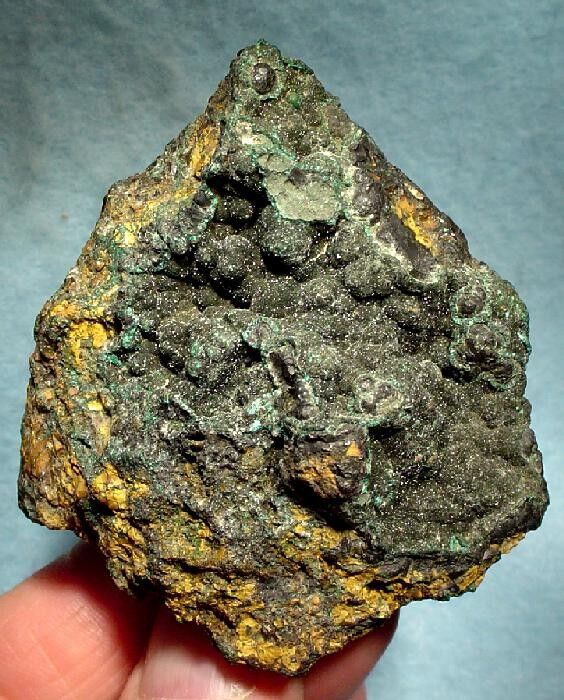
Very common. As nodules, vein fillings, crusts in volcanic rocks. As sinter-like crusts in low- to medium temperature hydrothermal veins. Main constituent in silica-rich marine sedimentary rocks. As nodular concretions and layers in limestones and marls. As a metasomatic replacement in limestones and marls ("replacement chert"). As cement in sandstones. Replacing other minerals in pseudomorphoses. As a fossilizing material (petrified wood, coral agate).
- Type locality
- Kadıköy (Chalcedon)
- Istanbul Province
- Turkey
Varieties
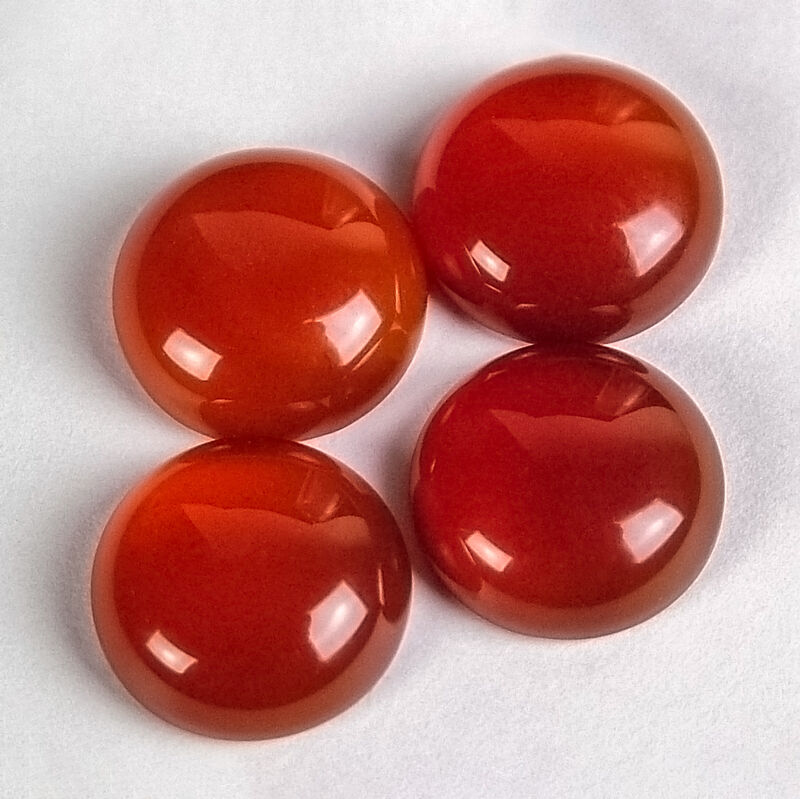
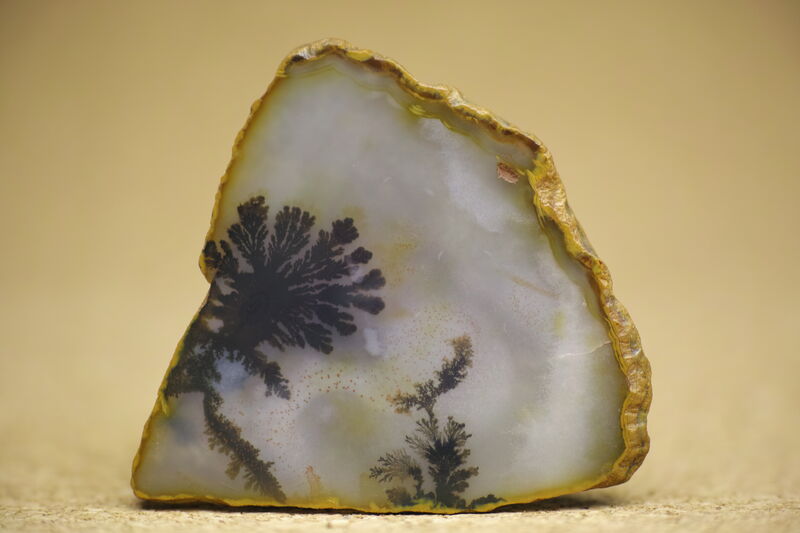
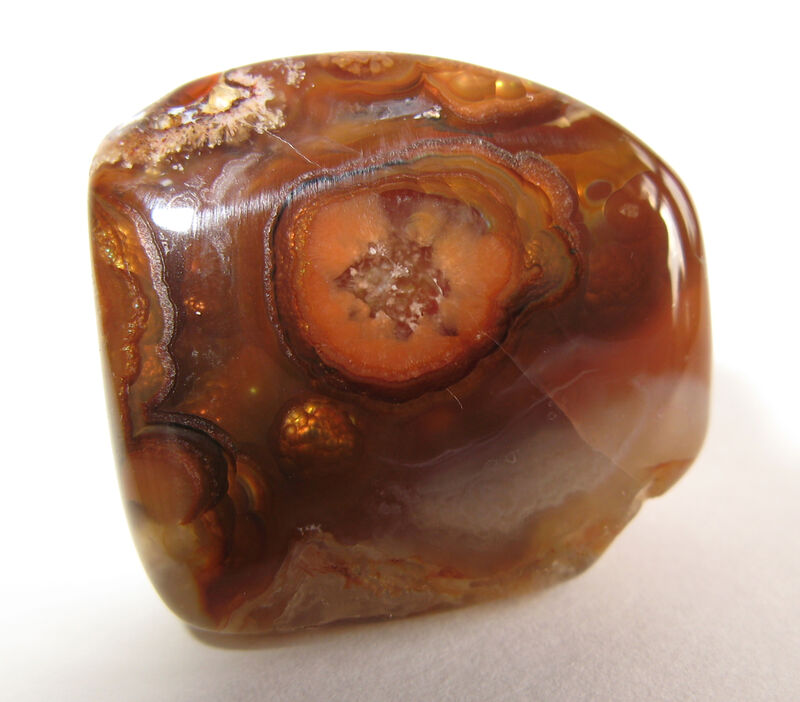
Physical
- Hardness
- 1Talc
- 2Gypsum
- 3Calcite
- 4Fluorite
- 5Apatite
- 6Orthoclase
- 7Quartz
- 8Topaz
- 9Corundum
- 10Diamond
- Transparency
- Translucent
- Colour
- colorless · white · gray · blue · any color due to embedded minerals · multicolored specimen not uncommon.
- Streak
- White
- Tenacity
- brittle
- Cleavage
- None Observed
- Fracture
- Conchoidal · Sub-Conchoidal
- Density
- 2.6 g/cm³
Optical
- Optical type
- Uniaxial (+)
- Birefringence
- 0.009
- Pleochroism
- Non-pleochroic
- UV response
- None in a pure specimen, however, green fluorescence in short-wave UV light is very common at many localities.
Crystallography
- Twinning
Quartz crystallites in the chalcedony fibers are polysynthetically twinned by the Brazil law (left- and right-handed domains).
- Comment
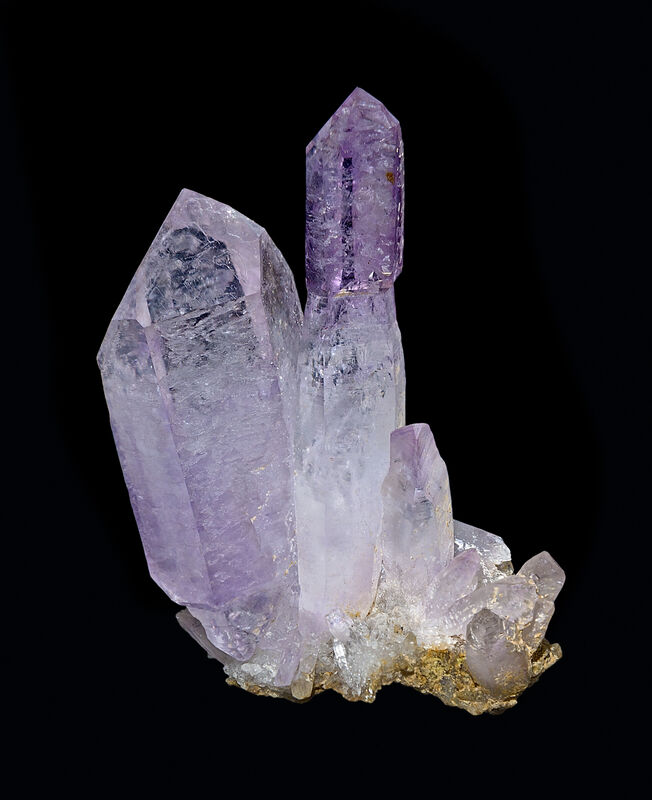
If pure quartz, trigonal, but very often contains some moganite
Chemical composition
Synonyms
- Calcédoine
- Calcedon
- Calcedonia
- Calcedónia
- Calcedònia
- Calcedonio
- Calcedonius
- Ceracahtes
- Cerachates
- Chalcedon
- Chalcedón
- Chalcedonas
- Chalcedone
- Chalcedonit
- Chalcedonite
- Chalcedononyx
- Chalcedoon
- Chalzedon
- Halcedons
- Kalcedon
- Kalcedono
- Kalkedon
- Kalsedon
- Kalsedoni
- Kaltsedon
- Kaltzedonia
- Kalzedon
- Merlinite
Group, growth & confusion
Literature, links & citation
- 1892Lévy, Auguste Michel, Munier-Chalmas, Ernest (1892) Mémoire sur diverses formes affectées par le réseau élémentaire du quartz. Bulletin de la Société française de Minéralogie, 15 (7). 159-190
- 1933Correns, Carl W.; Nagelschmidt, Günter (1933) Über Faserbau und optische Eigenschaften von Chalzedon. Zeitschrift für Kristallographie, 85 (1-6). 199-213 doi:10.1524/zkri.1933.85.1.199DOI: 10.1524/zkri.1933.85.1.199
- 1956Braitsch, Otto (1956) Über die natürlichen Faser- und Aggregationstypen beim SiO2, ihre Verwachsungsformen, Richtungsstatistik und Doppelbrechung. Heidelberger Beiträge zur Mineralogie und Petrographie, 5 (4) 331-372 doi:10.1007/bf01115659DOI: 10.1007/bf01115659
- 1961White, J. F., Corwin, J. F . (1961) Synthesis and origin of chalcedony. American Mineralogist, 46 (1-2) 112-119
- 1964Monroe, E. A. (1964) Electron optical observations of fine-grained silica minerals. American Mineralogist, 49 (3-4) 339-347
Entry last updated
@misc{mineral2026,
  author    = {Mineral Index editorial board},
  title     = {Chalcedony — Mineral Index},
  year      = {2026},
  url       = {https://mineralindex.org/minerals/chalcedony-960}
}